Access to private market investments has historically been limited to institutional and accredited investors. High minimum investment requirements, regulatory barriers, and restricted deal networks made participation difficult for most retail investors.
That changed.
Blockchain broke that old gatekeeping system wide open. Now a first time investor with only $10 can sit at the same table as the wall street professionals and be a part of the VC. Pre-IPO investment is not a private club any more.
Platforms like IPO Genie are making this real. They are sharing the same data the wall street professionals use. With this new shift there is no huge bear mi minimum to pay not do we have to go through the endless paper works, and no middle man
This article explains how pre-IPO investing works, how tokenized access models operate, and the key factors investors should evaluate before participating in early-stage opportunities.
Pre-IPO investment means acquiring tokens or equity before a company launches publicly.
Traditional pre-IPO investing (private equity, venture capital) was restricted to wealthy investors. Blockchain-based pre-IPO platforms democratize access by enabling retail participation in early-stage deals through tokenized structures.
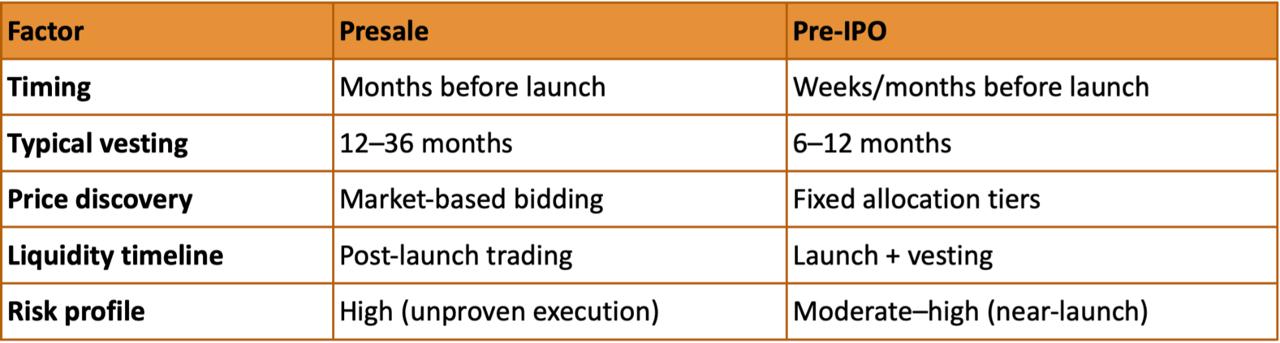
Presales involve tokens released during fundraising rounds. Pre-IPO refers to the stage immediately before public launch. The distinction matters: presale pricing may or may not reflect pre-IPO valuation, and vesting schedules vary significantly between structures.
The Access Gap Problem: “Retail investors historically lacked access to pre-IPO deals due to information asymmetry, regulatory barriers, and high capital requirements. IPO Genie $IPO addresses this through three mechanisms: transparency, verification, and tiered allocation.”
The hot deals were always hidden from regular people. Not to forget the high cost, secrecy of hidden data, the doors shut tight for regular investors.
This is exactly what IPO Genie $IPO is built to break
This crypto fixes this with a few things.
The proof is that Redwood AI was one of the proof of concept the IPO Genie happened to showcase that the concept and the AI power they claim works. Check the Vault on their website and you will find all the details.

Now they are onto the next vault revelation part 2 – this is going to be interesting if they are going to be as successful as the vault one proof.
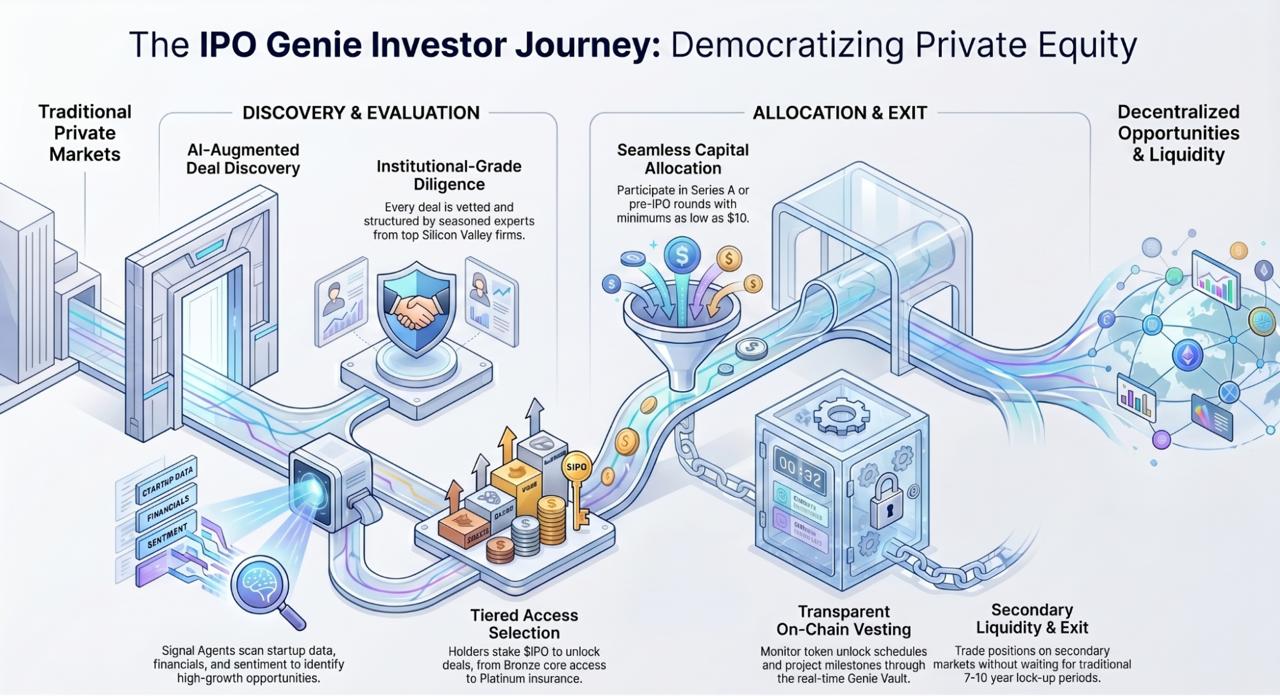
Investors should assess:
2. Tokenomics and allocation structure
“Retail investors often overlook critical factors when evaluating pre-IPO opportunities:
“A structured approach to pre-IPO investing involves:
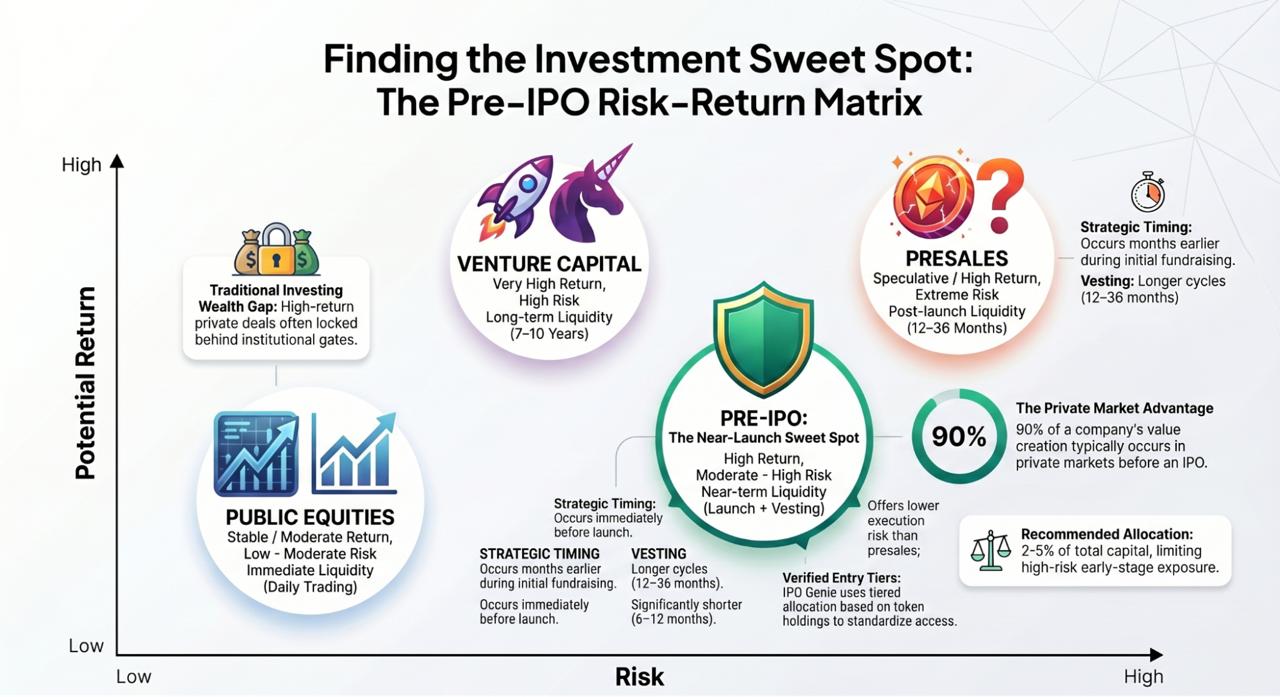
“Structured platforms like IPO Genie serve two functions: they reduce information asymmetry and standardize deal evaluation. This matters because retail investors lack the resources to independently verify team backgrounds, audit smart contracts, or model tokenomics. Platforms that publish transparent data enable self-directed analysis while maintaining investor protection.”
“Pre-IPO investment is expanding as regulatory frameworks clarify and infrastructure matures. However, retail participation will require increasing sophistication. Projects that embrace transparency, published vesting, allocation data, milestone tracking will attract more confident retail investors. Those withholding information will face credibility challenges.”

“Research pre-IPO opportunities using published tokenomics data and structured evaluation frameworks.”
Q: What’s the difference between pre-IPO investing and presale investing?A: Presales occur during fundraising rounds, months before launch. Pre-IPO refers to the final stage immediately before public trading. Vesting schedules, pricing, and risk profiles differ significantly between the two.
Q: Can retail investors actually access pre-IPO deals? A: Yes, through structured platforms that tokenize allocations. However, access varies by jurisdiction and regulatory status. Always verify legal compliance before participating.
Q: How much capital should I allocate to pre-IPO investments? A: Experts recommend 2–5% of investment capital for high-risk early-stage opportunities. This depends on your risk tolerance, total portfolio size, and investment timeline.
This publication is sponsored and written by a third party. Coindoo does not endorse or assume responsibility for the content, accuracy, quality, advertising, products, or any other materials on this page. Readers are encouraged to conduct their own research before engaging in any cryptocurrency-related actions. Coindoo will not be liable, directly or indirectly, for any damages or losses resulting from the use of or reliance on any content, goods, or services mentioned.
The post How to Invest in Pre-IPO Opportunities Through IPO Genie appeared first on Coindoo.





