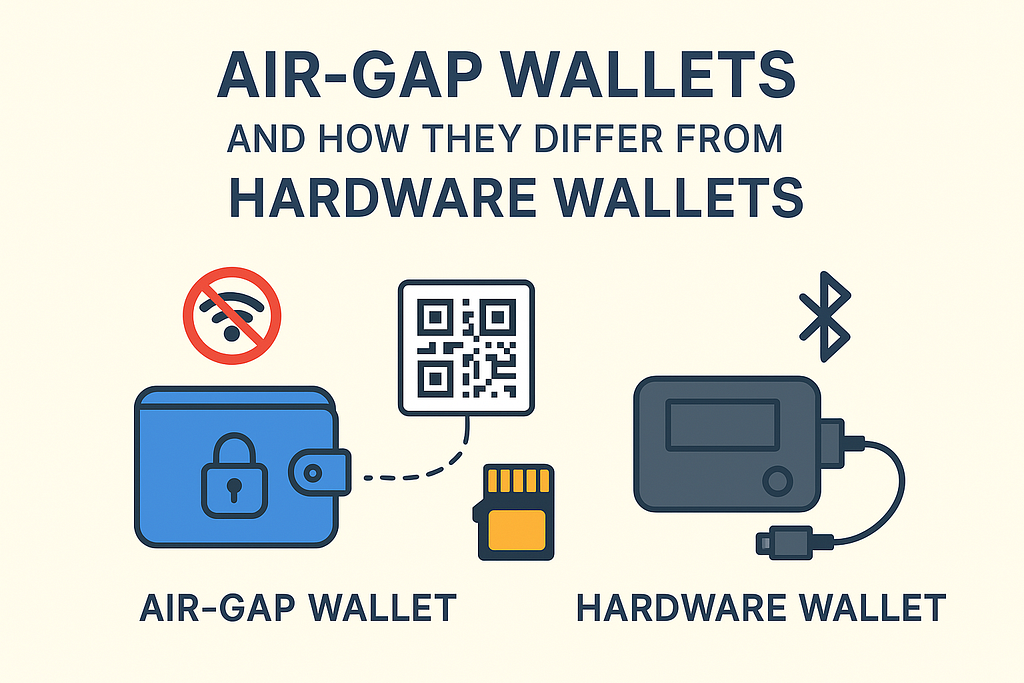
Across the world, more people are using crypto for savings, remittances, and business. But one truth remains: if you lose your private keys, you lose your money. Your crypto is really never safe if your private keys are exposed online, even if encrypted. Just one mistake and your life can be ruined. That’s why secure wallets matter. The two strongest options are hardware wallets and air-gap wallets.
A hardware wallet is a small physical device (like Ledger or Trezor) that stores your private keys offline.
When you want to make a transaction, you connect it to your phone or laptop — using USB or Bluetooth — approve the transfer, and it goes through.
👉 It’s simple, safe, and great for most users.
An air-gap wallet takes security to another level. It never connects to Wi-Fi, Bluetooth, or USB. It works completely offline.
How it works:
👉 Fewer chances for hackers, but it takes extra steps.
Connection
Ease of Use
In the end, it’s about balance: convenience vs. maximum protection.
Air-Gap Wallets vs. Hardware Wallets: What You Should Know was originally published in Coinmonks on Medium, where people are continuing the conversation by highlighting and responding to this story.