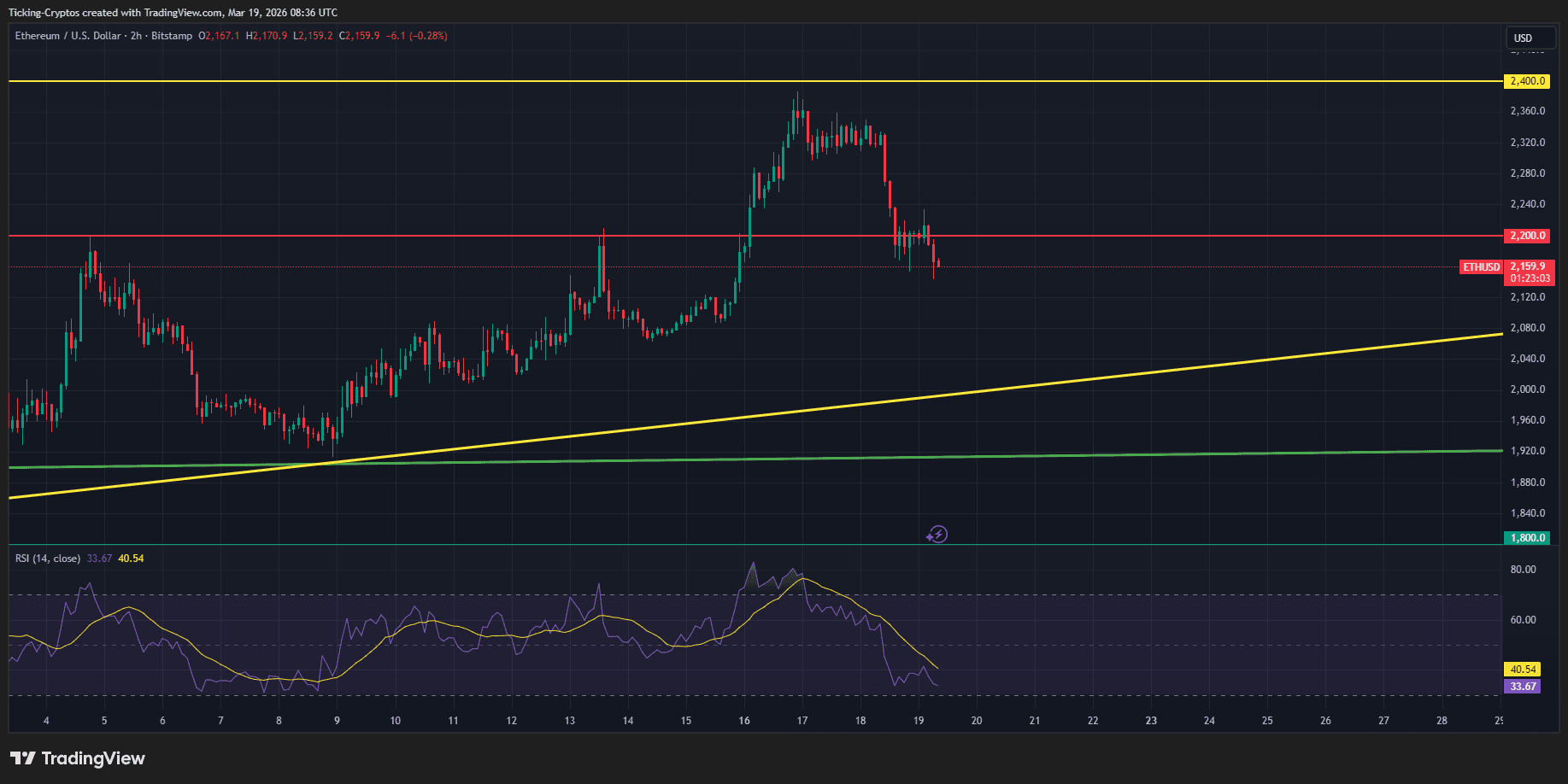
After a brief rally earlier this week, Ethereum ($ETH) is now testing the critical breakout-turned-support zone between $2,180 and $2,200.
This price action comes as a direct response to three simultaneous global shocks: a major military escalation in the Middle East, a hotter-than-expected US inflation report, and a stern warning from Federal Reserve Chair Jerome Powell. For ETH bulls, the mandate is clear: hold the $2,200 line or risk a deep correction toward the psychological support of $1,900.
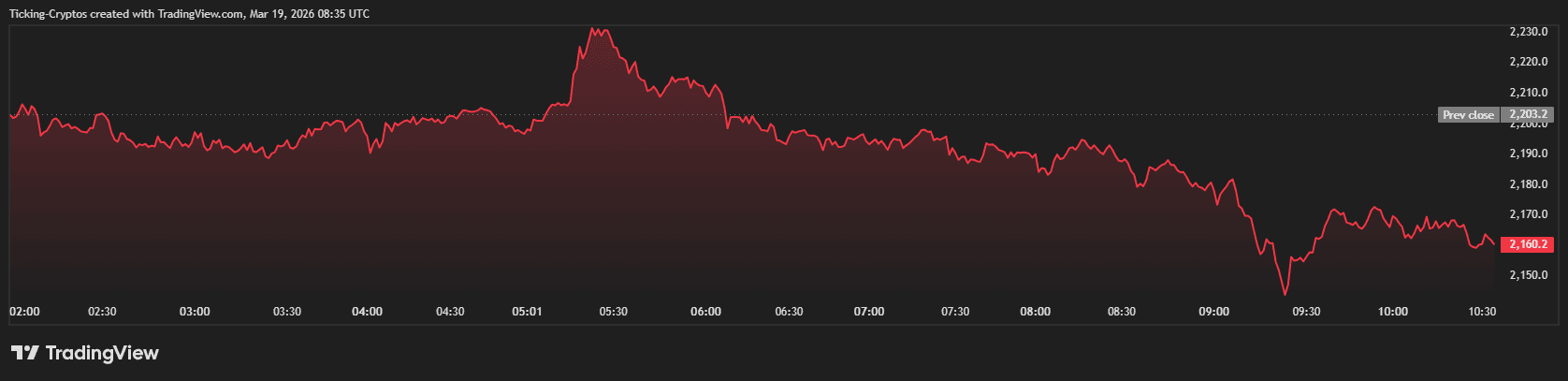
The sudden reversal in risk appetite isn't just a technical correction; it is a fundamental shift driven by three massive catalysts.
Geopolitical tensions reached a breaking point today following reports that Israel targeted Iran’s South Pars gas facility, the world’s largest gas field. In immediate retaliation, Iranian strikes reportedly caused extensive damage to Qatari LNG infrastructure at Ras Laffan.
This "energy war" sent crude oil prices soaring toward $99 per barrel almost instantly. For Ethereum and the broader crypto market, rising energy costs act as a double-edged sword: they increase the cost of living (reducing retail liquidity) and fuel long-term inflation fears.
Adding fuel to the fire, the Producer Price Index (PPI) for February 2026 came in significantly hotter than anticipated at 3.4% year-on-year. This suggests that wholesale inflation is accelerating even before the full impact of the recent oil price surge hits the data.
When "factory gate" prices rise, they inevitably trickle down to consumers, making the path to the Fed’s 2% target look increasingly impossible.
Federal Reserve Chair Jerome Powell held interest rates steady at 3.5%–3.75% today, but it was his tone that rattled the cages. For the first time in the Fed's history, the committee explicitly acknowledged the Middle East situation as a primary economic risk.
Powell’s refusal to commit to a timeline for rate cuts, combined with the acknowledgment of "uncertain" implications for the US economy, led markets to price out a summer pivot.
Despite the macro negativity, Ethereum's chart shows a technical battle that is currently being fought at the "Line in the Sand."
As seen in recent trading data, Ethereum has retraced to its previous breakout zone. This area was formerly a heavy resistance level throughout early 2026. In technical analysis, a successful "retest" of this zone as support would be a massive bullish signal.
Ethereum’s correlation with the S&P 500 and Bitcoin remains high. With the US dollar index (DXY) strengthening on the back of safe-haven flows, ETH faces significant selling pressure. Investors looking to hedge against this volatility often turn to hardware wallets to secure their assets during periods of extreme exchange uncertainty.
The next 48 hours are crucial for the ETH/USD pair. Investors should monitor:





