After years of regulatory battles and fluctuating sentiment, XRP is now regaining momentum, with analysts looking toward 2030 as a breakout year that could see the token challenge Bitcoin’s dominance in cross-border payments.
The past year has seen XRP push through major resistance levels, reflecting both institutional demand and renewed retail interest. According to CoinMarketCap, XRP has traded within an upward channel, holding firm above $2 and climbing toward $3 in mid-2025. Despite swings, the overall uptrend signals growing investor conviction in Ripple’s long-term value.
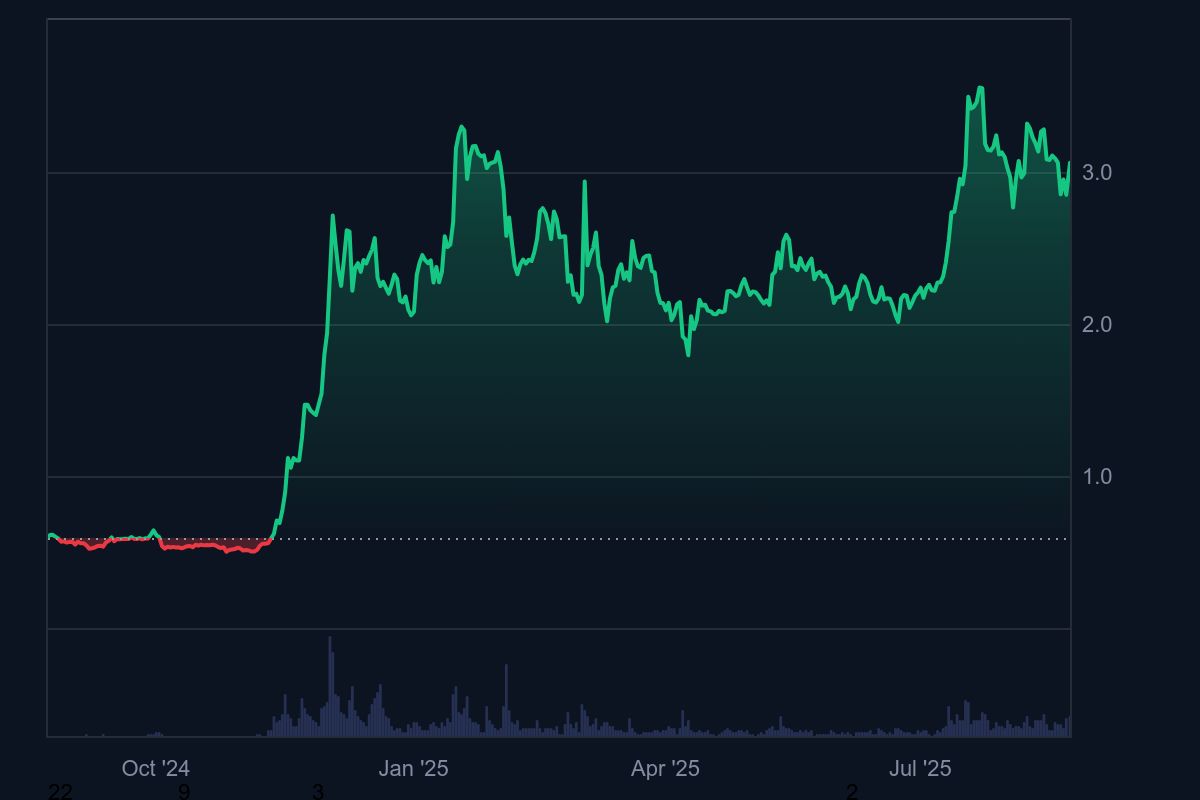
According to CoinCodex projections, XRP could range between $10.10 and $10.64 by 2030, averaging $10.30 across the year. This outlook suggests a potential ROI of more than 248%, reinforcing the bullish case for long-term holders. Importantly, the price prediction points to stability, with smaller fluctuations compared to its early trading history, an indicator of XRP’s possible evolution into a mature digital asset, much like Bitcoin’s path in previous cycles.
CoinCodex’s monthly forecast shows XRP beginning 2030 around $10.16 in January and ending the year near $10.55 in December, with slight fluctuations in between. The tight trading range – from a minimum of $10.10 in January to a maximum of $10.64 in December, indicates that XRP could maintain consistent growth with fewer speculative spikes. February and March show some of the strongest momentum, with ROI projections above 245%, while the year closes with December matching the annual peak at 248% ROI. This steadiness highlights a possible transition from volatility-driven rallies toward sustainable value appreciation.

Several forces support the bullish scenario:
Bitcoin continues to dominate the market as the premier store of value, often compared to digital gold thanks to its scarcity and unmatched institutional recognition. Its role is primarily one of preservation, holding wealth in a decentralized, inflation-resistant network. Yet, while Bitcoin has become the go-to asset for long-term investors, it is less efficient when it comes to fast, low-cost global payments. Transaction speeds, scalability concerns, and fees remain challenges for BTC’s everyday utility.
[reaadmore id=”107520″]
This is where XRP positions itself differently. Ripple has spent years building out RippleNet and fostering partnerships with banks, fintech firms, and remittance providers. The network’s focus is on settlement speed, interoperability, and liquidity bridging, giving XRP a real-world use case that goes beyond speculation. If XRP achieves the projected $10+ valuation by 2030, it won’t just reflect investor optimism but also the token’s adoption within global financial infrastructure.
Analysts increasingly frame the rivalry as “store of value vs. utility token” – Bitcoin securing wealth, and XRP enabling the frictionless transfer of that wealth. Should Ripple’s ecosystem continue to expand, XRP could emerge as the default settlement layer for digital value, potentially matching Bitcoin’s dominance in perception with dominance in usage.
With forecasts pointing to stability and nearly 250% ROI by 2030, XRP looks set to redefine its place in the crypto hierarchy. By that point, Ripple may not only be Bitcoin’s most serious rival, but also a transformative force in how money moves worldwide, bridging traditional finance and decentralized networks in a way Bitcoin was never designed to do.
The information provided in this article is for informational purposes only and does not constitute financial, investment, or trading advice. Coindoo.com does not endorse or recommend any specific investment strategy or cryptocurrency. Always conduct your own research and consult with a licensed financial advisor before making any investment decisions.
The post XRP Price Prediction 2030: Ripple Set to Challenge Bitcoin appeared first on Coindoo.