A couple of years ago, accepting crypto meant one of two options: hire a small army of blockchain engineers, or don’t bother. Neither felt great, one burned money you didn’t have, the other meant watching competitors move faster.
That’s changed. White-label crypto payment platforms have basically eaten the “build it yourself” option alive, and for good reason. Most businesses don’t actually want to be a blockchain company. They want to sell sneakers, process remittances, or run a gaming platform, and they’d like crypto checkout to just work.
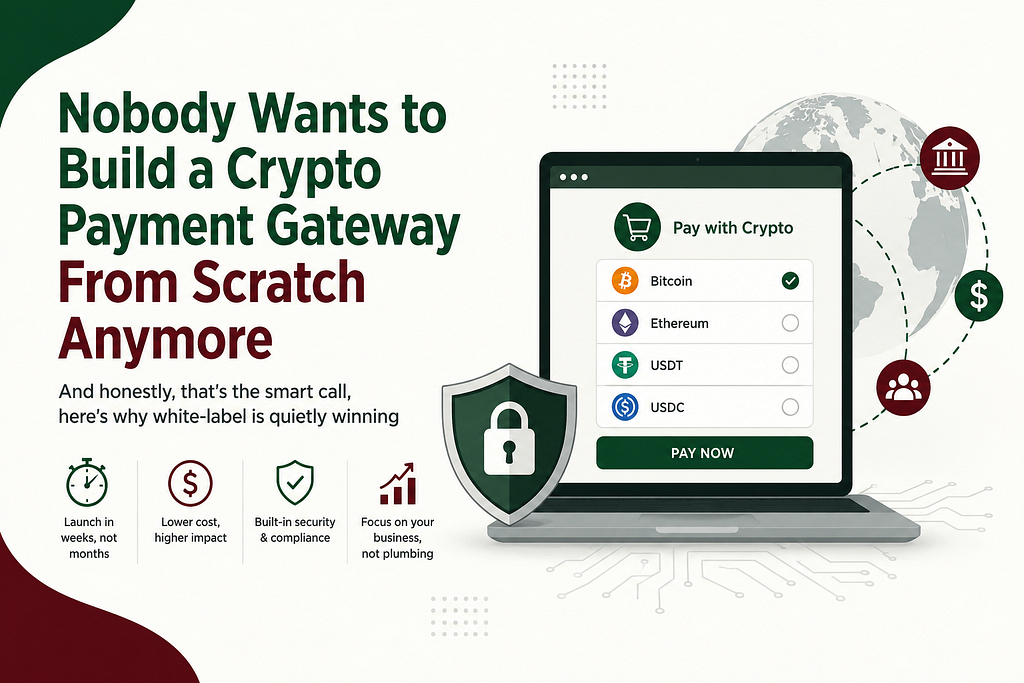
So what are these platforms, and is the hype justified?
A white-label solution is someone else’s finished payment infrastructure, wearing your logo. The provider has already built the hard parts wallet systems, blockchain integrations, security layers, compliance tooling and you plug it in, slap your branding on top, and launch it as if you built it yourself.
Under the hood, that usually means:
None of this is glamorous. It’s plumbing, the kind that takes most in-house teams over a year to build properly, which is the whole point.
Because building it yourself is a trap that looks cheaper than it is. Sure, you skip licensing fees. But now you’re hiring blockchain developers who understand five different networks, security auditors who catch the mistakes that cost other companies millions, and a compliance person tracking how rules shift by jurisdiction, all before you’ve processed a single real transaction.
White-label flips that math:
To be fair, white-label isn’t free or magic, you’re trading control for speed. For most companies, that trade is worth making. For a handful planning to become crypto infrastructure providers themselves, it isn’t.
It’s not just crypto exchanges anymore:
What ties them together: they want the upside of crypto rails without the years of engineering it usually demands.
This is where a lot of businesses get careless, and it shows up later usually during an outage or an audit. Worth checking before you sign anything:
None of this is exciting to check. But it’s the difference between a smooth launch and a very bad phone call six months in.
Crypto payments sit right where financial regulation and fast-moving technology collide, and that collision keeps shifting. A provider worth trusting offers jurisdiction-specific compliance tools, real transaction monitoring, clear data practices, and audits from someone other than themselves.
Here’s the part that trips people up: using a white-label provider doesn’t hand off your legal responsibility. It reduces the engineering burden, not the need for your own legal and compliance judgment. That distinction matters more than most sales decks let on.
Stablecoins are becoming the default for cross-border settlement, and providers are racing to make that instant and cheap. More of them are also bundling fiat on/off-ramps into the same dashboard, so a business handles crypto and traditional currency without switching tools.
Payment infrastructure is becoming modular. It’s no longer “build your own” versus “sit this one out”, there’s a real middle path now, and most businesses are choosing it.
Building trustworthy financial infrastructure from scratch is hard legally, technically, and in plain old maintenance terms. Renting that expertise and putting your name on it isn’t a shortcut so much as the obviously correct move, unless your actual business is running blockchain infrastructure.
The businesses that win here won’t have the most custom code sitting in a repo somewhere. They’ll be the ones that picked a solid partner, integrated without drama, and spent their energy on customers instead of blockchain nodes.
If you’re weighing crypto payments right now, the real question isn’t build versus buy. It’s which partner fits your compliance needs, your customers, and how fast you need to move.
Nobody Wants to Build a Crypto Payment Gateway From Scratch Anymore was originally published in Coinmonks on Medium, where people are continuing the conversation by highlighting and responding to this story.





