As MiCA’s final enforcement deadline arrived on July 1, 2026, the numbers told a striking story: only around 210 crypto firms out of an estimated 3,000 that had previously operated across the EU had secured full authorization.
At the same time, spot crypto ETF trading volume crossed $2 trillion in early 2026, and a late-2025 survey of institutional investors found that most expect to double their digital asset exposure within three years. The compliance threshold has hardened. The capital is here. The question European financial institutions are now urgently asking is not whether to participate — it’s who will build the operational backbone that makes participation possible at scale.
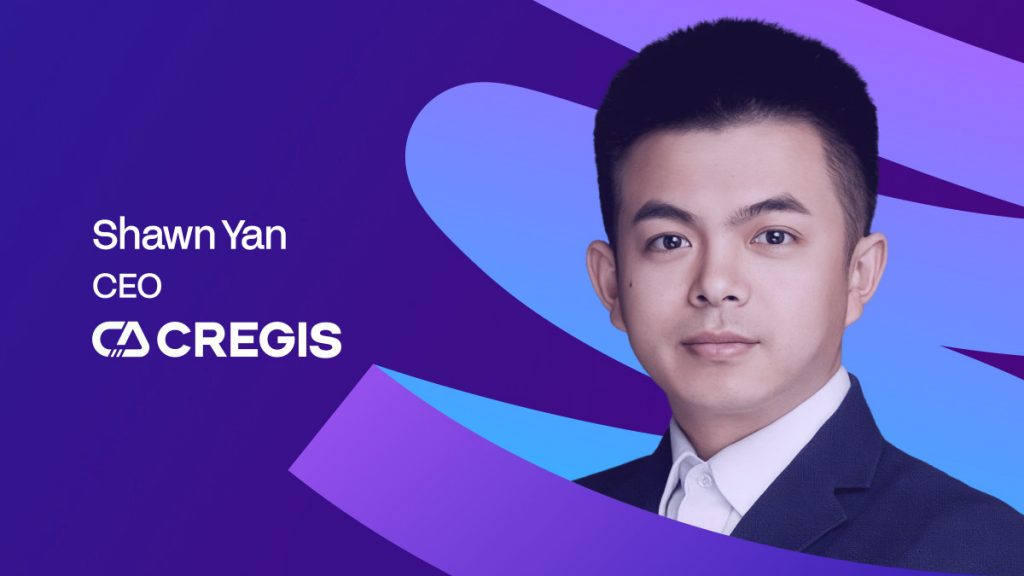
That’s exactly the problem Shawn Yan, founder and CEO of Cregis, has spent the last nine years solving — building the enterprise plumbing that lets banks, brokers, and payment firms move and safeguard digital assets without reinventing the wheel each time.
Cregis now serves over 4,000 clients across 50+ countries. We sat down with Shawn Yan to talk about what European institutions want as the market turns practical, and why the firms winning that phase rarely sprint hardest.
When MiCA’s transition period closed on July 1, what did that moment represent from an operational standpoint?
Moments like that read differently from the inside than they do in the media. For us, MiCA is an operational milestone as much as a legal one. Clearer rules don’t remove the need for infrastructure — they make it more visible. Plenty of institutions have parked their plans because the path ahead felt undefined, and nobody builds serious infrastructure on shifting ground.
If the framework firms up, those teams quit debating whether to participate, and ask questions about custody, approval authority, and how every movement gets recorded and reviewed. What changed after July 1 wasn’t that everyone suddenly wanted to enter the market. What changed was the nature of the conversations. They shifted from “Should we participate?” to “How should we build this properly?” To me, that was the real significance of the transition. It marked the point where institutions stopped treating digital assets as an experiment and started thinking about them as an operational capability.
Where do institutions typically run into trouble with asset segregation and auditability, and how does Cregis address it?
Segregation and auditability look tidy on paper, and they get messy the moment several teams touch the same assets. In our experience, the technology itself usually isn’t the hardest part. Trouble starts when finance, operations, treasury, and compliance all need different access to one wallet setup that was never built for it. Institutions hit the real challenge when coordinating approvals, treasury movements, and settlement across several teams. Money from different business lines ends up mixed together, working out what belongs to whom turns into guesswork, and someone loses hours every week matching transactions by hand.
That’s exactly where we spend most of our time with customers. Master and sub-account structures keep different business lines separated, deposit addresses can be mapped to individual users for automatic reconciliation, and role-based approval workflows make sure funds move according to policy rather than individual discretion. The goal isn’t simply to add more controls. It’s to design workflows where the compliant way is also the easiest way to operate.
What does MPC wallet infrastructure actually change about how an institution manages risk and demonstrates custody control?
MPC itself isn’t new technology. It’s a mature approach that’s widely used to improve how signing authority is managed. A lot of people describe it primarily as a security technology, but I actually think its bigger contribution is governance. Instead of concentrating control in a single private key, it distributes signing authority so no individual can move assets on their own. That’s an important improvement because it removes a single point of operational failure.
At the same time, MPC isn’t a security silver bullet. The overall security of a custody system still depends on the broader architecture — how keys are protected, how approvals are managed, how systems are isolated, and how operational risks are controlled. Those are different questions from how signatures are generated.
That’s why we don’t think institutions are choosing between MPC and something else. They’re building an operating model they can trust. For many enterprises, our MPC-based WaaS platform provides the right balance of governance, security, and operational efficiency. But organizations such as banks, listed companies, or institutions with stricter internal controls often need another layer of governance. That’s where Cregis Trust Vault comes in. It adds policy enforcement, approval workflows, and operational controls above the wallet layer, giving institutions a framework that’s better suited to auditors, regulators, and internal risk teams.
Ultimately, what matters isn’t whether an institution uses MPC. It’s whether the entire custody architecture matches the level of governance and assurance the business requires. Different organizations have different requirements, but the objective is always the same: no individual should be able to move client assets alone, every action should be governed by policy, and every decision should be fully traceable.
The public conversation focuses on exchanges, but FX brokers and mid-market fintechs are moving faster under MiCA. What’s driving that?
Exchanges make for the obvious story because they’re visibly crypto-native, but the quieter movers often have another commercial reason. FX brokers’ clients across the Middle East, Southeast Asia, and Latin America now expect stablecoin deposits and withdrawals as standard, because those rails beat traditional banking for cross-border flows. A wire that takes two days and a percentage cut is hard to justify when a client’s next-door competitor settles in minutes. A broker that can’t offer it loses accounts, so this becomes a revenue question long before it’s a technology one.
Payment service providers (PSPs) and mid-market fintechs feel a similar pressure because moving money is already at the center of their business. Technology has rarely been their competitive advantage. What they’re looking for is infrastructure they can deploy quickly, integrate with existing operations, and trust to run reliably as volumes grow.
What does a forex broker need from an infrastructure provider that a crypto exchange doesn’t?
On the surface, they want the same things — assets moving securely across borders, fast. Underneath, their starting points could hardly be more different. Crypto exchanges build nearly everything themselves; the matching engine, wallet layer, and deposit rails are the product, so they want raw performance and deep control at huge scale.
Brokers grew up in the opposite tradition, leaning on distribution, client acquisition, and risk handling, with their platforms bought from specialists. So, what a broker needs is infrastructure it can wire into an existing CRM, with order matching and reconciliation built in, plus governance it can hand to finance and operations. That’s why I often say: give an exchange a black box and they’ll probably reject it. Give a broker something that requires building everything from scratch, and they’ll probably reject that too. They need infrastructure that’s powerful, but also practical for the way their organizations operate.
Have you observed common operational patterns in how markets move from early experimentation to structured institutional adoption?
Early on, most institutions try the lightest setup possible. They connect to a third-party provider, get deposits and withdrawals live, and that’s usually enough for the first stage of growth. At that point, speed matters more than optimization.
Then volume climbs, and three pressures show up in the same order every time. Percentage-based fees become more noticeable, firms become less comfortable leaving larger balances with third parties, and clients who expect near-instant settlement become less tolerant of delays. That’s usually the point where the conversation shifts from “How do we access digital assets?” to “How do we operate this ourselves?” We’ve watched this pattern repeat across multiple markets, whether in Asia, the Middle East, or more recently in Europe. Once institutions reach a certain scale, they almost always start thinking about owning more of the wallet layer, while bringing approvals, treasury management, and operational controls in-house. We’ve seen this pattern often enough that we can usually tell where a client is in their growth journey just from the questions they’re asking.
Where does Europe stand relative to more mature markets? What can it learn from how adoption unfolded elsewhere?
Europe isn’t behind in terms of sophistication. If anything, European institutions tend to be among the most disciplined when it comes to governance and operational planning. The difference is that parts of Asia and the Middle East entered this phase earlier, so they’ve accumulated more hands-on experience running digital asset infrastructure at scale.
That actually gives Europe an advantage. Institutions don’t have to learn every lesson firsthand — they can learn from markets that moved earlier. The organizations that transition most smoothly are usually the ones that align payments, operations, compliance, and finance around a shared objective from the beginning, whether that’s improving efficiency, reducing costs, or gaining more operational control.
We’ve seen customers approach that transition very successfully when they treat it as an operational transformation rather than a technology deployment.
What has nine years of building through regulatory transitions changed the way Cregis develops its products?
Nine years has taught us to be skeptical of product roadmaps that begin in a meeting room instead of with real operational problems. Almost everything we’ve built started with a customer challenge, but solving a problem for one customer doesn’t automatically mean it should become a product.
The bigger question we ask ourselves is whether that problem reflects where the market is heading. If we see the same operational challenge emerging across different types of institutions or different regions, that’s usually a sign we’re looking at an industry shift rather than a one-off request.
That’s how our platform has evolved over time. Wallet infrastructure came first. Fund orchestration followed as institutions needed better control across multiple chains, and custody capabilities expanded as governance requirements became more demanding. Each layer wasn’t built because a customer asked for a feature — it was built because we believed those capabilities would eventually become fundamental infrastructure for the industry.
I often describe it as following momentum rather than simply reacting to demand. A bank and a broker may look completely different as businesses, but underneath they’re solving many of the same operational problems — secure asset control, reliable fund movement, and clear governance. Our job is to identify those common patterns early and build reusable infrastructure before they become standard expectations.
In the long run, the products that last aren’t the ones built for individual customer requests. They’re the ones built around structural changes in how the industry operates.
Where does institutional digital asset infrastructure go from here?
I think we’re moving beyond the stage where digital assets are treated as a standalone product or feature. They’re increasingly becoming part of the financial infrastructure institutions operate every day.
Once deposits and withdrawals run smoothly, needs grow in two directions at once. One is deeper governance — richer controls, cleaner reporting, monitoring that stands up as volumes and scrutiny climb. The other is treasury sophistication. Firms hold real digital asset balances as a structural part of the business now, and they want automated sweeping, visibility across entities and chains, and smart settlement routing.
Momentum sits in the areas tied to genuine economic activity, because those fix inefficiencies people feel every day. Money flows toward whatever is faster, safer, or cheaper, much like water finding the easiest way down. Our job is to keep clearing friction from that path.
The post ‘How Should We Build This Properly?’ Cregis CEO Shawn Yan On MiCA, Institutional Infrastructure, And The Firms That Win The Practical Phase appeared first on Metaverse Post.





