As Operation Epic Fury enters its third week, the global financial landscape is being rewritten in real-time. For decades, the "War Playbook" was simple: sell stocks, buy Gold, and hide in U.S. Treasuries.
However, as the conflict between the U.S. and Iran escalates in March 2026, that playbook has been set on fire. While traditional markets face a staggering $5 trillion evaporation, Bitcoin ($BTC) and the broader crypto ecosystem are doing something unprecedented: they are holding the line.
In 2026, the "War Discount" that usually drags down risk assets is failing to suppress the Bitcoin price. Institutional investors are no longer viewing BTC as a "risk-on" tech trade, but as a "risk-off" sovereign asset. While the S&P 500 has plummeted since the February 28th strikes, Spot Bitcoin ETFs recorded over $760 million in net inflows this week alone.
The numbers coming out of Wall Street and the London Bullion Market this week are nothing short of apocalyptic. The massive capital flight is no longer rotating into traditional safety nets.
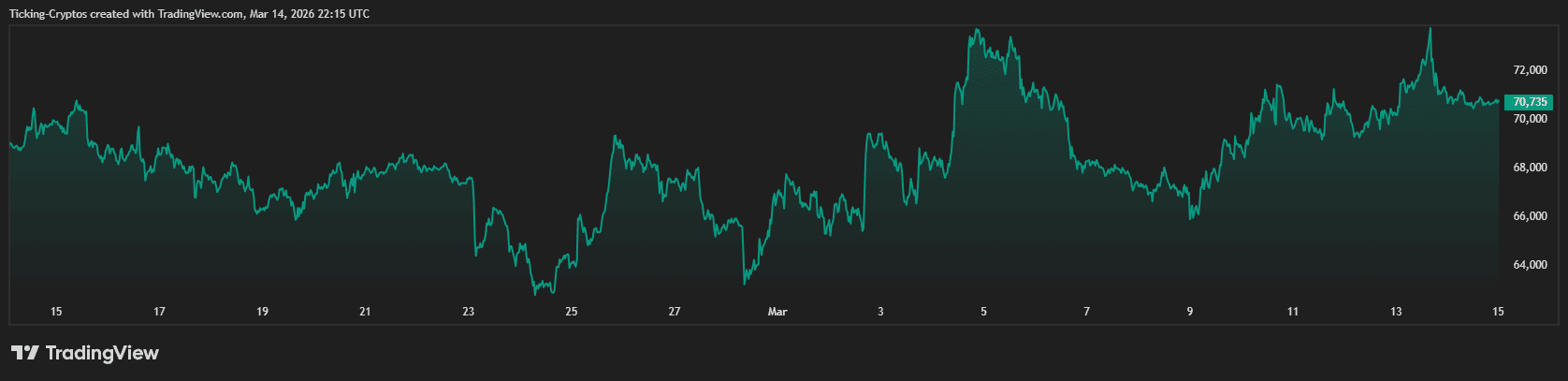
While the S&P 500 and Gold have cratered, Bitcoin (BTC) has shown remarkable resilience. After a brief "flash crash" to $62,400 on Day 1 of the invasion, BTC has surged back, currently consolidating firmly above $70,000.
It’s not just Bitcoin. We are seeing a "Flight to Utility" across the board as users seek refuge from failing crypto exchanges and traditional banking infrastructures.
Note on Self-Custody: During times of global instability, reliance on centralized platforms can be risky. Many investors are migrating their assets to verified hardware wallets to ensure 24/7 access to their funds regardless of the geopolitical climate.
The image of the "$5 Trillion Loss" isn't a warning for crypto—it’s a eulogy for the old financial system. In 2026, the market has rendered its verdict: In times of kinetic war, digital assets provide a level of sovereignty and portability that physical gold simply cannot match. The "Digital Gold" thesis is no longer a theory; we are watching its global implementation in real-time.





