Aster DEX is making its most aggressive deflationary move yet. The protocol has activated a sweeping buyback and burn upgrade starting today at 12:00 PM UTC, committing 99% of its daily platform fees to automated ASTER repurchases while simultaneously burning an equivalent amount from its reserve.
The combined effect creates a 198% total capital commitment against circulating supply and the market has already responded, with ASTER jumping 14% in the hours following the announcement.
The goal is unambiguous: take the current total supply of 8,000,000,000 ASTER and grind it down to a hard terminal floor of 3,000,000,000. That is a 62.5% reduction from where the supply sits today, and the protocol is not relying on one-off events to get there, it is baking the burn directly into the fee architecture so it runs continuously and automatically.
The mechanics behind the upgrade are straightforward but deliberately aggressive. According to the official Aster announcement, 99% of all daily platform fees are routed into automated TWAP buybacks, timed weight average price purchases that spread execution across the day to minimize slippage and market impact. Then, separately but simultaneously, the protocol burns an amount of ASTER from its reserve that equals the buyback one for one.
One dollar of fees generates a buyback. That buyback is then matched with an equivalent burn from reserve. The result is a 198% total commitment, nearly double the fee revenue, being directed at reducing supply every single day the platform generates activity. The buyback wallet address is public and verifiable on-chain at [0xa0edBaBcb48034e368de286b49F9603C7AfA1b60], meaning anyone can monitor every transaction in real time without relying on team disclosures.
The ASTER bought back through the fee mechanism does not simply disappear. It flows directly to stakers, added to the Loyalty Rewards pool each epoch on top of the existing 300,000 ASTER base reward. Distribution is weighted by veASTER lock weight, meaning the longer and larger a user’s lock commitment, the greater their share of the buyback rewards.
This dual architecture is worth understanding clearly. The bought-back tokens go to stakers as yield. The burned tokens come from team allocation. Both mechanisms run in parallel, which means the protocol is simultaneously rewarding its most committed participants while reducing the team’s share of supply. The burn does not touch staker holdings, it targets the allocation that typically creates the most long-term sell pressure in token economies.
On top of the fee-driven mechanism, Aster has embedded an additional buyback trigger directly into its listing process. Every permissionless listing on Aster Spot carries a 50,000 USDT fee, and that fee goes entirely toward buying back ASTER as extra staking rewards, outside the standard 99% fee allocation.
This turns every new project that chooses to list on Aster Spot into a direct contributor to ASTER’s deflationary momentum. As the platform grows and listing activity increases, the supplemental buyback pressure scales with it. It is a structurally clever design choice that aligns platform growth with token value accrual in a way that does not depend on the team making discretionary decisions.
The burn targets a hard floor of 3,000,000,000 ASTER, a number that represents a significant structural shift from the 8,000,000,000 total supply the token launched with. The protocol describes this as a transition toward a “negative net emission” model, meaning the supply is not merely growing slowly, it is actively shrinking on a daily basis until it hits the floor.
Reaching that floor through fee-driven burns means the timeline depends directly on platform activity. Higher trading volume and more listings accelerate the burn. Lower activity slows it. This creates an alignment between protocol usage and supply reduction that many tokenomics models attempt but few execute with this level of mechanical commitment.
Aster(@Aster_DEX)がトークノミクスの大幅変更を発表
今後、Asterの日次プラットフォーム手数料の99%が $ASTER の買い戻しに使われ、さらに買い戻しと同量の $ASTER がリザーブからBurnされる仕組みに。
つまり、
・手数料の99%で市場からBuyback
・同量のASTERをReserve Burn… https://t.co/1uM0RBpm2h pic.twitter.com/SHhsMUMV3b— ADMEN | CryptoTimes (@admen_vc_2) June 17, 2026
The burn sequence also starts from team allocation first, a sequencing decision that protects circulating holders from having their positions diluted during the reduction process and signals a willingness from the team to absorb the initial supply compression themselves.
Markets did not wait for the mechanics to play out before reacting. a sharp 14% price jump in ASTER following the announcement, a move that suggests the market is treating this upgrade as a genuine structural catalyst rather than a routine tokenomics update.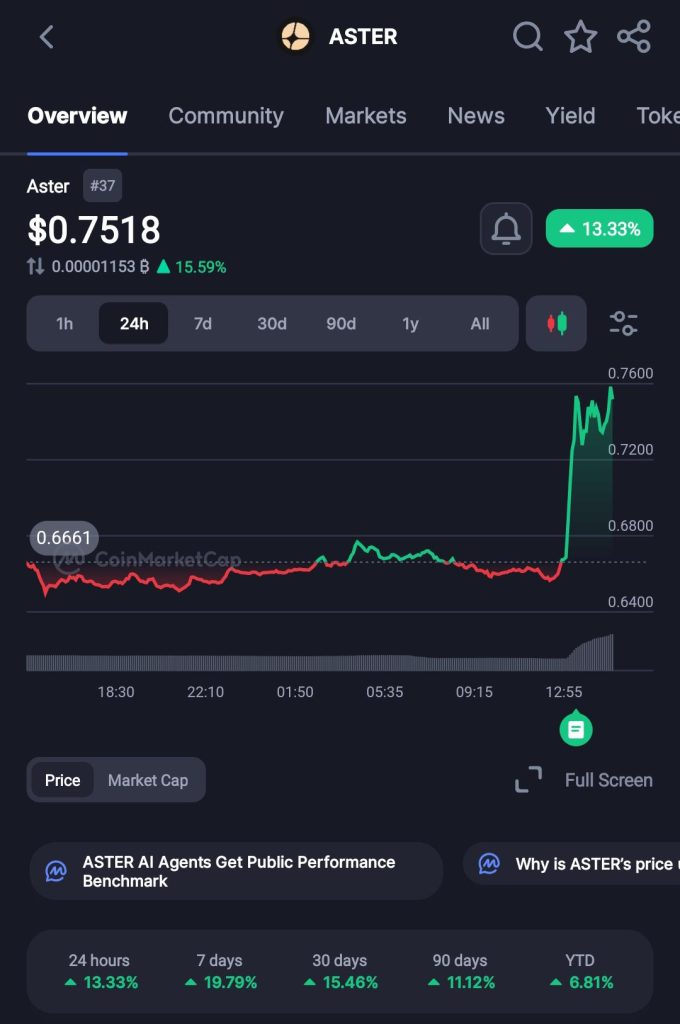
Whether that initial spike holds or fades will depend on how quickly the buyback and burn mechanism demonstrates measurable on-chain results. The transparency built into the design, public wallet, on-chain settlement, verifiable burns, gives the community the tools to track progress in real time. That accountability layer matters in a space where tokenomics promises frequently outpace delivery.
For now, Aster DEX has made its intentions clear. The protocol is betting that a daily, automated, verifiable commitment to supply reduction will do more for long-term ASTER value than any one-time event or discretionary buyback program ever could. The 14% jump on day one suggests the market, at least for the moment, is inclined to agree.
Disclosure: This is not trading or investment advice. Always do your research before buying any cryptocurrency or investing in any services.
Follow us on Twitter @nulltxnews to stay updated with the latest Crypto, NFT, AI, Cybersecurity, Distributed Computing, and Metaverse news!





