Binance and KuCoin are global cryptocurrency exchanges, offering a wide range of services for both beginners and experienced traders. These platforms support hundreds of digital assets and are known for their low trading fees, advanced trading tools, diverse earning features, crypto loans, and extensive products for institutional traders.
Given their similarities, we will compare Binance vs KuCoin based on several key features, including automated trading bots, web3 wallets, earning opportunities, security, and their respective token launch platforms (Binance Launchpad & Launchpool and KuCoin LaunchHub).
In addition, we’ll look at their transaction fees, available cryptocurrencies, pros and cons, and supported payment methods. And by the end of this Binance vs KuCoin review, you’ll be able to determine which of the two cryptocurrency exchanges is best for you.
The key differences between Binance and KuCoin are their key features, security and regulatory level, user base, liquidity, KYC requirements, and institutional products. Binance is suitable for a wide range of users, including complete beginners, advanced traders, and institutional traders, due to its robust liquidity, regulatory footprint in various countries, and comprehensive product offerings.
On the other hand, KuCoin is known for its deep selection of altcoins and access to early-stage or low-cap tokens that may not be available on larger exchanges like Binance. It also offers features like trading bots, KuCoin lending, a launch platform, and community-based programs such as “KuCoin Earn” and GemVote.
That said, the table below compares Binance and KuCoin to help you decide which might be best for you at a glance.
| Exchange | Binance | KuCoin |
| Best For | Experienced traders who need deep liquidity, advanced tools, and low fees. | Experienced traders who want access to new and not-yet-mainstream coins. |
| Founded | 2017 | 2017 |
| Founder | Changpeng Zhao | Michael Gan |
| Headquarters | Malta | Mahé, Seychelles |
| Supported Cryptocurrencies | 430+ | 750+ |
| Key Features | Trading bots, web3 wallet, earn, Binance NFT, and Binance Launchpad & Launchpool. | Trading bots, web3 wallet, LaunchHub, KuCoin Earn, and KuCard. |
| Trading Fees | 0.1% makers/takers for spot trading) and 0.02% / 0.05% maker and taker fees, respectively. | 0.1% makers/takers for spot and 0.02% / 0.05% maker and taker fees, respectively. |
| Web3 Wallet | Yes | Yes |
| NFT Marketplace | Yes | Yes |
| Trading Bot | Yes | Yes |
| Security | SAFU, two-factor authentication (2FA), withdrawal address whitelisting, cold storage of crypto, multi-signature wallets, and a bug bounty program. | Cold storage, Two-Factor Authentication, anti-phishing codes, and an insurance fund. |
| KYC Requirements | Mandatory | Mandatory (Basic KYC) |
| P2P Trading | Yes | Yes |
| Accepted Payment Methods | Crypto, bank deposits, debit/credit cards, Apple Pay, Google Pay, and third-party payment processors. | Crypto, bank transfer, credit cards, and SEPA bank transfers. |
| Trading Volume (Subject to Market Changes) | $217 billion | $1.2 billion |
| Available in the US | No | No |
Register a new Binance account and receive a $100 welcome bonus and a 10% additional fee discount
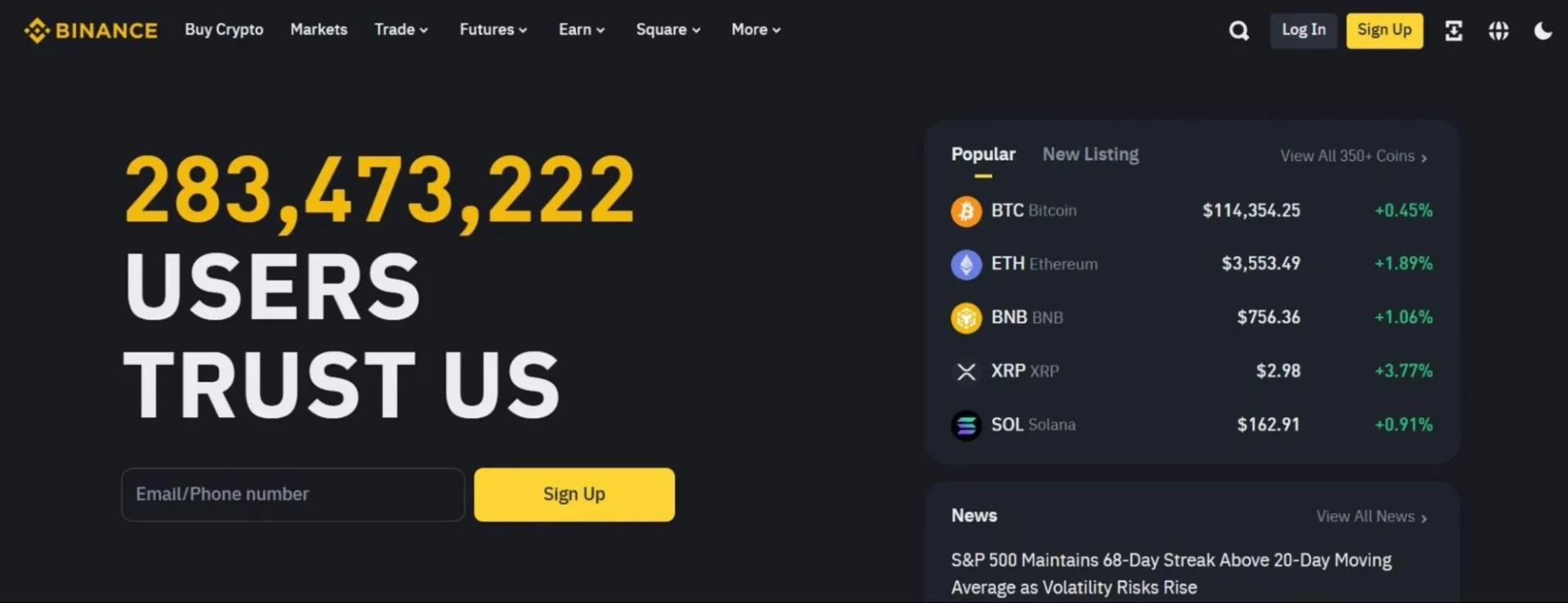
Binance is the largest cryptocurrency exchange by trading volume and one of the most popular platforms for buying, selling, and trading cryptocurrencies. The exchange platform has an in-app web3 portal, a robust DeFi ecosystem, and advanced trading features such as spot trading, margin, futures trading, staking, and liquidity farming.
Binance crypto exchange is popular for low trading fees with a discount for BNB holders, high liquidity, support for a wide range of cryptocurrencies, and extensive products and services. Although the exchange faces regulatory restrictions in some countries, including the United States, Binance has a separate platform for customers in the U.S called Binance U.S to comply with local regulations.
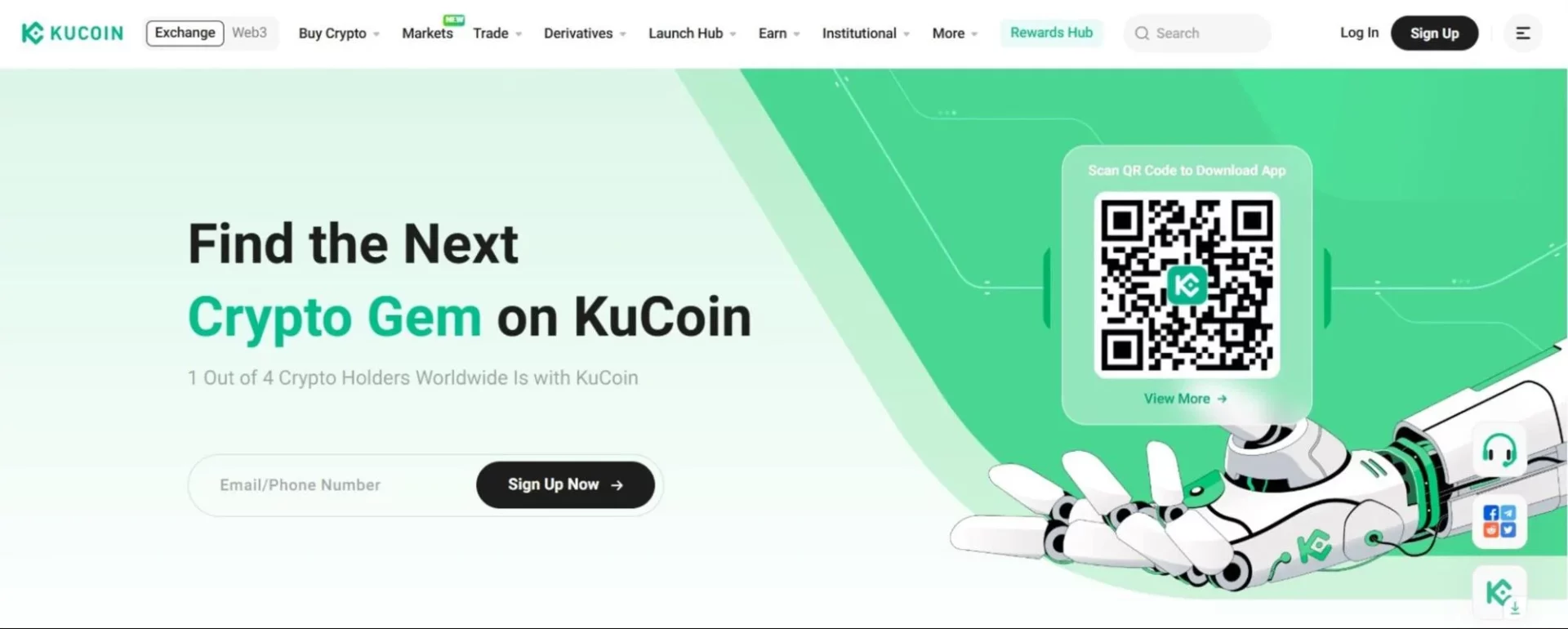
KuCoin is a global cryptocurrency exchange that offers a comprehensive set of trading options, such as spot trading, margin trading, futures trading, options trading, and peer-to-peer (P2P) fiat trading. The trading platform is often referred to as the “People’s Exchange” due to its user-friendly approach and support for a vast selection of altcoins, including listing new crypto assets before they are available on other exchanges.
KuCoin is suitable for both beginners and advanced traders as it offers low transaction fees with discounts for KCS holders, advanced automated trading bots, a web3 wallet, and extensive staking services that allow users to earn rewards from their crypto holdings. Like Binance, KuCoin supports a broad geographic user base across more than 200 countries, but does not offer its services to traders in the US due to regulatory reasons.

The fees of Binance and KuCoin include crypto trading fees, deposit and withdrawal fees, staking fees, and futures fees.
Binance and KuCoin have a tiered fee structure that applies to spot and margin trading pairs. Both Binance and KuCoin offer discounts for traders holding their native tokens, BNB for Binance and KCS for KuCoin Exchange. Here is a rundown of the fees spot traders should expect to pay on both exchanges:
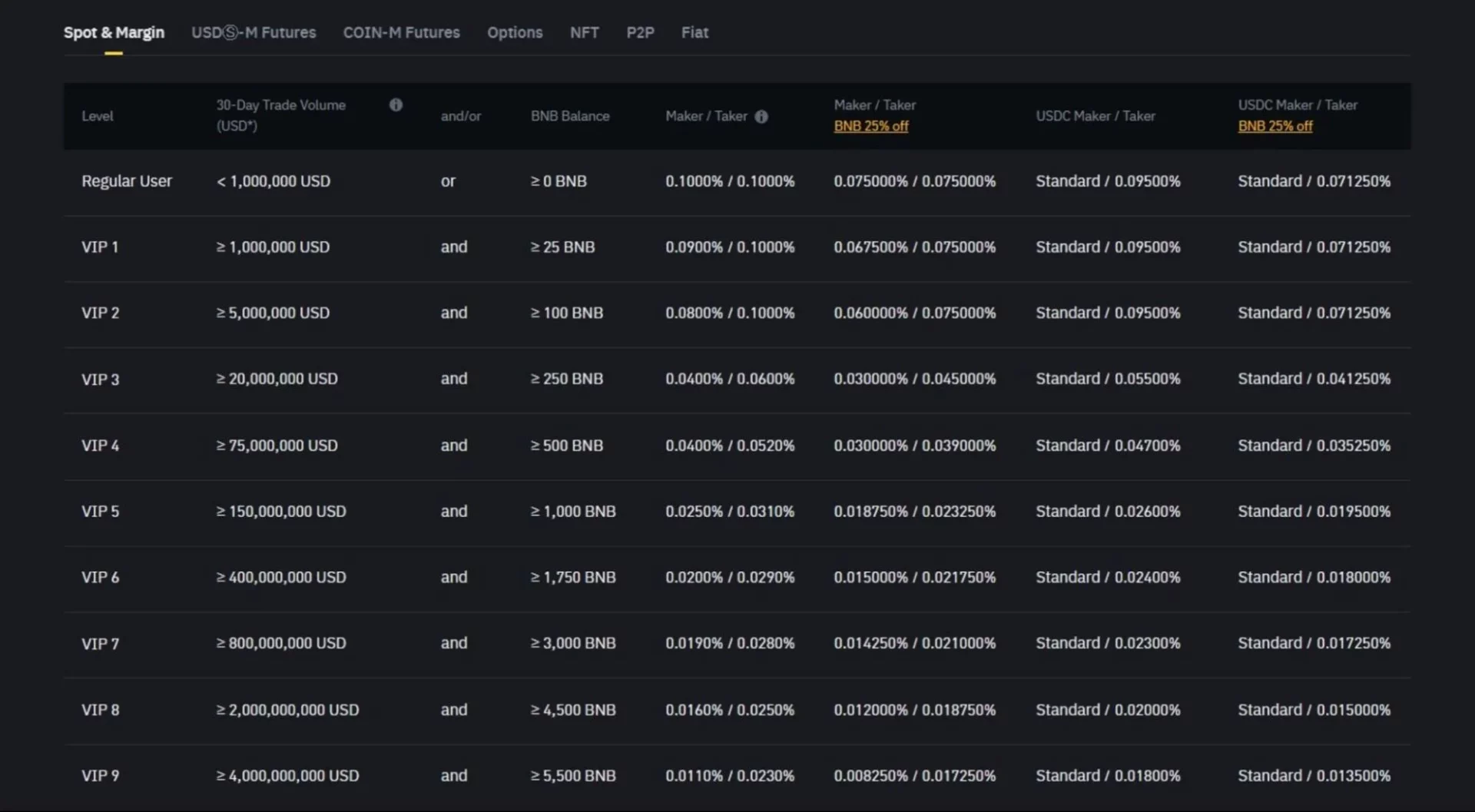
Binance spot and margin fees are 0.10% for both makers and takers. Traders holding or using Binance Coin (BNB) to pay transaction fees receive a 25% discount, reducing the fee to 0.075%. Traders with higher 30-day trading volume qualify for an additional discount on fees.
KuCoin charges a base fee of 0.10% for both makers and takers on spot and margin trades. KuCoin native token (KCS) holders receive a 20% discount, lowering the fee to 0.08%. The exchange platform also offers a tiered VIP system, based on 30-day trading volume and KCS holdings, which reduces costs to as low as 0.005% for makers and 0.020% for taker fees.
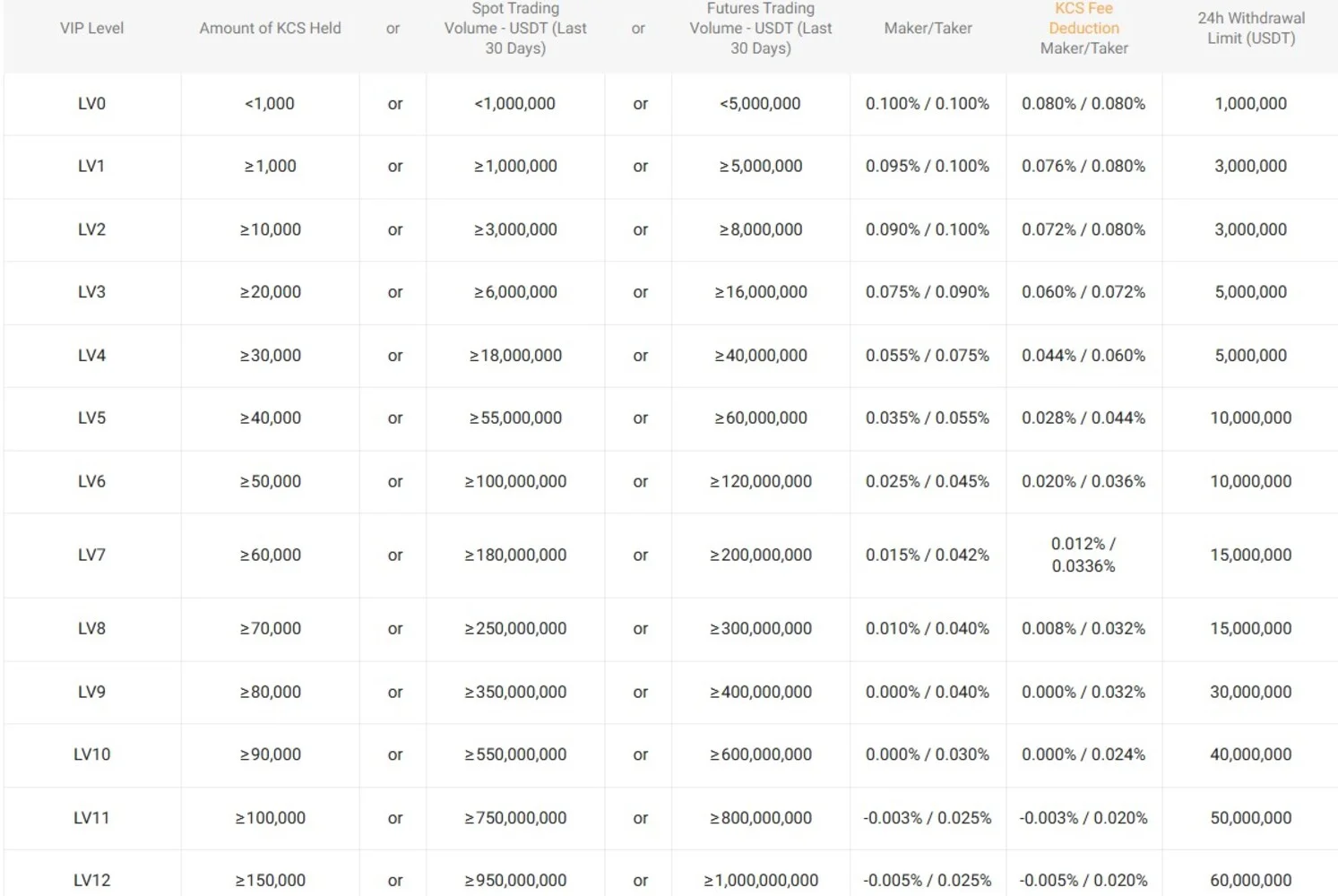
Open a new account on KuCoin and receive a 100 USDT welcome bonus to kickstart your trading journey.
KuCoin and Binance deposit and withdrawal fees for crypto and fiat transactions are highlighted below
KuCoin Deposit Fees
KuCoin Fees (Withdrawal)
Binance Deposit Fees
Binance Withdrawal Fees
Cryptocurrency Withdrawals: Binance charges a flat fee for each crypto withdrawal. The cost depends on the token and blockchain network, and it can change based on network congestion. Examples:
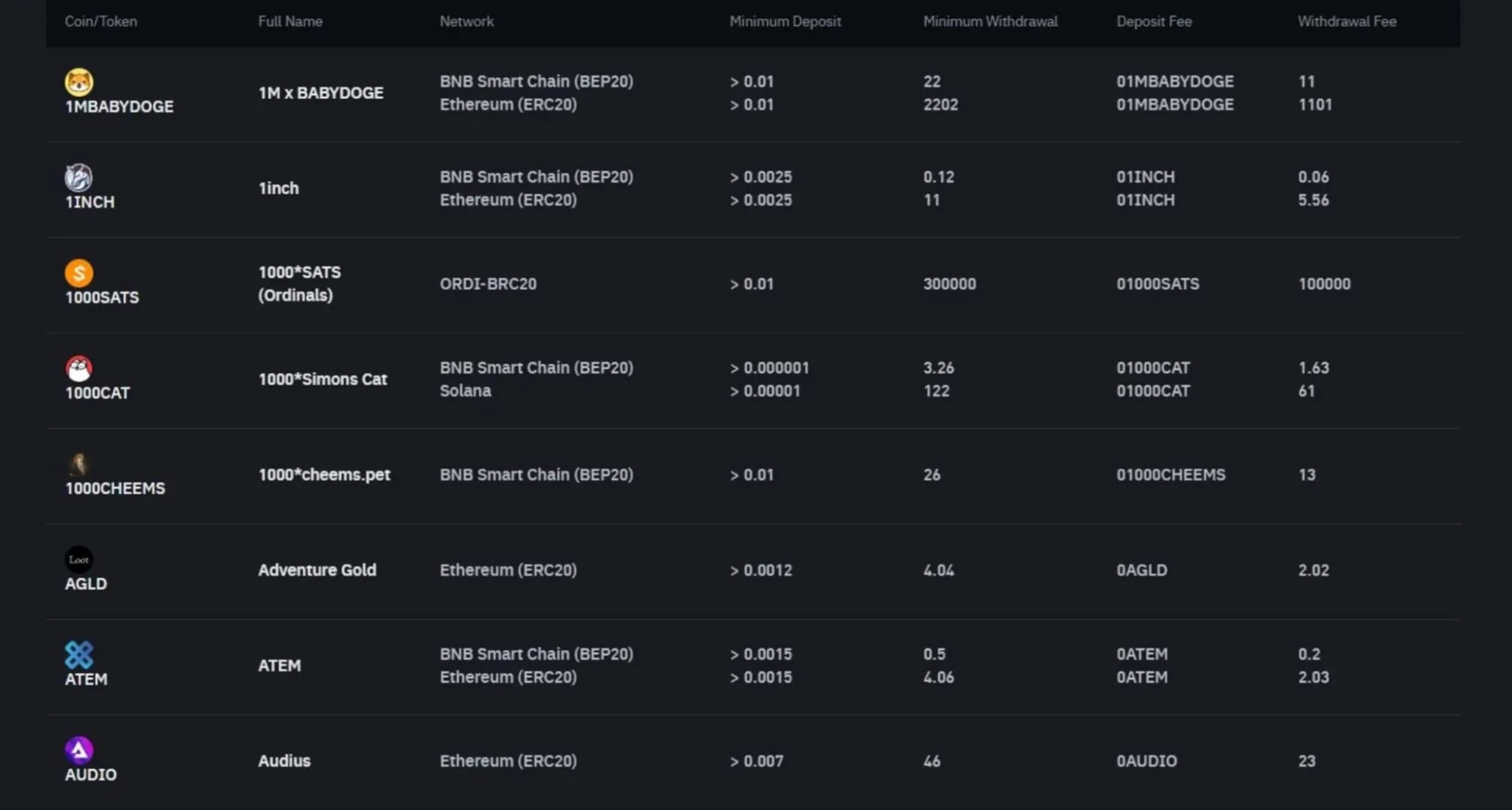
Fiat Withdrawals: Binance offers several options, with fees varying by payment method and currency, ranging from 0.1% to 1%. Please check the withdrawal page for the exact fees you are to pay.
Binance charges a service fee for staking, which varies by coin (ETH and SOL), but it is generally around 10% of the staking rewards as a commission for managing the staking process. This fee is deducted from the staking rewards that Binance traders earn.
Aside from SOL and ETH staking, Binance also offers Soft Staking, which allows traders to earn daily rewards by holding selected crypto assets in their spot account. Fortunately, you do not need to pay any additional fees for participating in Soft Staking.
Likewise, KuCoin also charges a service fee for staking, usually in the range of 10% to 20% of the staking rewards, depending on the coin. KuCoin staking options comprise soft staking and locked staking. Soft staking on KuCoin lets users earn rewards without locking their assets. In contrast, locked staking requires traders to commit funds for predetermined periods ranging from 3 to 90 days, with higher annual percentage yields (APYs) in return.
For futures contracts, KuCoin charges 0.02% for makers and 0.06% for takers. Similar to spot trading, fees decrease as users climb the VIP levels. At the top VIP tier, maker fees can go as low as -0.008% while taker fees can be reduced to 0.025%. Unlike Binance, KuCoin does not offer an additional discount for paying futures fees with its native token (KCS).
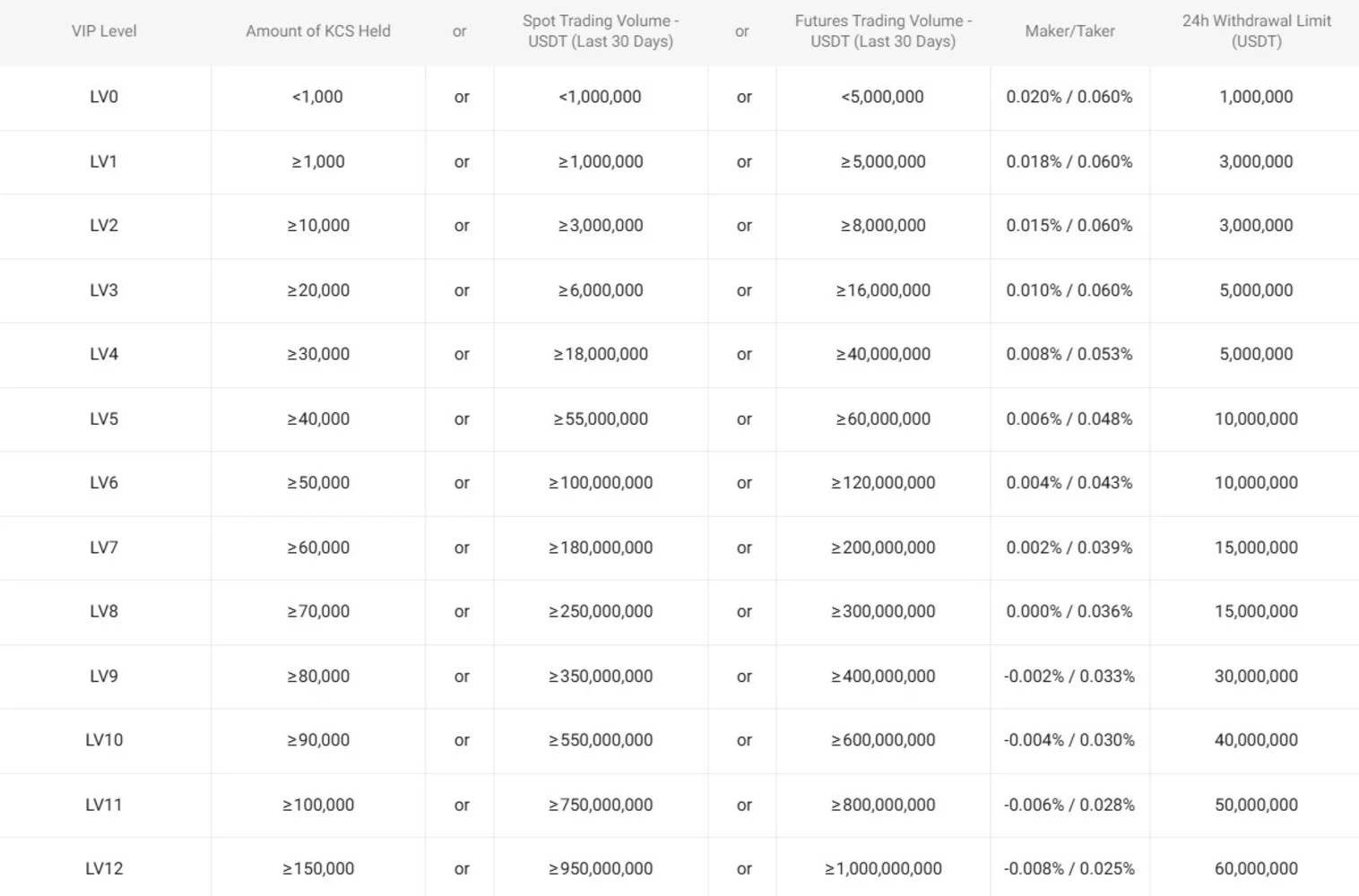
Meanwhile, for USD-M and COIN-M Futures contracts on Binance, regular users pay 0.02% for maker fees and 0.05% for taker fees. Traders with higher trading volume enjoy lower costs, with VIP 9 users paying 0% maker and 0.017% taker fees. Additionally, holding BNB can help you reduce Binance fees by 10%.
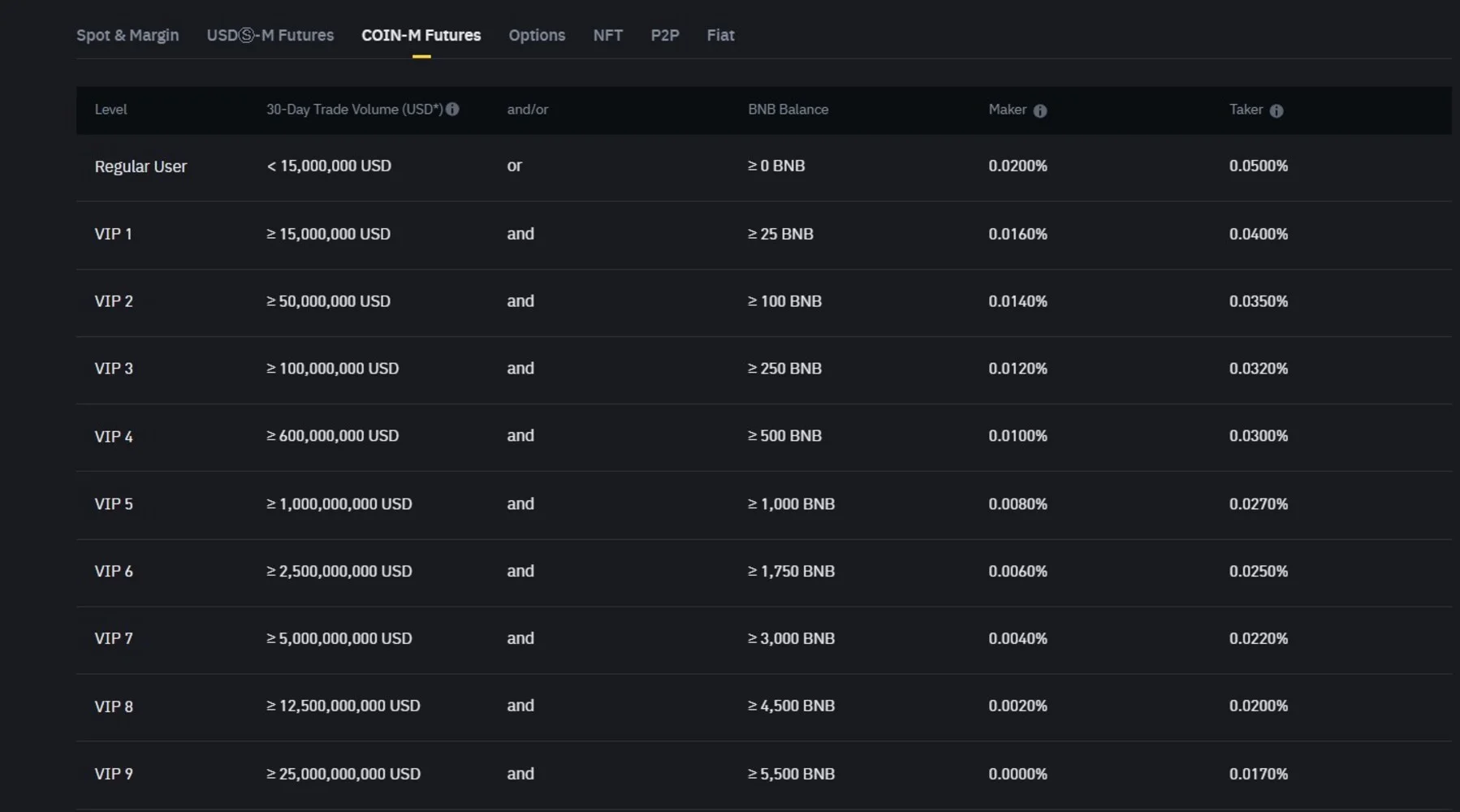
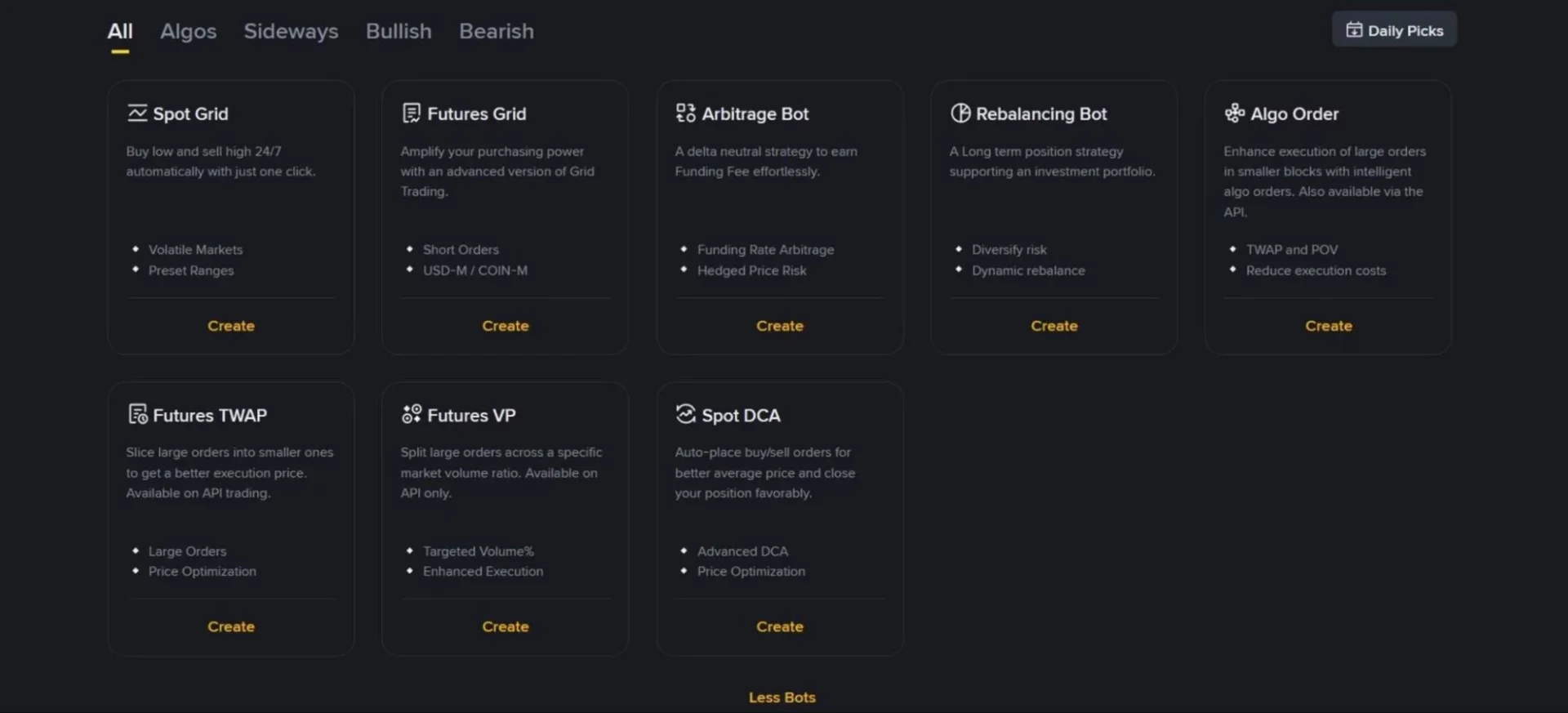
The best features of Binance include trading bots, Binance Web3 wallet, Earn, Binance NFT, and Binance Launchpad & Launchpool.
Binance has built-in bots that automate your trades based on preset strategies. Binance offers eight trading bots, including grid bots (purchase crypto at low prices and sell high) and DCA (dollar-cost averaging), which enable you to automatically place buy/sell orders for a better average price. It also supports third-party API integrations, making automation easier and more accessible for beginners and advanced traders.
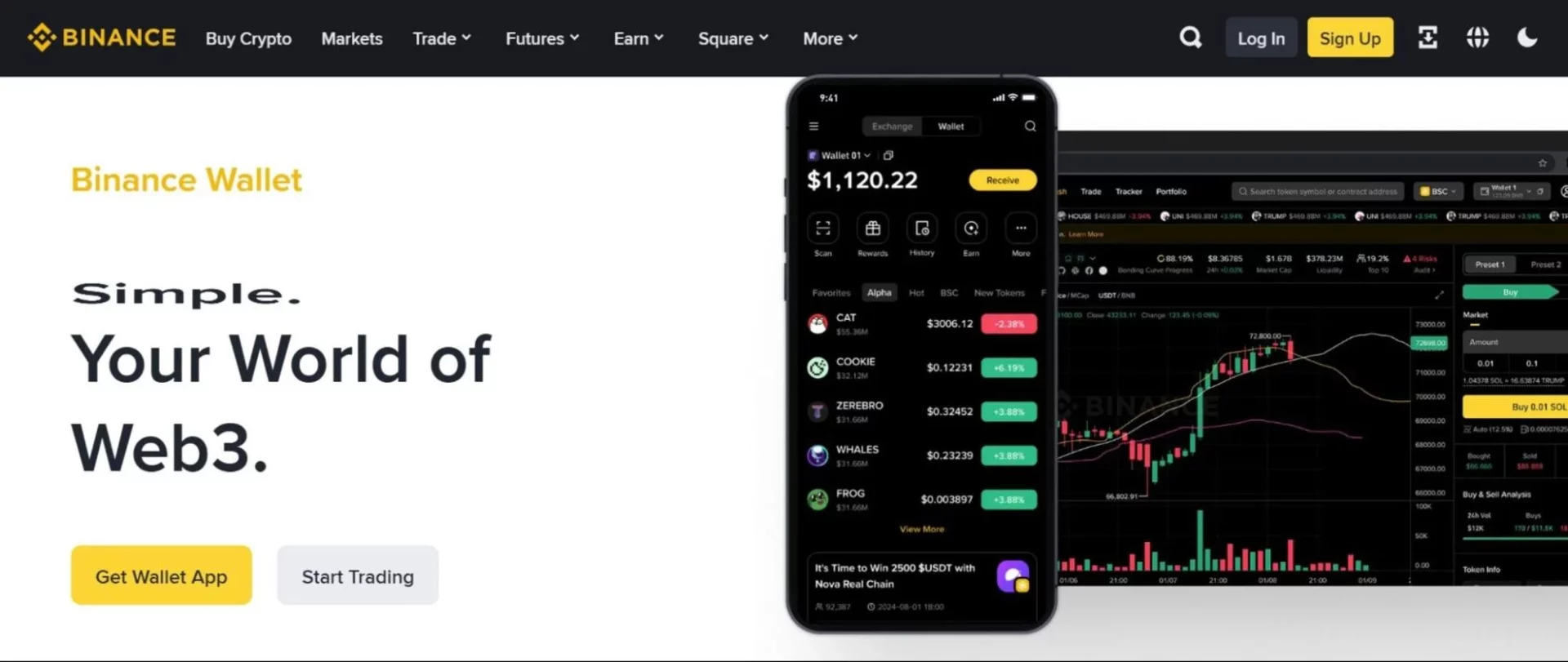
The Binance Web3 Wallet is a self-custody wallet that allows users to explore decentralized applications (dApps), manage on-chain assets, and access DeFi protocols securely. The platform integrates directly into Binance, allowing users to participate in exclusive airdrop campaigns, easily interact with DeFi protocols, and process token swaps across Ethereum, BNB Chain, and other networks.
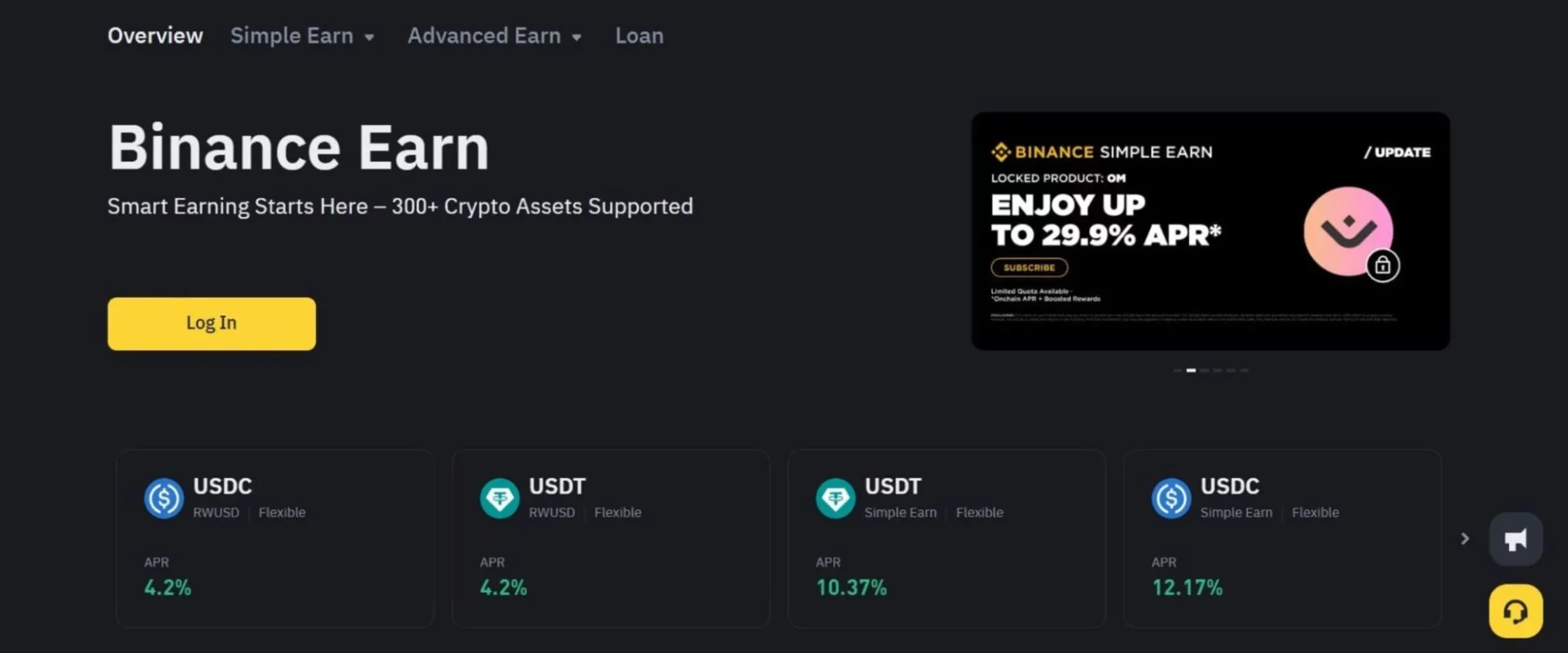
Binance Earn is a comprehensive suite of financial products designed for traders who want to make passive income while trading. This service includes the following:
Binance also offers earnings via spot and futures trading, referral commissions, airdrops, promotions, and an educational “Learn & Earn” program that rewards users with free crypto for completing courses.
Binance NFT is the exchange’s dedicated platform for users to discover, buy, sell, and mint digital collectibles and NFTs. It supports a range of creators, games, and projects, all in one place. Similar to the web3 wallet, Binance NFT is integrated with the broader Binance ecosystem, giving users access to better liquidity, lower fees, and easier onboarding for both creators and buyers.
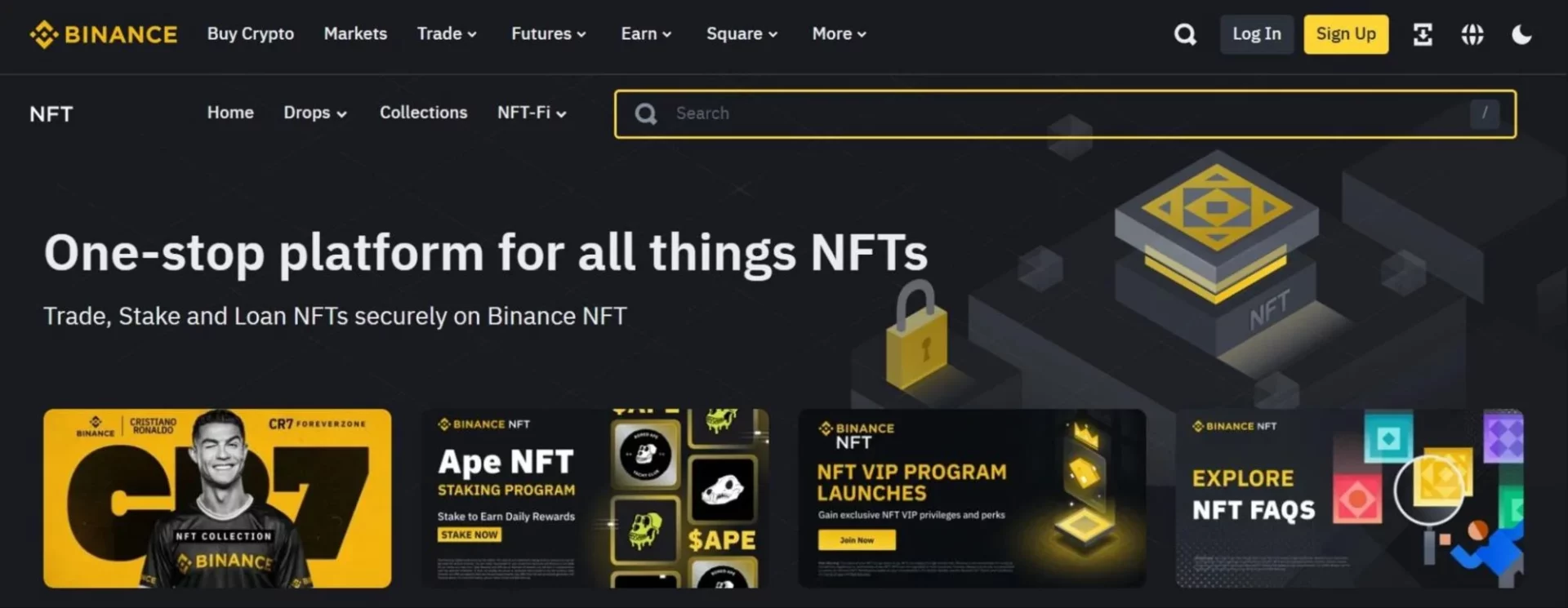
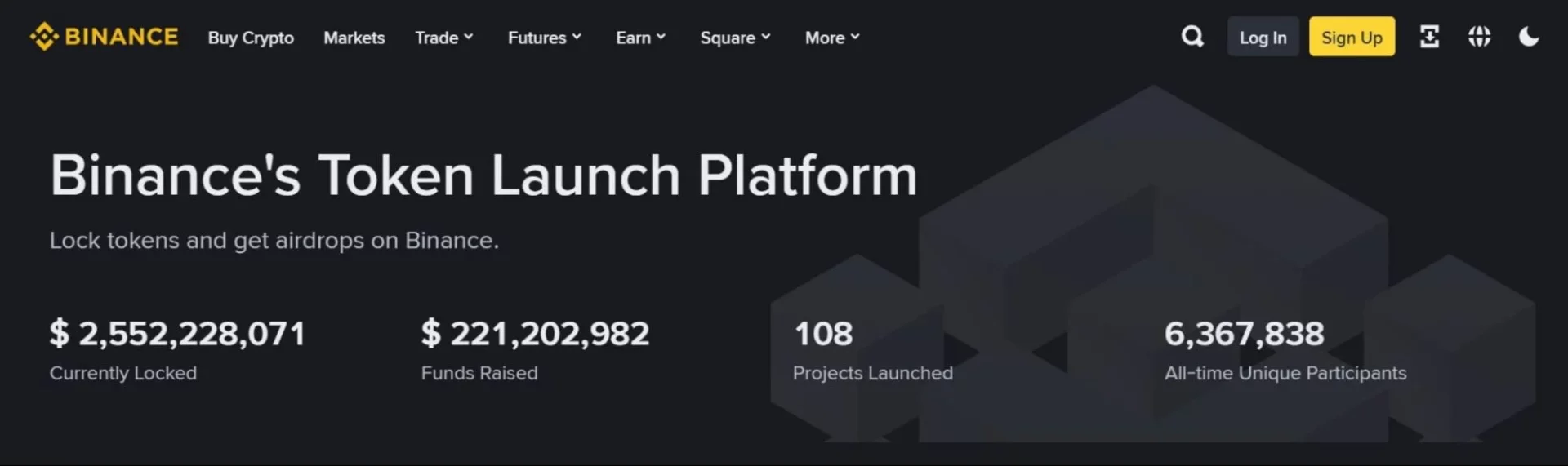
Binance Launchpad gives investors early access to high-potential crypto projects through token sales, while Launchpool lets users earn newly launched tokens by staking or locking up cryptocurrency assets.
On Launchpad, users can participate in Initial Exchange Offerings (IEOs), buying tokens before they’re publicly traded. Binance carefully vets these projects for quality, innovation, and long-term potential, giving investors a chance to support promising startups while benefiting from early adoption.
The best features of KuCoin are trading bots, KuCoin web3 wallet, LaunchHub, KuCoin Earn, and KuCard.
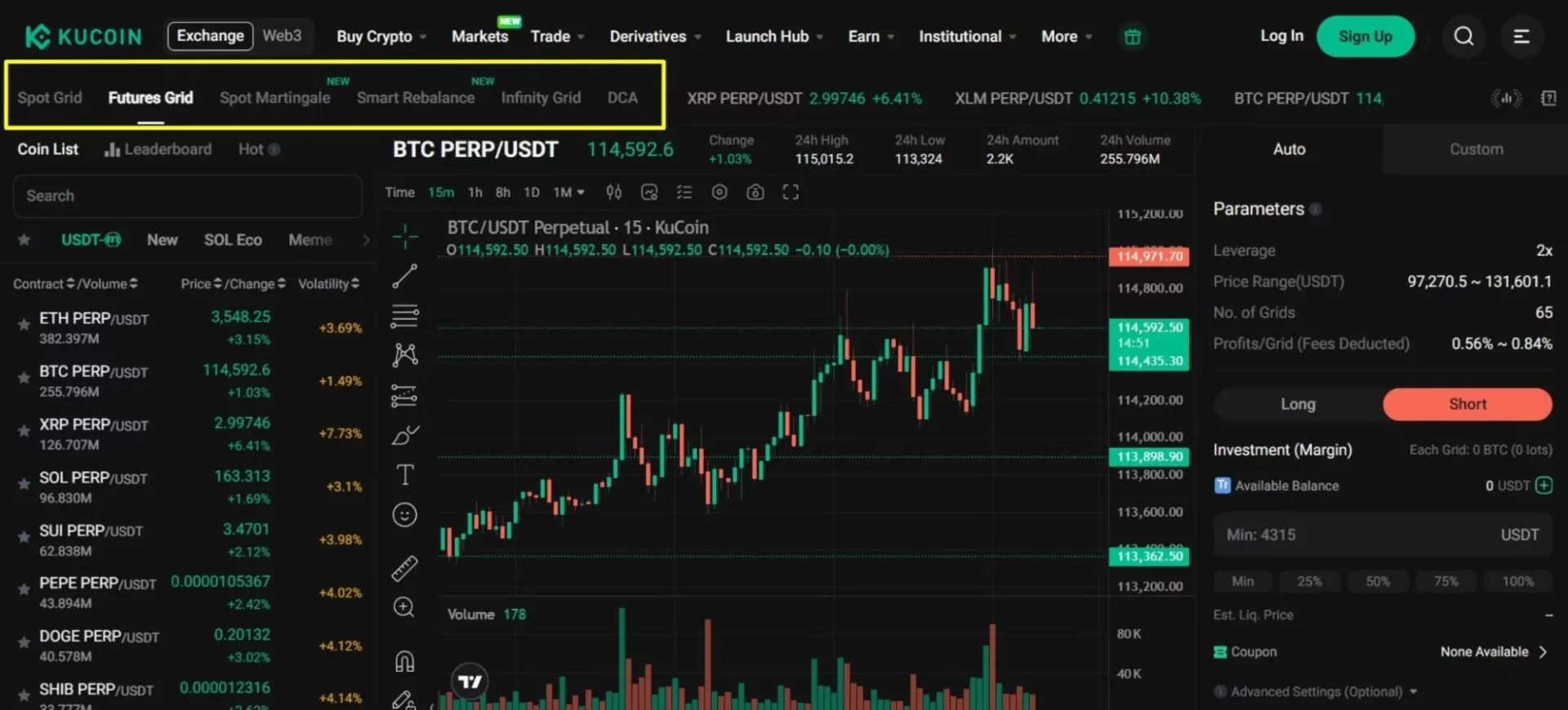
KuCoin offers bots that help users execute trades, track market changes, and manage positions based on predefined parameters. The crypto exchange provides six bots to accommodate all traders. Some of the options include Spot Grid and Futures Grid for buying low and selling high in spot and futures markets, Spot Martingale for averaging down in bear markets, and Smart Rebalance for maintaining portfolio balance over time.
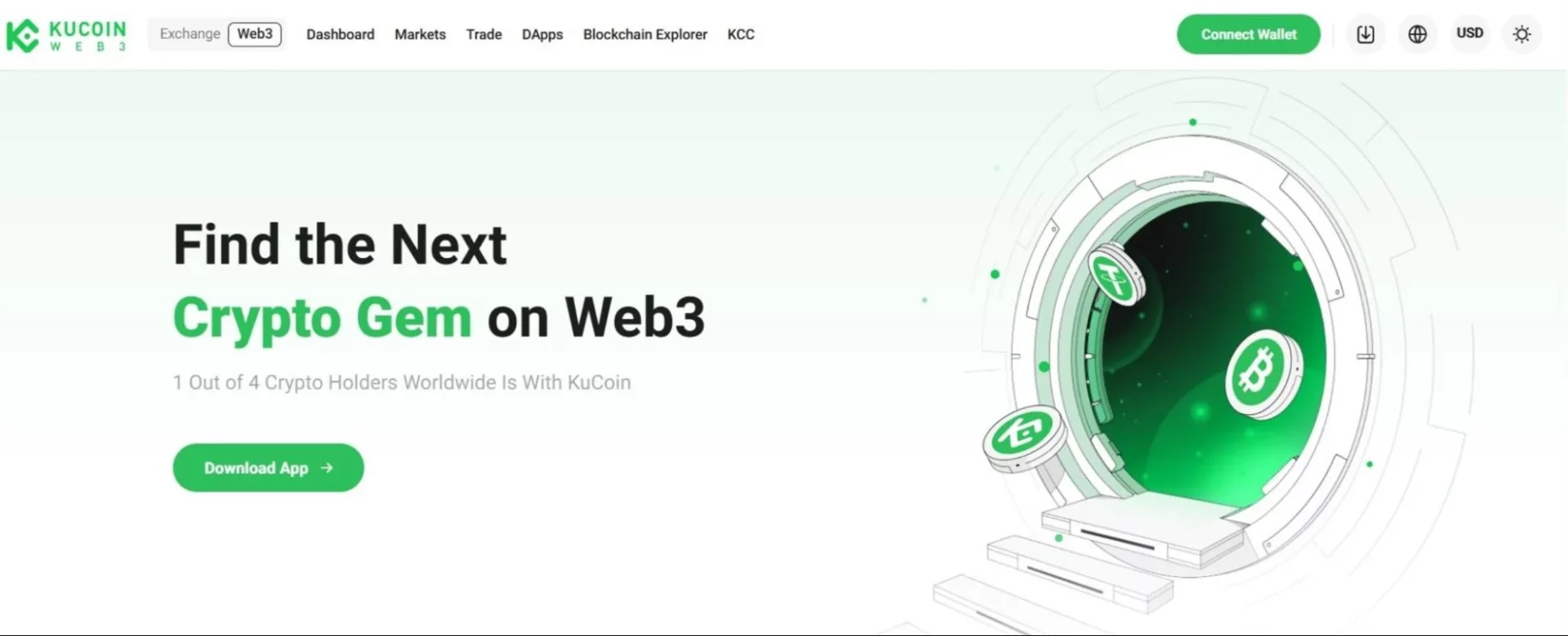
The KuCoin Web3 Wallet is a decentralized, non-custodial wallet that allows users to securely store, manage, and interact with a wide range of cryptocurrencies and NFTs. It features an integrated cross-chain swap aggregator DEX and Web3 Earn, a built-in DeFi investment tool. In addition, users can seamlessly connect to dApps, engage in DeFi activities such as staking and yield farming, and manage their NFTs and digital collectibles.
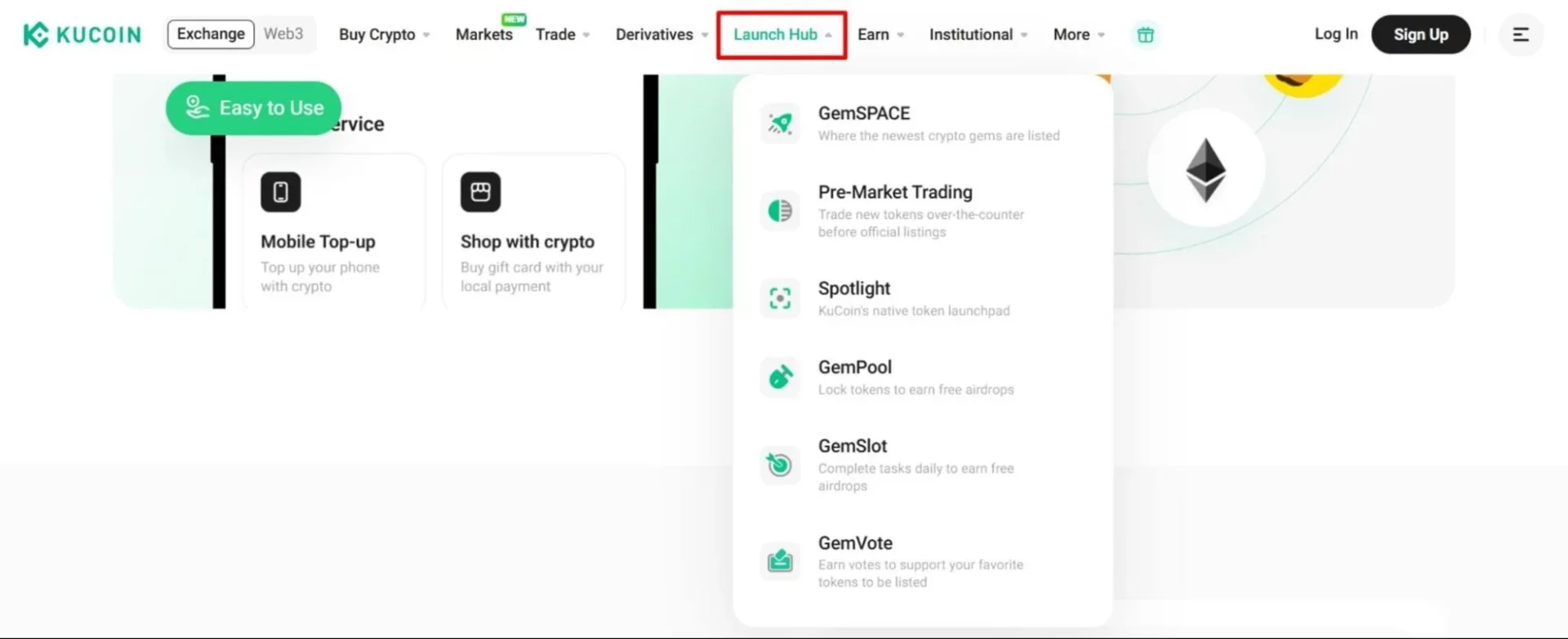
LaunchHub is KuCoin’s dedicated space for discovering new crypto projects. It features various products that provide information about upcoming token launches, help users participate in early-stage sales, and keep the community engaged with promising startups in the crypto space.
For instance, KuCoin Spotlight is where users participate in early token sales of vetted projects. GemSPACE is the project profile space, offering detailed information and milestones so users can follow the development journey. GemVote allows the community to vote on which new projects should be listed, while GemPool lets users stake assets to earn interest or tokens from up-and-coming projects.
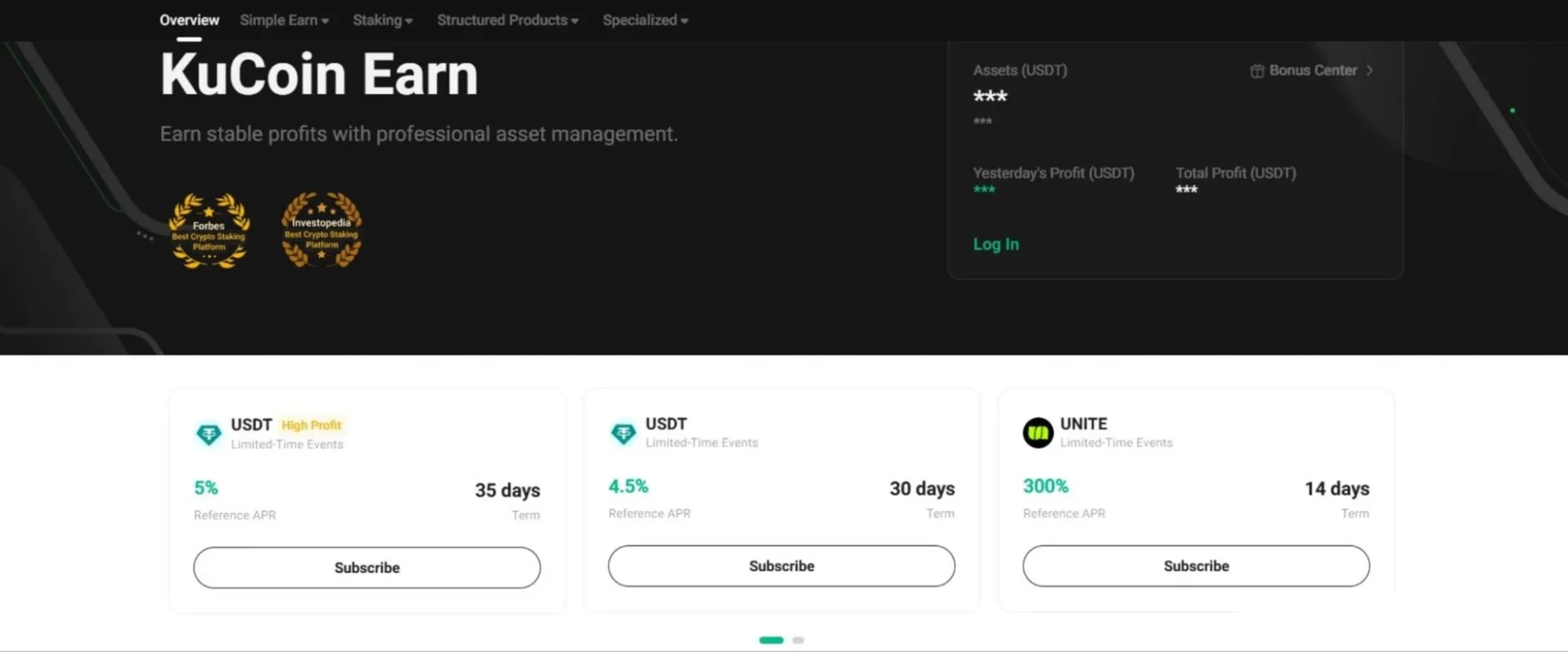
KuCoin Earn offers traders multiple ways to earn passive income through professional asset management. Depending on their investment goals, users can choose from various financial products, including Simple Earn, Staking, Structured Products, and Specialized Products. Additionally, the exchange has a Learn & Earn program that allows traders to earn free crypto for learning about crypto.
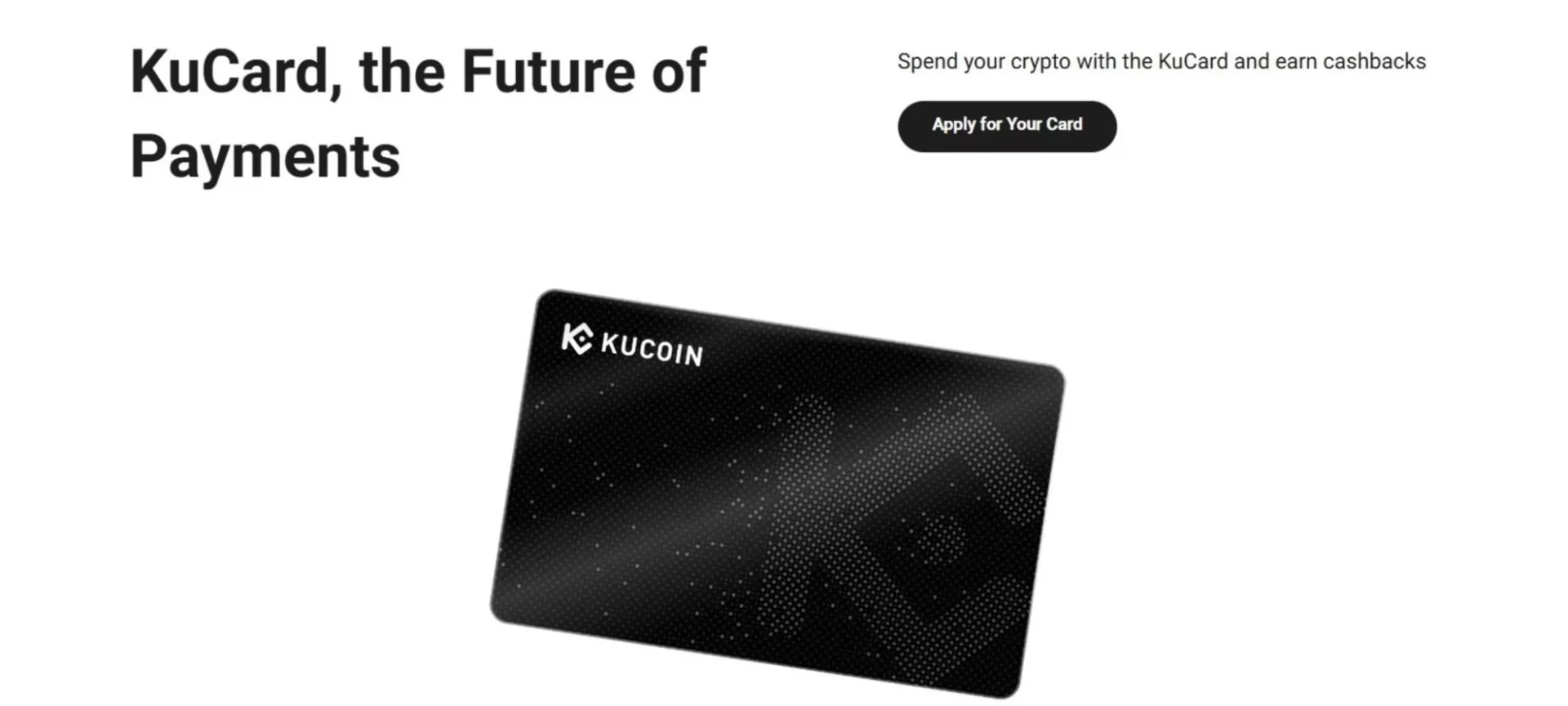
The KuCard is a VISA debit card that allows users to spend their cryptocurrencies anywhere Visa cards are accepted. KuCoin converts crypto into fiat currency at the point of purchase, making it easy for traders to use their cards for online shopping, in-store purchases, and cash withdrawals at ATMs. However, KuCard is not available to all KuCoin users. Currently, it is only available to residents of the European Economic Area (EEA).
Register a new KuCoin account and receive a $100 welcome bonus and 10,800 USDT Bonus
Binance currently supports over 430 cryptocurrencies and 1,500 trading pairs. In Q1 2025, the exchange added 36 new tokens, including SAHARA, SPK, NEWT, HOME, and other AI-focused and zero-knowledge projects. Meanwhile, KuCoin supports 750+ cryptocurrencies for buying, selling, and trading, including major coins and many smaller altcoins.
The key differences in security between Binance and KuCoin are in their insurance funds and account management. Although they have similar security features, Binance has a more robust security infrastructure than KuCoin, even though KuCoin’s security is also strong.
Binance stores the majority of user assets in cold wallets offline and has a $1 billion Secure Asset Fund for Users (SAFU) designed to protect customer funds in case of a breach caused by a vulnerability on Binance’s end. In addition, the crypto exchange employs a multi-tier system architecture and AI-based suspicious activity detection.
On the other hand, KuCoin emphasizes anti-fraud design, including device security, privacy protection, anti-phishing measures, withdrawal anti-tampering, and wallet security, all of which are combined with high data and app security. KuCoin also has an insurance fund primarily focused on leveraged tokens and futures trading positions.
The choice between Binance and KuCoin depends on your experience level, trading needs, and priorities as a crypto investor or trader. For instance, KuCoin is best for crypto traders who want to invest in lesser-known altcoins and want advanced trading features and automation options. Meanwhile, Binance has more liquidity, making it suitable for active and high-volume traders. Here’s a comparison to help you decide which may be best for you:
Start your trading journey on Binance today with $100 free trading credit and a 20% lifetime discount
The pros and cons of Binance are listed below:
Pros
Cons
Binance crypto exchange is best for:
That said, Binance offers a wide range of features, which can be overwhelming for users looking for a simple trading experience. If you are unfamiliar with trading and want to use Binance, you can learn more about the cryptocurrency exchange in this Binance review and through Binance Academy.
The pros and cons of KuCoin are listed below:
Pros
Cons
KuCoin is best for:
If you are considering opting for KuCoin, check out our comprehensive KuCoin exchange review to better understand the exchange, its features, and security measures. Once you’ve settled on trading with KuCoin, you can use the current KuCoin referral code to get a $100 welcome bonus and up to 10,500 USDT in futures trial funds.
The post Binance vs KuCoin: Which Crypto Exchange Is The Best in 2025? appeared first on CryptoNinjas.