Binance spot trading is the process of exchanging cryptocurrencies instantly at current market prices. You fully own the assets, and there is no leverage or borrowing involved. The top features of Binance include 1,500+ spot pairs, low 0.1% fees with BNB discounts, advanced order types, global access with Binance’s SAFU insurance fund, and full integration with its earning ecosystem.
| Criteria | Rating |
| Rating | 4.8/5  |
| Security | 9.5/10 |
| Available Cryptocurrencies | 9/10 |
| Customer Service | 9.5/10 |
| User Experience | 8.5/10 |
| Is Binance Spot Trading Safe? | Yes |
In this Binance spot trading review, you will learn exactly how the platform works, along with its main advantages and drawbacks. We will also cover order types, supported regions, key features, fees, step-by-step trading guides, and proven tips for safe and profitable trading.
Binance spot trading is a service that lets you buy and sell digital assets at current market prices on one of the world’s biggest cryptocurrency exchanges. There is no leverage or borrowing involved. Binance also supports automated strategies such as Spot Grid Trading Bots.
Today, Binance has become the world’s largest crypto exchange with over 280 million users in more than a hundred countries, and you can choose from 500+ cryptocurrencies and over 1,500 trading pairs. Liquidity is deep because millions of traders are buying and selling around the clock, so trades generally execute quickly with minimal slippage.
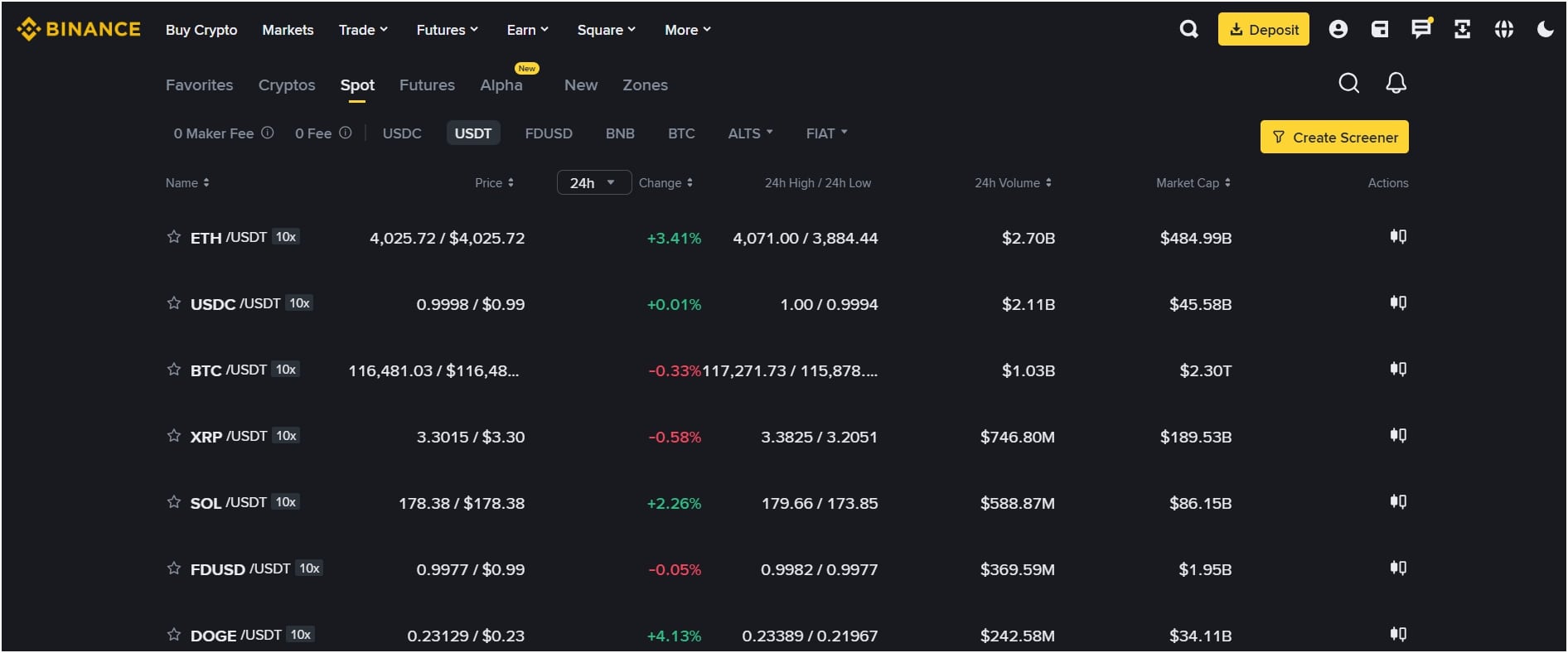
Spot trading works based on an order book. You need to deposit fiat currency or another crypto asset into your Binance wallet and select a trading pair, such as BTC/USDT. The order book shows bids (buyers) and asks (sellers). You have to decide how many tokens you want and choose the price, or use a market order to accept the best available price. When your order matches with an opposite order from another user, the exchange executes the trade and updates your balance immediately. Binance charges a small fee for executing the order, which starts at 0.1% for both makers and takers.
After the trade, the platform credits your new asset balance and debits the one you sold. You can withdraw tokens to your own wallet or keep them on the exchange. The platform also offers additional tools such as charts, technical indicators, and trading bots.
Pros of Spot Trading on Binance
The pros of spot trading on Binance are deep liquidity, competitive trading fees, a wide selection of assets, a large integrated ecosystem, spot trading bots, and advanced trading features.
Cons of Spot Trading on Binance
The cons of spot trading on Binance include a lack of full decentralization, potential regulatory restrictions, and a complex interface for beginners.
Binance spot trading order types are market order, limit order, OCO order, trailing-stop order, and stop-limit order.
A market order buys or sells instantly at the best available price on the order book. So, when you place one, the exchange matches your order with existing bids. Because you accept the current market price, there is no guarantee on the exact fill price, and taker fees apply. Market orders are useful when immediate execution is more important than the price.
A limit order lets you set a specific price at which you want to buy or sell. The order remains in the book until the market reaches your chosen price, and if the price never reaches your limit, the order remains unfilled. Limit orders give you control over entry and exit prices, often at lower maker fees, and they provide liquidity to other traders.
An OCO order combines a limit order and a stop‑limit order. When one part of the pair executes, the other cancels automatically. Hence, this setup mainly allows you to place a take‑profit limit order and a stop‑loss order simultaneously.
A trailing‑stop order follows the market price at a fixed percentage or amount. So, if the price moves in your favor, the stop level moves with it, locking in potential profits. And when the price reverses by the specified trail amount, the order triggers and sells (or buys) at market, protecting gains. Trailing stops are valuable in trending markets where you want to let profits run while limiting potential losses.
A stop‑limit order uses two prices: a stop price that triggers the order and a limit price that defines the worst price you are willing to accept. When the market hits the stop price, the system places a limit order at your limit price. Mainly, this order type is helpful for setting precise stop‑losses or trigger‑based entries where you don’t want slippage beyond your limit.
Yes, Binance spot trading is safe to use because the exchange invests heavily in protective measures and provides transparency around its reserves. The company publishes Proof‑of‑Reserves reports showing that user assets are fully backed 1:1 with additional reserves. They have also built a Merkle Tree system, so you can verify that your assets are included in their liability reports.
The exchange also operates with zero debt in its capital structure and maintains an emergency Secure Asset Fund for Users (SAFU) to cover extreme cases. Two‑factor authentication, address whitelisting, and cold‑storage wallets provide further safeguards against hacks. While no platform is risk‑free, Binance’s combination of transparency, insurance, and technical security obviously makes it a relatively safe choice for spot trading when used responsibly.
The Binance spot trading supported countries are spread across Asia, Europe, Africa, Oceania, and parts of Latin America. Millions of people from India, the Philippines, Australia, Germany, France, Nigeria, Turkey, Brazil, Argentina, and many other jurisdictions trade on the platform daily. Hence, users from these countries can open accounts, complete verification, deposit fiat or crypto, and access the full range of spot pairs.
Binance spot trading access is restricted in some jurisdictions due to legal and regulatory concerns. Binance’s terms of use explicitly prohibit customers from the United States, Canada (Ontario), Iran, Cuba, the Crimea region, and North Korea. You may also face limitations if local regulators do not license Binance or if sanctions apply. People in the U.S. can only use the separate Binance.US platform, which lists fewer coins and has different fee structures.
No, Binance.com spot trading is not available to customers residing in the United States because of regulatory restrictions. Hence, U.S. residents cannot open accounts on the global exchange or trade its full set of spot pairs.
Instead, they must use Binance.US, an independent entity operated under U.S. regulatory frameworks. The American platform offers a smaller selection of coins and features compared with Binance.com, and fees and VIP tiers differ. It still provides market and limit orders, but some advanced products and promotions are not available. So, if you live in the United States, make sure you register with Binance.US and follow local Know‑Your‑Customer (KYC) and tax reporting rules.

The unique features of Binance spot trading are unmatched liquidity across 1,500+ pairs, tiered fee discounts & BNB integration, seamless ecosystem with built-in earnings, and leading security with SAFU insurance.
The depth of Binance’s order books is one of its standout strengths. You gain access to 500+ digital currencies and more than 1,500 spot trading pairs. This means you can trade everything from well‑known coins like BTC, ETH, and BNB to newer tokens in DeFi, gaming, and layer 2 ecosystems.
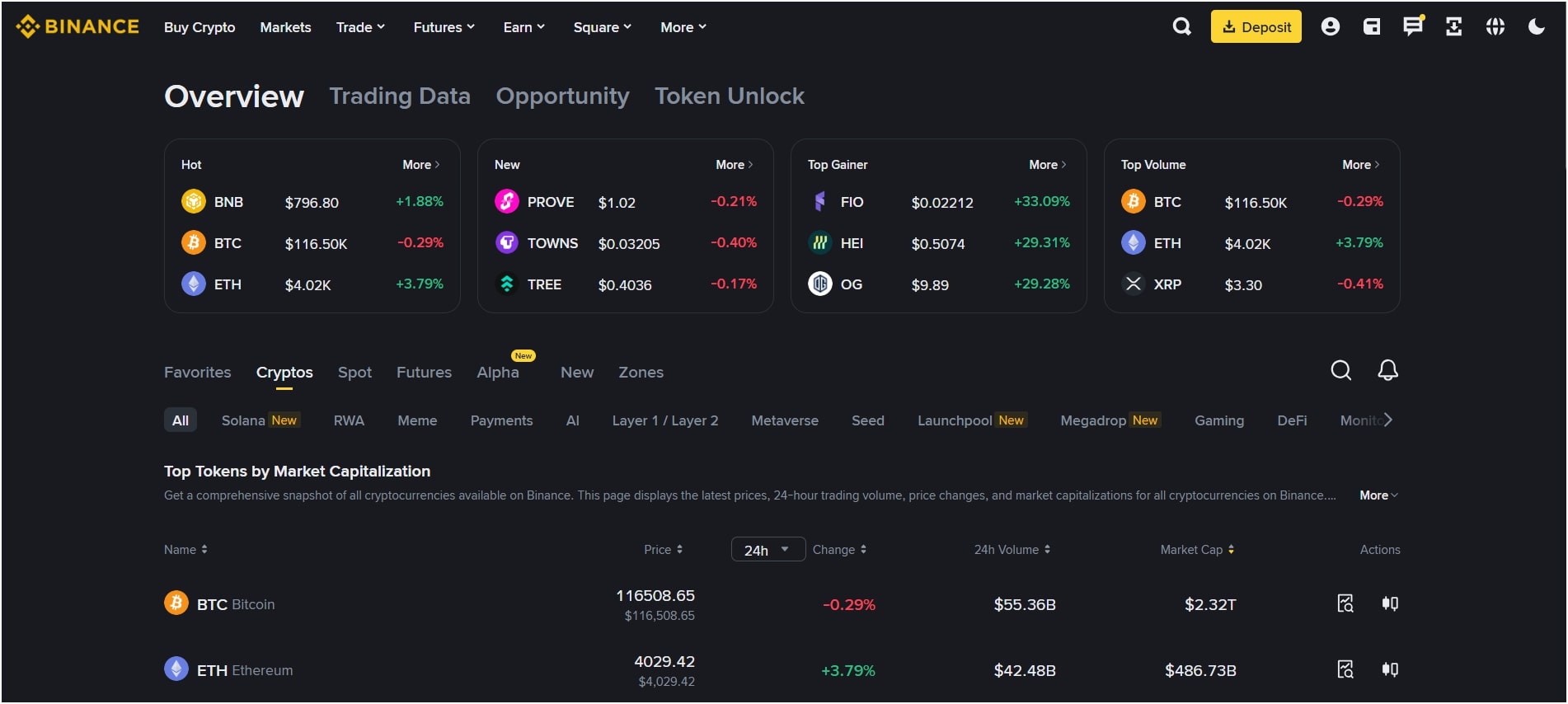
Liquidity remains robust even on mid‑cap pairs, and daily spot volume is over $10 billion, according to CMC data, which translates to tight bid‑ask spreads and rapid execution. High liquidity also allows you to enter or exit positions at almost any time. Unlike smaller exchanges, where a single trade might move the market, Binance’s depth absorbs orders smoothly.
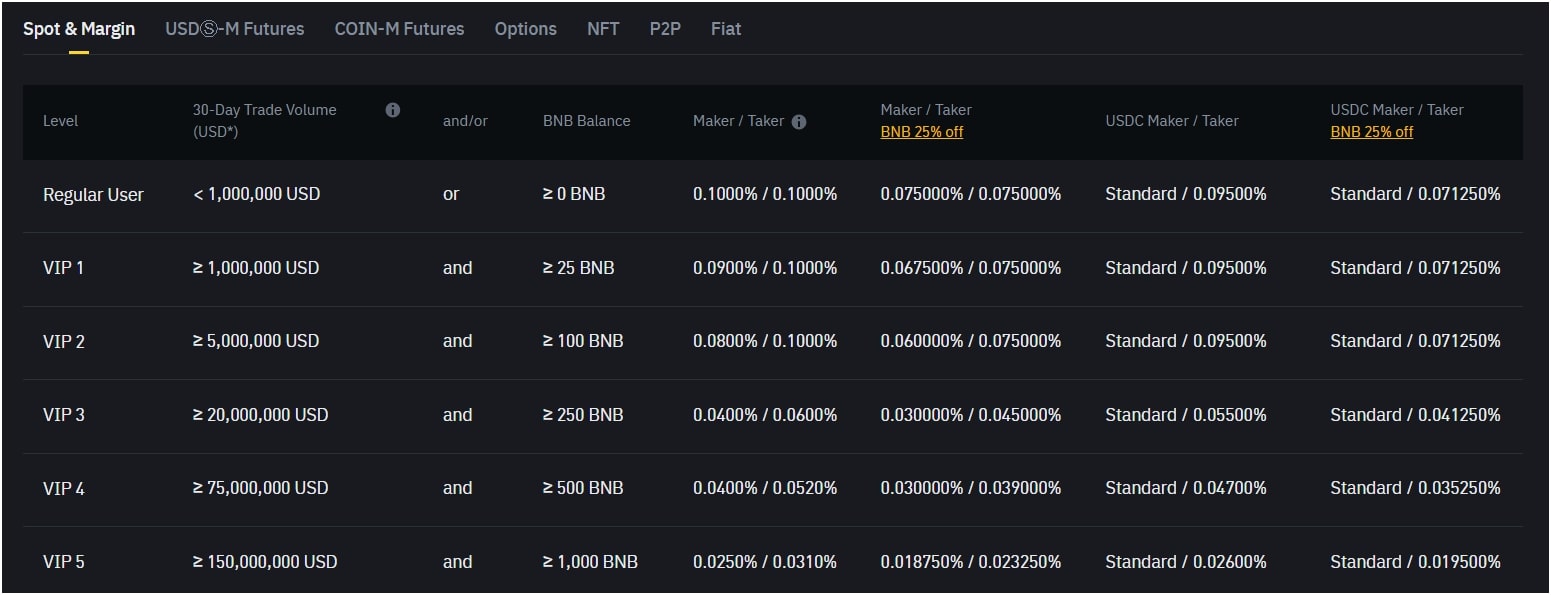
The Binance standard maker and taker fee is 0.1%. By holding BNB, the exchange’s native token, you can pay fees with BNB and receive a 25% discount. This reduces your effective rate to 0.075%, which beats many other centralized exchanges. Binance also provides 9 VIP levels. As your 30‑day trading volume increases and your BNB balance grows, you will qualify for lower fees. VIP 1 lowers maker fees to 0.09% and taker fees to 0.10%, while VIP 9 can bring maker fees down to 0.011% and taker fees to 0.023%.
The platform runs periodic promotions offering zero maker and taker fees on specific trading pairs. For example, BTC/FDUSD and ETH/FDUSD have seen zero‑fee periods. Beyond spot fees, Binance offers rebates for market makers, referral commissions if you bring friends to the platform, and additional savings through trading challenges.
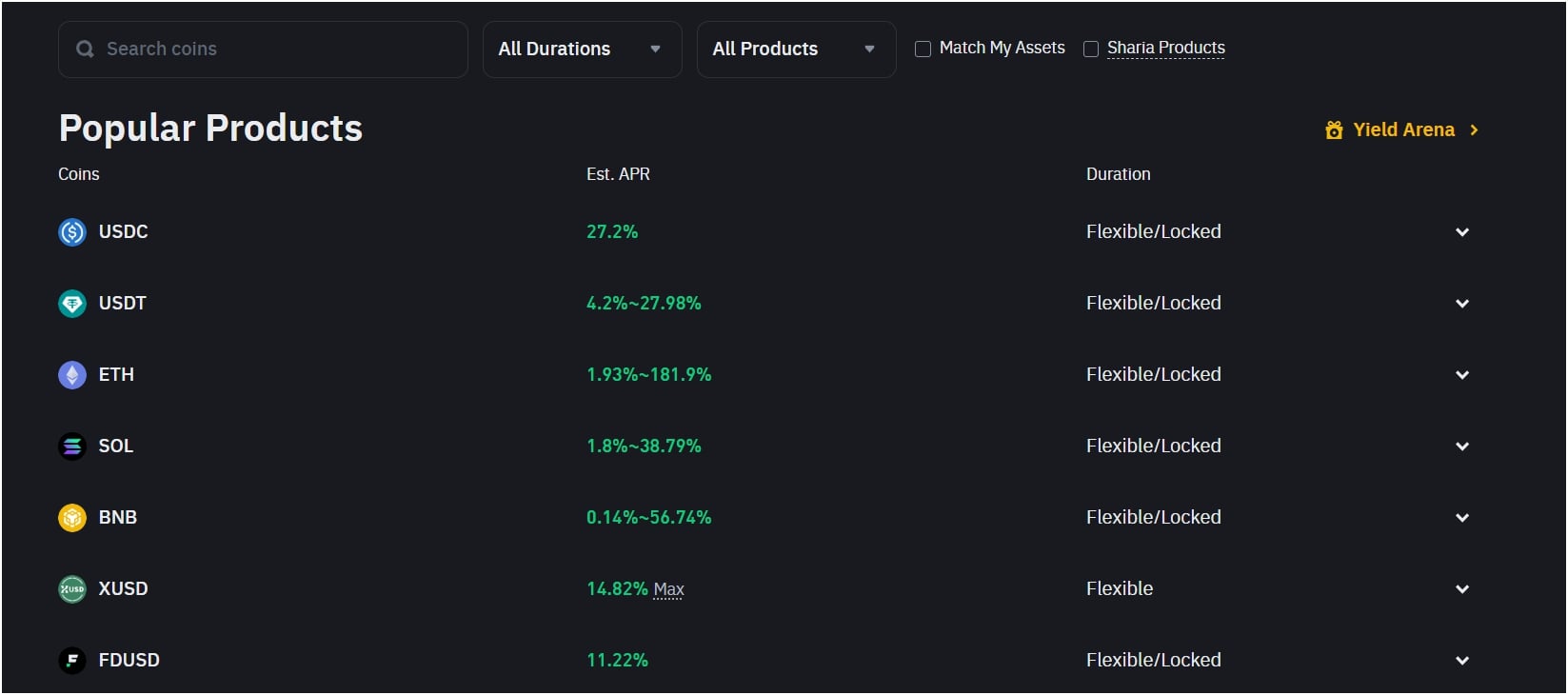
Spot trading on Binance is part of a larger ecosystem designed to make cryptocurrency useful in daily life. After you buy tokens, you can stake them on Binance Earn and earn interest through savings products, launchpools, or on-chain staking. You can earn APY as high as 20% on some of your top altcoins like DOT, ATOM, and more.
The exchange also operates Binance Pay, a payment network that lets you spend crypto at supported merchants or send funds to friends without fees. You can also order a Binance Card in some countries, which converts crypto to fiat when you pay, letting you spend digital assets like a debit card. All these features connect under one login, so you don’t need multiple accounts to trade, learn, and earn.
Binance is a highly secure crypto exchange. The Proof‑of‑Reserves page shows that user assets are fully backed at least 1:1, with additional reserves. Also, corporate holdings are stored on a separate ledger, so user assets are not mixed. The proof‑of‑reserves system employs Merkle Tree and zk‑SNARK technologies, allowing you to verify that your balances are included in the report without revealing personal information.
The company has zero debt and an emergency Secure Asset Fund for Users (SAFU), an insurance pool funded by trading fees, that can cover losses in extreme cases. The exchange uses multi‑layer cold storage for the majority of funds and keeps only a small portion in hot wallets for withdrawals. Other features, like two‑factor authentication, address whitelisting, and cooldown periods for withdrawals, help prevent unauthorized access.
Binance charges spot traders a base fee of 0.1% for both makers and takers. Using BNB to pay fees lowers this rate to 0.075%, and as your trading volume increases, you can qualify for VIP tiers with reduced fees.
Binance spot trading platform also has promotional zero‑fee trading on selected pairs like BTC/FDUSD. Crypto deposits are free, though network transaction fees apply when withdrawing tokens. Fiat deposits and withdrawals may involve bank or payment processor charges depending on your region.
To understand how the fees work, consider an example. Imagine you place a market order to buy 1,000 USDT worth of BTC. As a regular user with no VIP status and without using BNB, your taker fee would be 0.1%, so you pay 1 USDT in fees. If you hold enough BNB and choose to pay fees with it, the rate drops to 0.075%, so you pay 0.75 USDT instead.
To spot trade on the Binance website, you need to log in, deposit funds, open the spot trading page, choose a pair, place your order, and confirm. To spot trade on the Binance app, you need to download the app, log in and complete KYC, deposit funds, access the market, select your trading pair, place a trade, and confirm.
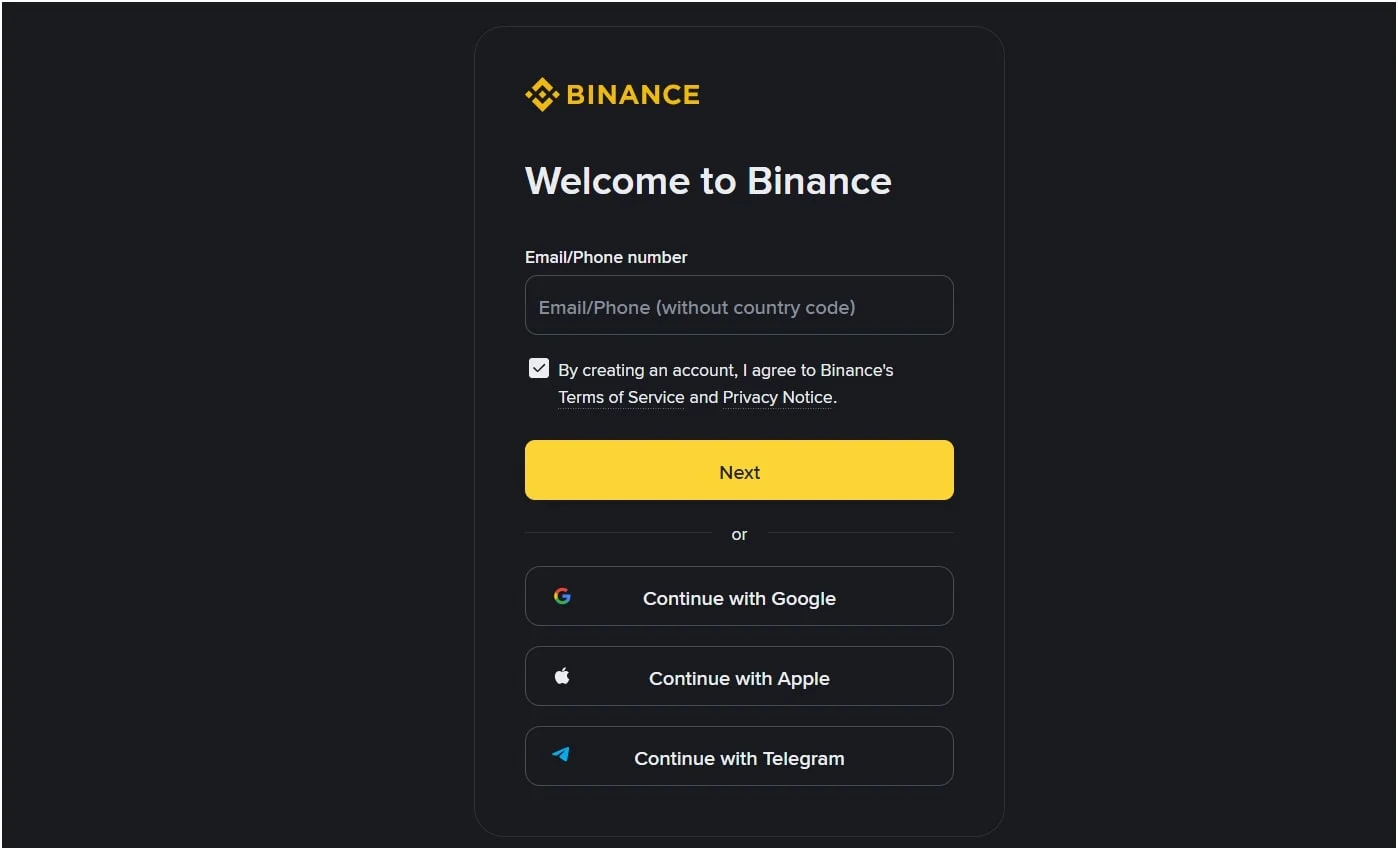
Step 1: Log In to Binance
You need to start by navigating to binance.com and logging in to your account with your email and password. Make sure you have completed the necessary identity verification because Binance requires KYC before enabling full trading. Also, if you don’t have a Binance account, you can use our Binance referral code during registration and get a $100 free crypto sign-up bonus.
Step 2: Deposit Funds
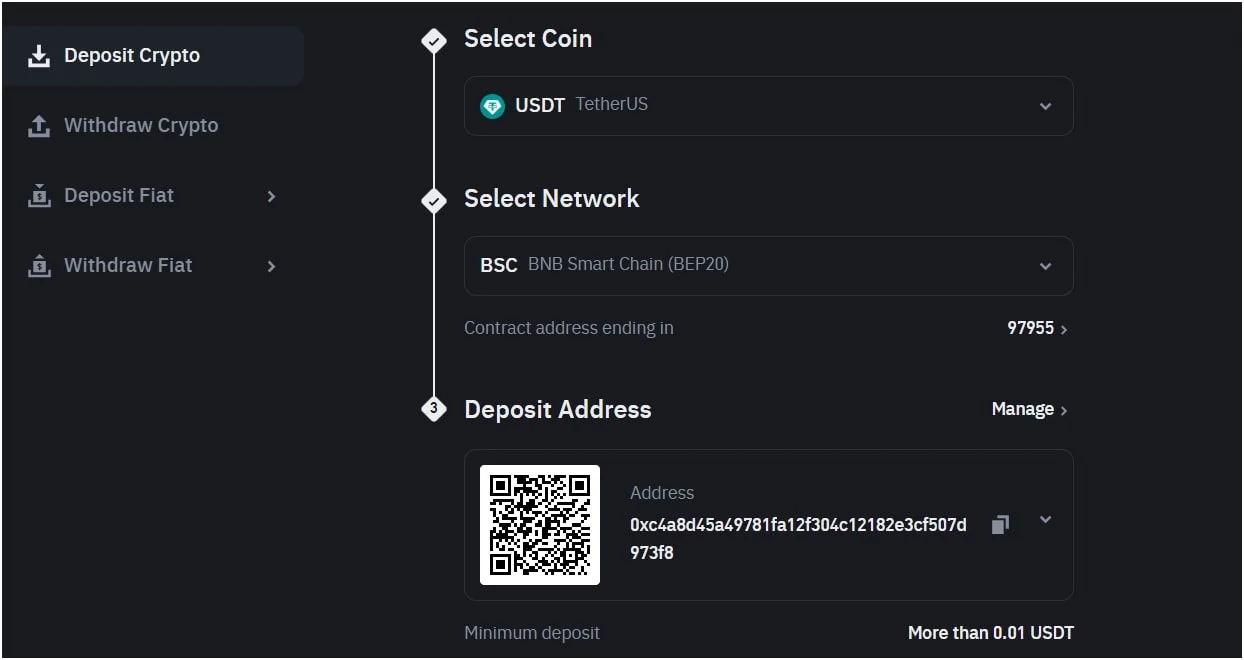
Once logged in, you have to locate the “Wallet” tab on the top menu and choose to deposit funds. You can either transfer crypto from another wallet or deposit fiat currency through a bank transfer or any other supported payment method.
Step 3: Open the Spot Trading Interface
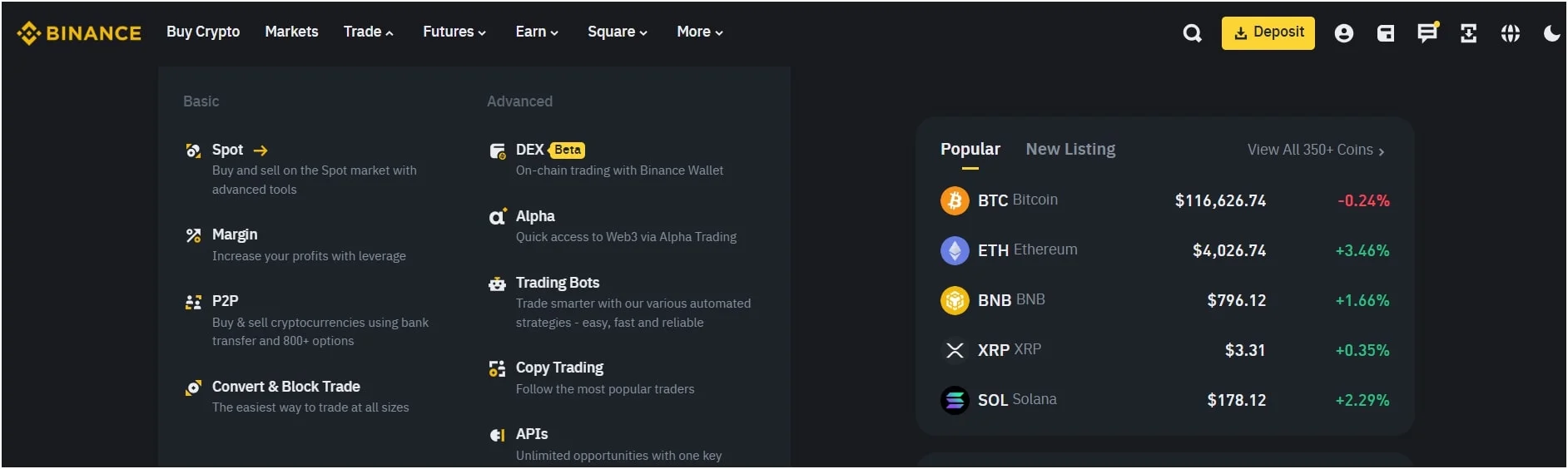
Next, click “Trade” in the top menu and select Spot. Here, you will see the price chart, order book, and buy/sell form. You need to select your desired trading pair from the top left, such as BTC/USDT for trading Bitcoin against Tether.
Step 4: Place Your Trade
You have to decide which type of order suits your strategy. A Market order buys or sells instantly at the best available price, while a Limit order lets you set an exact entry or exit price. You need to enter the amount of the cryptocurrency for your buy and sell orders in the order form.
Next, if you are buying, select the percentage of your USDT balance to spend; if you are selling, enter the amount of BTC to sell. Once you click Buy BTC or Sell BTC, the system processes your order and updates your balance. You can then view your completed orders and trade history in the Orders tab.
Step 1. Download the App and Log In
First, download the Binance app from the Google Play Store or Apple App Store and log in using your credentials. After completing KYC, tap Wallets at the bottom of the screen and choose to deposit funds. You can scan a QR code to transfer crypto, or use a bank card or payment service for fiat.
Step 2. Access the Market
Once funded, tap Trades on the home screen to access the market. Choose the pair you want by tapping the search bar and entering a symbol like “ETH/USDT.”
Step 3. Place and Confirm Your Trade
Select Buy or Sell and pick your order type – market, limit, or stop-limit. Enter the price and quantity, confirm the details, and slide to submit. The app shows a confirmation once the trade executes. You can check your positions and order history by navigating to Orders within the app. For more info about the exchange, you can check out our in-depth Binance review.
The tips for safe and successful spot trading on Binance are using strong security, doing research, setting risk limits, using fee discounts, and withdrawing to personal wallets for long-term storage.
The post Binance Spot Trading Review: Is It Safe Using in 2025? appeared first on CryptoNinjas.