
Bitcoin liquidity on Binance is tightening as the BTC Scarcity Index climbs to its highest level since October, signaling declining exchange supply. According to a update by CryptoQuant analyst Arab Chain, the index has reached about 5.10, indicating that fewer Bitcoins are available for immediate sale on the exchange.
Bitcoin was trading near $70,000 at the time of writing, down by about 1% over the past 24 hours, according to TradingView data.

Source: TradingView
Binance’s BTC Scarcity Index represents the relative amount of available Bitcoin for trading purposes compared to the historical levels. A positive value indicates that relatively few Bitcoins are available for immediate sale on the exchange.
When the amount of BTC available for sale at an exchange reduces, it typically causes a greater sensitivity of the token’s price to changes in demand. Therefore, relatively small purchases made by investors may generate a larger price movement than would occur under normal conditions.
Most historical bull cycles for BTC were positively correlated with increasing levels of the Scarcity Index. The decrease in exchange supply provides a bullish condition for price movements in the upward direction.
Also Read | Bitcoin Holds Firm Between $62K–$72K As Buyers Return
High Scarcity Index readings have historically indicated that investors are removing their BTCs from exchanges or placing them in cold storage, institutional custodial services, or long-term holdings. These actions remove liquidity from the sell side of trading platforms.
Negative Scarcity Index readings have historically occurred when large numbers of BTC are flowing into exchanges. The increased liquidity provided by these inflows tends to create greater potential selling pressure.
The CryptoQuant Chart published by Arab Chain illustrates the decline into negative territory and subsequent recovery back into positive territory for the Scarcity Index. This reversal in investor sentiment may be an indication of the increased removal of BTC from exchanges.
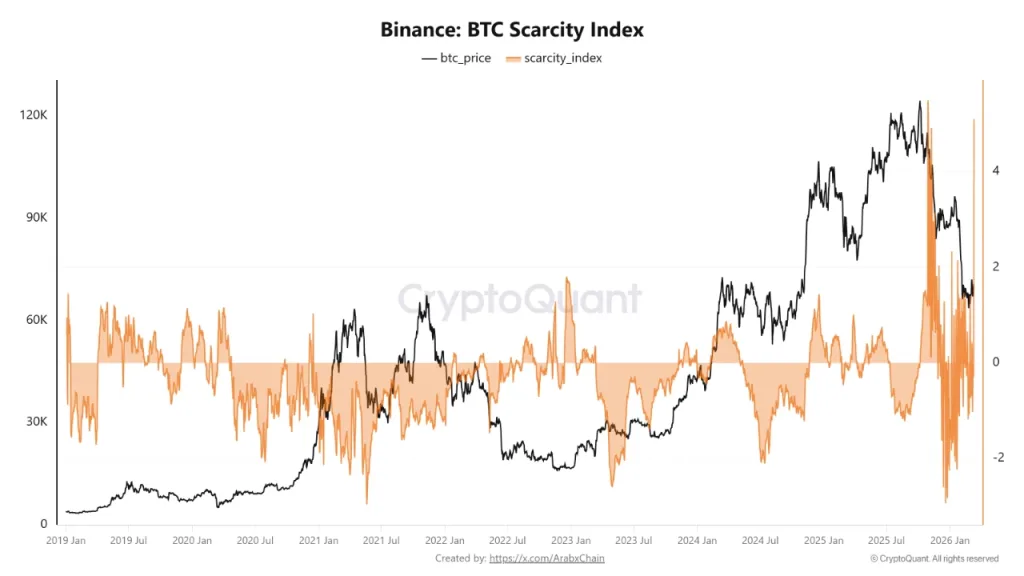
Source: CryptoQuant
Meanwhile, institutional interest in BTC remained high. There were net inflows of approximately $115.17 million into U.S.-based spot BTC ETFs on March 11, as shown by SoSoValue.
The largest inflow of the day occurred through BlackRock’s IBIT at approximately $115.26 million. Fidelity’s FBTC experienced the second largest inflow at approximately $15.37 million.
Grayscale’s BTC Mini Trust also received a net inflow of approximately $5 million. However, Grayscale’s GBTC recorded outflows of approximately $15.97 million.
VanEck’s HODL also recorded outflows of approximately $4.49 million, both of which were offset by the ETF inflows. The continued flow of capital into BTC ETFs, combined with a declining exchange supply, will likely make the coin even more responsive to changes in demand.

Source: SoSoValue
This article contains market analysis and price predictions. These are not guarantees. Crypto markets are volatile. Always DYOR. Not financial advice.
Also Read | Bitcoin Bearish Call Intensifies as Bloomberg Strategist Repeats $10,000 Forecast





