Bitcoin (BTC) slipped below US$80,000 (AU$110K) after stronger-than-expected U.S. producer inflation data renewed pressure on risk assets and weakened the case for Federal Reserve rate cuts this year.
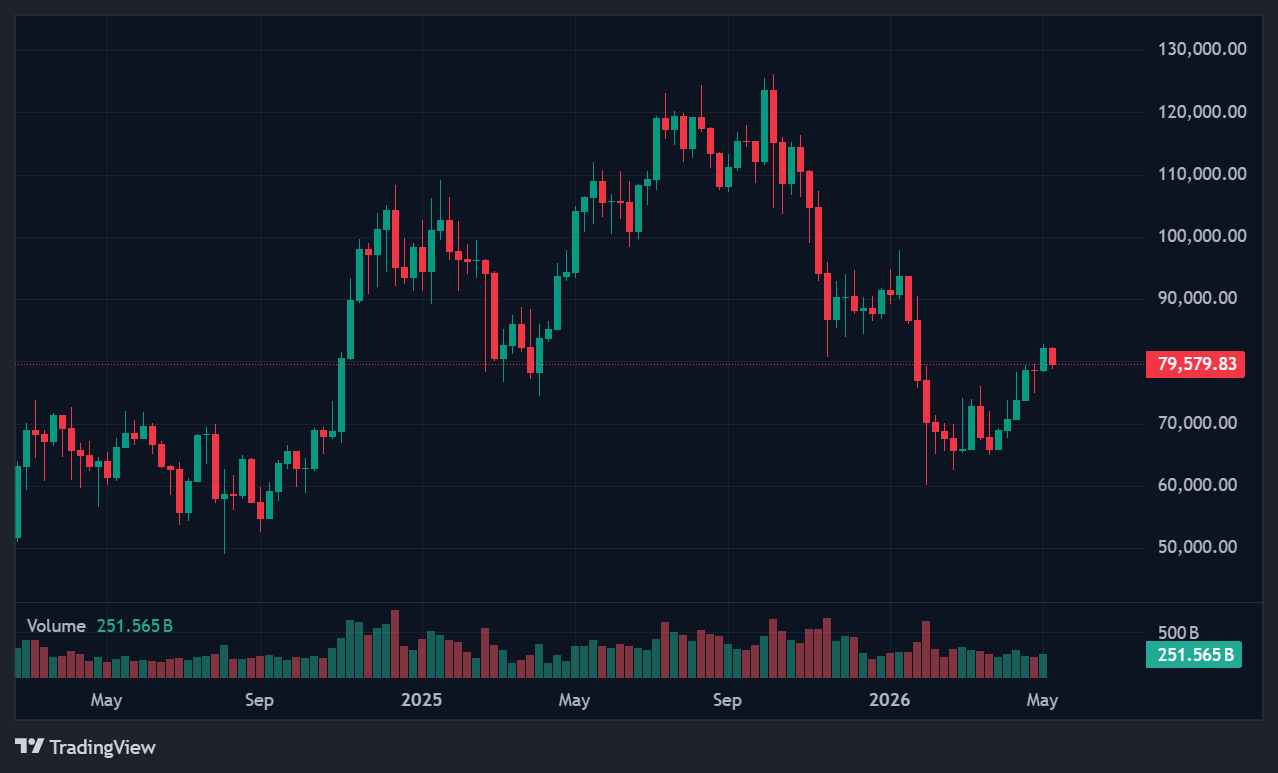
The move left BTC trading near US$79,573 (AU$109,811) during the research window, with an intraday low of US$78,762 (AU$108K) and high of US$81,276 (AU$112K).
The decline was not a deep breakdown, but it put the market back around a level traders have treated as a major near-term line.
The inflation trigger came from the Bureau of Labor Statistics report, showing that the Producer Price Index for final demand rose 1.4% in April.
Final demand prices were up 6.0% over the 12 months ended April, while final demand energy prices jumped 7.8% for the month and 22.7% from a year earlier.
Excluding food and energy, producer prices rose 1.0% in April and 5.2% year over year, adding to concerns that inflation is not cooling quickly enough for the Fed to ease policy.
Read more: Saylor Shrugs Off Bitcoin Sale Concerns as Strategy Expands Capital Markets Ambitions
Bitcoin didn’t react so well, as lower rate-cut odds generally make cash and short-term debt more attractive relative to speculative assets, while higher inflation readings can lift Treasury yields and pressure crypto valuations.
CME Group’s FedWatch tool, which tracks implied rate probabilities from 30-day Fed Funds futures, became a key market reference after the data.
The technical picture now centres on whether Bitcoin can hold the high-US$70,000 range. The first support zone sits around US$78,000 (AU$107K), close to the intraday low, with a deeper level near US$75,000 (AU$103K) if selling accelerates.
At press time, Bitcoin is trading at US$79.5K (AU$108K), according to data from CoinMarketCap.
Read more: NSW Police Pull Off One of Australia’s Largest Bitcoin Busts in History
The post Hot Inflation Data Knocks Bitcoin Below $80K as Fed Rate-Cut Hopes Fade appeared first on Crypto News Australia.





