
Blockchain technology is rapidly moving beyond cryptocurrency into practical applications that could reshape entire industries. Leading experts in the field share their predictions on how distributed ledger systems will transform everything from supply chains and healthcare to digital identity and global finance. This article explores fifteen key areas where blockchain is expected to create real-world impact in the coming years.
Using blockchain to tokenize real-world assets like real estate is potentially the best use of decentralized ledger technology. Traditional industries and finance, just by the nature of operating in a complex, physical environment, have all sorts of friction. Strategically using new technology like blockchain, which operates programmatically and in a trustless manner, will create unprecedented transparency and efficiency—two prerequisites for the movement of capital.
Traditional industries, especially those dealing with physical goods, such as real estate, trade finance, or commodities, often have dozens of parties involved. Some are necessary, others are unnecessary; for example, there tend to be multiple intermediaries for custody, settling, auditing, and reporting—all responsibilities that could be consolidated and automated with blockchain technology. These intermediaries are costly, thereby extracting value from the transaction, and slow down the speed of the transaction.
Tokenizing real-world assets works by using smart contracts, which are coded programs that can move information and value (real value, like USD) to govern transactions—generally the transfer of ownership from one party to another. Bonds, treasuries, art, or any asset has a contract or certificate of ownership that entitles a party to the rights and gains of the underlying asset. To securely move this to another party during a sale, there is always due diligence, paperwork, and a protocol for reconciliation. For assets with big price tags, many moving parts, and high risk of fraud, the aforementioned steps become increasingly drawn out, sometimes taking many months to complete.
When tokenized and backed by data, these months-long transactions can drop to weeks, days, or hours without compromising efficiency or trust. Not only does this relieve headaches for many people, but it allows capital to move faster and more freely. Ambiguous environments become trusted, illiquid markets become liquid, and—because these assets are often tangible like infrastructure, real estate, or businesses—the world moves forward; projects get funded and people get paid.
There are some challenges with tokenization, such as security, regulation, and access to on-chain capital, but these are being resolved by startups and institutions alike. The blockchain vertical is maturing by the day and will replace legacy systems within the next decade.

The practical application of blockchain technology in real-world use cases excites me the most, particularly in transforming traditional industries. Last year, I deployed a high-traffic NFT ticketing app on Solana and experienced firsthand how near-instant finality and low fees can make blockchain viable for everyday consumer applications. This demonstrated to me that blockchain’s future lies not just in financial services, but in reimagining how we handle digital ownership and transactions across various sectors.

I’ve spent 25+ years building compliance and transparency platforms across government and data intelligence sectors, so I look at blockchain through a pretty specific lens: verifiable authenticity in systems where trust is broken.
The area that excites me most is reputation and review verification. I’m now running The Transparency Company, and we’re tackling the $500B online review economy where fake reviews poison consumer trust. Current systems rely on platforms self-policing—which clearly isn’t working. Blockchain could create immutable, timestamped records proving a real transaction occurred before a review was posted. No retroactive editing, no deletion, no gaming the system.
What makes this different from supply chain tracking is it’s consumer-facing and immediate. At Premise Data, we built networks of millions of contributors globally—and verification was always the hardest problem. Blockchain could solve “did this person actually experience this service” in a way centralized databases can’t, because there’s no single authority to corrupt or pressure.
The key is it has to be invisible to end users. Nobody wants to “verify their review on the blockchain”—they just want to know what they’re reading is real. That’s where the tech actually earns its keep: solving fraud without adding friction.
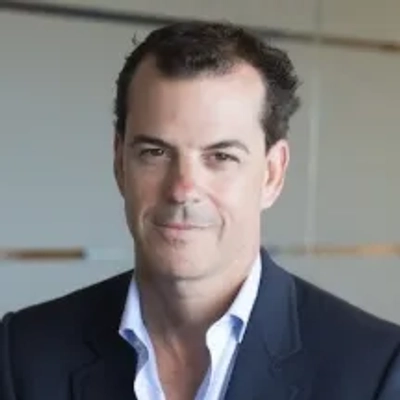
Blockchain’s role as a verification layer is pretty interesting and excites me the most. Blockchain’s immutable nature enables the authentication and validation of data without relying on intermediaries, creating immense value in markets that desperately need trust and auditability. A specific area where the opportunity is enormous is in environmental credits. I have spent two decades around various types of carbon credits in voluntary carbon markets, and they have faced a consistent problem every year: data is prone to manipulation, and audits are expensive as well as time-intensive. Credits get double-counted, origins get blurred, liquidity issues persist, and buyers often don’t know whether they’re paying for real impact or clever accounting.
When the underlying data like GHG emissions, production volumes, and lifecycle metrics are timestamped and verifiable on-chain, the tokenized carbon credit now becomes stronger, more investable, and easier for institutions to underwrite. Banks, insurers, and corporate buyers can participate, boosting liquidity in these markets with confidence. Using blockchain as a verification layer can bring billions of dollars into climate projects that struggle with financing today.
I think the future of blockchain isn’t in NFTs or exotic DeFi products, which are still speculative. It’s going to be the high-integrity digital infrastructure platforms that make messy real-world markets transparent and investable. That’s where the real upside and value creation will come from.

I’ve launched tech products for companies from Nvidia to Robosen, and honestly? The blockchain aspect that excites me most is supply chain transparency for physical products–specifically how it can kill counterfeiting and build consumer trust in premium goods.
We’re already using Hamilton Blockchain at CRISPx to ensure transparency and traceability in our product development pipeline. When you’re launching a $700 Robosen Optimus Prime transformer, customers need to verify authenticity instantly. Blockchain makes every component’s journey from factory to doorstep visible, which is massive for high-value tech and collectibles.
The real opportunity I see is in warranty and resale markets. Right now, warranty fraud costs tech companies billions, and resale verification is a nightmare. Imagine every product with a blockchain certificate that automatically transfers ownership, maintains warranty status, and proves it’s not a fake–that’s not future talk, we’re building this into product launches now.
For brands fighting commoditization (which is literally what I help clients do), blockchain-verified authenticity separates premium products from cheap knockoffs. That’s direct bottom-line impact, not theoretical use cases.

What excites me most isn’t blockchain as a blanket technology—it’s Bitcoin specifically, and what it represents as the first truly scarce digital asset.
We’ve spent decades digitizing everything: communication, entertainment, commerce. But until Bitcoin, we couldn’t digitize scarcity itself. You can copy a photo, a song, a document infinitely. But you can’t copy a bitcoin. That’s a fundamental breakthrough.
The area I see massive potential: Bitcoin as a neutral reserve asset in an increasingly multipolar world.
We’re moving away from dollar dominance. Countries are questioning traditional reserve currencies. Sanctions are being weaponized. Trust in central banking is eroding—not catastrophically, but steadily.
Bitcoin offers something unique: an asset no single nation controls, no central bank can inflate, and no government can confiscate remotely. It’s not perfect—volatility remains an issue—but as a long-term store of value for those who want sovereignty over their wealth? The use case is becoming clearer.
I’m not talking about replacing fiat for daily transactions. I’m talking about Bitcoin becoming a base layer for value storage—digital gold with better properties: divisible, verifiable, transferable globally in minutes.
Where innovation happens: the infrastructure layer.
Holding Bitcoin securely at institutional scale is still complicated. Custody solutions, regulatory frameworks, energy-efficient mining operations—this is where real opportunities are.
At Neopool, we’re focused on making mining more efficient, transparent, and decentralized. Bitcoin’s value proposition only works if the network remains secure and distributed. If mining centralizes too much, you lose the censorship resistance that makes Bitcoin valuable.
The next decade won’t be about Bitcoin replacing everything. It’ll be about Bitcoin finding its role as the neutral, non-sovereign asset in global portfolios. And the infrastructure making that possible—from mining to custody to traditional finance integration—that’s where the opportunities are.
Most people still see Bitcoin as speculative tech. But the countries quietly accumulating it, the pension funds allocating to it, the mining operations professionalizing—they’re seeing something else. The early stages of a new asset class maturing.
That’s what excites me. Not hypothetical use cases. Just the steady realization that digital scarcity has real value, and the infrastructure to support it is still being built.

The most promising application of blockchain technology will be to create trust-based systems that simplify complex cross-border transactions between jurisdictions with different governance frameworks.
In our daily work setting up and maintaining international structures, we consistently encounter problems with ownership verification, asset provenance, and document authentication standards. The process of obtaining notarized originals and aligning due diligence requirements across countries can take several weeks. A well-implemented blockchain system would allow all stakeholders–regulators, banks, clients, and service providers–to access tamper-proof records in real-time while ensuring full privacy protection.
The technology itself doesn’t fascinate me as much as the operational shifts it enables. Having a shared, verified data source allows stakeholders to move away from repeatedly proving the same information and toward confirmation-based transaction progress. This new framework lets governance teams focus on critical risk assessment and handling edge cases, rather than verifying standard procedures.
Private-permissioned blockchain networks appear especially promising for building trust in high-security environments like family offices with operations in multiple jurisdictions, insurance-dependent structures, and regulated investment funds. These systems implement access control via regulatory oversight to establish which entities can amend ledger entries.
The adoption path relies on improvements in both security and scalability, along with successful alignment of regulatory standards and technical system design. This approach shows strong potential for professionals managing complex global investment portfolios, where effective risk management often depends more on coordination than on technological capability.

What excites me most is how blockchain could change ownership on the internet in a very real way. Right now, we sort of rent our digital lives from platforms. Your photos, content, and even your reputation live inside systems you do not control. Blockchain flips that idea and says you can actually own your digital identity and assets in a way that moves with you.
The area I am most curious about is identity and credentials. Think about signing into apps without passwords, carrying verified certificates or work history in one wallet, or proving who you are without handing over your life story. That feels like a big shift that could make logins safer, hiring faster, and fraud much harder to pull off.

The most exciting aspect of blockchain today is the shift from speculative hype to practical, infrastructure-level innovation. The real breakthrough lies in blockchain’s ability to create trusted digital ecosystems without the friction of traditional intermediaries. That change is pushing industries to rethink how trust, verification, and value flow across global networks.
One area with massive potential is blockchain-driven credential verification. As workforce mobility increases, talent credentials, skills data, and training histories are becoming fragmented across platforms. Blockchain opens the door for secure, tamper-proof, and portable skill identities that move with individuals across roles, organizations, and countries. This single innovation can streamline hiring, upskilling, compliance, and cross-border talent movement—while drastically reducing verification delays.
As someone leading a skills and training organization, the possibilities around decentralized skill records stand out as a transformative step toward a more transparent and efficient global workforce ecosystem.

The part of blockchain that excites me most is the evolution of self-custody. In my work at Crypto Recovers, I see how easily people lose access to their wallets, and it shows me how much room there is for better recovery tools. When people can control their own assets and recover them without fear, blockchain becomes usable for everyone.
I see big potential in simple, trustless recovery layers and social recovery setups that protect people without taking away their freedom. “Crypto won’t go mainstream until self-custody feels safe for normal users,” and that’s where the next real innovation will happen.

One of the more exciting aspects of blockchain technology for me is its ability to deliver financial transparency. This is a core feature of our social ecosystem in EqoFlow.app. We openly publish revenue flows, reward distributions, and treasury movements on-chain for a level of trust and accountability that simply never existed in traditional social media systems.
In the EqoFlow model, our accounting data is made publicly visible through on-chain reporting and DAO dashboards, allowing the entire community to audit decisions and expenditures.
I think that this has massive potential for innovation: social platforms, creator economies, and even public institutions can adopt similar transparent frameworks to eliminate fraud, prevent financial manipulation, and build trust with users.

The part of blockchain that excites me is its potential to flip the script on how ownership works online. We’re on a journey towards an internet where you can prove who you are, showcase your assets, and sort out transactions without relying on just one website or middleman.
One spot that has loads of potential for innovation is supply chain transparency. When every handoff of a product gets recorded on a shared, tamper-proof ledger, it gets a heck of a lot easier to see if it’s the real deal, reduce all the fake stuff, and prove where it came from. This is a game-changer for industries like food, pharmaceuticals, and luxury goods, where people really trust what they’re buying and need to be able to track where it came from.
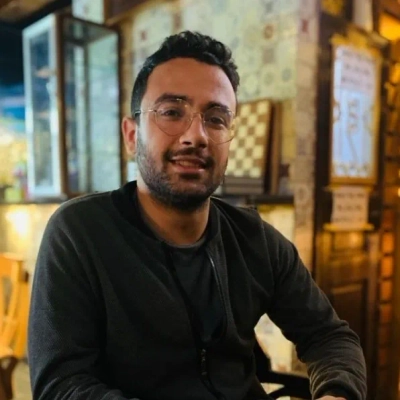
For me as a digital strategist, it’s exciting to think about the possibilities within blockchain technology due to its potential for creating provable ownership of data and intellectual property as well as the ability to enforce impenetrable digital scarcity through code alone. It fundamentally changes the way we think about the internet and moves us away from a Web2 centralized copy-and-paste community towards a system where every individual author and creator retains complete control over their digital identity and assets. It is the basis for what I believe will be the next generation of the web, and there will be far greater trust and transparency in digital transactions.
There are tremendous opportunities for innovation with Decentralized Identity (DID) and Verifiable Credentials (VC) for the professional digital community. The current model of authority and credibility in search engines is based on centralized domain registration and therefore continues to favor traditional models of authority and credibility. The development of DID-based systems on the blockchain will provide technologists, designers, and content creators a means to cryptographically prove and validate their authorship and ownership of their work and code throughout the entire internet and create an indisputable and portable digital authority. This fundamentally alters how search engines evaluate and rank the reliability of a site or URL, therefore shaping the future of how we interact with digital assets and interactions.

I think the use of blockchain in ERP and supply chain management is one of the most exciting areas for innovation. One of supply chain management’s key issues has always been traceability, being able to understand what is passing through where. Blockchain technology enables full visibility into supply chains and allows companies to gain maximum control of their sensitive business data, something that is becoming increasingly vulnerable to cyber attacks, like we saw with the M&S attack. Using blockchain in supply chain management can also enable automated contract settlements and build trust across multiple parties without compromising data security. It really is an area that I see great potential in and something I think will provide maximum business gains.

The most exciting aspect of blockchain isn’t the hype around tokens; it’s the ability to create trust without friction. Blockchain’s distributed, tamper-proof recordkeeping solves one of the oldest problems in technology: how to verify truth between parties who don’t inherently trust each other. That capability opens doors far beyond finance.
The area where I see the biggest opportunity is verifiable data exchange in healthcare. Today, medical records, consent forms, device logs, and clinical data move through fragmented systems full of security gaps and administrative bottlenecks. A blockchain-backed verification layer could ensure that every access, update, and transfer is transparent, traceable, and fraud-resistant, without slowing clinicians down. It would also enable patients to finally control their own health data while allowing authorized providers to access it instantly.
In a world drowning in data but starving for trust, blockchain’s real potential lies in making critical systems, especially healthcare, more secure, more interoperable, and more human-centric.