Today, we’re diving deep into the rabbit hole of the myriad of complaints surrounding the sensational, controversial, and so-called “acclaimed” success of BlockDAG and its presale.
In the volatile world of cryptocurrency speculation, few projects have attracted as much sustained criticism and public suspicion as BlockDAG. Marketed as a next-gen Layer 1 blockchain using Directed Acyclic Graph architecture BlockDAG promises massive scalability high throughput, and mining accessibility. Critics however, argue that the project shows nearly every hallmark of a large-scale crypto scam or, at minimum, an extremely high risk presale operation.
This article consolidates the strongest accusations allegations, and red flags raised by investigators, community members, analysts, journalists, and regulators who have publicly questioned or outright labeled BlockDAG a scam. All claims summarized below originate from publicly available reports, commentary, and user testimonies.
This is not a declaration of guilt but a comprehensive overview of the case presented by BlockDAGs loudest and most persistent critics.
One of the most frequently repeated accusations is that BlockDAGs claimed presale funding figures are fabricated, exaggerated or deliberately misleading.
BlockDAG marketing materials and public statements have claimed presale raises exceeding 300 million and later over 400 million dollars. Critics argue there is no verifiable on-chain data or independently auditable evidence to support these numbers.
On-chain investigator ZachXBT has publicly questioned these claims, stating that the figures do not align with observable wallet activity and suggesting that the project relies on the fact that most retail investors do not know how to verify blockchain transactions.
Multiple Reddit threads echo this concern with users pointing out that wallet activity appears inconsistent with the scale of funding claimed and that the figures are repeated in promotional content without proof.
Some analysts argue that inflated fundraising numbers are a psychological tactic designed to create fear of missing out and legitimacy by association with success.
Another core criticism is the length and structure of the BlockDAG presale.
According to critics, the presale has been running for well over a year with multiple final deadlines announced and then extended. Each extension has been accompanied by marketing language suggesting urgency or a last chance to enter.
Crypto analysts and community members argue that this pattern closely resembles historical presale scams where the fundraising phase continues indefinitely while delivery milestones are pushed further into the future.
Several crypto news outlets have pointed out that despite repeated promises of imminent token launch and exchange listings no clear immutable launch date has ever been honored.
Reddit users frequently refer to BlockDAG as a never ending presale and compare it to prior projects that raised large sums and never delivered a functioning network.
Despite its claimed scale and funding, critics argue that BlockDAG has failed to deliver a publicly usable mainnet.
The most common complaints include the absence of a verifiable blockchain explorer the lack of real transaction history accessible to the public and no evidence of organic network usage.
While BlockDAG has referenced testnets and internal demonstrations, critics argue that none of this constitutes proof of a production-ready network.
Multiple posts highlight that even modest blockchain projects typically release open explorers nodes and developer tooling early in development, which BlockDAG has not done in a transparent manner.
This absence is viewed by critics as especially alarming given the amount of money allegedly raised.
A major red flag frequently cited is the lack of fully transparent leadership.
Investigative writers and community researchers have suggested that the publicly presented CEO may be a hired spokesperson rather than the actual decision maker. Some reports allege that the real controlling figure behind BlockDAG is linked to prior failed or controversial ventures.
While BlockDAG presents a team publicly, critics argue that many profiles lack verifiable work history or appear generic. Some claim that reverse image searches lead to stock photography or AI-generated portraits, though this remains disputed.

The concern is not anonymity alone but the combination of anonymity, massive fundraising, and the lack of accountability.
Several critics point to regulatory red flags surrounding BlockDAG.
Reports claim that financial regulators in multiple jurisdictions have either flagged the project as unauthorized or warned investors about unregistered token sales.
In particular, commentators have referenced warnings from European and United Kingdom regulatory bodies stating that BlockDAG is not authorized to offer financial products in those regions.
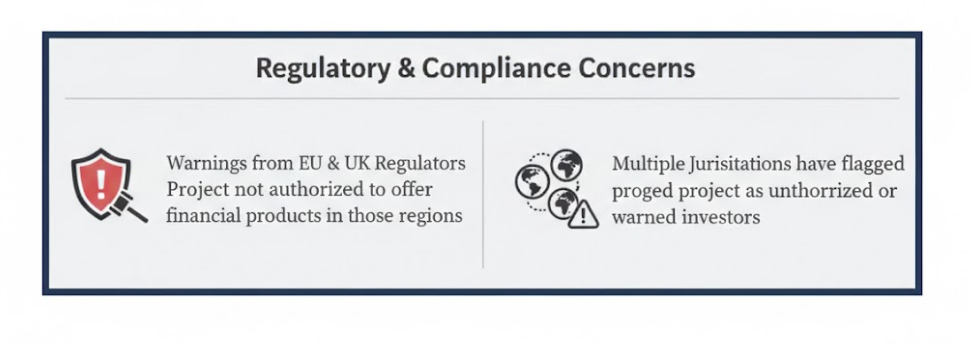
While not a conviction, these warnings significantly elevate perceived risk and have historically preceded enforcement actions against fraudulent projects.
BlockDAG claims significant technical innovation, including extremely high transaction throughput and advanced mining efficiency.
Critics argue that these claims are not supported by publicly available code or peer-reviewed research.
GitHub repositories linked to the project reportedly show limited activity and do not reflect the scale of development implied by marketing claims. Analysts have also suggested that portions of the BlockDAG whitepaper resemble existing documentation from other DAG based projects with minimal original contribution.
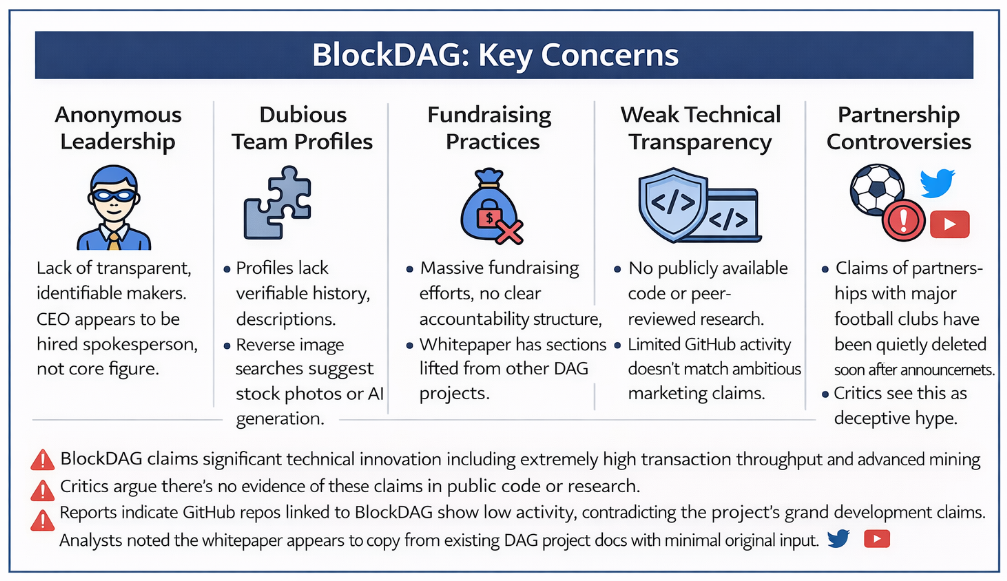
Without an open source code, independent audits, or live performance data, critics argue that the technology claims remain unsubstantiated.
One of the more controversial aspects of BlockDAG is the sale of physical mining devices before the blockchain network is live.
Critics argue that selling thousands of mining units without a functional network or confirmed mining algorithm is a known scam pattern in crypto history.
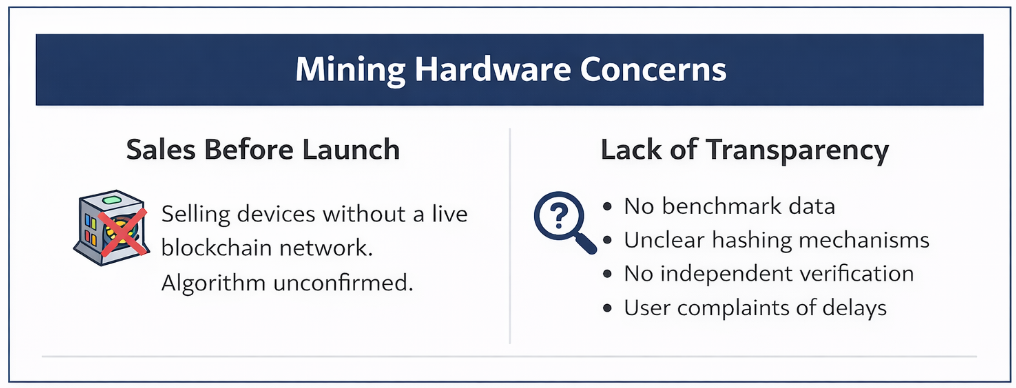
Complaints include the absence of benchmark data, unclear hashing mechanisms, and lack of independent confirmation that the devices function as advertised.
Some users claim delivery delays or that received hardware cannot be meaningfully tested due to the absence of a live network.
BlockDAG marketing has referenced partnerships, sponsorships, and exchange relationships.
Critics argue that many of these are either paid promotional arrangements or unverifiable claims rather than genuine strategic partnerships.
Investigative articles have noted that some announced partnerships were never acknowledged by the supposed partner organizations. Others argue that the exchange listings mentioned are minor platforms known for paid listings rather than organic adoption.
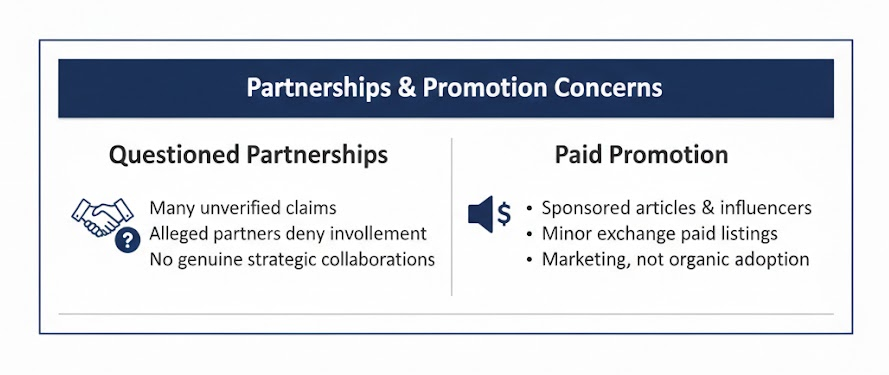
The widespread use of sponsored articles and influencer promotions has further fueled skepticism.
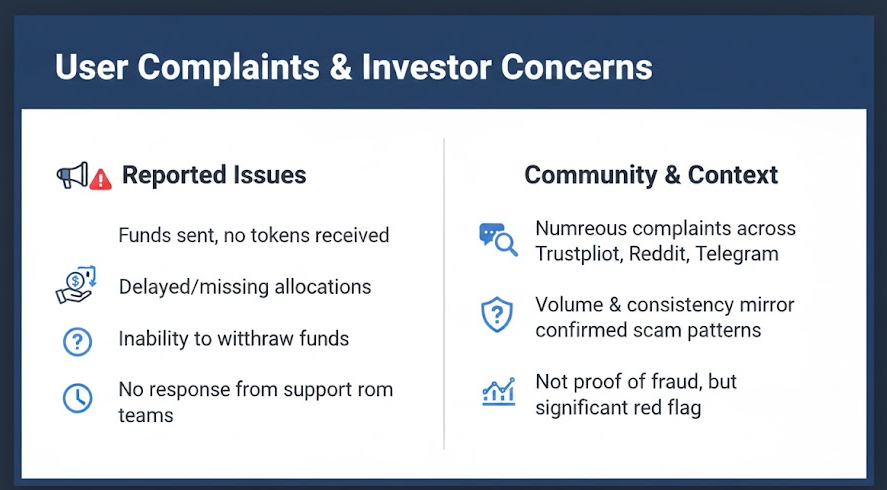
Trustpilot, Reddit, and Telegram groups contain numerous complaints from individuals claiming financial loss.
Reported issues include funds sent without receiving tokens, delayed or missing allocations, inability to withdraw or lack of response from support teams.
While online complaints alone do not prove fraud, critics argue that the volume and consistency of these reports mirror patterns seen in confirmed scams.
Among the frequently cited concerns about BlockDAG is the moderation behavior observed in official community channels. Numerous users have reported being muted, banned, or having critical messages deleted when raising questions about project delays, fundraising transparency, leadership ambiguity, or marketing claims. These complaints appear in public forums and review sites where dissatisfied investors share their experiences of limited ability to engage in open discussion.
Crypto analysts and investigators argue that while moderating offensive or abusive content is normal, the systematic suppression of critical discourse in official channels, especially on platforms like Telegram and Discord, can be a warning sign in high-risk investment environments — because it can prevent transparency and discourage scrutiny of important issues.
In some instances where large presales and aggressive marketing are involved, criticism of a project’s progress or claims can provoke pushback from moderators, leading to perceptions of censorship. In online ecosystems more broadly, community moderation is known to shape which voices are amplified or suppressed, and overly restrictive controls can fuel distrust among stakeholders.
BlockDAG’s brand has been repeatedly impersonated by malicious actors who set up fake presale pages and phishing domains that mimic the project’s look and language. Security analysts and site-removal trackers have catalogued specific scam domains tied to the BlockDAG presale funnel and security tools (including MetaMask phishing blocklists) have flagged related domains as high-risk.
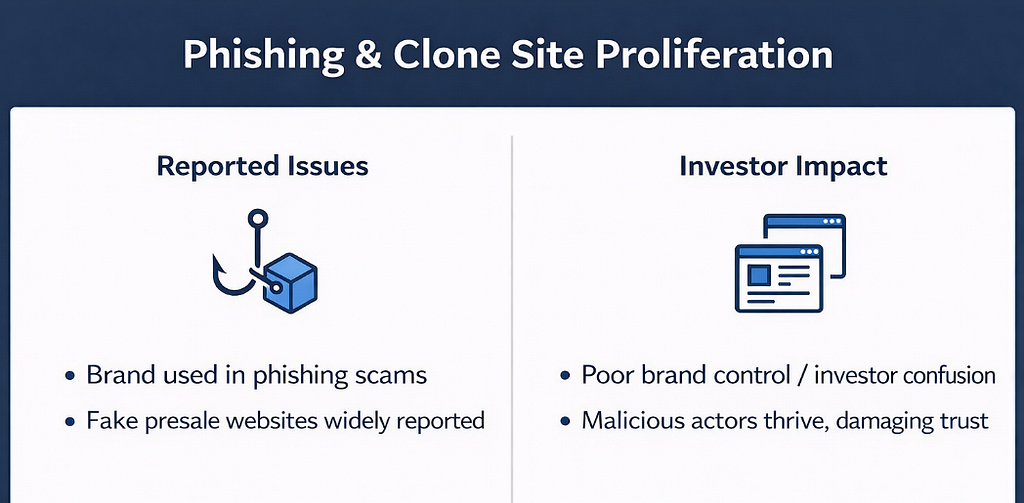
High volume = Confusion at scale.
When dozens or hundreds of look-alike presale sites and social posts appear, retail investors can’t reliably distinguish official links from fakes. That confusion increases the chance of credential theft, wallet compromise, or sending funds to fraudulent wallets. Industry guidance shows phishing and cloned pages are a top vector for crypto theft.
Poor brand control is exploitable.
Rapid, aggressive presale marketing creates fertile ground for impersonators. The presence of many successful clone pages suggests inadequate centralised domain/brand monitoring and weak controls on partner/affiliate channels — which fraudsters exploit to scale their operations quickly. Security telemetry from takedown firms shows these campaigns have become industrialized.
Takedowns lag; deception persists.
Scammers use short-lived domains, cloaking, and automated redeployment. Even after a domain is reported or taken down, near-identical domains frequently reappear, meaning takedown alone rarely solves the problem.
Public reporting and community warnings are helpful but, in most cases, reactive.
Direct financial losses
Victims who follow fraudulent links can lose funds via fake checkout flows or by being tricked into revealing private keys. Regulatory and investor protection bodies consistently list phishing as a leading cause of crypto losses.
Erosion of trust
Persistent impersonation reduces confidence in the underlying project and the broader market, inflating reputational risk beyond immediate financial harm. High-profile community warnings can accelerate withdrawal of partner interest and community support.
Independent writeups and community analysts have catalogued suspicious presale mechanics and numerous phishing domains in their investigative posts. Those writeups illustrate how presale urgency language (deadline/batch messaging) is combined with cloned presale sites to increase conversion.
The volume and persistence of clone/presale phishing pages, plus multiple security flags and community warnings indicate a serious brand-control problem that materially raises investor risk.
Whether the root cause is entirely operational or whether it reflects deliberate manipulation by actors allied with the presale is a separate investigatory question; however, the practical effect is the same - An environment in which malicious actors can extract funds and damage reputations at scale.
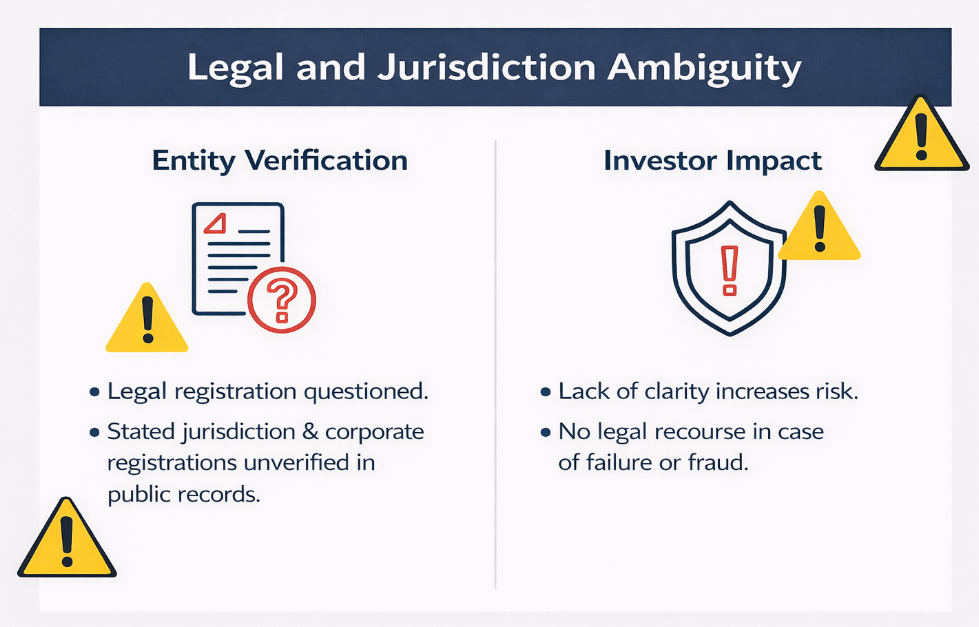
Questions have also been raised about BlockDAGs legal registration.
Some investigators claim that the projects stated jurisdiction and corporate registrations cannot be independently verified in public records. This lack of clarity increases risk for investors who have no legal recourse in the event of failure or fraud.
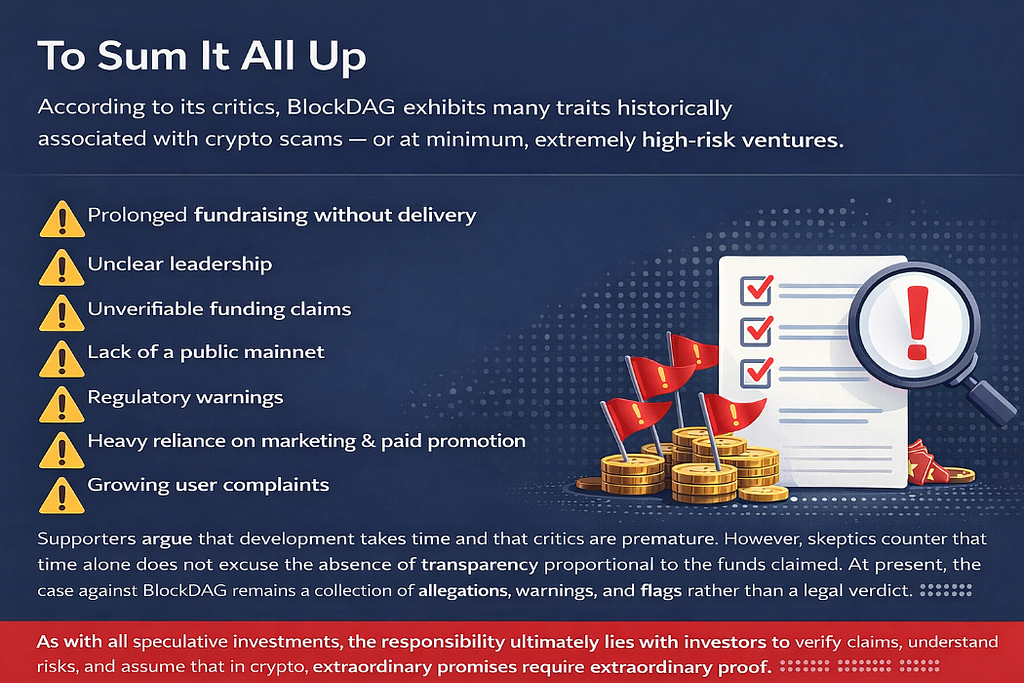
According to its critics, BlockDAG exhibits many traits historically associated with crypto scams or at minimum, extremely high-risk ventures.
These include prolonged fundraising without delivery, unclear leadership, unverifiable funding claims, lack of a public mainnet, regulatory warnings, heavy reliance on marketing & paid promotion, and growing user complaints.
Supporters argue that development takes time and that critics are premature. However, skeptics counter that time alone does not excuse the absence of transparency proportional to the funds claimed.
At present, the case against BlockDAG remains a collection of allegations, warnings, and red flags rather than a legal verdict. Nevertheless, critics argue that the convergence of these factors places BlockDAG among the most controversial and scrutinized crypto projects of its cycle.
As with all speculative investments, the responsibility ultimately lies with investors to verify claims, understand risks, and assume that in web3, extraordinary promises require extraordinary proof.
It is important for me to state my own position clearly.
I am not writing this as an outside observer with no exposure. I am a small fish investor in BlockDAG myself. My allocation is modest and fully within what I can afford to lose. I entered not because of marketing claims or presale hype but because the underlying vision of a scalable DAG based blockchain is intellectually compelling.
That said, belief in a vision does not automatically translate into confidence in execution.
The concerns outlined above are real concerns. Delays lack of transparency, inconsistent communication and unanswered questions do not disappear simply because the idea sounds good. In web3 history, many strong ideas have failed due to poor leadership, weak governance and/or outright misuse of funds.
This article is not an attempt to incite panic, nor is it a call to abandon the project. It is an attempt to document what critics are saying and why so many experienced participants are uneasy. Ignoring these signals does not make them go away.
If BlockDAG delivers a functioning public network verifiable data open development and accountable leadership then much of this criticism will dissolve on its own. Until then skepticism is not hostility. It is due diligence.
As a small investor I hope the project succeeds. As a rational one I accept that hope is not a strategy.
BlockDAG : Grand Crypto Scam or Misunderstood Innovation was originally published in Coinmonks on Medium, where people are continuing the conversation by highlighting and responding to this story.





