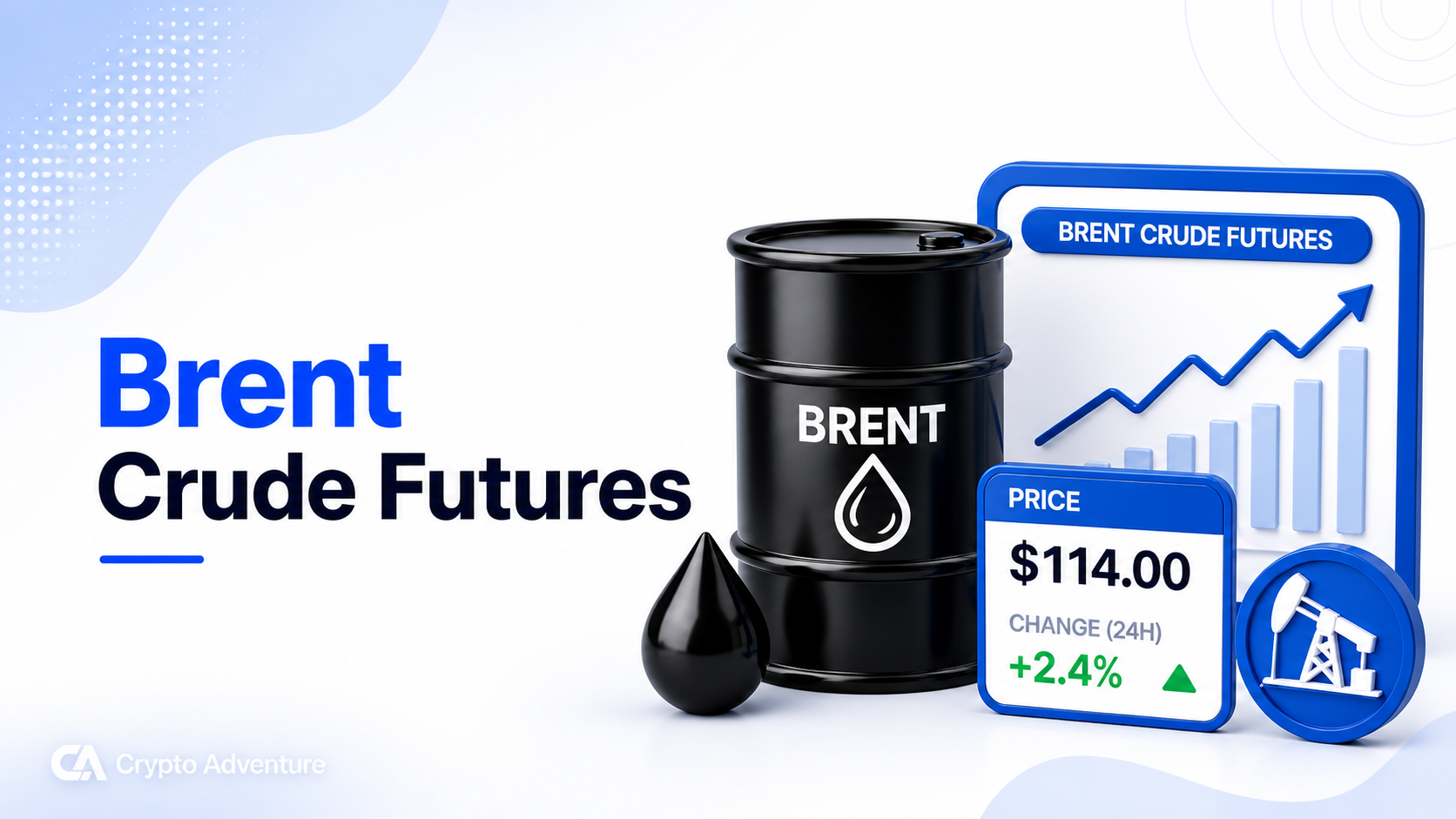
Brent crude is holding above $113 per barrel, keeping the global economy exposed to a fresh inflation shock just as traders are trying to price a recovery in risk assets.
Market analyst Axel Adler Jr. flagged the pressure in a post on X, warning that the global economy could soon feel the consequences through faster inflation, higher costs, and weaker growth. The warning landed as live oil data continued to show Brent in the $113 zone, with Trading Economics placing Brent near $113.6 on May 5 after a sharp move tied to Middle East supply risk.
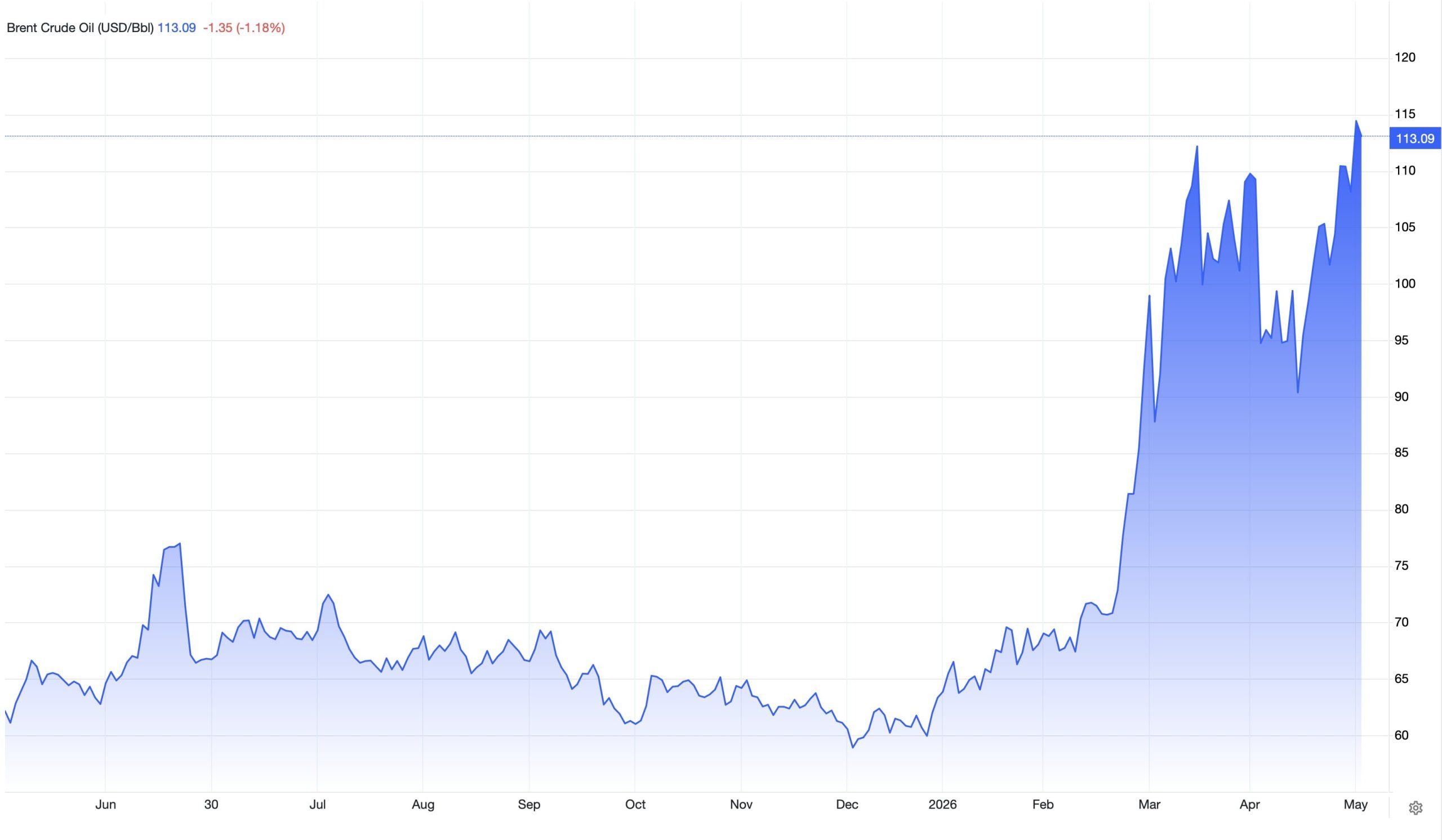
Reuters also reported that Brent futures held near $114 despite a slight pullback, with traders still focused on U.S.-Iran tensions and the Strait of Hormuz. The same report placed Brent at $113.51 after the previous session’s strong surge, while WTI traded near $104. The issue is not only the latest oil tick. It is the fact that crude remains expensive enough to keep pressure on transport, fuel, manufacturing, food inputs, shipping, and consumer inflation.
A sustained oil shock can hit the economy in several ways at once. It raises headline inflation through gasoline, diesel, jet fuel, freight and petrochemical inputs. It squeezes households because fuel costs behave like a tax on disposable income. It also pressures companies that cannot fully pass higher energy bills to customers.
That mix is uncomfortable for central banks. If oil stays elevated, inflation can remain sticky even while growth slows. Investors may want rate cuts to protect the economy, but policymakers become more cautious when energy prices threaten to feed into inflation expectations.
That tension is already visible in bond markets. A recent Treasury yield spike story showed how quickly rate-market stress can reprice liquidity expectations, while a separate Trump-Powell rates update placed the 10-year yield near 4.5% and the average 30-year mortgage rate above 6.5%. Oil above $113 adds another layer to that same pressure.
Crypto does not trade directly on Brent crude, but it is highly exposed to the liquidity conditions that oil shocks create. If higher energy prices keep inflation firm and bond yields elevated, Bitcoin and altcoins can lose part of the easier-policy tailwind that helped the latest rally.
A recent crypto market snapshot showed Bitcoin holding above $80,000 on the back of ETF demand, fresh stablecoin liquidity, and short liquidations. That setup works best when financial conditions are stable or easing. It becomes more fragile if crude keeps rising, yields stay high, and investors begin cutting exposure to high-beta assets.
The market has already seen how oil can shape crypto positioning. A prior Iran war and oil-price analysis warned that a prolonged energy shock could delay the crypto bull run by keeping inflation elevated and rate-cut expectations under pressure. Another China-Iran crude sanctions update showed how sanctions, refinery flows, and dollar-settlement risk can keep geopolitical premiums embedded in oil.
Oil above $113 is not only an inflation story. It is also a growth story because expensive energy drains demand from other parts of the economy. Airlines, logistics firms, manufacturers, food producers, and emerging-market importers feel the pressure first. Consumers then absorb it through fuel, power bills, and higher prices for goods that depend on transport and energy-intensive inputs.
That is why the current oil level matters for crypto traders even when Bitcoin looks technically stronger. BTC can still climb if ETF inflows remain strong and the $80,000 breakout holds, but a persistent crude shock raises the cost of that rally. It keeps central banks cautious, keeps yields elevated, and makes every risk-asset breakout more dependent on fresh liquidity rather than broad economic comfort.
Brent holding above $113 leaves markets facing a more expensive backdrop than last week’s crypto rally suggested. Bitcoin has room to push higher if buyers defend $80,000 and flows stay positive, but oil is now carrying the macro warning: inflation pressure is not fading cleanly, and a longer energy shock would test how much risk appetite is really behind the move.
The post Brent Holds Above $113 As Oil Shock Threatens Inflation And Crypto Liquidity appeared first on Crypto Adventure.





