On 15 July, Circle Grupo BIND Partnership announced to provide access to USDC stablecoins through regulation in Argentina. This partnership seeks to assist companies in managing their currency risk. This is achieved by the use of Grupo BIND’s digital asset platform.
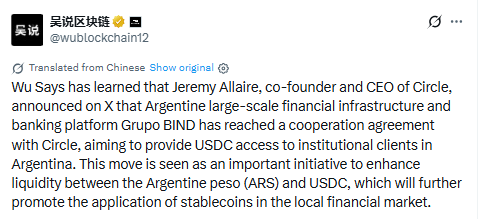
Source: Show Original
BEN will serve as the infrastructure layer connecting eligible Argentine institutions to a dollar-backed stablecoin, covering payments, treasury operations, and broader digital asset transactions, all wrapped in a compliance framework that BIND is keen to emphasize.
Circle continues expanding its digital dollar strategy in countries like Brazil, Mexico, and Colombia. This shows that Latin America is an important place for its growth.
The firm aims to increase its usage by partnering with regulated banks and other financial institutions
For a time, Tether was the main stablecoin used in Latin America, especially when people were buying and selling things with each other.
They are teaming with a company named BIND to help large companies and institutions—not just individual people.
It is really good at following rules and being transparent, which is important for businesses that have to follow a lot of rules.
This could make the market for stablecoins like the digital dollar in Latin America more competitive.
The partnership could encourage wider adoption of regulated digital dollars.
The economy and rules in Albiceleste Nation are still very hard to predict.
Government policies frequently evolve. This might impact how it works.
Even though the organisation is talking to the Central Bank of Argentina and the Ministry of Economy, this does not mean that there will not be problems in the future.
How Circle does in the Albiceleste Nation will depend on what the government decides to do in the next few years.
Circle is working with Grupo BIND to help it grow in Argentina. This is part of its plan to expand across Latin America. Circle aims to help businesses and institutions access compliant USDC infrastructure, and institutions in the region use USDC by providing services that follow the rules. Circle wants more people to use it in the region. For Circle and USDC to succeed over the long term, they have to deal with the changing rules in Argentina and make sure they are doing everything correctly, even when the economy and policies are not stable.
YMYL Disclaimer: This article is for informational and educational purposes only and should not be considered financial, investment, legal, or tax advice. The information presented is based on publicly available resources, and every regulatory statement should cite an official announcement or trusted publication.





