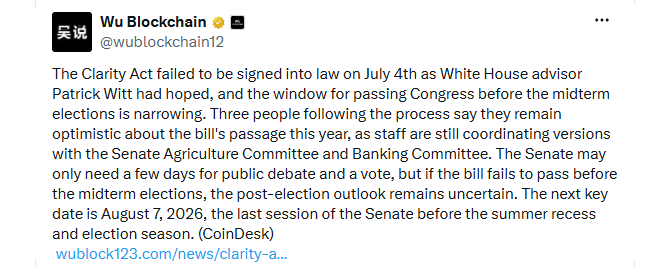
The US crypto CLARITY Act missed the July 4 signing target that White House adviser Patrick Witt had hoped for, and the window to get it through Congress before midterm campaigning takes over keeps shrinking.
Source: Wu Blockchain Official
Some officials close to the process still say they expect the bill to pass this year, even as the calendar works against them. The next date that matters is August 7, 2026, the final Senate session day before summer recess.
At the same time, Polymarket, the largest prediction market, now puts the odds of it passing this year at just 44%. Lawmakers need to move the bill forward before Congress breaks for summer recess, or the whole effort risks sliding into 2027 while attention shifts to the midterms.
Market analysts flagged August 7, 2026 as the day that decides whether the Digital Asset Market Clarity Act, formally H.R. 3633, keeps moving or stalls out for the year. The bill sits on the Senate calendar right now, listed as Calendar No. 423, with a tight runway before the August recess deadline shuts the window.
Missing this stretch carries real weight. Crypto bills rarely move fast through Congress, and once midterm election season takes over floor time, a delayed bill often waits until the next session entirely.
This bill has already covered more ground than most digital asset legislation before it. The House passed it on July 17, 2025, with a bipartisan 294-134 vote during what lawmakers called Crypto Week, and the Senate Banking Committee advanced it 15-9 on May 14, 2026 under Chairman Tim Scott.
The framework splits oversight cleanly between two regulators. The CFTC takes primary authority over digital commodities like Bitcoin and Ethereum spot markets, while the SEC handles assets that behave more like securities. DeFi safe harbors, stablecoin rules, and exchange broker requirements round out the package.
A handful of sticking points have slowed things down since committee passage. A few remain unresolved heading into this week:
Stablecoin yield and reward language still needs final wording
DeFi safe harbor terms require agreement between industry groups and regulators
Ethics rules for officials holding crypto sit outside the Banking Committee's normal reach
The bill needs 60 votes on the floor, meaning several Democratic senators must join Republicans
Floor time keeps shrinking as the August recess and November midterms close in
Earlier this year, banks pushed back against stablecoin yield features over fears of pulling deposits away from traditional accounts, while digital asset firms argued the DeFi safe harbor didn't go far enough.
More than 100 amendments came in during May markup alone, covering everything from illicit finance rules to CFTC nominee questions.
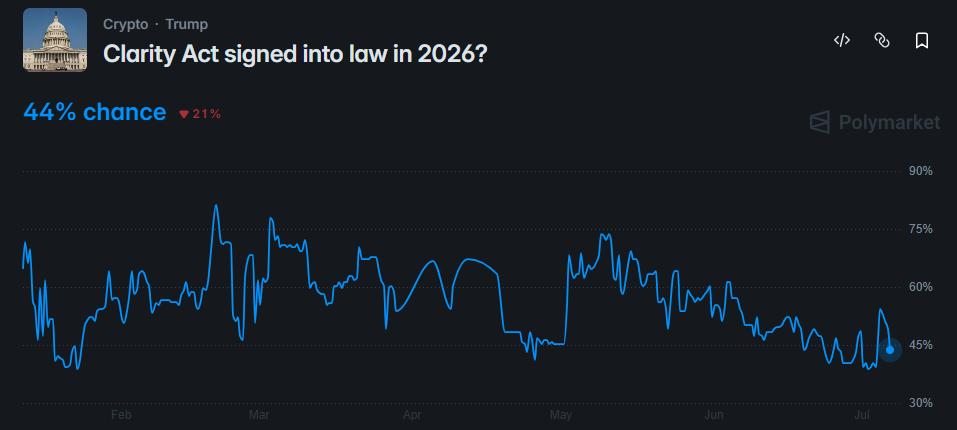
Polymarket's 44% figure reflects just how uncertain this path has become, even after clearing the House and committee stages. Passing this year would need quick manager's amendments, firm backing from Senate leadership, and enough bipartisan votes to clear that 60-vote threshold before recess.
Success would let banks and institutions custody and offer crypto under clear federal rules, strengthen the case for U.S. competitiveness against other financial hubs, and give the industry the market structure it has waited years to get.
Falling short pushes the decision into 2027, stretching out the current stretch of enforcement-first crypto policy and leaving smaller innovators guessing at the rules a while longer.
Disclaimer: This article is for informational purposes only and does not constitute financial or investment advice. Crypto markets carry significant risk. Always do your own research before making any investment decisions.





