
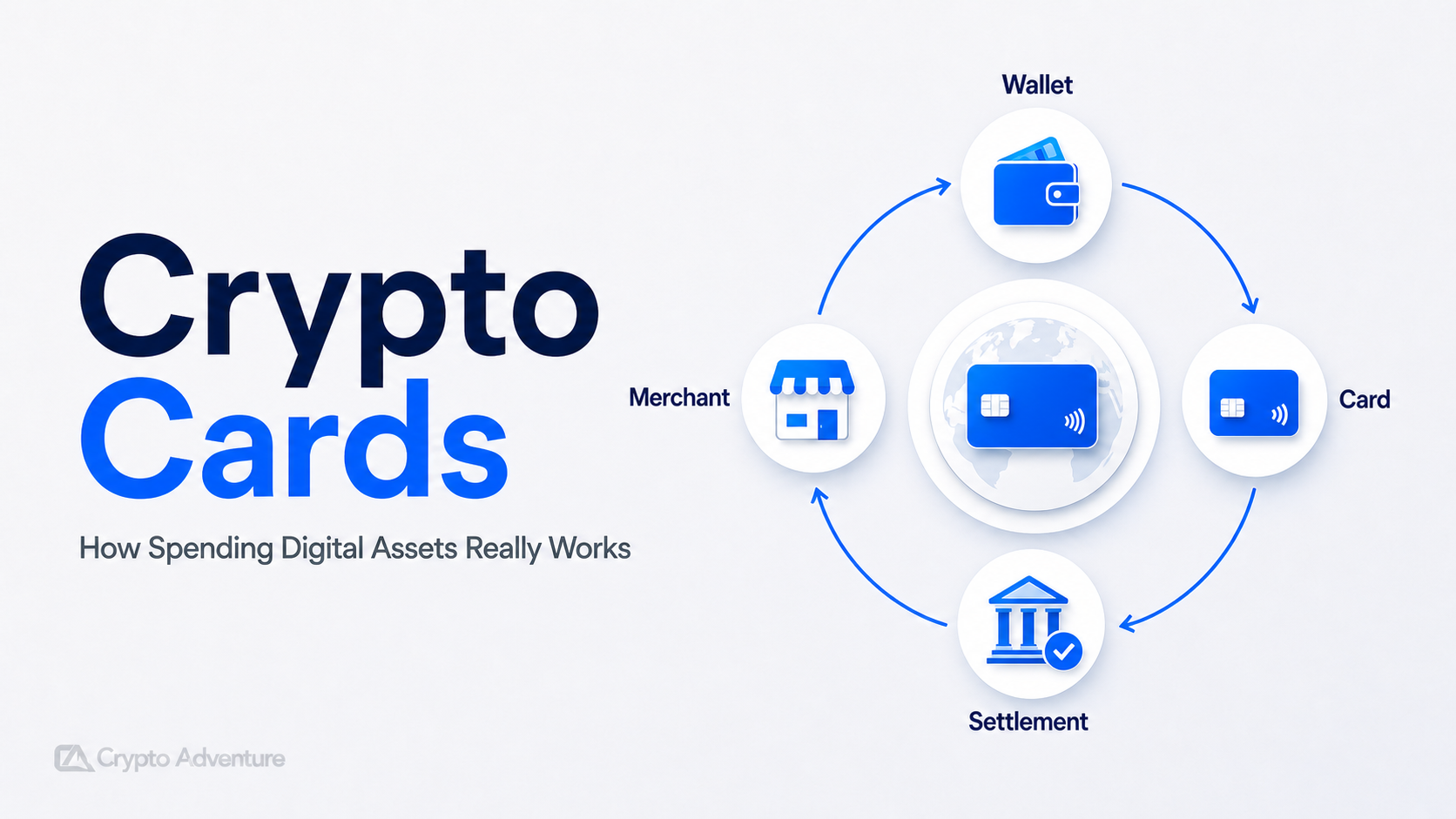
Crypto cards let users spend digital assets through ordinary card networks. The card may look like a Visa or Mastercard debit, prepaid, or credit card, but the funding source can involve Bitcoin, Ethereum, stablecoins, exchange balances, or a crypto wallet behind the scenes.
The important point is that most merchants do not directly receive Bitcoin or another crypto asset when a customer taps a card. The merchant usually receives fiat settlement through the normal card network. The crypto side happens before or during authorization, when the card provider converts, reserves, or debits the user’s digital asset balance.
That makes crypto cards a bridge between two systems. The user wants to spend crypto. The merchant wants normal card settlement. The card issuer, processor, exchange, or wallet provider handles conversion, compliance, authorization, settlement, rewards, and disputes.
A crypto card payment starts like a normal card transaction. The user taps, inserts, or enters card details online. The merchant sends the authorization request through the card network. The crypto card provider checks whether the user has enough available balance, then approves or declines the transaction.
The conversion model depends on the product. Coinbase Card lets eligible users spend cash or crypto anywhere Visa debit cards are accepted, while the EU help flow explains that crypto can be converted to fiat for purchases and ATM withdrawals. Crypto.com uses a prepaid structure where supported crypto can be converted into the relevant market currency and loaded for spending.
That difference matters. Some crypto cards spend directly from exchange balances with instant conversion. Others require top-ups into a fiat card balance first. Stablecoin-linked cards may use stablecoin balances more directly, but the merchant still usually receives fiat through the card network.
Crypto cards generally fall into three models.
The distinction affects taxes, fees, volatility, and budgeting. A prepaid card can lock spending value before the purchase. A live conversion card exposes the user to market price at authorization. A credit card may create normal credit risk rather than direct crypto-spending risk.
Stablecoin cards are becoming more important because stablecoins reduce volatility. A user spending USDC or USDT does not face the same price movement risk as someone spending BTC or ETH. That makes stablecoins more suitable for payroll, remittances, business travel, creator payouts, and everyday spending.
Visa’s stablecoin platform focuses on stablecoin movement, minting, burning, settlement, and cross-border money movement, while Visa’s 2026 stablecoin settlement expansion with Bridge gives issuers and acquirers a path to settle with Visa using stablecoins over supported blockchains. That shows how crypto card infrastructure is shifting from only user-side conversion toward stablecoin settlement inside the payment network.
This is the next step for crypto cards. The card can still work at ordinary merchants, but the back-end settlement layer can use stablecoins to move value faster between financial institutions, processors, and issuers.
Crypto cards can include several fee layers. The first is conversion spread. If BTC or ETH is sold into fiat at the time of purchase, the user may receive a rate that includes a spread. The second is card fees, which can include ATM fees, foreign exchange fees, top-up fees, replacement fees, or inactivity fees depending on the product.
The third is blockchain cost. If the user must move funds into the card account from an external wallet, network fees may apply. The fourth is tax cost. In many jurisdictions, spending crypto can create a taxable disposal event because the user is selling or exchanging a digital asset to make the purchase.
Users should not judge a card only by rewards. A card that pays crypto rewards can still be expensive if the spread, foreign exchange charge, or withdrawal fee is high.
Crypto card rewards usually come in one of three forms: cashback in crypto, points converted into crypto, or perks tied to staking or lockups. Crypto.com’s card tiers, for example, connect benefits to CRO lockups in some markets, while Coinbase offers crypto rewards on eligible U.S. card purchases.
Rewards can be useful, but they are not free. Token lockups create market risk because the locked asset can fall. Reward rates can change. Perks can be limited by geography, merchant category, card tier, or promotional period.
The better review starts with the net cost of spending. A high reward rate does not help if the user pays high conversion fees or locks into a volatile token that falls more than the reward value.
Crypto cards often require users to hold funds with an exchange, issuer, wallet provider, or custodial partner. That creates custody risk. If the provider freezes an account, changes terms, faces regulatory action, or suffers an operational failure, the user may lose card access.
Non-custodial stablecoin card models are emerging, but they still need authorization, compliance, and settlement infrastructure. Even when the user holds funds in a wallet, the card provider must know whether a payment can be approved, which asset can be used, and how settlement will happen.
Crypto cards therefore sit between self-custody and traditional finance. They improve spendability, but they often reduce direct control compared with simply holding assets in a wallet.
Crypto card spending can create tax complexity. Selling Bitcoin for a coffee can still be a taxable event in some jurisdictions. The user may need to track cost basis, disposal value, gains, losses, and fees.
Stablecoins can reduce price volatility, but they may still require reporting depending on local rules. Business users also need receipts, invoices, merchant data, card statements, and accounting exports.
This is one reason stablecoin cards and fiat-preloaded cards can feel cleaner. They reduce price volatility at spending time, even if the original conversion still needs records.
Crypto cards fit users who want convenience more than maximum self-custody. They are useful for travelers, freelancers, crypto-native workers, stablecoin earners, and users who want to spend digital assets without manually selling on an exchange.
They are less suitable for users who want full control, minimal fees, or long-term holding discipline. Spending volatile assets can create regret when prices rise. Lockup-based card perks can create risk if the reward token falls.
Crypto cards do not usually make merchants accept Bitcoin directly. They make digital assets spendable through existing card networks by converting, reserving, or settling value behind the scenes. The user sees a crypto-funded card. The merchant usually receives normal fiat settlement.
The strongest crypto cards make conversion, fees, rewards, custody, taxes, and settlement easy to understand. The biggest risks are hidden spreads, taxable disposals, account freezes, reward changes, token lockups, and provider dependence. Crypto cards are useful when the spending convenience is worth the trade-off between wallet control and card-network access.
The post Crypto Cards: How Spending Digital Assets Really Works appeared first on Crypto Adventure.





