Crypto is closing the week in cautious green after a whipsaw few days. A softer-than-expected inflation print early in the week pushed Bitcoin briefly above $65,000 and Ethereum over $1,900, before a sixth straight day of U.S. airstrikes against Iran pulled risk assets back down. As of now, the majors are holding modest weekly gains, but the market remains firmly below where it started 2026.
Here's what moved this week and what to watch next.
As of this weekend, here's the snapshot for the majors:
Bitcoin dominance sits around 57%, and total 24-hour market volume is hovering near $36 billion. Sentiment has recovered from June's "Extreme Fear" lows but remains fragile.
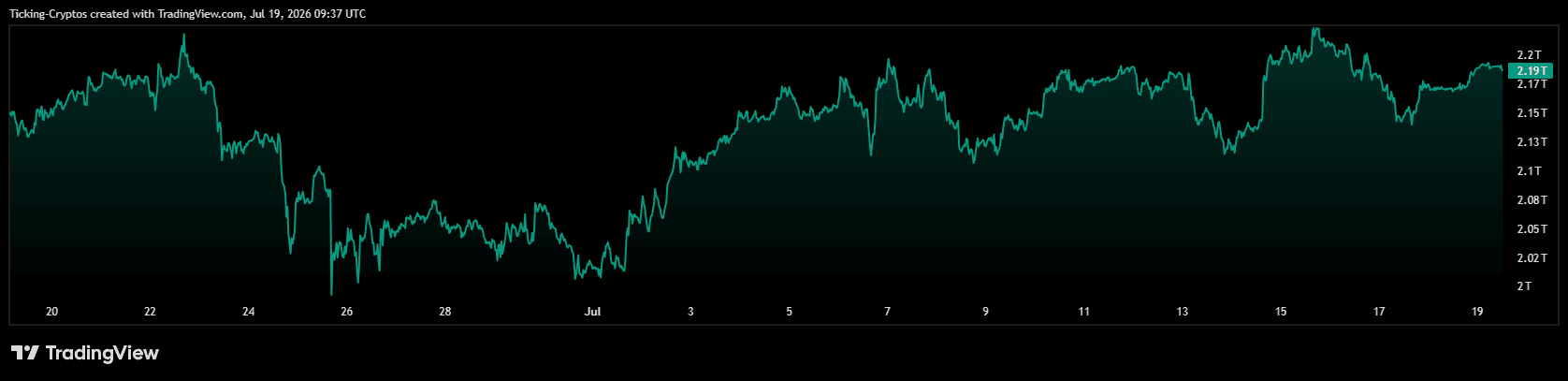
Three forces defined the week. First, a softer inflation report early in the week reignited hopes of a less hawkish Fed, sparking the mid-week surge that briefly took Bitcoin over $65K. Second, geopolitics reasserted itself — a sixth day of U.S. airstrikes against Iran, with the Strait of Hormuz effectively closed and oil prices climbing, dampened appetite for risk-based assets like crypto. Third, ETF flows kept whipsawing: after June's record $4.5 billion in net outflows — the worst month on record for U.S. spot Bitcoin ETFs — early July saw flows partially reverse, and the market is watching closely for the first sustained "consecutive net inflow week" that many analysts see as the signal to re-engage.
Ethereum continued to quietly outperform. Analysts point to ETH's historical tendency to lead broader crypto recoveries, and its technical setup — having reclaimed key moving averages while pressing toward 100-day EMA resistance near $1,944 — looks stronger than Bitcoin's right now.
The short version: Bitcoin's 2026 pain hasn't come from crypto fundamentals — it's come from flows and macro. ETF outflows removed a large structural source of demand, a hawkish Fed under Chair Kevin Warsh kept the dollar firm, and capital rotated into AI stocks for much of the year. Warsh's June meeting delivered an unambiguously hawkish message, with the dot plot now pointing toward a possible hike in 2026 rather than a cut. Until ETF flows turn durably positive, Bitcoin's biggest structural bid remains a swing factor rather than a tailwind.
The calendar is dominated by one event: the Federal Reserve's July 28–29 FOMC meeting. Markets are now pricing a meaningful probability of a rate hike, a stark shift from the rate-cut expectations that carried into the year. This meeting is widely viewed as the decider for whether the recent bottom holds or another leg lower opens up.
Key things to watch:
Expect range-bound, headline-driven trading in





