Crypto mining is a process of solving extremely complex equations to generate new coins in circulation. When any crypto is successfully mined, the miner receives a predetermined amount of crypto coin.
In the present world, cryptocurrency has gained immense popularity, and everyday people are investing in crypto coins. The method through which new cryptocurrencies are placed into circulation is known as crypto mining. It is also how the network certifies new transactions and is an important part of the blockchain ledger’s maintenance and development. There are more than 20,000 cryptos worldwide, and mining is a significant term that a crypto holder should know. In this article, we are going to discuss what mining is and how it works.
Table of Contents
The process of “mining” involves using advanced technology to solve a very challenging computational arithmetic problem. The next block of crypto coin is given to the first computer to solve the issue, and the process starts over.
Mining for cryptocurrencies is consume a lot of time, is expensive, and is rarely rewarding and profitable. However, because miners are compensated for their efforts with crypto coins, mining has a magnetic pull for many investors who are interested in cryptocurrencies.
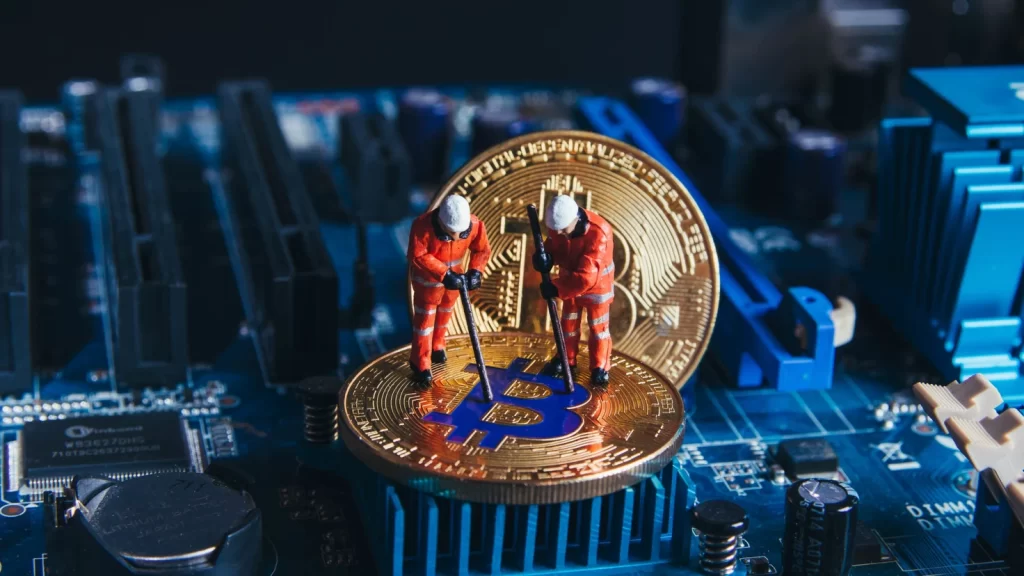
Numerous cryptocurrency uses the mining process to create a new currency and validate fresh transactions. Blockchains, the digital ledgers that record cryptocurrency transactions, are verified and secured by massive, decentralized networks of computers located all over the world. The network’s computers receive fresh coins in exchange for using their computing power. It’s a positive feedback loop:
There are three main methods for getting any cryptocurrency. They are available for purchase on exchanges like Coinbase, BitMart, and other exchange platforms as payment for products or services, or you can digitally “mine” them.
One might have thought of attempting crypto mining on their own. Anyone with a simple personal computer could participate ten years ago. However as the blockchain has expanded, more computing power and energy is needed to keep it running. As a result, it’s unclear whether hobbyist cryptocurrency mining is currently profitable for amateurs.
Funex coin is one of the crypto coins that doesn’t require mining. Anyone can buy it from major exchanges and wallets. It is a native token of Funex club which was built on a multi-blockchain. It is a secure and one of the best crypto which offers a variety of features.
Cryptocurrency mining refers to the process of validating transactions and adding them to the blockchain while also issuing new coins as a reward. There are several types of cryptocurrency mining, each utilizing different techniques and algorithms. Here are some common types:
This is the most traditional form of mining used by cryptocurrencies like Bitcoin. Miners use high computational power to solve mathematical puzzles which is complex. The first miner to solve the puzzle gets to add the next block to the blockchain and is rewarded with newly minted coins and transaction fees.
In this type of mining, validators are chosen to create new blocks and validate transactions based on the number of coins they “stake” or lock up as collateral. The more coins a validator has, the higher the chance of being chosen to create a block and receive transaction fees as a reward.
This method relies on approved validators or nodes who are given the authority to validate transactions and create new blocks. Validators are typically selected based on their reputation or identity within the network.
DPoS is a variation of PoS where coin holders can delegate their coins to a chosen set of validators who take turns in creating new blocks. The more coins a validator has delegated to them, the more likely they are to be selected to create blocks and receive rewards.
PoSpace involves using storage space on a computer or device to prove that a certain amount of space is reserved for mining. This approach is employed by some cryptocurrencies like Chia, which use hard drive space instead of computational power.
In PoB, miners send coins to an unspendable address (burn them), providing proof of their commitment to the network. By doing so, they may be rewarded with newly minted coins or other benefits.
Some cryptocurrencies use a combination of mining algorithms, such as combining PoW with PoS to leverage the advantages of both methods.
Also Check: Is Cryptocurrency Truly the Future of Money?
Mining cryptocurrency is about more than just making money. In the blockchain network, miners play a very important role. They solve math questions and give the go-ahead for other users’ online transactions. Miners protect blockchains from block theft and hacker attacks, and they also make sure that the network is not centralized. But the main point of digging is not the same. The main purpose is to come to an understanding of what makes a transaction valid so that no one can spend coins that have already been spent in another transaction. Because of this, getting Bitcoin is just a bonus for doing good work.
Proof of Work (PoW) is a consensus mechanism used in blockchain networks to achieve distributed consensus and secure the system. It was introduced by Satoshi Nakamoto as an integral part of Bitcoin’s design. In a PoW-based blockchain, miners compete to solve complex mathematical puzzles, and the first miner to find a valid solution gets the right to add the next block of transactions to the blockchain.
The cryptocurrency mining process involves several steps:
Also Check: Top 10 Stablecoins to Buy in 2023
One of the significant challenges in cryptocurrency mining is the extreme price volatility of cryptocurrencies. The value of cryptocurrencies can fluctuate dramatically over short periods, impacting the profitability of mining operations. Miners invest in expensive hardware and bear ongoing operational costs, such as electricity, cooling, and maintenance. When cryptocurrency prices drop significantly, mining may become less profitable or even lead to financial losses. Such price volatility can make it difficult for miners to predict their returns and make long-term investment decisions.
The network difficulty level adjusts regularly in Proof-of-Work (PoW) mining based on the total computational power (hash rate) of the network. As more miners join the network or as existing miners increase their computational power, the difficulty level increases. Higher difficulty means that miners need to perform more computational work to find a valid solution to the PoW puzzle and mine a block. This increase in difficulty can lead to reduced block rewards and longer time intervals between successful block mining, affecting mining profitability.
Cryptocurrency mining operations are not immune to security risks and potential attacks. Some of the risks include:
51% Attack: In PoW-based blockchains, a malicious entity with more than 51% of the network’s total hash rate can control the blockchain’s consensus process. This entity can potentially reverse transactions, double-spend coins, or prevent new transactions from being confirmed. It is crucial to have a decentralized network to prevent such attacks.
Sybil Attacks: Malicious actors could create multiple fake identities (Sybil nodes) on the network to control a significant portion of the computational power, potentially disrupting the consensus mechanism.
Distributed Denial of Service (DDoS) Attacks: Mining pools and individual miners could be targeted with DDoS attacks, affecting their ability to contribute to the network and receive rewards.
Malware and Phishing: Miners may be targeted with malware or phishing attacks, compromising their mining hardware or stealing their cryptocurrency assets.
Smart Contract Vulnerabilities: In networks that support smart contracts, poorly coded or audited smart contracts could be exploited, leading to financial losses for miners and users.
Check Out: Top 10 Best Crypto Wallets in India
The future of cryptocurrency mining is expected to be marked by several technological innovations:
Efficiency Improvements: Mining hardware is likely to become more energy-efficient and powerful, reducing the environmental impact of mining operations.
Custom Hardware Solutions: The development of specialized hardware tailored for specific mining algorithms or tasks could enhance performance and reduce energy consumption.
AI and Machine Learning: These technologies could be employed to optimize mining operations, predict market trends, and improve decision-making for miners.
Decentralized Mining Pools: Advances in blockchain technology may lead to the creation of decentralized mining pools, mitigating the risks associated with centralized control.
Smart Mining Contracts: Automated and self-executing smart contracts could streamline mining operations, enabling more secure and transparent agreements between miners and mining pool operators.
Cryptocurrency networks are likely to explore alternative consensus mechanisms beyond Proof of Work (PoW):
Proof of Stake (PoS): PoS is gaining popularity as an energy-efficient alternative to PoW. It involves validators who are chosen to create new blocks based on the amount of cryptocurrency they hold and are willing to “stake” as collateral.
Proof of Space (PoSpace): PoSpace uses unused storage space on a device to mine cryptocurrencies, offering an energy-efficient approach compared to traditional PoW.
Hybrid Approaches: Cryptocurrencies might adopt hybrid consensus mechanisms that combine PoW, PoS, or other methods to achieve a balance between security, decentralization, and efficiency.
While exact predictions vary, some trends are anticipated:
Energy Transition: Mining may shift towards greener energy sources and sustainable practices to address environmental concerns.
Regulatory Landscape: Evolving regulations around cryptocurrencies could impact mining operations, requiring miners to adapt to compliance requirements.
Increased Specialization: Miners may become more specialized, focusing on specific cryptocurrencies or algorithms to optimize their operations.
Market Maturation: As the cryptocurrency market matures, mining could become more institutionalized, with professional mining firms entering the scene.
Market Dominance: Established cryptocurrencies like Bitcoin might continue to dominate the mining landscape, while newer projects explore different consensus mechanisms.
Economic Incentives: Changes in block rewards and transaction fees might impact mining profitability, influencing miner behavior and network security.
Cryptocurrency mining is the primary thing to know for anyone interested in f cryptocurrencies and blockchain technology. It plays a fundamental role in securing the network and ensuring the integrity of the decentralized ledger. While PoW has proven to be effective in securing early blockchain networks like Bitcoin, it has also faced criticism for its high energy consumption and potential centralization of mining power in large mining farms. As a result, other consensus mechanisms like Proof of Stake (PoS) have been developed as alternatives, aiming to address some of these concerns while maintaining the security and decentralization of the blockchain network.
Miners must be vigilant about their security practices, use reputable mining pools, keep their software and hardware up to date, and follow best security practices to mitigate these risks. Addressing these challenges and risks requires miners to carefully manage their operations, stay informed about market conditions, adapt to changing network dynamics, and prioritize security measures to protect their mining investments and rewards.
Mining is the technique that Bitcoin and a number of other cryptocurrencies utilize to generate new coins and validate new transactions. It is carried out through the use of huge, decentralized networks of computers located all over the world. These computers are responsible for verifying and securing blockchains, which are virtual ledgers that record cryptocurrency transactions.
Cryptocurrency mining is the process by which new transactions are verified and added to a blockchain, as well as the method through which new units of the cryptocurrency are created and distributed. It plays a very important role in maintaining integrity and blockchain network security.
There are several types of mining hardware used in the cryptocurrency mining process, each designed to perform specific tasks efficiently. The choice of hardware depends on factors such as the cryptocurrency being mined, the consensus mechanism, energy efficiency, computational power, and budget. Some common types of mining hardware are, ASIC (Application-Specific Integrated Circuit) Miners, GPU (Graphics Processing Unit) Miners, FPGA (Field-Programmable Gate Array) Miners and Storage Miners.
Mining operations require high computational power, which also leads to high energy consumption. Large-scale mining farms with multiple mining rigs running 24/7 contribute to substantial electricity demand, often comparable to that of small countries.
Cryptocurrency mining presents several risks and challenges that miners need to consider before engaging in the activity. These challenges range from technical and operational issues to financial and regulatory concerns. Some of the key risks and challenges in cryptocurrency mining are market volatility, high initial investment, hardware obsolescence, competition and difficulty, and environmental impact.
The future of cryptocurrency mining will be shaped by technological innovation, regulatory developments, and shifts in market dynamics. Miners who stay adaptable and well-informed about these changes will be better positioned to navigate the evolving landscape successfully.





