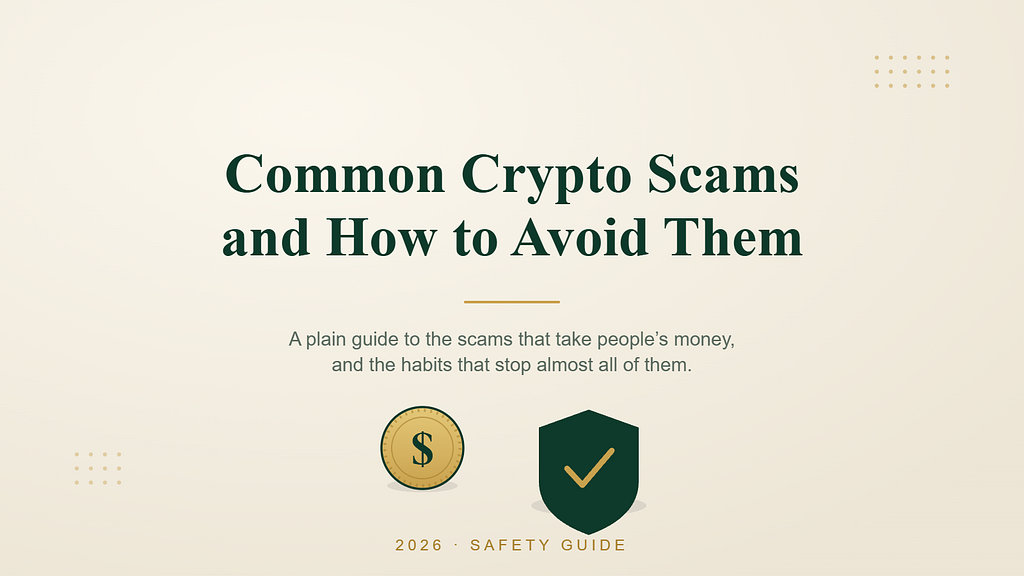
Crypto moves fast and does not reverse. This is a plain guide to the scams that take people’s money, and the small habits that stop almost all of them.
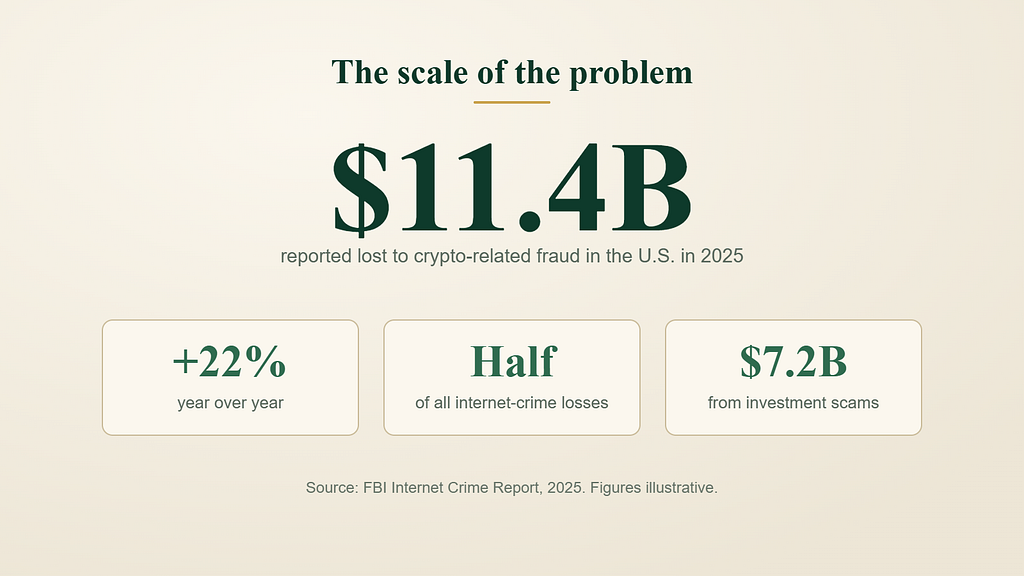
Americans reported a record $11.4 billion lost to crypto-related fraud in 2025, up 22 percent in a single year, according to the FBI’s Internet Crime Report. Crypto now makes up more than half of all internet-crime losses in the country.
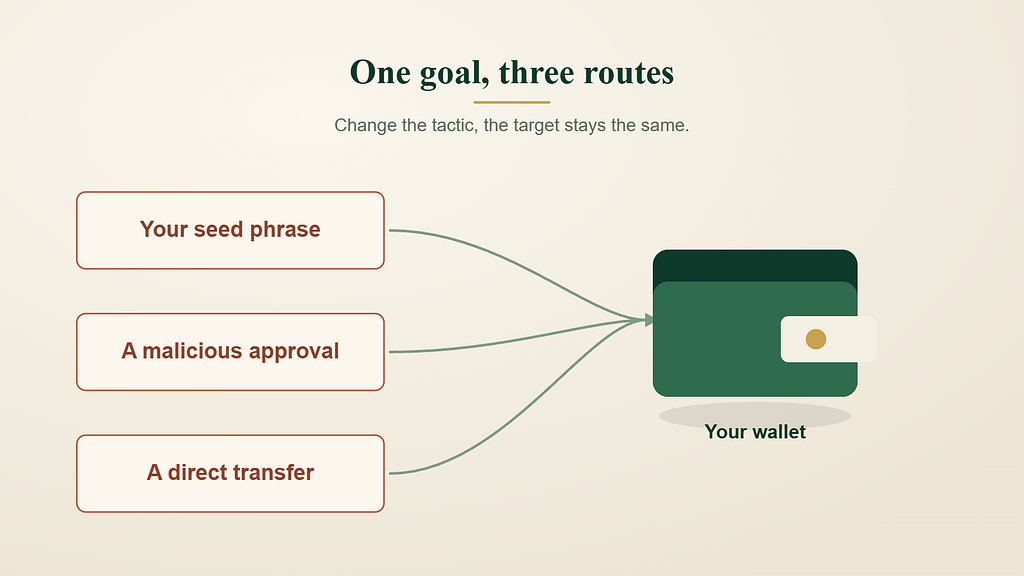
Almost every case works the same way. A scammer gets you to reveal your seed phrase, approve a malicious transaction, or send funds to someone posing as a person or brand you trust. Understand that shared goal and the specific scams get easier to spot.
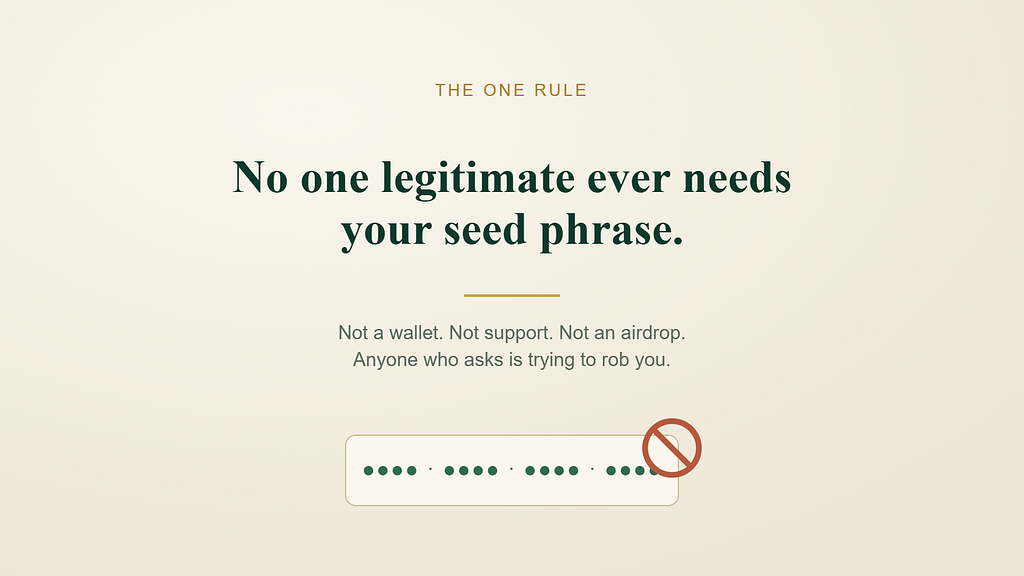
One rule defeats most of them: no one legitimate ever needs your seed phrase, and a promise of guaranteed or unusually high returns is a reliable warning sign. When anything pressures you to act fast, slow down and verify before you sign or send.
No one legitimate will ever ask for your seed phrase. Anyone who does is trying to rob you.
Most crypto scams aim to get one of three things: your seed phrase, a malicious approval, or a direct transfer of funds. The tactics change, the goal rarely does.
The reason is structural. Onchain transactions are irreversible, and self-custodied funds move whenever someone holds the right key or a signed approval. There is no bank to call and no chargeback to file, so scammers work on the person instead of the blockchain. They engineer a moment where you hand over the key, sign the wrong thing, or send money yourself. Seen that way, the six scams below are six versions of the same move.
The most common crypto scams fall into six recognizable categories. Each has a clear tell, and learning the tells is most of the defense.
Impersonation-based scams grew sharply in 2025, and the average scam payment climbed to $2,764 from $782 a year earlier, according to Chainalysis.
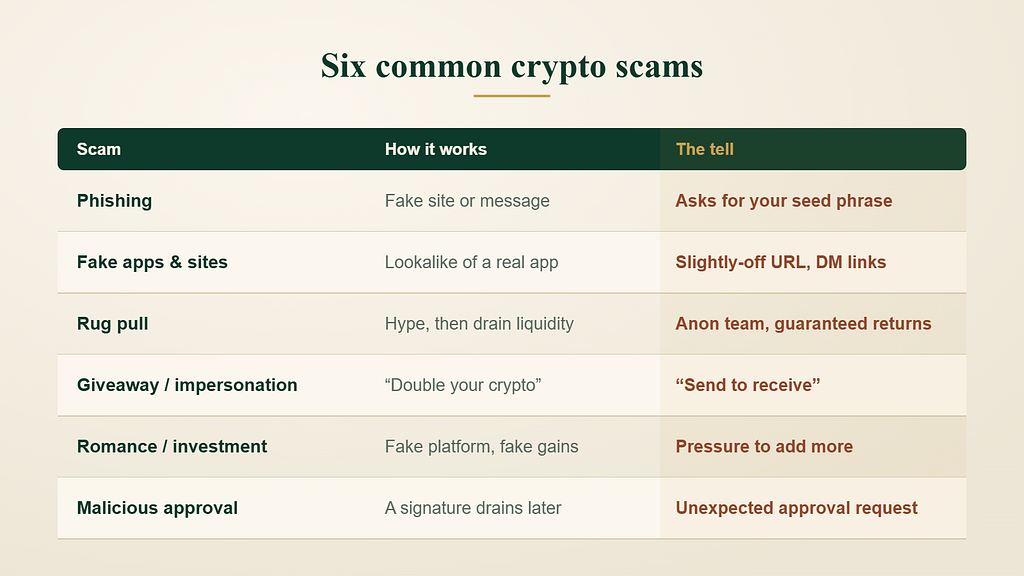
Phishing uses fake sites, emails, and messages to capture your seed phrase or trick you into approving a malicious transaction. It is the highest-volume attack because it needs no exploit, only a convincing page and a hurried moment. The rule that follows is absolute: never enter your seed phrase anywhere, and only use official domains you have verified, typed or bookmarked instead of clicked from a message.
A rug pull is when a team hypes a token or pool, attracts deposits, then drains the liquidity and vanishes. The money is usually gone the moment the liquidity leaves.
The tells appear before you deposit: an anonymous team, code that has not been audited or run in public, and returns promised as guaranteed or far above the market. If you cannot name who is accountable and what the money actually does, treat that as your answer.
A token approval lets a smart contract move a specific token for you. A malicious one grants ongoing access, so a contract can drain that token later even if the site looked fine.
Stay safe by approving only what you understand, and by periodically reviewing and revoking approvals you no longer need. Tools such as revoke.cash let you see and cancel standing approvals from your own wallet.
To avoid crypto scams, build a few defensive habits and apply them every time, especially when you feel rushed.
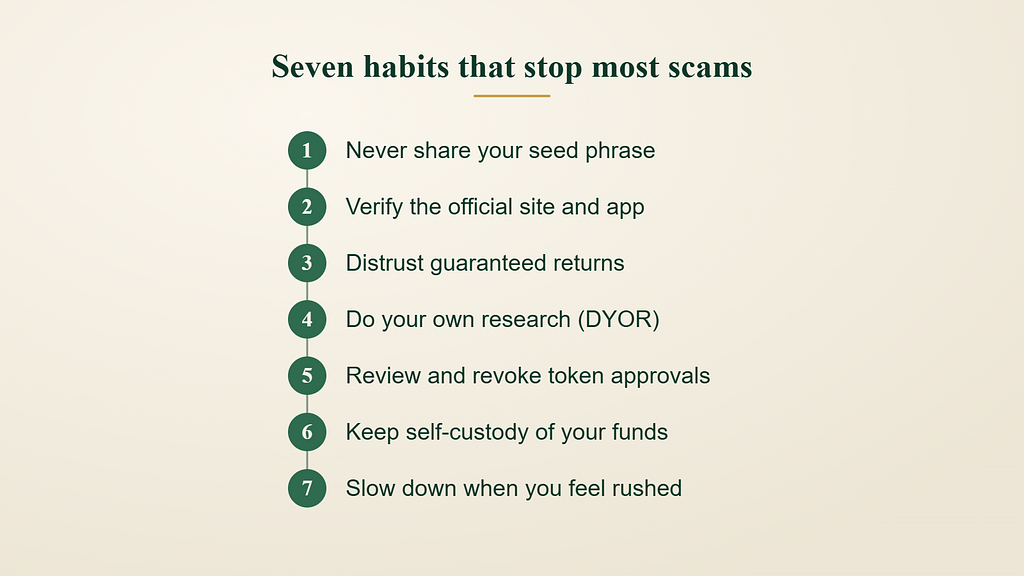
Guaranteed or unusually high returns are the oldest tell in fraud, in crypto and everywhere else.
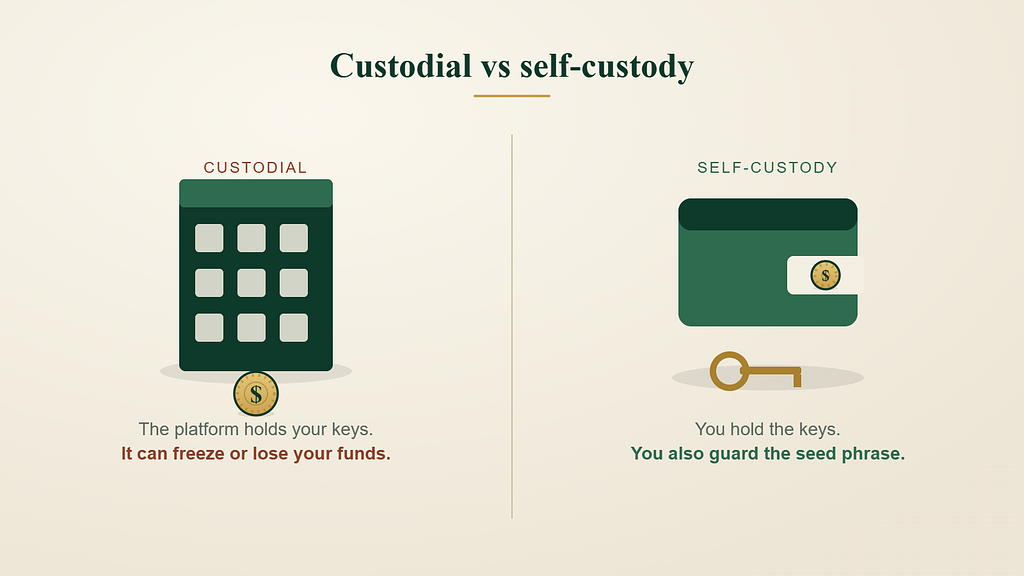
Self-custody means you hold your own keys, so no platform can freeze or lose your funds the way a failed custodian can, and you decide what to sign. That removes a whole category of risk that has cost depositors dearly in past collapses.
The honest limit is that self-custody is not total immunity. When you hold the keys, protecting your seed phrase and reviewing approvals become your job, and no platform can undo a transaction you authorized. It shifts risk toward habits you control, which is why this guide matters.
As a brief example, a non-custodial interface like Sky.money never takes custody of your funds and never needs your seed phrase, so the safe habits here are the same ones that protect you wherever you transact. The companion guide to checking whether a yield platform is safe takes the same verify-first approach.
If you think you have been scammed, act quickly and calmly. The goal is to stop further loss and protect whatever remains.
Set your expectations honestly. Onchain transactions are usually irreversible, so recovery is rare. Be wary of “recovery” services that promise to get your money back; those are frequently a second scam.
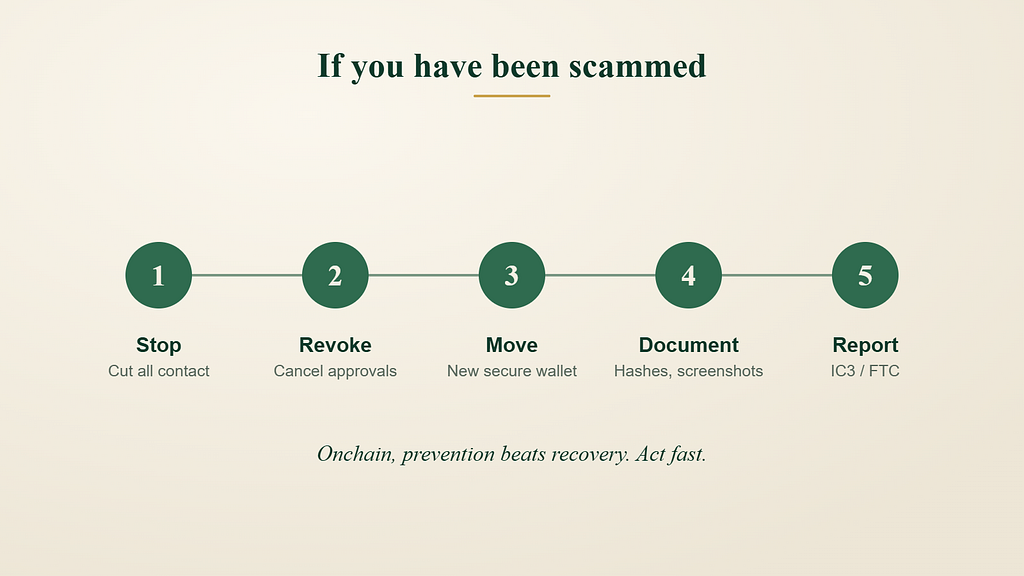
Onchain, a sent transaction does not come back. Prevention is the only protection you can count on.
What are the most common crypto scams? Phishing, fake apps and sites, rug pulls, giveaway and impersonation scams, romance or investment schemes, and malicious token approvals. Most aim to get your seed phrase, a malicious approval, or a direct transfer.
How do I avoid crypto scams? Never share your seed phrase, verify the official site before connecting, treat guaranteed returns as a warning, and review your token approvals. Slow down when anything rushes you.
What is a rug pull? A team hypes a token or pool, attracts deposits, then drains its liquidity and disappears. Anonymous teams, unaudited code, and guaranteed high returns are the common tells.
What is phishing in crypto? A fake site, email, or message that tries to capture your seed phrase or trick you into approving a malicious transaction. Only use official domains you have verified.
Does self-custody protect me from scams? It removes the risk of a platform losing or freezing your funds, but you must still protect your seed phrase and approvals.
Will anyone legitimate ask for my seed phrase? No. No legitimate service, wallet, or support agent will ever ask for your seed phrase. Anyone who does is trying to scam you.
If I could keep one habit from this guide, it would be the pause. Almost every scam depends on you moving faster than your judgment, so the most protective move is to slow down, verify the site and the request, and refuse to be rushed.
Hold your own keys, guard your seed phrase like the master password it is, and question any promise that sounds too generous. If you are choosing where to transact, favor non-custodial tools you can verify, such as Sky.money. What you keep by being patient is worth far more than any hurried “opportunity” pays.
This article is for information only and is not financial, investment, legal, or tax advice, and it does not endorse any project. Self-custody reduces some risks but is not complete protection; you remain responsible for protecting your seed phrase and approvals. Sky.money is a non-custodial interface, never needs your seed phrase, and does not set, control, or guarantee any rate. Always verify sites and apps against official, canonical channels before you act.
Common Crypto Scams and How to Avoid Them (2026) was originally published in Coinmonks on Medium, where people are continuing the conversation by highlighting and responding to this story.





