Crypto VC funding trends 2021–2026

Over the past five years, venture capital funds have invested more than $106 billion into crypto startups. This is the story of the market’s transformation from wild hype into a mature, institutional industry.
Key Concepts Before We Begin
The market has gone through a classic cycle: euphoria → collapse → cleansing → recovery → maturity.
A year of absolute records. Crypto asset prices skyrocketed, NFTs went mainstream, and the idea of Web3 captured investors’ imagination. Venture capitalists deployed money as if there were no tomorrow.
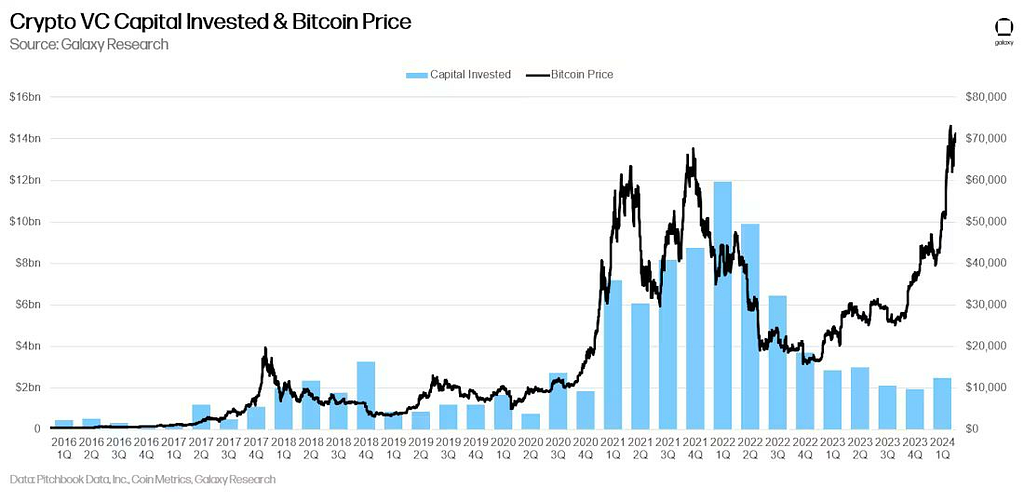
Context & Analysis: The market was overflowing with optimism. At least 43 new “unicorns” (companies valued above $1B) emerged. Investors funded ideas and narratives, often without deep analysis of business models. It was a classic FOMO cycle (fear of missing out), similar to the dot-com bubble of 1999.
The first half of the year still carried the momentum of 2021, but the collapse of Terra/Luna — followed by FTX in November — changed everything.

Context & Analysis: Investors began demanding “safety,” shifting toward more mature companies. The share of Pre-Seed deals fell below 10%. Funds accumulated massive “dry powder” reserves for the future.
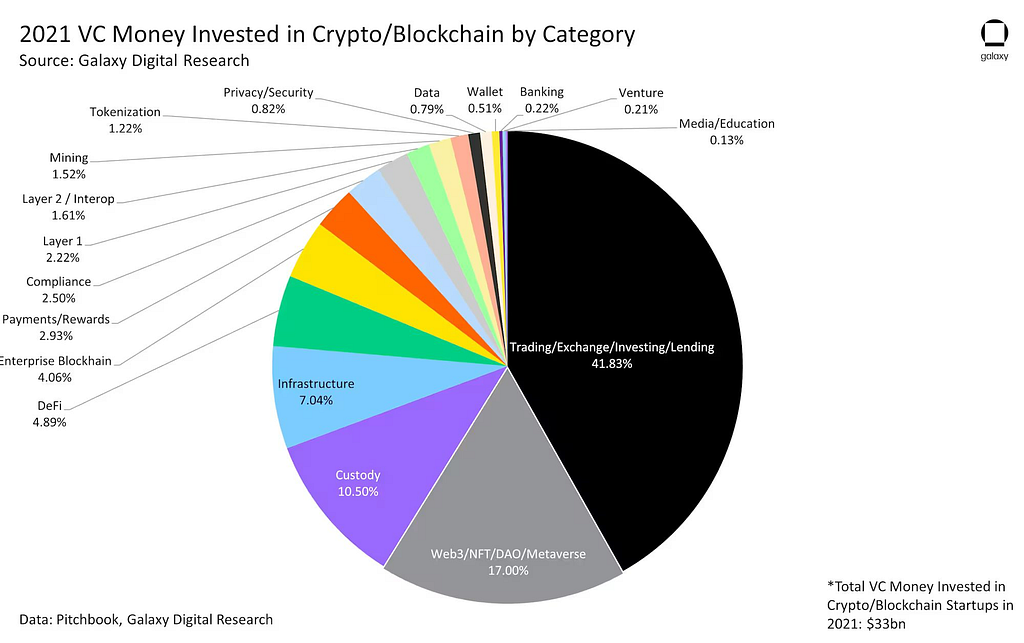
A clear picture emerged: the primary sectors attracting funding were Trading/Exchange/Lending, Web3, and Infrastructure.
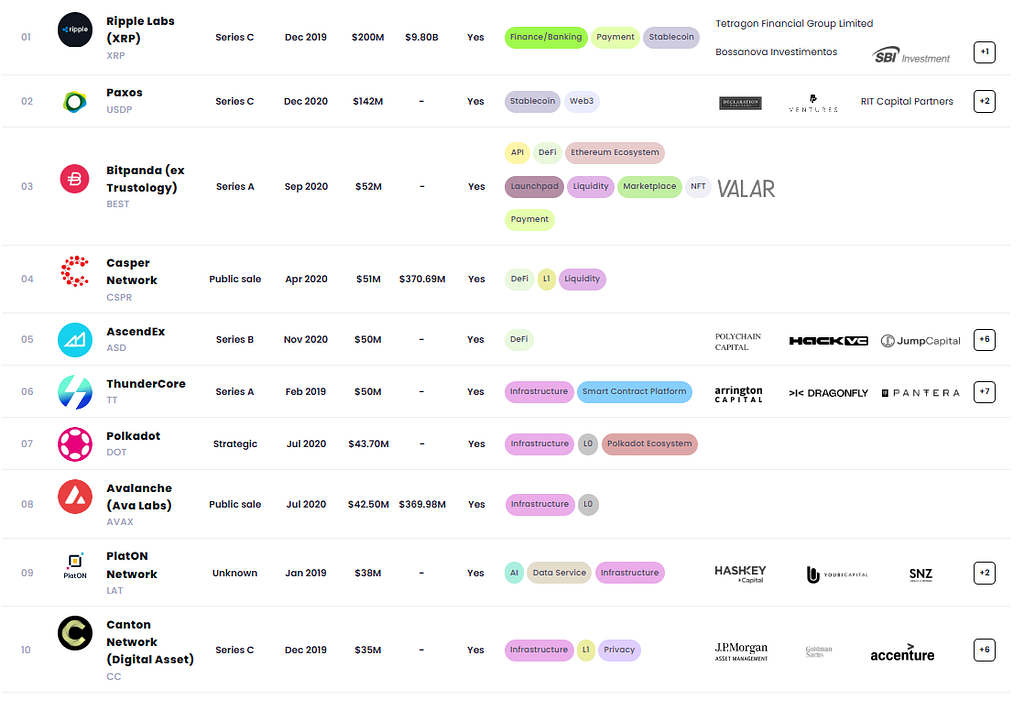
Now let’s look back at 2019–2020 and examine which projects received the largest capital inflows — and what became the reliable foundation of today’s market.
The top ten included projects from the Infrastructure, Lending, and DeFi sectors.
And once you dig deeper, it becomes obvious that virtually no individual Web3, NFT, or Gaming project received massive funding rounds. The data showed these sectors attracting large overall funding volumes, yet no single project secured a major allocation.
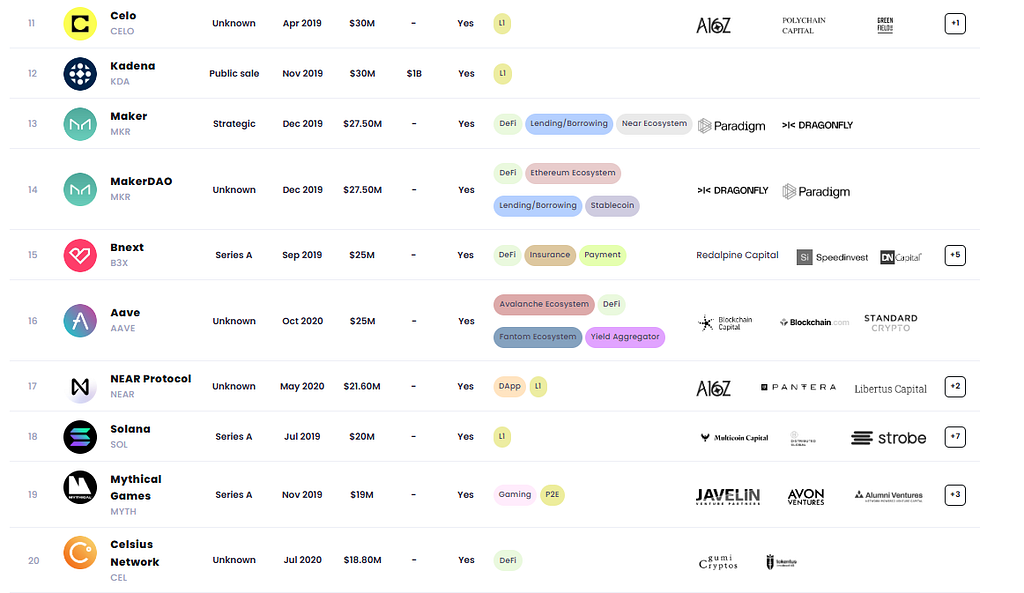
This points to one conclusion there were simply too many projects. Capital was diluted across countless startups inside the same narrative sector. This highlights the importance of reading data correctly — understanding narratives rather than blindly trusting surface-level numbers into research data.
The toughest year of the cycle. High Federal Reserve interest rates, regulatory pressure (especially in the U.S.), and the absence of hype weighed heavily on the market.

Context & Analysis: The market was “burning out” weak projects. Investors shifted from “growth at any cost” toward startups with real revenue models and resilient teams. Many startups shut down or suffered major valuation cuts.
The launch of Bitcoin ETFs in the United States became a major catalyst.

Context & Analysis: Institutional money began entering the market seriously. Stablecoins proved themselves as a reliable bridge between traditional finance and crypto. The market started recovering — but without the excessive euphoria of previous cycles.
The strongest year since 2022. The market finally became “adult.”
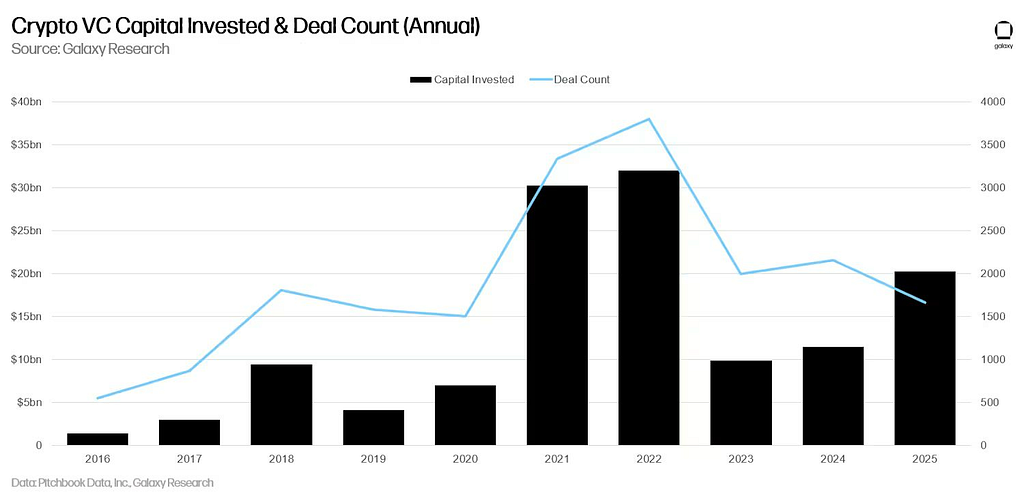
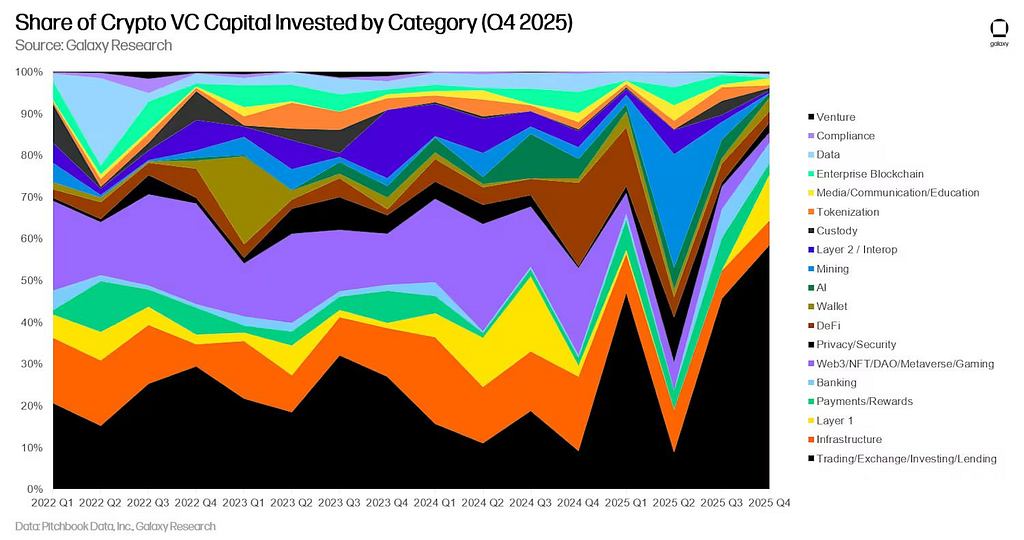
Context & Analysis: Late-stage rounds and mega-deals dominated. Investors became highly selective — fewer deals, but much larger checks. Mining surged thanks to rising demand for computing power for artificial intelligence.
The market consolidated around real cash flows and synergies with traditional sectors of the economy.
As of May 2026, the market remains highly selective. Q1 2026 data shows that capital is concentrating in high-quality sectors, particularly in late-stage projects with real viability.
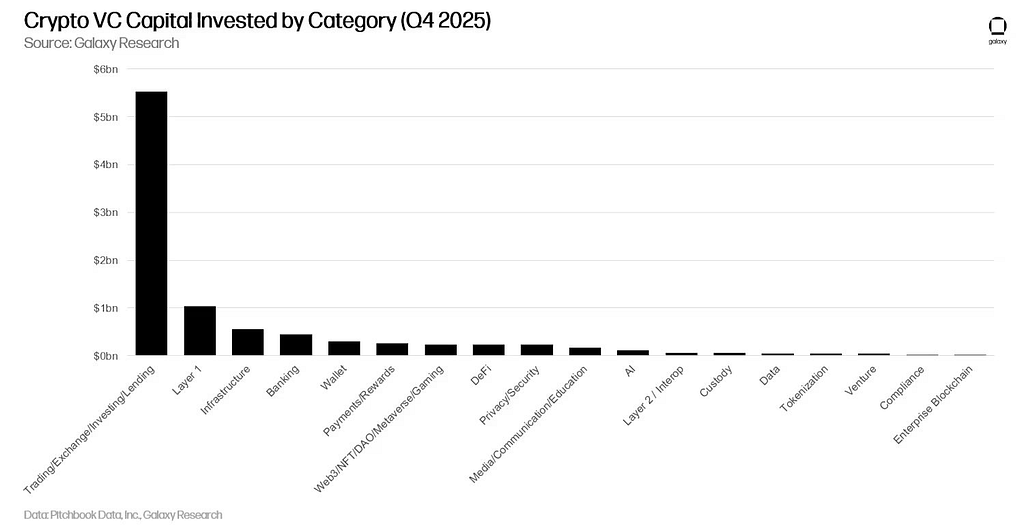
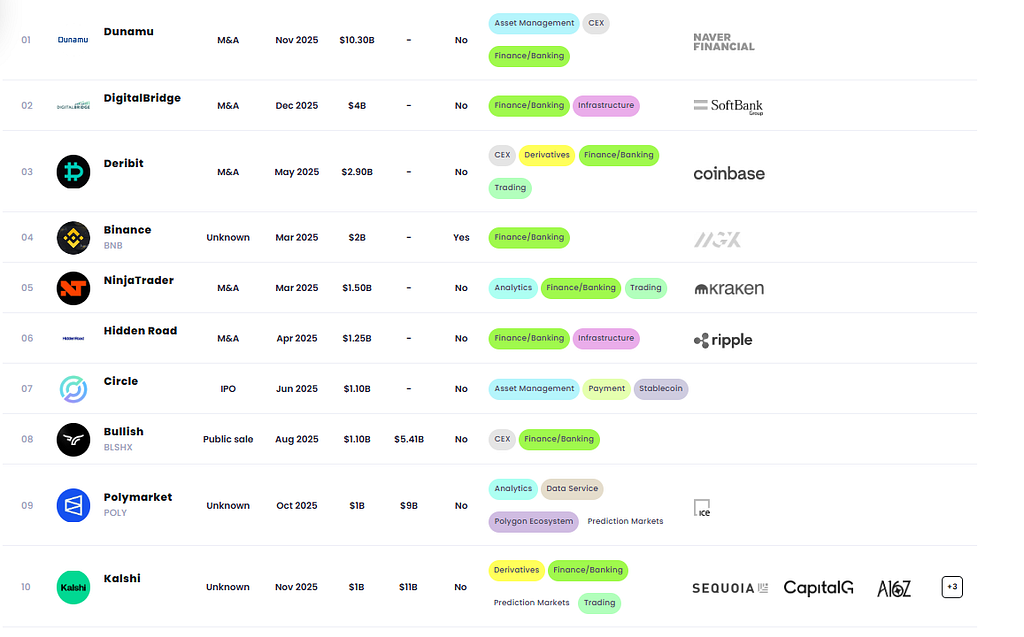


The data clearly shows where capital is actually flowing right now.
Not all sectors convert investment into success equally effectively. Here are the major patterns observed over the past five years:
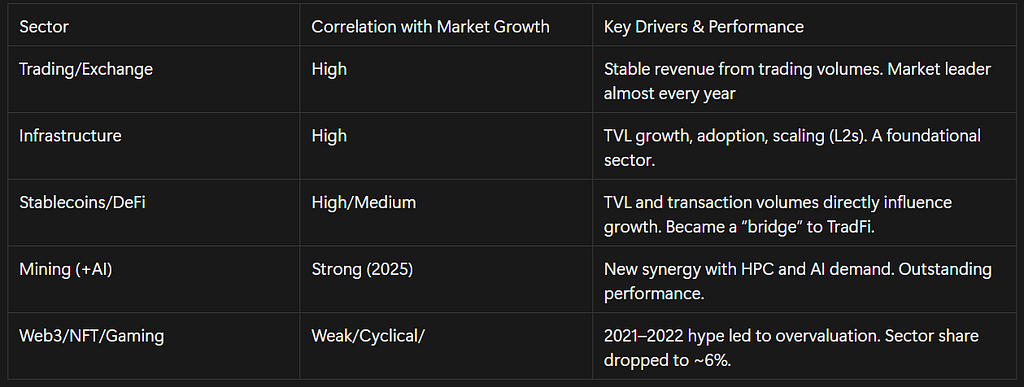
Over the last five years, crypto venture capital evolved from “digital gold” narratives and speculative hype into a serious financial sector integrated with traditional finance and artificial intelligence.
The key lesson: Infrastructure, trading, and stablecoins remain the eternal foundations of the industry, showing the strongest correlation between investment and long-term results.
The new growth drivers are:
Potentially Most Promising Categories for 2026+
Its newsletter provide research and information for educational purposes only and should not be taken as any form of professional advice. We do not advocate for any investment actions, including buying, selling, or holding digital assets.
The content reflects only the writer’s views and not financial advice. Please conduct your own due diligence before engaging with digital assets or related technologies, as they carry high risks and values can fluctuate significantly.
Note: This research paper is not sponsored by any of the mentioned companies.
Over the last five years, venture capital has poured more than $106 billion into crypto. But here’s what most investors fail to notice:
That money didn’t disappear during the bear market. It simply moved.
Away from noise.
Away from NFTs and speculative narratives.
And into infrastructure quietly rebuilding the next cycle.
Because while retail investors are still chasing yesterday’s stories smart capital is already positioning itself for what comes next.
And if history is any indication, wherever crypto venture capital moves first the market usually follows.
Where Smart Crypto Money Is Moving Before The Next Bull Market was originally published in Coinmonks on Medium, where people are continuing the conversation by highlighting and responding to this story.





