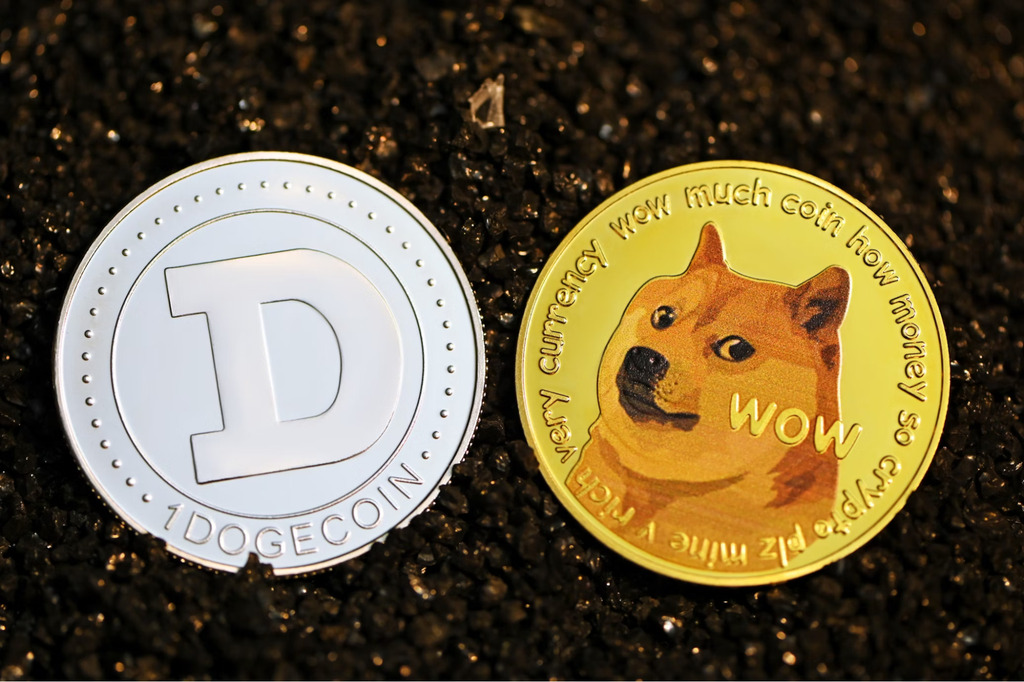
Dogecoin saw renewed short-term movement this week, rising by around 5% according to recent market data, amid increased online discussion. Bitcoin and Ethereum, by contrast, remained relatively stable, with trading activity reflecting familiar short-term interest patterns. This dynamic has historically characterized Dogecoin’s market behavior, where brief attention-driven momentum is often followed by periods of consolidation as broader interest subsides.
These dynamics help explain why Dogecoin frequently appears in discussions around actively traded crypto assets. It responds quickly to visibility. However, that same responsiveness can limit sustained momentum when attention shifts. By contrast, Zero Knowledge Proof (ZKP) is operating under a different framework, centered on predefined distribution mechanics rather than sentiment-driven exposure.
Dogecoin’s accessibility and simplicity have contributed to its global recognition. However, its underlying network design has remained largely unchanged. The protocol does not support smart contracts or application-level utility, and its market activity is primarily influenced by visibility rather than functional demand.
Historically, DOGE experienced its most significant price expansion in early 2021, driven by social engagement rather than network evolution. Since then, its price movements have largely followed sentiment cycles, with renewed interest leading to temporary increases and reduced visibility resulting in slower activity.
This pattern does not diminish Dogecoin’s relevance, but it does highlight its predictability. Price behavior often mirrors shifts in public attention rather than long-term structural developments.
Zero Knowledge Proof (ZKP) is currently running a live presale auction that distributes tokens through a fixed, transparent daily release mechanism. Supply enters the market on a scheduled basis, allowing price discovery to occur incrementally rather than through sudden releases.
According to publicly available information, the project does not include private venture rounds or preferential allocations. The initial funding, reported to be provided by the founding team, was designed to support development without introducing delayed unlocks or asymmetric early access.
ZKP’s auction model links participation directly to distribution, emphasizing visibility into how tokens enter circulation. This approach aims to reduce sudden supply shocks and provide a clearer view of ongoing demand conditions.
A general comparison of historical behavior highlights differing dynamics:
Dogecoin: Characterized by rapid price movements followed by extended periods of consolidation, often aligned with shifts in online visibility.
ZKP Auction Model: Displays gradual daily participation, with pricing shaped by consistent auction activity rather than isolated events.
Historically, crypto assets with structured distribution mechanisms tend to develop price discovery more gradually, while attention-driven assets often experience sharper but less sustained movements.
As crypto markets mature, participants increasingly evaluate where demand originates, not solely where short-term price changes occur. In this context, Zero Knowledge Proof (ZKP) is notable for its operational presale structure rather than promotional momentum.
Dogecoin is likely to continue experiencing periodic visibility-driven activity, as it has in past cycles. However, historical patterns suggest that sustained value development is more closely associated with functional systems and transparent distribution models than with attention alone.
ZKP’s approach focuses on ongoing participation rather than episodic exposure, illustrating how different market designs can influence long-term behavior.
This article contains information about a cryptocurrency presale. Crypto Economy is not associated with the project. As with any initiative within the crypto ecosystem, we encourage users to do their own research before participating, carefully considering both the potential and the risks involved. This content is for informational purposes only and does not constitute investment advice.





