$Ethereum is holding the $2,500 handle, but it is not moving with anything like the conviction $Bitcoin showed yesterday. ETH trades at $2,517.8, up marginally against a previous close of $2,507.6, after tagging $2,546.2 intraday and immediately giving the move back. The current 3 hour candle is actually down 0.35%.
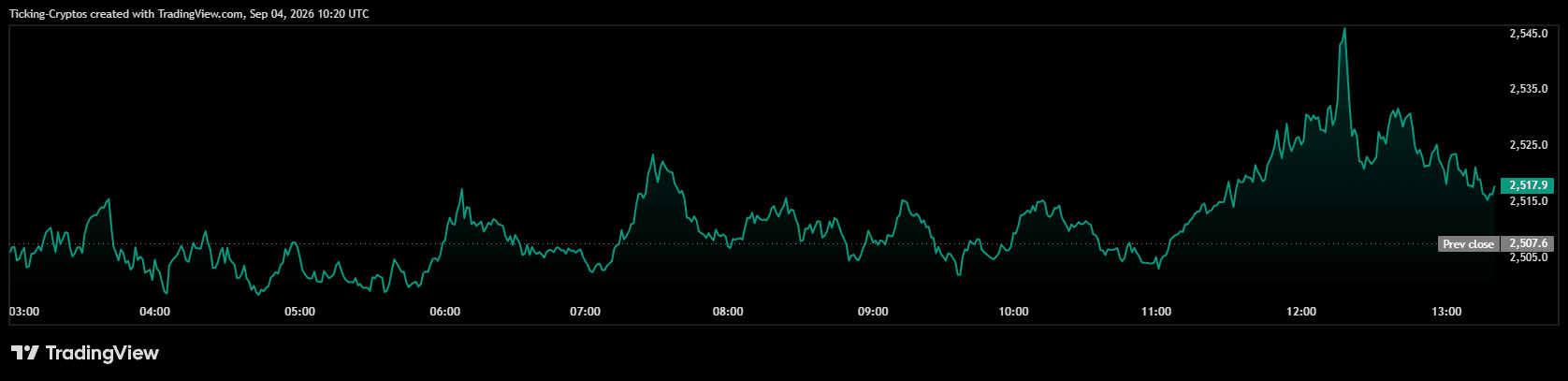
That failed spike is the whole story, and it is the fourth time it has happened in two weeks.
Ether is riding the same wave Bitcoin caught on Thursday. Fed Governor Christopher Waller's remarks pushed traders to price in a hold rather than a hike at the September meeting, the dollar sold off, yields eased, and every liquidity sensitive asset caught a bid. ETH went along for the ride from the $2,400 area back over $2,500.
Underneath that, the structural bid is real. Ether gained 32.5% through August while spot ETF inflows crossed $1.852 billion in a single month and exchange reserves declined. Record ETF inflows alongside slightly lower open interest suggest spot buying rather than expanding derivatives exposure is supporting the recovery, which makes the move less fragile than one driven mainly by speculative contracts.
Spot demand with shrinking leverage is a healthier foundation than most crypto rallies get. It also explains why the dips keep getting bought around $2,400 instead of collapsing.
Here is where it gets uncomfortable for bulls.
Today's high printed at $2,546.2. That is not a random number. The ceiling sits on the 50 week moving average at $2,542, and analyst Ted Pillows has flagged that Ethereum tried to clear $2,550 and failed again. Sellers have now rejected multiple breakout attempts at that level.
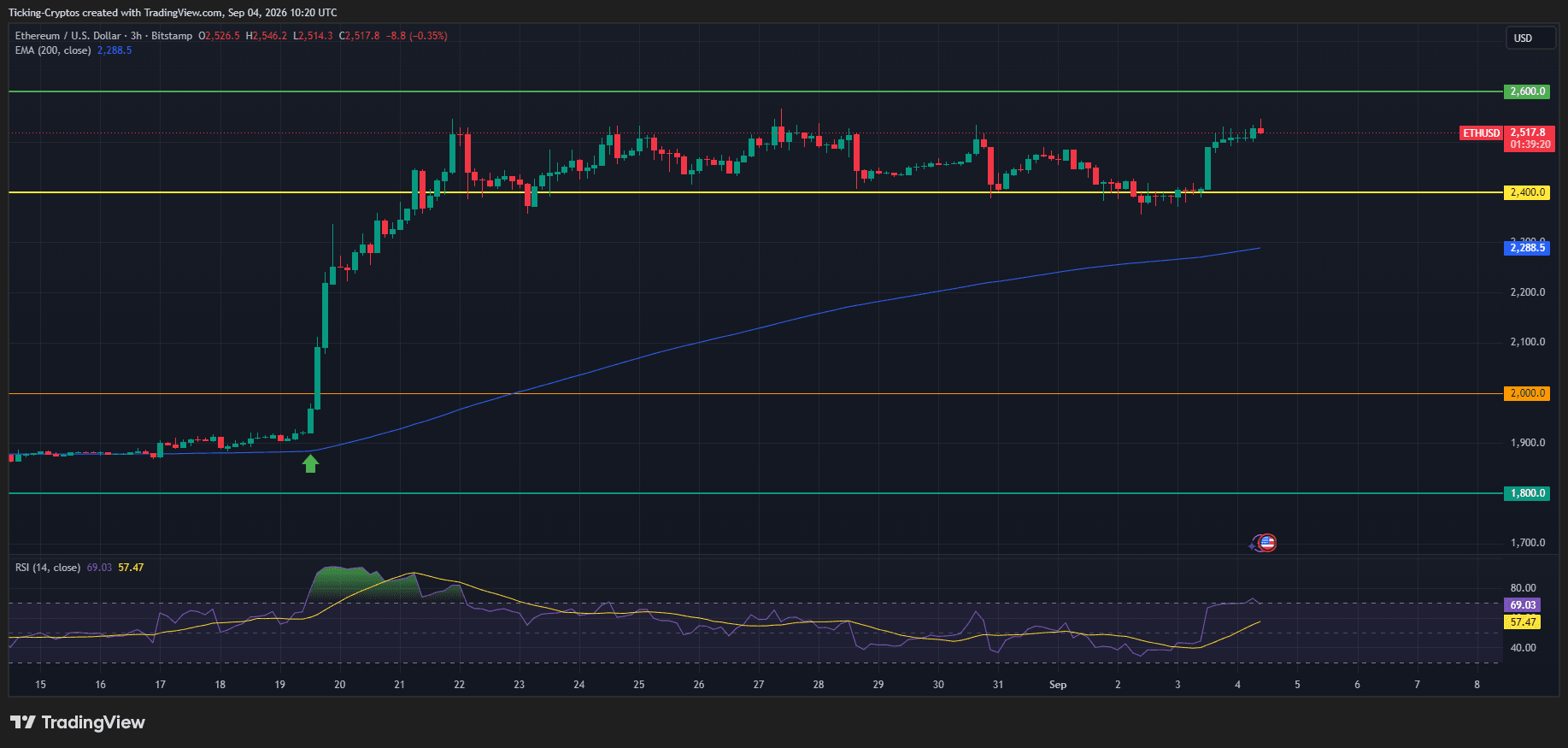
So $ETH did not fail at a psychological round number today. It failed at a weekly moving average that has been capping this market for a year. Look at the 3 hour chart and the shape is unmistakable: since August 21, Ethereum has traded in a box roughly between $2,380 and $2,580, with the upper edge getting tighter each time.
The rest of the structure is genuinely strong:
That August move broke the descending trendline that had capped every rally since the August 2025 peak at $4,958, a line that had held for almost a year, and produced a weekly candle worth more than 31%.
Strong trend, hard ceiling. That is a coiled spring, not a broken chart.
Not quite, and that is arguably the most constructive thing on the chart.
The RSI(14) reads 69.03 against its moving average at 57.47. It is pressed right up against the overbought threshold without having crossed it. Compare that to Bitcoin yesterday, which blew through 72 with its signal line still in the mid 40s.
The difference matters. Bitcoin's move was a violent one day repricing that left the indicator stretched and vulnerable. Ethereum has climbed into the same zone gradually over several sessions, with the RSI moving average rising underneath it rather than being left behind. That is what a sustainable grind higher looks like as opposed to a headline spike.
The catch is that an RSI at 69 has very little headroom left before momentum sellers show up, which is exactly what happened at $2,546 this morning.
One detail deserves more attention than it is getting. Ethereum has formed a higher cycle high while Bitcoin has not, which points to stronger relative momentum.
Bitcoin is still trading well below its own cycle peak and spent yesterday reclaiming a level it had already visited in August. Ether, by contrast, has printed structure that Bitcoin has not managed. For a market that spent most of 2026 treating ETH as the weaker asset, that is a meaningful rotation signal.
Whether it holds depends on the next few hours.
Upside:
Downside:
The August jobs report, released at 12:30 GMT. Payrolls are expected to rise by 58,000 after July's unexpected drop of 23,000, with the unemployment rate seen holding at 4.1%.
Read this one carefully, because the usual logic is inverted right now. Through 2024 and 2025, weak payrolls meant rate cuts and a relief rally. In September 2026, a strong August print is the hawkish outcome and a soft one is what takes hike risk off the table.
In other words, bad news for the labour market is currently good news for Ethereum. A soft print reinforces Waller's argument for holding rates, keeps the dollar under pressure and gives ETH the liquidity backdrop it needs to finally push through $2,550. A hot print puts the September hike back in play and this range breaks the other way.
The ADP report earlier this week already showed private payrolls rising by just 38,000 in August, below the 47,000 economists expected and the smallest gain in seven months. That leans soft, though ADP is a famously unreliable guide to the official number.
Further out, the Glamsterdam upgrade has slipped to Q4 2026, with the Sepolia testnet fork proposed for late September. That is a catalyst for later this month, not today.





