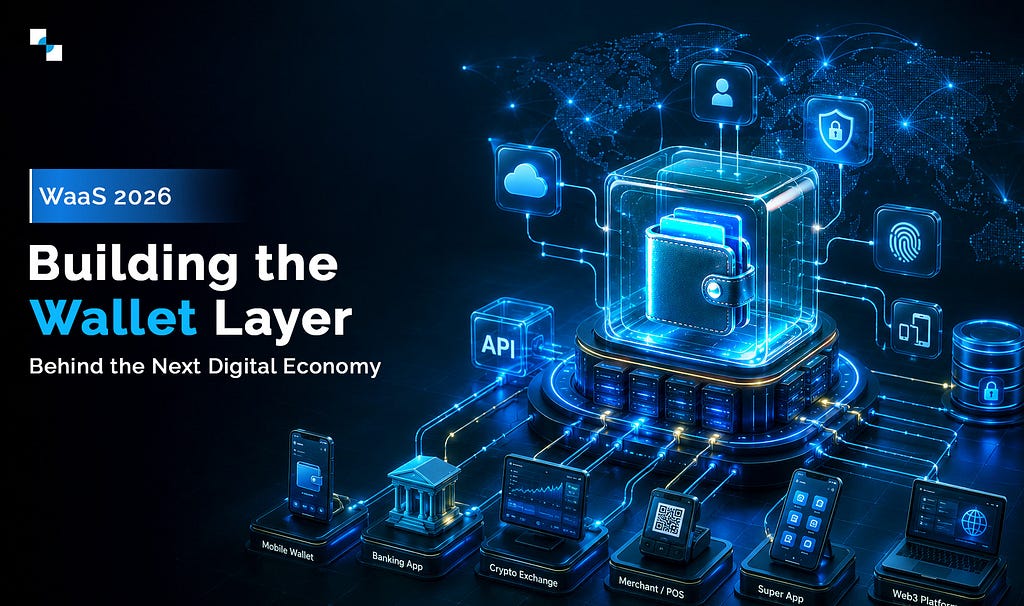
Every fintech founder eventually hits the same wall: users want crypto-native features, but building a secure wallet from scratch takes months, a specialized security team, and a compliance budget most startups don’t have. That gap: between ambition and infrastructure — is exactly what Wallet-as-a-Service (WaaS) was built to close.
The numbers tell the story. Zoom out further, and the broader crypto wallet infrastructure market is even more striking, expected to climb from $19.3 billion in 2026 to over $100 billion by 2033. Behind those figures sits a simple shift: wallets are no longer a standalone product category. They’re becoming embedded infrastructure, quietly powering exchanges, banking apps, games, and payment platforms.
For crypto startups, Web3 founders, and enterprises evaluating their next infrastructure decision, understanding what WaaS actually offers — and where it’s heading — has become essential reading.
Crypto Wallet-as-a-Service is, at its core, a model where a wallet service provider handles custody, key management, and blockchain connectivity, while businesses plug that capability into their own product through APIs and SDKs. Instead of every fintech reinventing wallet security, they license it.
Three factors are driving default adoption:
Generic blockchain wallet software wasn’t designed for multi-chain support, enterprise-grade key recovery, or the compliance reporting regulators now expect. That’s driving demand toward purpose-built wallet-as-a-service infrastructure rather than retrofitted consumer tools.
Three technical shifts define WaaS in 2026.
The strategic pattern emerging among serious providers is combining MPC for the signing layer with account abstraction for execution logic, custody strength paired with consumer-friendly usability.
For businesses evaluating whether to build, buy, or partner, the calculus increasingly favors partnering with an established crypto wallet development company:
Embedded finance compounds this opportunity — gaming studios, marketplaces, and loyalty programs are integrating wallet capabilities purely to deepen engagement, not because they set out to become financial institutions.
Antier, among other blockchain technology providers, has been active in this space, building white label crypto wallet infrastructure that lets businesses launch branded wallet products without owning the underlying security stack.
Expect wallet infrastructure to keep disappearing into the background of everyday apps. As MPC and account abstraction mature together, and regulatory clarity slowly improves across major markets, providers combining security depth with developer-friendly integration will likely capture the bulk of enterprise demand.
Wallet-as-a-Service has moved from a niche technical decision to a foundational infrastructure choice for anyone building in Web3 or fintech. The businesses figuring this out early aren’t necessarily the ones with the biggest budgets; they are the ones asking the right questions about custody, compliance, and user experience before committing to a provider.
As Web3 adoption accelerates, businesses that invest in scalable blockchain infrastructure today will be better positioned to capitalize on tomorrow’s digital economy.
A Complete Guide On Wallet-as-a-Service (WaaS): The 2026 Playbook for Web3 Builders was originally published in Coinmonks on Medium, where people are continuing the conversation by highlighting and responding to this story.





