Everyone is talking about tokenizing real-world assets.
Real estate. Energy. Infrastructure.
The narrative is consistent: bring tangible value on-chain, fractionalize it, distribute yield, attract liquidity, repeat.
It sounds efficient. It looks scalable.
But beneath that surface is a structural limitation most models never address:
Distribution is not the same as value creation.
And more importantly:
distribution without accumulation weakens long-term systems.
ATEG starts from that exact premise and builds differently.
Most RWA tokenization frameworks today are optimized for entry, not endurance.
They are designed to onboard users quickly:
This works well in early phases.
However, when examined as economic systems rather than products, several constraints emerge:
This leads to a subtle but critical outcome:
tokens become yield instruments, not value systems.
The system survives as long as participation expands.
Not necessarily as long as value compounds.

ATEG rejects the idea that tokenization should begin with distribution.
Instead, it begins with balance sheet construction.
Capital entering the ecosystem is not immediately pushed outward.
It is deployed inward:
The token is not the first layer of interaction.
It is the reflection layer.
This is a fundamental shift.
Instead of asking:
How do we distribute returns?
ATEG CAPITAL asks:
How do we build a system that naturally produces them?
ATEG’s model mirrors how traditional companies create enduring value.
In conventional finance:
Companies accumulate assets
Assets generate cash flow
Cash flow strengthens valuation
Valuation is reflected in equity
ATEG translates this into a blockchain-native structure:
This creates alignment between:
Operational performance
Capital efficiency
Token behavior
The result is not just transparency.
It is coherence between economics and representation.
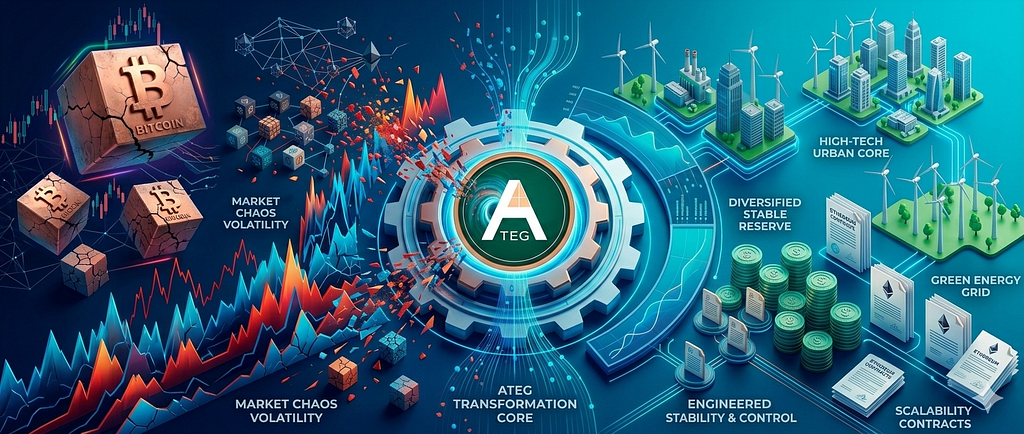
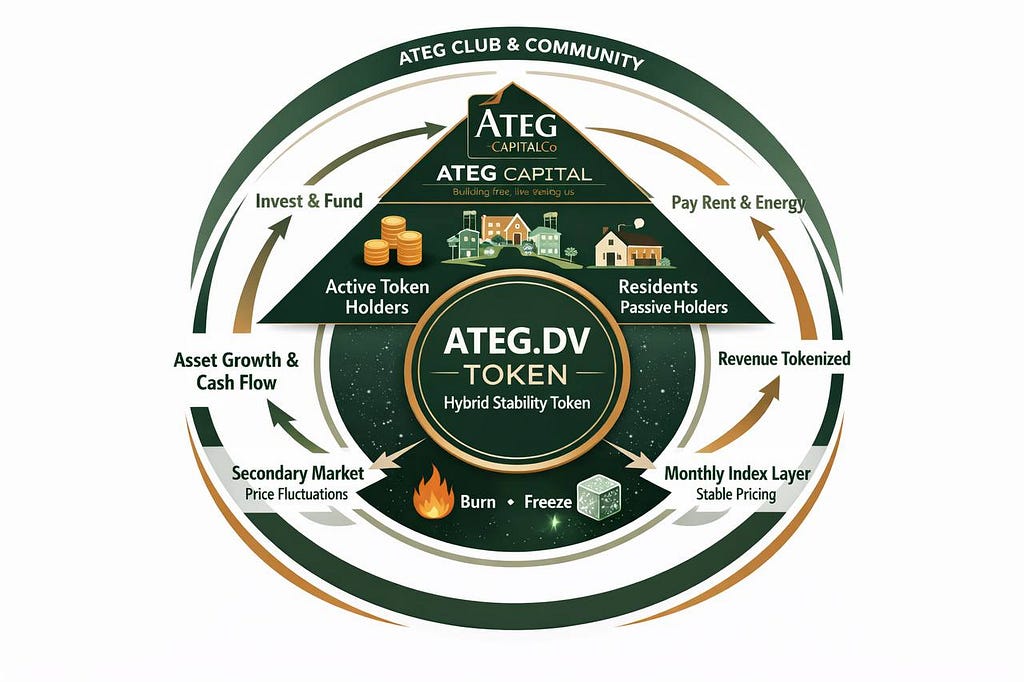
ATEG.DV is intentionally positioned between two extremes that dominate crypto markets:
ATEG avoids both.
It introduces a structured volatility environment:
This creates a system where:
This is not stability through control.
It is stability through economic grounding.
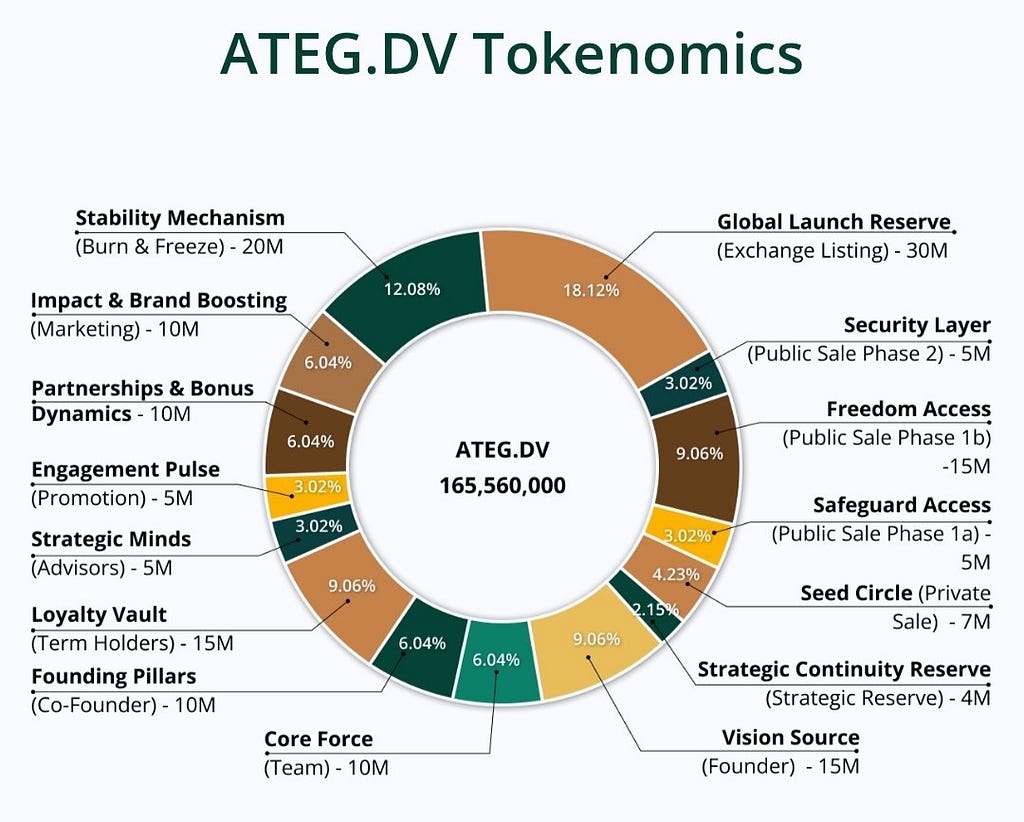
Most token supply models are pre-defined:
Fixed supply, inflation schedules, or governance-based changes.
ATEG introduces responsive supply mechanics tied directly to performance:
This is significant because it removes randomness from supply decisions.
Supply becomes:
• A function of productivity
• A reflection of ecosystem health
• A feedback mechanism within the system
From this emerges what ATEG describes as Natural Demand:
This is fundamentally different from attention-driven demand cycles.
It does not require constant narrative reinforcement to sustain itself.
One of the most overlooked variables in token design is time.
Most tokens react to:
Immediate sentiment
Short-term liquidity
Market noise
ATEG introduces a temporal framework through its Monthly Index Layer.

This does not restrict price movement.
Instead, it:
Smooths volatility over longer intervals
Anchors expectations to economic cycles
Reduces susceptibility to short-term manipulation
The implication is profound:
In essence:
time becomes a stabilizing force within the system.
ATEG expands the concept of participation beyond token holders.
It introduces a dual-layer ecosystem:
These include:
Residents within real estate developments
Consumers of energy infrastructure
Users engaging with services tied to the ecosystem
This creates a feedback loop rarely seen in Web3:
Importantly:
Participants contributing value do not need to be token holders.
And token holders benefit from activity they do not directly manage.
This is how economic density is created.

ATEG does not rely on a single asset class.
It integrates multiple value sources into one economic structure:
This diversification achieves two things:
The token, in this case, is not tied to one narrative.
It is linked to a portfolio of realities.
ATEG’s transition toward its public phase is deliberate.
Rather than leading with visibility, it aligns visibility with readiness.
Partnerships with platforms such as:

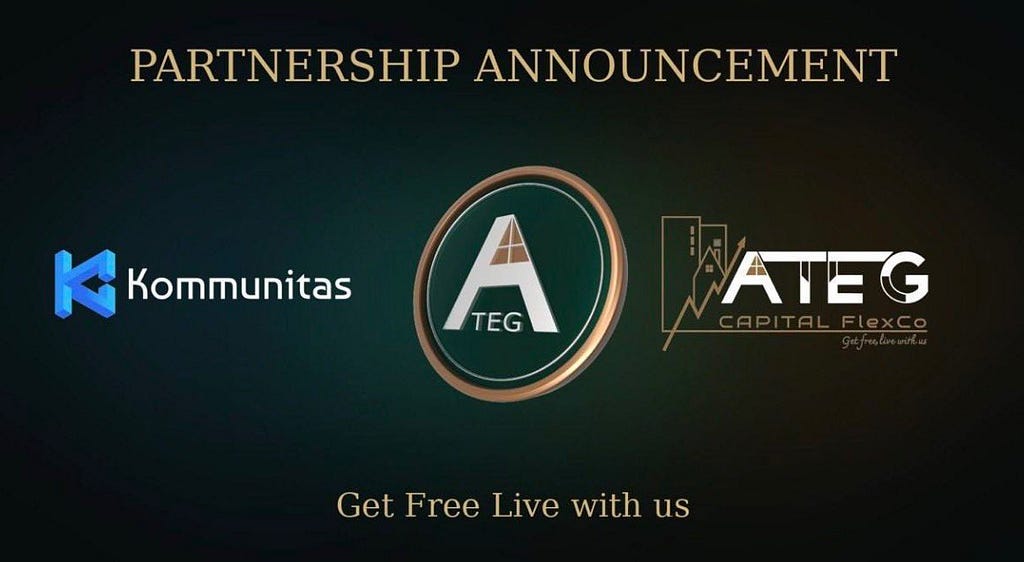
serve a specific purpose:
Expand market access
Facilitate distribution channels
Introduce the system to broader liquidity
But critically:
These are entry points, not foundations.
ATEG maintains a clear stance:
This sequencing reflects a long-term orientation rarely observed in token launches.
Current State:
In Progress:
Forward Trajectory:
ATEG is not just introducing a new token model.
It is challenging the foundation of how tokenization is approached.
The shift is clear:
This represents a transition from:
financial products → economic systems
And that distinction changes everything.
As the space matures, superficial models will struggle to sustain themselves.
The next phase will be defined by systems that can:
ATEG is positioning within that future.
Not by being louder.
But by being structurally aligned with how value actually works.
Get Free, Live With Us.
A Token Empowering Generations.
Author: Engr Aliyu Almustapha
For Collaboration or Promotion
Contact Me: Telegram | Twitter | Email
ATEG Capital: Rewriting the Rules of Tokenized Value was originally published in Coinmonks on Medium, where people are continuing the conversation by highlighting and responding to this story.





