
Following mixed performance by the US dollar earlier this week, investors are now fully focused on the June Nonfarm Payrolls report, which will be released on Thursday rather than Friday. The schedule has been brought forward as US financial markets will be closed on Friday to mark the 250th anniversary of the signing of the Declaration of Independence. Today's report is expected to shape expectations for the Federal Reserve's monetary policy and set the direction for the US dollar through the remainder of the week.
Market participants will closely watch the unemployment rate, average hourly earnings and initial jobless claims, all of which will be released alongside the headline payrolls data. Following weaker-than-expected ADP employment figures, investors will be looking for confirmation that the US labour market remains resilient. Strong data could reinforce expectations that the Fed will maintain its hawkish stance, supporting the US dollar, while weaker figures may trigger profit-taking on long USD positions.
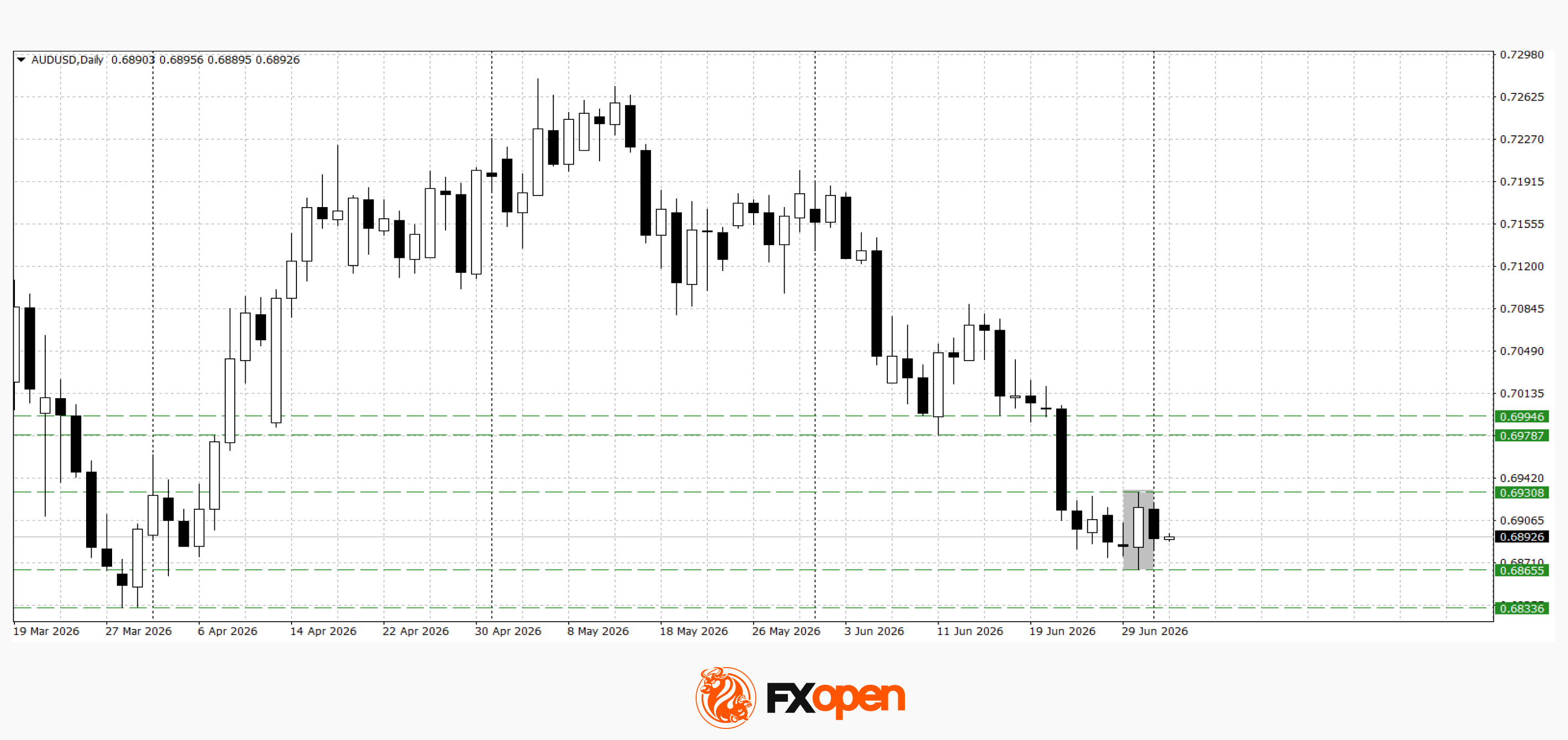
AUD/USD found support at 0.6860 at the start of the week, forming a bullish engulfing pattern after rebounding from this level. Technical analysis suggests the pair could advance towards 0.6980–0.7000 if 0.6930 turns into support. A break below 0.6860 could pave the way for a decline towards 0.6800–0.6830.
Key events for AUD/USD:
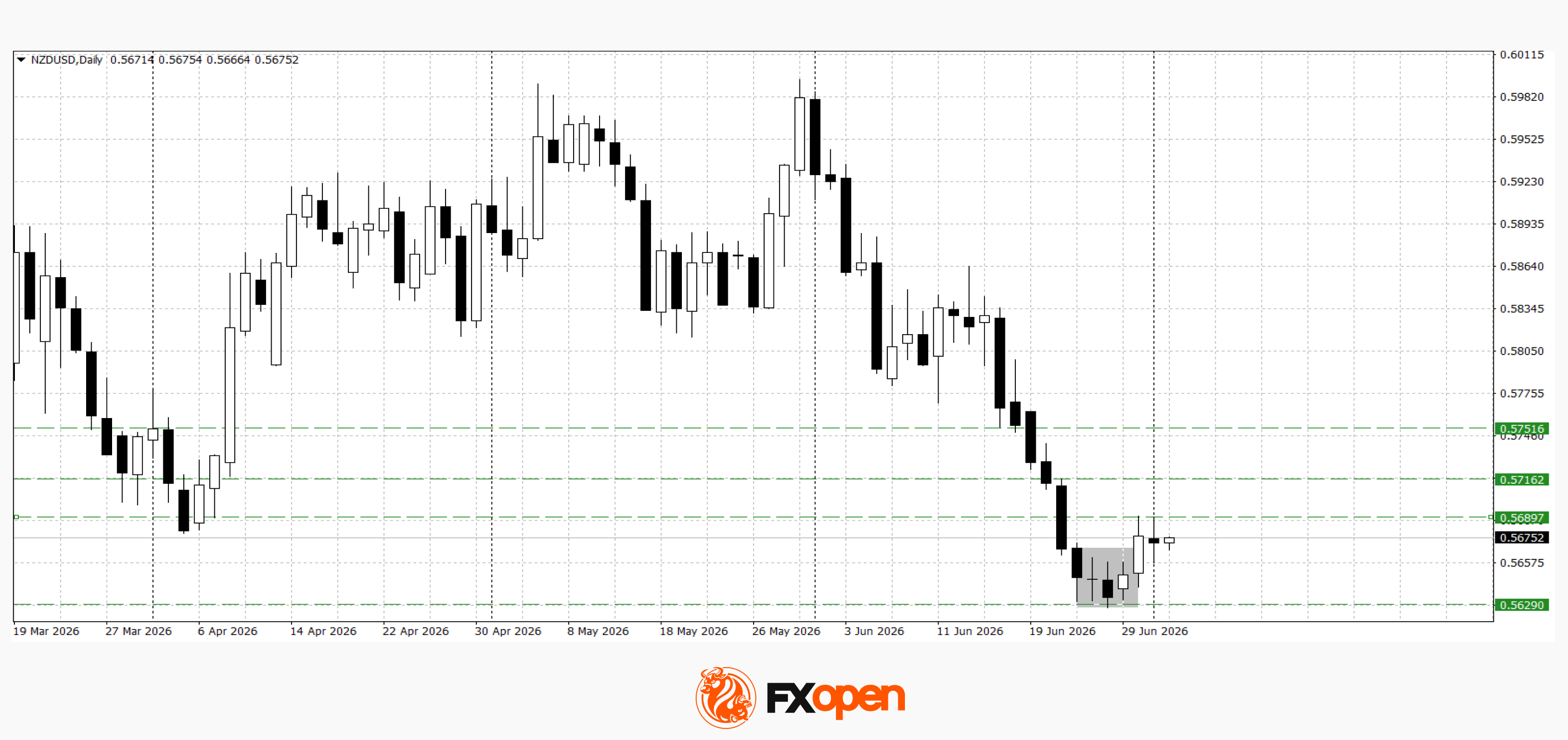
NZD/USD is showing a similar technical picture. After falling to 0.5630, buyers formed a V-shaped reversal pattern, which could support further gains. A break below the base of this formation may lead to a decline towards the 0.5570–0.5600 area.
Key events for NZD/USD:
Overall, today's Nonfarm Payrolls report will be the week's key event for the currency market. Employment growth, the unemployment rate and wage data are expected to determine market expectations for future Federal Reserve policy. Until the figures are released, AUD/USD and NZD/USD are likely to remain in consolidation near key technical levels, while volatility could increase sharply once the data is published.





