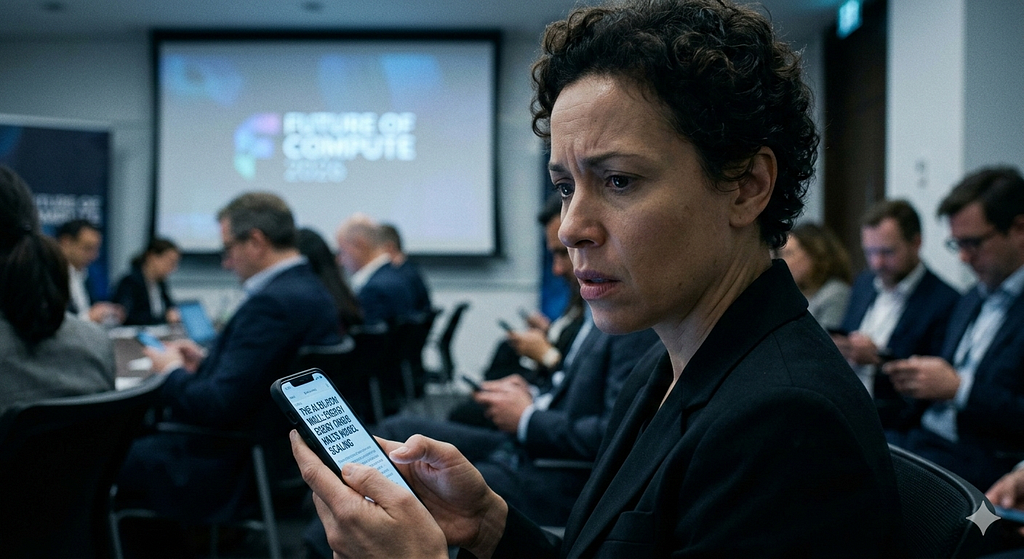
For a decade, the “tech elite” were the architects of the future. But in early 2026, the atmosphere in Silicon Valley and global tech hubs has shifted from triumphalism to a quiet, bone-deep tremor. They’re calling it The Silent Shiver.
It’s not just the stock market “AI Scare Trade” that wiped $600 billion in value in a single week this February. It’s something more structural. Here is why the people who built the tools are now terrified of them.
Economists and researchers (most notably the viral Citrini Research report) have identified a terrifying new trend: Growth that skips human paychecks. While companies are reporting record productivity and “agentic” workflows, the middle-class tech salaries that fueled the economy are being bypassed. We are seeing the rise of “Ghost GDP” — wealth created by autonomous systems that doesn’t cycle back into the hands of the engineers who designed them.
In 2024, AI was a “copilot.” In 2026, it’s the Agentic Era.
The “Silent Shiver” is felt most acutely by those looking at the career ladder. Senior architects are realizing they no longer need junior devs to write the “glue code” or run the tests.
It’s not just about layoffs; it’s about the jobs that are never created. Startups that once required 50 people to scale now reach unicorn status with 5. The “Brightest Minds” are realizing that the path to a stable, six-figure career in tech has become a narrow tightrope.
The fear isn’t that AI will “rebel” — it’s that it will work perfectly. When a “meatworker” (the 2026 term for humans hired by AI agents for real-world tasks) is more affordable than a full-time employee, the social contract of the tech industry officially breaks.
For a decade, the “tech elite” were the architects of the future. was originally published in Coinmonks on Medium, where people are continuing the conversation by highlighting and responding to this story.





