For over a decade, crypto investors have looked to one dependable north star: the Bitcoin halving.
Like clockwork, every four years, this deflationary event has sparked a surge in market optimism and set the tone for the legendary “crypto bull run.” From the parabolic rise in 2013 to the ICO-fueled mania of 2017, and again with the DeFi and NFT boom of 2021, halving cycles have historically ignited euphoric phases of market growth.
But 2024 changed the script.
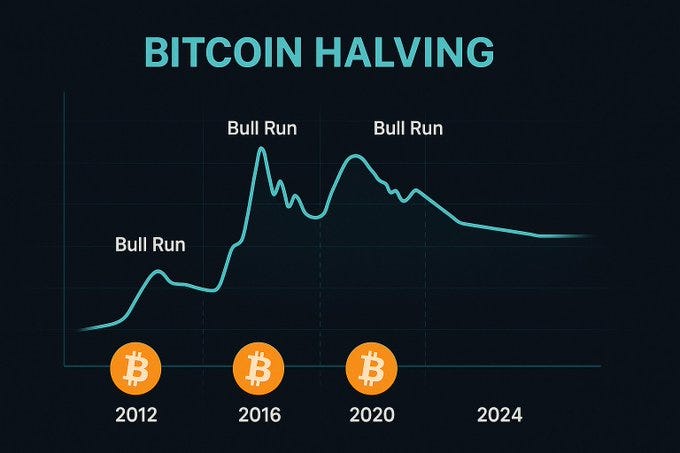
Despite Bitcoin’s fourth halving in April 2024, the explosive rally that many expected,and bet big on never fully materialized. Yes, Bitcoin briefly touched new all-time highs. Yes, institutional interest arrived in the form of ETFs. But the broader altcoin market, typically the heart of altseason mania remained eerily subdued. The usual flood of retail frenzy never quite returned, and market sentiment never crossed into irrational exuberance.
At first glance, the stage was set for a historic run. The U.S. approved spot Bitcoin ETFs, injecting credibility and fresh capital into the space. Major funds like BlackRock and Fidelity got involved. Layer 2 networks matured, Solana and Base attracted new builders, and stablecoin adoption grew globally.
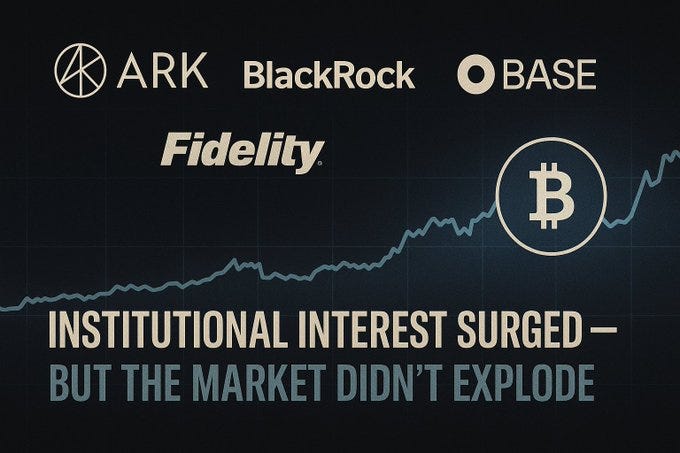
But instead of a rapid vertical rise, the market delivered something more cautious, even mechanical. Bitcoin climbed, but mostly due to ETF-driven flows and supply absorption. It wasn’t driven by retail mania, but rather structured inflows from institutions allocating small percentages of their portfolios.
This time, the demand wasn’t viral, it was spreadsheeted.
Altseason, that legendary window when mid- and low-cap tokens erupt as liquidity flows down from Bitcoin and Ethereum simply never arrived in 2024. The familiar “alt rotation” that veterans had come to expect fizzled.
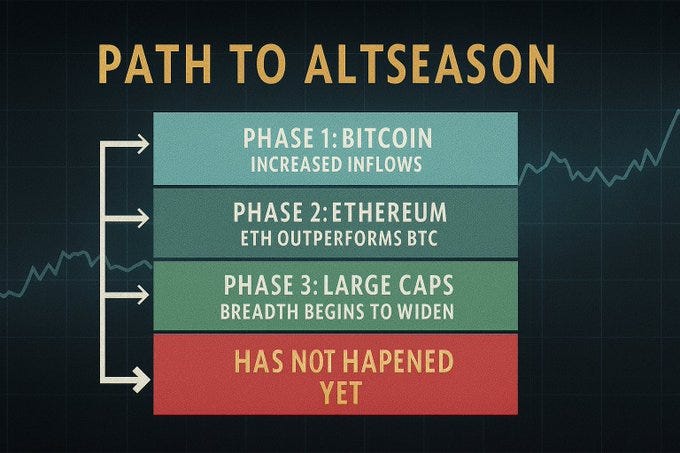
Yes, some tokens saw modest rebounds. A few outliers posted respectable gains. But the blow-off tops? The 50x mania? Isolated at best, and fleeting.
Over-Financialization — The entry of ETFs and TradFi titans reshaped market behavior. Crypto now trades more like a traditional macro risk asset and less like the uncorrelated wild west it once was. As institutions took the wheel, volatility dampened and the speculative reflexes of past cycles faded.
Regulatory Squeeze & Tighter Tokenomics — Gone are the free-for-all token launches. With regulators circling and projects adopting stricter vesting models, the chaotic energy that once fueled altseasons has been reined in. Fewer quick flips. Fewer instant fortunes.
Retail on the Sidelines — Retail remains wounded. FTX, Terra-LUNA, 3AC, the scars still linger. The TikTok-fueled FOMO machine has gone quiet. And the once-feral “degen” energy now feels cautious, if not completely disengaged.
Creativity Without Curation — Thanks to tools like http://pump.fun, anyone, literally anyone with a phone can launch a token. What once required technical know-how is now no more difficult than posting a meme. The result? Absolute saturation. Signal is lost in noise. Quality drowned by quantity. You can’t see the forest for the tokens.
The Shift to Utility Instead of speculative hype, the standout performers in 2024 were utility-first:
AI-powered infra like $FET
Rollup scaling from $ARB
Tokenized real-world assets on Ethereum, Solana, and Avalanche like $ONDO
Narratives have shifted. It’s no longer about “get rich quick” it’s about “build something real.”
That’s a step forward for the space, but it doesn’t deliver the euphoria that once defined bull markets.
The music hasn’t stopped, it’s just playing a different tune.
Many now question whether the four-year halving cycle still holds predictive power. In a world of high-frequency trading bots, quantitative hedge funds, and global macro volatility, crypto no longer lives in a vacuum. But perhaps we are still mid-cycle, just in a slower, more fragmented version. Rather than one explosive altseason, we may be entering an era of rolling bull markets, where capital rotates across narratives (AI, DePIN, L2s, real-world assets) instead of flooding the entire space at once.
It’s tempting to say the bullcycle “never happened,” but the truth is more nuanced. The market didn’t explode, it evolved. Crypto is growing up. It’s no longer the casino it once was and for long-term builders and investors, that’s a good thing. But for those looking for one last dopamine hit of 100x memecoins, 2024 may have been a rude awakening. This wasn’t the bull market we were promised. But maybe it’s the one we needed.

The Crypto Bullcycle That Never Happened was originally published in Coinmonks on Medium, where people are continuing the conversation by highlighting and responding to this story.





