For years, the tokenization of assets seemed like a utopia, acting as a futuristic promise within the blockchain ecosystem. However, recent events in the global financial market confirm that this technology has already passed the experimental phase. What were previously proofs of concept are now operational infrastructures, with institutional capital and RWA assets coexisting in an efficient and permanent digital environment.
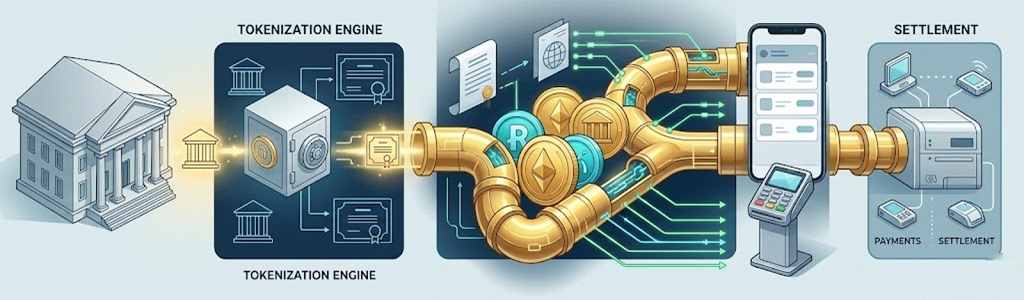
There is now a point of no return due to the arrival of financial giants on public networks. Institutions such as Franklin Templeton and JPMorgan are not just observing; they are actively participating and issuing financial products directly on blockchain rails. This integration allows products like U.S. Treasury Bonds to be traded with the liquidity and speed of a cryptocurrency, leaving costly intermediaries behind.
The 24/7 infrastructure of blockchain networks offers a competitive advantage that the traditional financial system cannot provide. While conventional stock markets are tied to opening and closing hours, tokenized assets allow for constant capital availability. This redefines asset settlement efficiency, decreasing waiting times from days to just seconds through automated smart contracts.
Stablecoins have evolved, moving from being simple liquidity bridges for trading to becoming the connective tissue of global commerce. Their ability to settle cross-border transactions instantly positions them as a real competitor to systems like SWIFT. The programmability of money allows payments to be executed under specific conditions, facilitating business models that were previously unfeasible due to their technical complexity.
The next step in this evolution is the emergence of machine-to-machine payment protocols. Thanks to this system, devices will be autonomous in performing value transactions independently, using stablecoins as a settlement currency. This integration of payments into the software layer transforms the digital economy, making the transfer of value as fluid as the exchange of data on the internet.
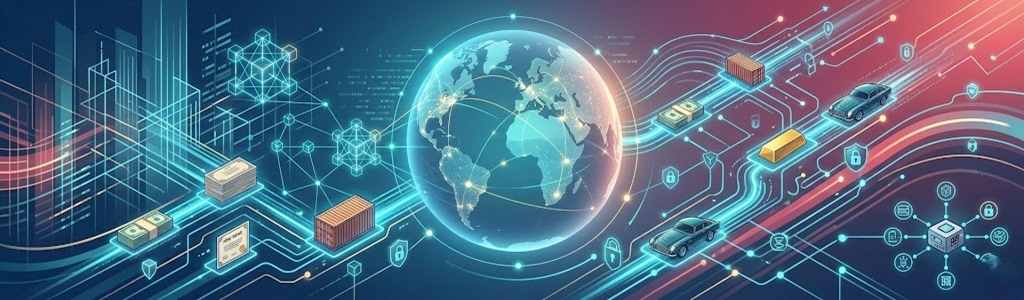
Tokenization is not limited to financial instruments; in fact, it extends to Real World Assets (RWA) such as real estate and private credit. The ability to fractionalize traditionally illiquid assets opens the doors to a much broader investor base. By digitizing ownership, transparency is enhanced and friction in the transfer of rights is reduced, creating a borderless global asset market.
Even tools like prediction markets are acting as onboarding mechanisms for new users. These platforms use blockchain rails to enable trading based on the outcomes of real-world events, familiarizing the public with the use of wallets and tokens. The technology has matured enough to offer institutional-grade custody and a regulation that, although slow, is beginning to provide the clarity necessary for large-scale deployment.
The tokenization of everything is no longer a long-term vision but the engine of a new financial reality. The marriage between traditional banking and decentralized protocols is cementing a more accessible, transparent, and efficient system. The market has decided that the future of ownership is digital, and those who do not adapt to this on-chain infrastructure will be left behind in an obsolete economic model.





