Four key US economic data releases this week could materially shift Bitcoin (BTC) market sentiment, with traders watching for signals that influence Federal Reserve (Fed) rate-cut expectations.
Last Friday’s February Non-Farm Payrolls (NFP) report delivered a shock: -92,000 jobs against an expected +59,000, with unemployment climbing to 4.4%. The result rattled risk assets and left BTC trading near $70,000, down roughly 2% on the week but 7% above Friday’s session lows.
The February jobs report deepened an already tense macro backdrop. January’s NFP had printed at +126,000 (revised), making the February figure a sharp reversal.
Unemployment ticking from 4.3% to 4.4% added fuel to recession concerns. Historically, labor market deterioration at this pace has preceded Fed easing cycles, a dynamic that cuts both ways for BTC.
Rate-cut odds rose on the news, which normally supports risk assets by increasing liquidity. However, the immediate BTC reaction was negative, reflecting a risk-off mood that overshadowed the policy tailwind.
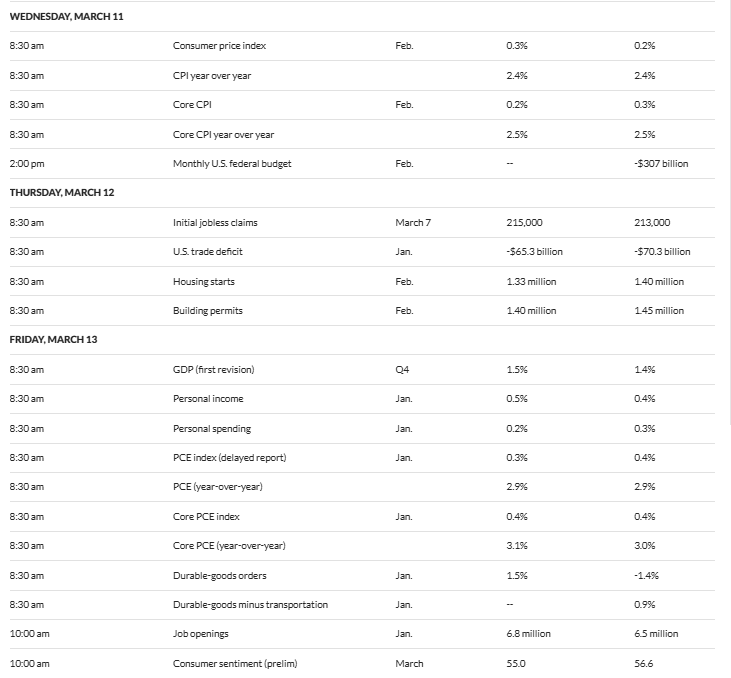
The Bureau of Labor Statistics releases the February CPI at 8:30 AM ET on Wednesday. Consensus sits at 2.5% year-over-year for headline and 3.0% for core, both slightly above January’s readings of 2.4% and the 2025 trend average (~3.1%).
January’s Producer Price Index came in hotter than expected at 2.9% year-over-year, with core at 3.6%, suggesting upside risk for CPI if energy costs feed through.
Oil prices are up approximately 12% on Iran-related geopolitical pressure, a factor that could distort the February print.
A softer-than-expected CPI reading could spark a relief rally for BTC. A hotter-than-expected result may reinforce the view that the Fed will keep rates higher for longer. Such an outcome would pressure prices toward the $60,000 range in bearish scenarios.
Weekly jobless claims for the period ending March 7 are due at 8:30 AM ET on Thursday, with consensus near 215,000, a modest rise from the prior reading of 213,000.
Claims have held a relatively stable range of 210,000–230,000 over the past 18 months, pointing to labor market resilience. However, a spike above 220,000 would reinforce the deterioration signaled by the February NFP.
The “bad news is good news” dynamic applies here: higher claims could boost rate-cut expectations, providing a liquidity tailwind for BTC even as recession fears grow.
The Bureau of Economic Analysis will release the January PCE data at 8:30 AM ET on Friday.
It is the Fed’s preferred inflation gauge, and showed Core PCE at 2.9% year-over-year in December 2025, up from November’s 2.7%, and still above the Fed’s 2% target.
January consensus expectations hold at 2.9% year-over-year for core and 0.3% month-over-month.
Alternative real-time inflation estimates place actual inflation closer to 1.02%, suggesting a possible undershoot.
A below-target PCE print could force a sharper shift in Fed guidance, potentially igniting a BTC rally. Confirmation of sticky inflation above target, by contrast, raises stagflation risks and could extend the current correction.
January JOLTS data arrives at 10:00 AM ET on Friday, with a consensus near 6.84 million openings. The most recent available reading came in at 6.542 million, below expectations, continuing a downward trend from 7.44 million in July 2025.
The JOLTS trajectory points to cooling labor demand without a dramatic collapse, consistent with a soft-landing scenario.
A further sharp drop in openings could amplify recession signals, creating mixed conditions for BTC, rate-cut-positive but risk-sentiment-negative.
Macro-focused analysts note the rarity of this week’s data stack, CPI, PCE, and JOLTS all landing within three days, a significant input for Fed watchers and, by extension, equity and crypto markets.
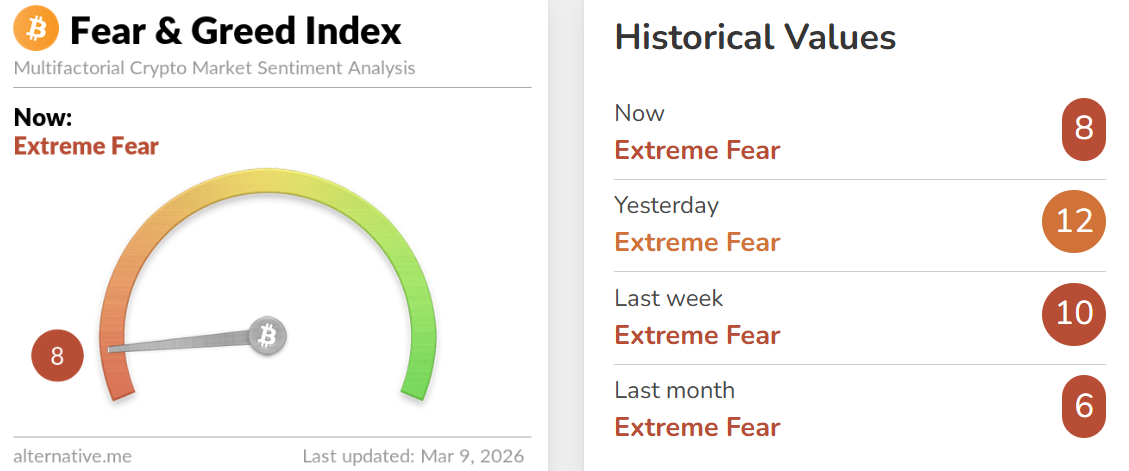
The Crypto Fear & Greed Index registered 8 at the start of the week, deep in “extreme fear” territory. This is interpreted as a contrarian setup if incoming data surprises to the dovish side.
Traders and investors are positioning for three scenarios this week:
The weight of the data, combined with a labor market already showing cracks, leaves Bitcoin at a macro crossroads.
Whether the Fed’s next move is shaped by inflation persistence or labor market deterioration may become clearer by Friday’s close.
The post 4 US Economic Signals That Could Shift Bitcoin Sentiment This Week appeared first on BeInCrypto.





