Global carbon markets have exploded in recent years — valued at over $978 billion in 2022 and expected to surpass $2.7 trillion by 2027, according to Statista. However, this massive growth has also brought mounting challenges — fraudulent carbon credits, double counting, and lengthy verification processes. Here’s where blockchain steps in as a game changer, revolutionizing how we verify, trade, and tokenize carbon credits.
In this blog, we’ll explore how blockchain technology streamlines carbon credit verification, what asset tokenization means for environmental assets, and why carbon credit tokenization could be the future of sustainability-driven economies.
Carbon credits represent one ton of carbon dioxide (CO₂) removed or avoided from the atmosphere. Companies buy these credits to offset emissions and meet sustainability goals. However, traditional verification processes are plagued by inefficiencies:
The solution? Blockchain-powered verification systems that automate and secure every transaction, ensuring authenticity and accountability.
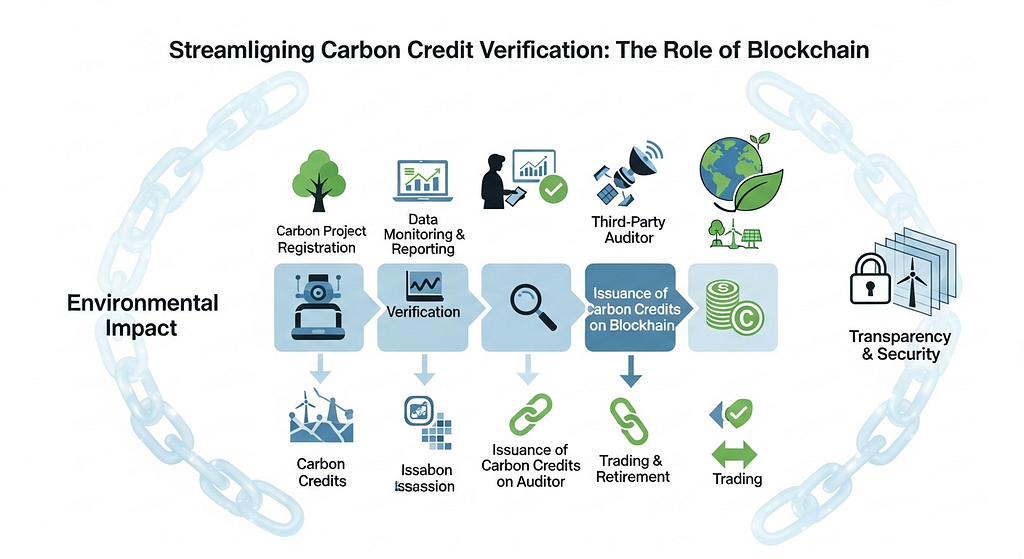
Blockchain — a distributed ledger technology — records every transaction transparently and immutably. Once data is recorded, it can’t be altered or deleted, which makes it ideal for tracking carbon credit creation and transfer.
Here’s how blockchain transforms carbon verification:
By merging these elements, blockchain provides a robust foundation for an efficient, verifiable, and transparent carbon market.
Now, let’s talk about carbon credit tokenization, one of the most exciting blockchain applications in sustainability. Tokenization is the process of converting a real-world asset — such as a carbon credit — into a digital token that can be traded on blockchain platforms.
Through carbon credit tokenization, organizations can:
Platforms like Spydra are pioneering this change. Their solutions demonstrate how blockchain can empower businesses and individuals to participate in climate-positive investments with ease and transparency.
Asset tokenization refers to representing ownership of tangible or intangible assets — such as real estate, gold, or carbon credits — as digital tokens on a blockchain. These tokens can be traded, divided, or transferred seamlessly.
When applied to carbon credits, asset tokenization:
This technology bridges the gap between traditional financial systems and emerging digital ecosystems, making sustainability both profitable and accessible.
The potential of blockchain extends beyond verification. It fosters a trust-based carbon ecosystem that aligns businesses, investors, and governments toward achieving Net Zero by 2050.
Here’s what the future could look like:
When blockchain meets sustainability, efficiency and accountability go hand in hand.
Blockchain technology is not just simplifying carbon credit verification — it’s redefining the way the world values sustainability. By enabling carbon credit tokenization and asset tokenization, it’s breaking barriers to entry, improving transparency, and driving trust in global carbon markets.
As climate urgency rises, organizations must embrace blockchain to streamline verification and reporting, ensuring every carbon credit genuinely counts.
For a deeper look into how blockchain drives sustainability, check out Spydra’s comprehensive guide on carbon credits 2.0.
1. What is carbon credit tokenization?
It’s the process of converting verified carbon credits into digital tokens on a blockchain for easier trading and tracking.
2. How does blockchain ensure carbon credit authenticity?
Blockchain’s immutable ledger records every transaction, ensuring credits can’t be duplicated or falsified.
3. What is asset tokenization in carbon markets?
Asset tokenization turns carbon credits into digital tokens that represent real ownership and can be easily traded globally.
4. Can blockchain reduce carbon credit fraud?
Yes! By offering transparent, tamper-proof verification, blockchain minimizes fraud and double counting.
Streamlining Carbon Credit Verification: How Blockchain is Revolutionizing Sustainability was originally published in Coinmonks on Medium, where people are continuing the conversation by highlighting and responding to this story.





