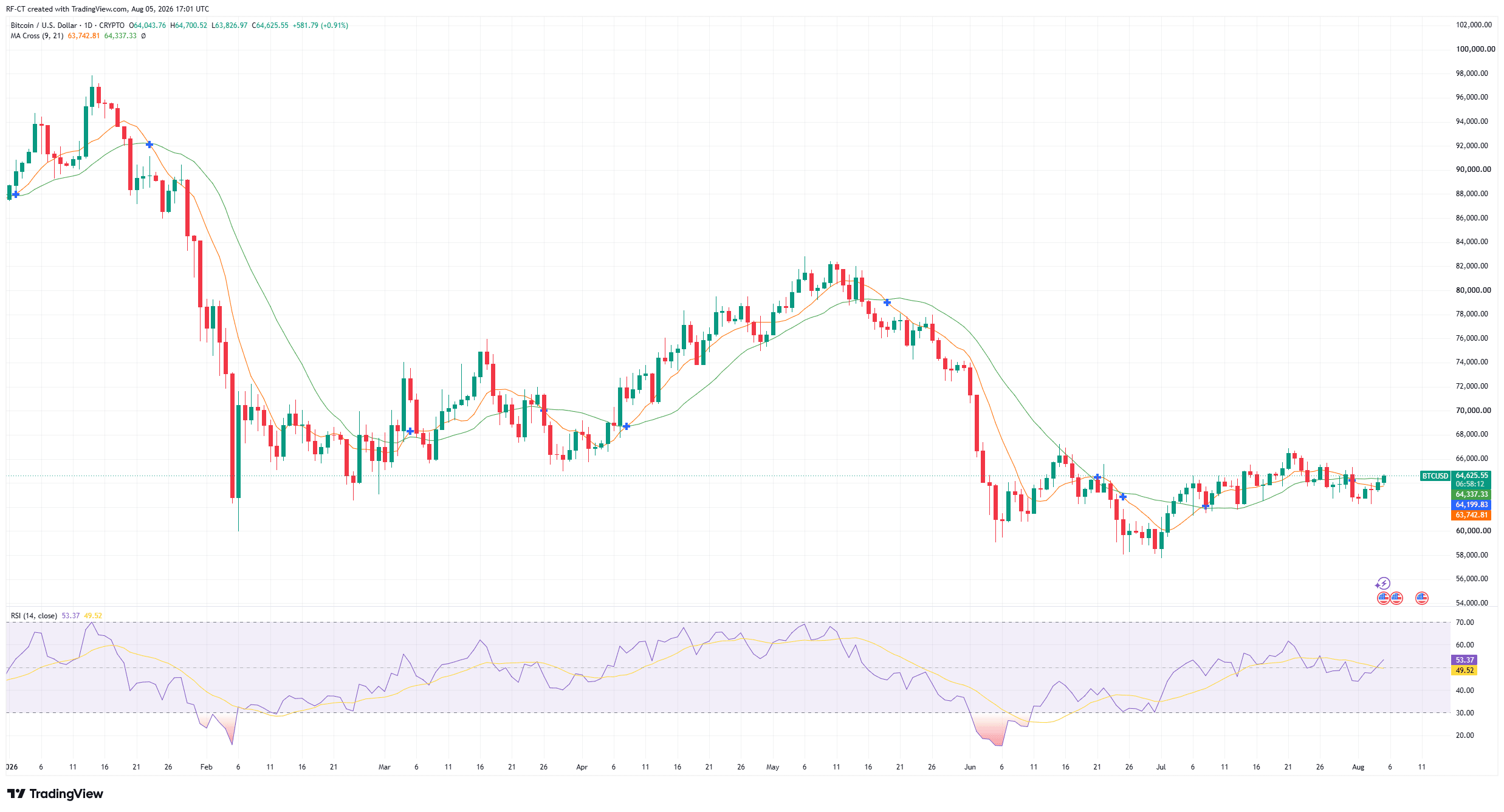
Gold delivered one of its strongest sessions of 2026, climbing 4.4% to approximately $4,257 per ounce. Bitcoin, meanwhile, remained near $64,000, recording only a modest recovery despite falling bond yields, a weaker dollar and improving sentiment across traditional markets.
The contrast is striking. Based on the estimated quantity of gold held above ground, the precious metal added roughly $1.3 trillion in market value during a single session—almost equivalent to Bitcoin’s entire market capitalization.
Why is gold responding so strongly while Bitcoin continues to struggle?
Spot gold climbed 4.4% to $4,256.85 per ounce, touching an intraday high near $4,259. It was gold’s strongest daily performance since February, while US gold futures rose approximately 4% to more than $4,317.
According to the World Gold Council, approximately 219,891 tonnes of gold existed above ground at the end of 2025. At the latest spot price, that stock would be worth approximately $30 trillion.
Applying a 4.4% daily increase to that estimated valuation produces a gain of roughly $1.27 trillion, commonly rounded to $1.3 trillion.
This does not mean investors deposited $1.3 trillion into the gold market in one day. Market capitalization reflects the value of the entire estimated supply at the latest quoted price. A relatively smaller amount of trading can therefore change the theoretical value of all existing gold.
Nevertheless, the comparison remains significant: gold’s estimated one-day increase was almost as large as Bitcoin’s entire market capitalization of approximately $1.3 trillion.
The rally was driven by a combination of falling Treasury yields, a softer US dollar and changing expectations surrounding the Iran conflict.
Optimism about progress in negotiations involving the United States, Iran and Oman helped push oil prices lower. The prospect of reopening the Strait of Hormuz reduced fears that energy shortages would keep inflation elevated.
Lower inflation expectations weakened the case for another Federal Reserve interest rate increase. The US 10-year Treasury yield declined toward 4.60%, making non-yielding assets such as gold relatively more attractive.
The relationship may initially appear contradictory. Easing geopolitical tensions normally reduces demand for traditional safe havens. In this case, however, the effect on oil prices, inflation expectations and bond yields provided stronger support for gold.
The move was also part of a wider precious-metals recovery. Silver gained almost 5%, while gold futures extended their two-day advance to more than 5%.
Bitcoin was trading around $64,600 at the time of writing, gaining approximately 1% over 24 hours. Ethereum hovered near $1,890, XRP traded around $1.06 and Solana remained close to $74.
The total cryptocurrency market capitalization stood near $2.19 trillion, while Bitcoin dominance increased to approximately 58.8%. These figures indicate that the recovery remains heavily concentrated in Bitcoin, with little evidence of a broader altcoin breakout.
Bitcoin’s position becomes even more unusual when compared with other markets. Gold is surging, Treasury yields are declining and major US equity indexes have recently traded near record levels. Bitcoin, however, remains approximately 49% below its October 2025 record of around $126,000.
The conditions that would normally support crypto are improving, but buyers are still reluctant to return.
Bitcoin’s weakness appears to be driven more by missing demand than by aggressive panic selling.
Spot Bitcoin ETF flows recently turned negative, while open interest on the Chicago Mercantile Exchange reportedly returned to levels last seen in 2023. This suggests that institutional participation has weakened significantly.
Corporate demand has also become less reliable. Strategy sold 1,638 BTC for approximately $104.7 million between July 27 and August 2. The company used the proceeds to fund preferred-stock dividends and repurchase STRC shares, according to its SEC filing.
The sale was relatively small compared with Strategy’s remaining 842,138 BTC holdings. Still, it represents an important psychological shift. One of Bitcoin’s most aggressive corporate buyers became a seller while the market was already struggling to attract new capital.
Regulatory uncertainty is creating another obstacle. The CLARITY Act remains stalled in the US Senate, reducing expectations that clear market-structure legislation will provide an immediate institutional catalyst.
Together, weak ETF demand, reduced derivatives activity, corporate selling and regulatory delays have prevented Bitcoin from fully benefiting from the improving macroeconomic environment.
The latest performance strengthens gold’s position as the market’s preferred defensive asset, at least in the short term.
Gold benefits from an established institutional market, central-bank ownership and centuries of acceptance as a store of value. Bitcoin offers scarcity and independence from traditional financial systems, but it continues to trade like a high-risk liquidity asset during periods of market uncertainty.
This does not mean Bitcoin’s safe-haven argument has permanently failed. It shows that investors are currently treating gold and Bitcoin differently.
Gold is responding directly to falling yields and a weaker dollar. Bitcoin requires those conditions plus renewed crypto-specific demand. Without ETF inflows, corporate accumulation or a major regulatory catalyst, favorable macroeconomic developments may not be enough to produce a sustained Bitcoin rally.
Bitcoin’s immediate challenge is to convert its stabilization above $64,000 into a decisive breakout. A sustained move above the recent $65,000–$67,000 resistance area could indicate that buyers are finally responding to improving macroeconomic conditions.
Failure to hold the $63,000–$64,000 region would keep the risk of another decline toward $60,000 alive. Demand around that psychological level could determine whether Bitcoin is building a long-term bottom or merely pausing before another correction.
Traders should also monitor ETF flows, developments surrounding the CLARITY Act and any further Bitcoin sales by major corporate holders. These crypto-specific catalysts may matter more than movements in gold or equities over the coming weeks.
Gold’s estimated $1.3 trillion one-day increase demonstrates how quickly global capital can reprice a major asset when macroeconomic conditions change.
Bitcoin has not experienced the same reaction. Its price remains near $64,000, altcoins are showing little momentum and institutional participation remains weak.
The divergence does not necessarily signal the end of Bitcoin’s recovery potential. It does, however, show that improving macroeconomic conditions alone are no longer sufficient. Until crypto attracts its own powerful catalyst, gold may continue winning the battle for global safe-haven demand.





