How We Taught Sand to Think: The Secret Electron Dance Behind Your Screen
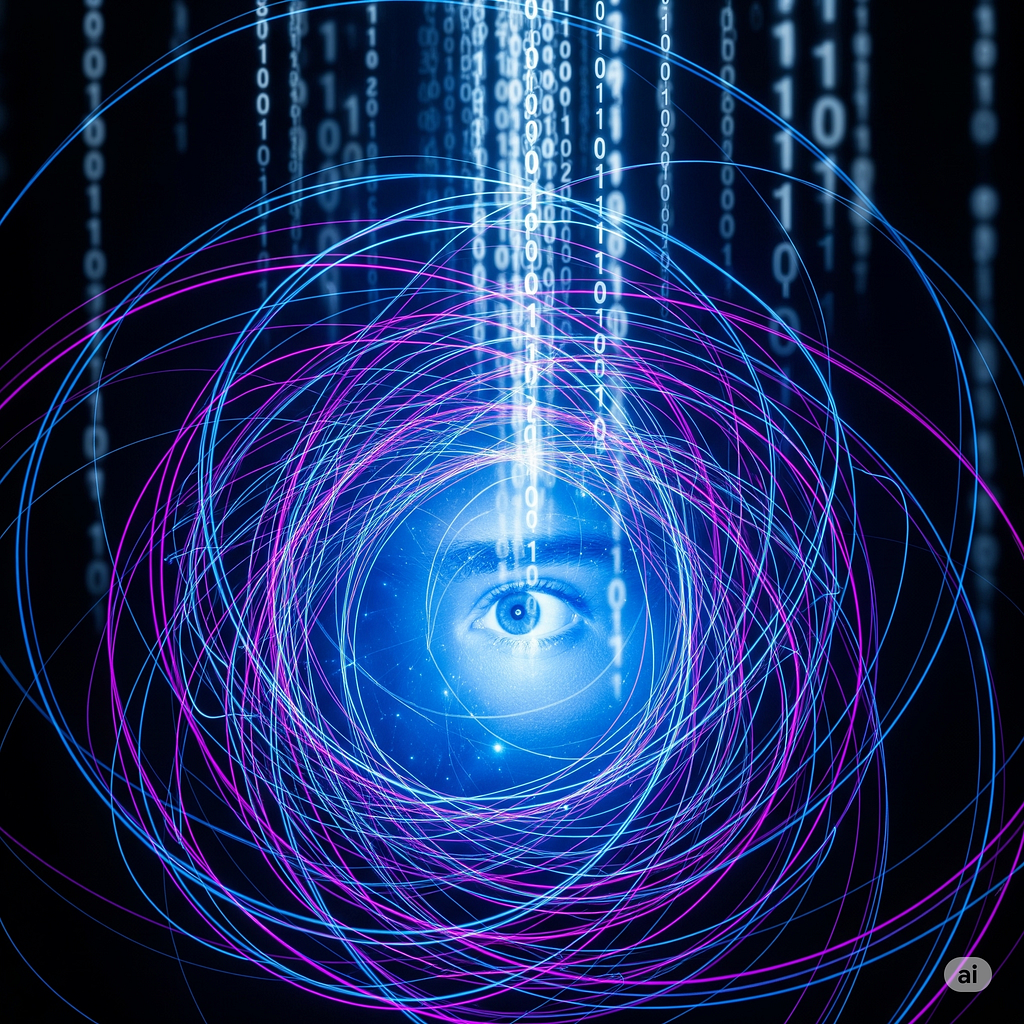
That smartphone in your pocket? It’s essentially a piece of sand we tricked into thinking using tamed lightning.
Sounds like science fiction, doesn’t it? But it’s not. Every single thing you do online — every swipe, every click, every video you stream — is powered by a secret, invisible performance. A tiny, chaotic ballet happening trillions of times a second.
This is the story of the “Electron Dance,” the most important story you’ve never been told.
Forget dusty textbooks. Imagine a group of brilliant, obsessed scientists a little over a century ago. They discovered something that would change humanity forever: a tiny, wild particle buzzing with energy. The electron.
For ages, it was just a ghost in the machine of the universe. But we didn’t just discover it. We learned how to catch it. How to build tiny highways for it to travel on and, most importantly, how to tell it where to go.
We became the choreographers of the universe’s most fundamental dance. But what message could this dance possibly convey?
How do you build a universe of infinite possibility from a single particle? You create the simplest language imaginable. A language with only two words:
ON and OFF.
That’s it. That’s the secret. By controlling whether an electron’s energy flows or stops, we created a switch. We call them 1s (On) and 0s (Off).
This isn’t just code; it’s the heartbeat of the digital world. Your favorite photo? It’s just a billion-piece mosaic of ones and zeros. The music you’re streaming? A perfectly timed sequence of on and off pulses. It’s a language so simple, it’s genius. It’s the two-word vocabulary that allowed us to write the epic of the modern world.
Once we had the language, we started writing poetry.
The first computer programs were clumsy and slow, like a toddler learning to walk. They could perform basic math, taking hours to solve problems a cheap calculator does today.
But we didn’t stop. We taught the dance new moves. We layered more complex instructions on top of the simple 1s and 0s, creating sophisticated programming languages that feel almost like speaking English. We went from a simple two-step to a dazzling, complex ballet.
This evolution is the reason you can edit a video on your laptop instead of needing a room-sized supercomputer.
So, the next time you unlock your phone or ask a smart speaker for the weather, stop for a second.
Realize what you’re actually doing.
You are commanding a silent, invisible orchestra. You are the conductor of a lightning-fast dance of countless electrons, all performing an intricate routine just for you. You are wielding the power that started as a scientific curiosity and became the force that defines our reality.
The digital world isn’t magic. It’s something far more incredible: a testament to human ingenuity. It’s the beautiful, chaotic, and world-changing result of us teaching sand how to think.
The Electron Dance was originally published in Coinmonks on Medium, where people are continuing the conversation by highlighting and responding to this story.