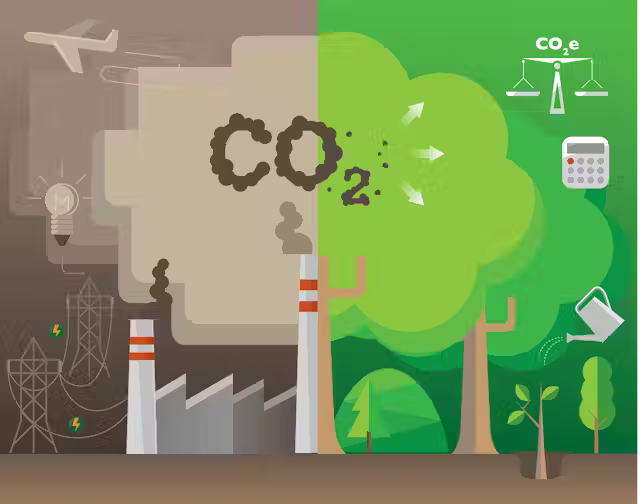
The decentralized finance (DeFi) revolution has democratized access to financial services, created new forms of value, and enabled unprecedented innovation. But there’s an elephant in the room: environmental impact.
Every swap on Uniswap, every yield farm on Aave, every trade across the DeFi ecosystem contributes to blockchain energy consumption and carbon emissions. As the space grows, so does its carbon footprint.
What if we could flip this equation entirely?
What if every DeFi transaction didn’t just avoid harming the environment, but actively removed CO2 from the atmosphere? What if trading, lending, and yield farming became forces for climate action rather than climate concern?
Today, we’re excited to introduce Carbon-as-a-Service (CaaS) — the first universal infrastructure that transforms any DeFi protocol into a carbon-negative application.
Let’s start with the reality: blockchain transactions have environmental costs. While Ethereum’s transition to Proof-of-Stake reduced energy consumption by 99.95%, transactions still consume energy, and energy production still generates carbon emissions.
Consider the real energy consumption differences across blockchains:
Even with Ethereum’s dramatic 99.95% energy reduction after the merge, a typical DeFi transaction still generates approximately 10 grams of CO²⁵. That might seem small, but with millions of transactions daily, the cumulative impact adds up.
More importantly, as DeFi aims to replace traditional finance, we have a responsibility to do better than the legacy system — not just financially, but environmentally.
Most “green crypto” initiatives focus on:
These approaches have fundamental limitations:
What if there was a better way?
Carbon-as-a-Service (CaaS) is the first universal infrastructure that any DeFi protocol can plug into to become carbon negative — meaning every transaction removes more CO2 from the atmosphere than it generates.
Think of it as AWS for carbon neutrality. Just as protocols don’t build their own cloud infrastructure, they shouldn’t have to build their own carbon offsetting systems.
Instead of each protocol building custom carbon solutions, they simply subscribe to our service:
🟢 Basic Tier: 110% carbon offsetting
🔵 Premium Tier: 150% carbon offsetting
⭐ Enterprise Tier: 200% carbon offsetting

The beauty of CaaS lies in its universality. Any existing DeFi protocol can become carbon negative without changing a single line of their code.
We support multiple integration patterns:
This means:
Behind the scenes, our system performs sophisticated calculations for every transaction:
We track the exact gas consumption of each transaction and convert it to CO2 emissions based on the specific blockchain’s energy profile:
Different blockchains have vastly different environmental impacts:
Our system automatically adjusts carbon calculations based on the specific chain, ensuring accurate offsetting regardless of where transactions occur.
For every transaction, we automatically purchase verified carbon credits from:
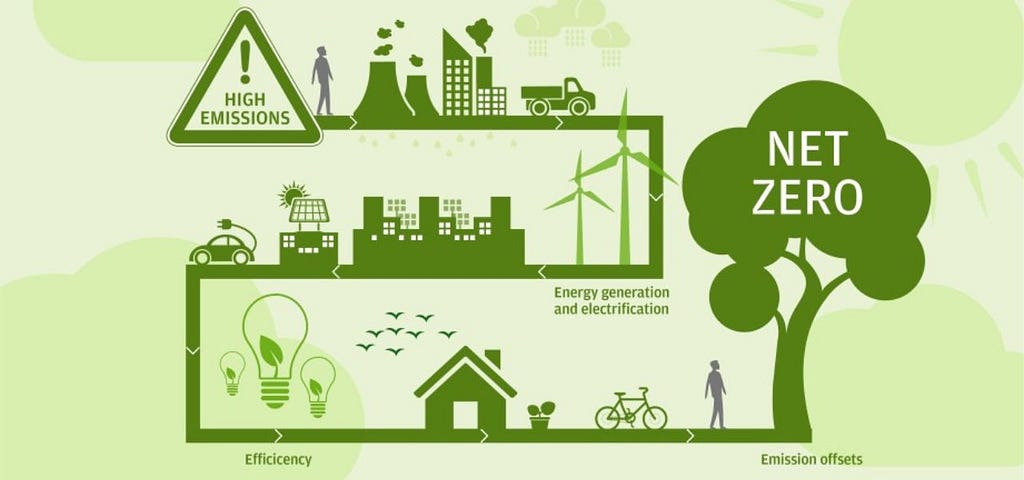
Let’s look at what this means in practice:
If adopted across major DeFi protocols:
That’s equivalent to planting 580,000 trees⁹ or taking 2,800 cars off the road permanently¹⁰.
Our subscription model creates a sustainable flywheel:
The more protocols that adopt CaaS, the better it becomes for everyone:
Scale Economics: Bulk purchasing of carbon credits drives down costs
Better Data: More transactions provide better carbon calculation accuracy
Broader Impact: Network-wide adoption maximizes environmental benefit
Partnership Power: Larger scale enables partnerships with premium carbon removal projects
Innovation: Shared infrastructure enables faster development of new carbon-positive features
Imagine opening your favorite DEX and seeing:
“✅ This swap will remove 12g of CO2 from the atmosphere”
Every trade becomes an act of climate activism.
Stake your tokens, earn yield, and remove carbon:
“💰 APY: 15% | 🌱 Carbon Impact: -2.3kg CO2 this month”
Investment strategies optimized not just for returns, but for environmental impact:
“This portfolio generated 8.5% returns while removing 45kg of CO2”
Businesses can automatically track and offset all their DeFi activities:
“Your company’s DeFi operations were carbon negative this quarter: -127kg CO2”
CaaS isn’t just about offsetting existing emissions — it’s about creating new carbon-positive innovations:
Users earn tradeable NFTs representing their carbon impact contribution.
Vote on which carbon removal projects to fund with governance tokens weighted by carbon impact.
Gamify climate action with leaderboards showing which users and protocols have the biggest positive impact.
Track your total carbon impact across all chains and protocols in one dashboard.
The climate crisis requires bold action, and the DeFi community has always been at the forefront of innovation. We have an opportunity — and responsibility — to make decentralized finance a force for climate action rather than climate concern.
For Protocol Builders: Join us in making your protocol carbon negative. Be the first in your category to actively remove CO2 from the atmosphere with every transaction.
For Users: Choose carbon-negative protocols. Vote with your transactions for a climate-positive future.
For Investors: Support infrastructure that creates both financial returns and environmental impact.
For the Community: Help us spread the word. The faster we achieve network effects, the bigger our collective climate impact.
Carbon-as-a-Service represents a fundamental shift in how we think about the relationship between technology and climate action. Instead of viewing environmental responsibility as a constraint on innovation, we’re making it a driver of innovation.
Every swap, every trade, every DeFi transaction becomes an opportunity to remove CO2 from the atmosphere. We’re not just building carbon-neutral DeFi — we’re building carbon-negative DeFi.
The technology exists. The market demand is growing. The climate urgency is real.
The question isn’t whether DeFi will become carbon negative — it’s whether you’ll be part of building that future.
Disclaimer: Carbon offset markets and blockchain energy consumption are rapidly evolving fields. Numbers cited represent estimates based on available data and may vary based on network conditions, electricity grid composition, and technological developments. This article is for informational purposes only and does not constitute financial or investment advice.
Carbon-as-a-Service is launching on testnet this quarter, with mainnet deployment planned for early next year. Follow us for updates on partnerships, integrations, and our journey to make every DeFi transaction a climate action.
Together, we’re not just decentralizing finance — we’re decentralizing climate action.
Building the infrastructure for climate-positive DeFi. Previously worked on carbon markets, blockchain scalability, and sustainable technology. Passionate about using innovation to solve humanity’s biggest challenges.
#DeFi #Climate #Sustainability #Blockchain #Ethereum #CarbonNegative #GreenFinance #Innovation
Disclaimer: This article is for informational purposes only and does not constitute financial or investment advice. Carbon credit markets and environmental impacts are complex topics that require thorough research and professional guidance.
Introducing Carbon-as-a-Service: Making Every DeFi Transaction Remove CO2 from the Atmosphere was originally published in Coinmonks on Medium, where people are continuing the conversation by highlighting and responding to this story.





