Hylo is a decentralized finance (DeFi) protocol built on the Solana blockchain that introduces a dual-token system: hyUSD, a decentralized stablecoin backed by liquid staking tokens (LSTs), and xSOL, a synthetic asset providing long-term leveraged exposure to SOL.
Hylo Referral Code — DSEZE0 and Mint xSOL and hyUSD and earn upto 17% yield on your stable coins.
The protocol is fully permissionless, non-custodial, and autonomous, avoiding traditional finance dependencies and real-world assets.
Designed for scalability, composability, and yield efficiency, Hylo leverages staking derivatives to create a self-contained monetary system native to Solana, with built-in risk management and slippage-free liquidity mechanisms.
Its goal is to redefine how stable value and leverage are accessed in decentralized markets.
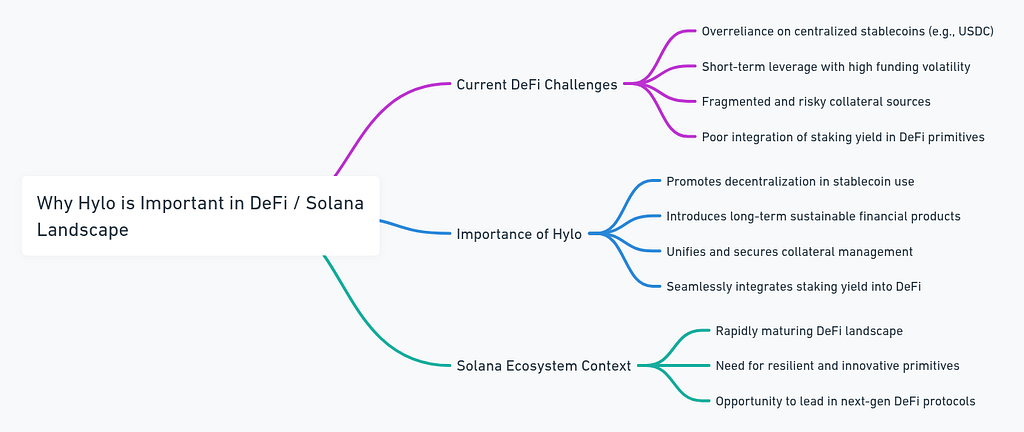
The DeFi landscape — particularly on Solana — is maturing rapidly, but still grapples with key limitations:
Hylo addresses all of these pain points in one integrated, protocol-native system
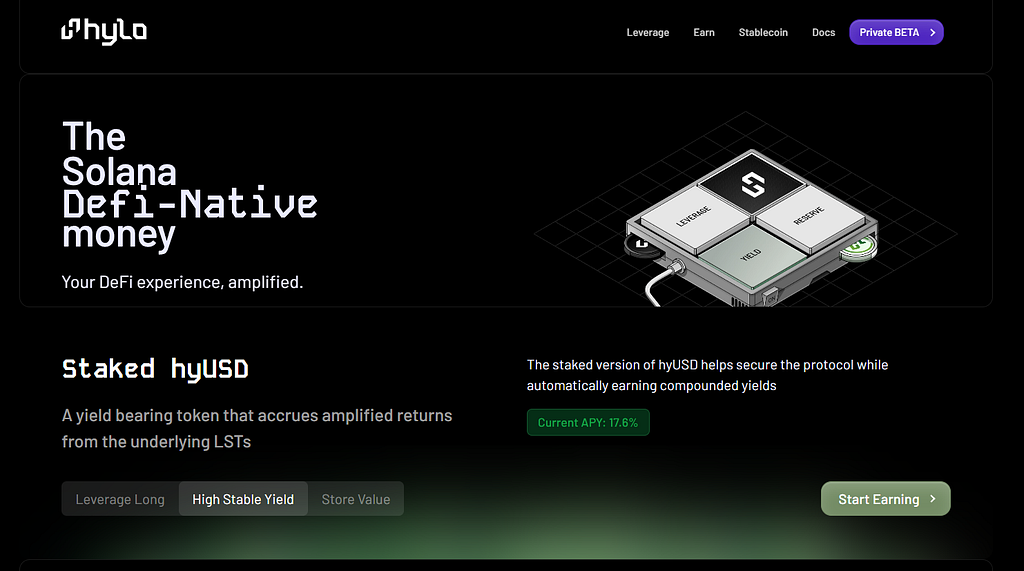
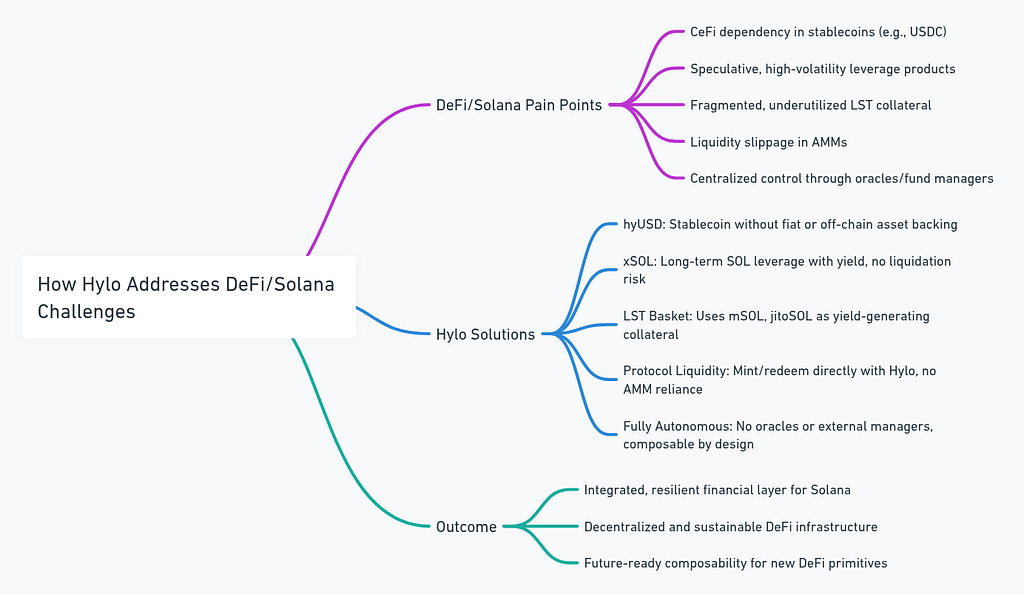
In short, Hylo is not just another stablecoin or leverage tool — it’s an independent, yield-aware financial system for Solana-native users.
1. LST-Backed Stablecoin (hyUSD)
2. Long-Term Leverage Token (xSOL)
3. Protocol-Integrated Risk Management
4. Fully Autonomous and Permissionless
5. Yield-Native Design
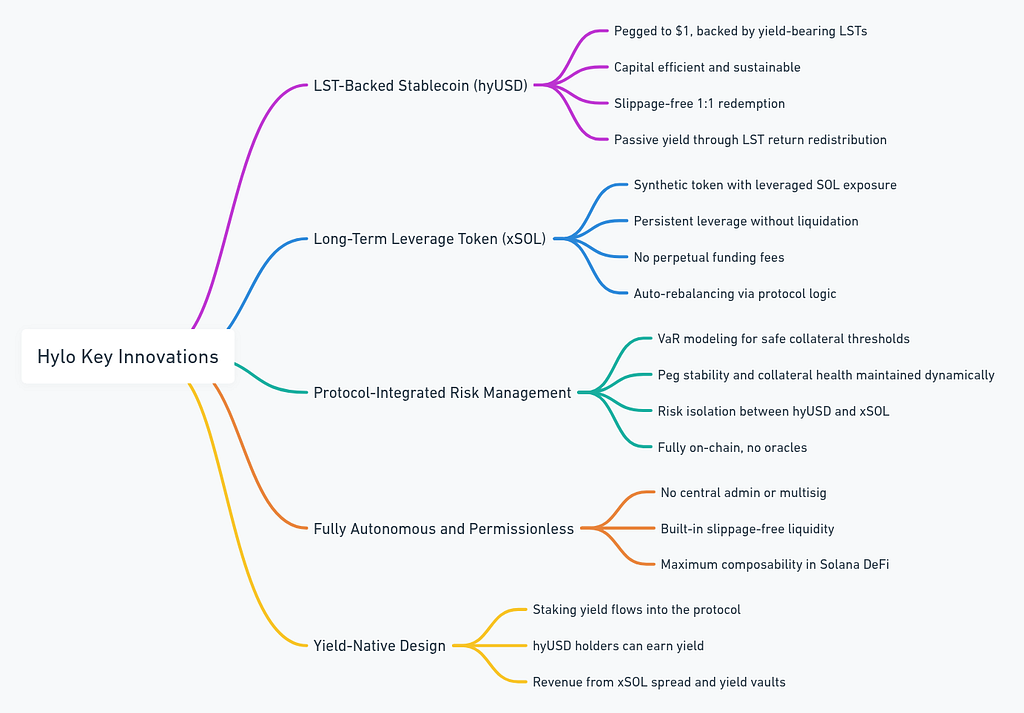
Hylo represents a next-generation DeFi protocol that reimagines stable value and leverage for a decentralized, yield-aware future — without relying on traditional finance, centralized stablecoins, or volatile leverage instruments. By integrating liquid staking, synthetic assets, and autonomous protocol economics, Hylo builds a resilient, Solana-native foundation for the next evolution of decentralized money.

Background of DeFi on Solana
Solana has rapidly emerged as a leading smart contract platform, prized for its high throughput, low fees, and parallel transaction processing — an ideal environment for decentralized finance (DeFi) innovation. Over the last few years, Solana has cultivated a vibrant DeFi ecosystem including DEXs (like Orca and Jupiter), lending protocols (MarginFi, Solend), and liquid staking solutions (Marinade, Jito, Blaze).
Despite its growing maturity, Solana DeFi still inherits several structural problems from broader DeFi:
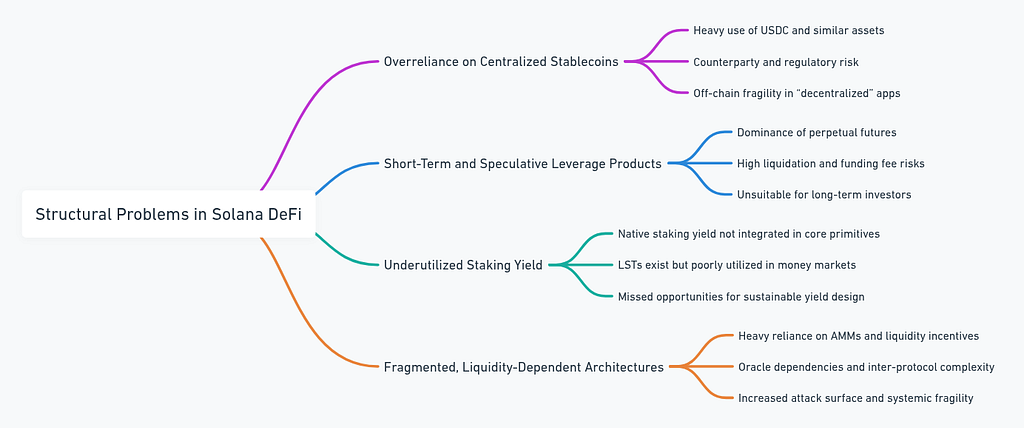
Solana has the infrastructure to support the next generation of DeFi, but it still lacks foundational protocols that:
This is where Hylo enters the picture.
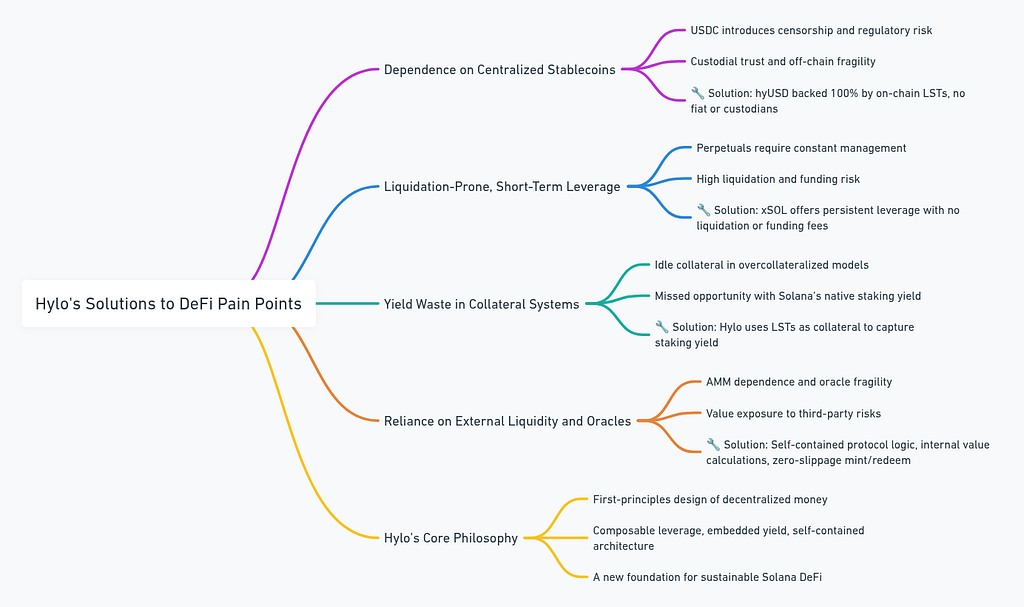
Hylo’s architecture directly targets and resolves the following DeFi shortcomings:
1. Dependence on Centralized Stablecoins
Most DeFi protocols on Solana rely on USDC, a fiat-backed, centralized stablecoin issued by Circle. This introduces:
Hylo Solution
hyUSD, Hylo’s stablecoin, is backed 100% by on-chain collateral — a diversified basket of liquid staking tokens (LSTs). No fiat. No real-world custodians. No off-chain oracles.
2. Short-Term, Liquidation-Prone Leverage
DeFi leverage is dominated by perpetuals or isolated margin platforms. These:
Hylo Solution
xSOL provides persistent, synthetic leverage on SOL without liquidation risks or funding fees. Built for long-term holders, not short-term traders.
3. Yield Waste in Collateral Systems
Protocols like MakerDAO require users to overcollateralize with idle assets, which don’t earn yield. Solana, with its native staking yield, offers a better design surface.
Hylo Solution
Collateral in Hylo is made up of yield-bearing LSTs. The protocol design captures this staking yield to support:
4. Reliance on Third-Party Liquidity and Oracles
Many protocols depend on external AMMs (e.g., Orca pools) for liquidity and on price oracles (e.g., Pyth, Switchboard) for collateral valuation — both are potential points of failure.
Hylo Solution
Hylo’s minting and redemption logic is self-contained. There is:
Hylo enters the DeFi scene not as a derivative of existing models, but as a first-principles rethink of decentralized money. By eliminating fiat dependencies, extracting staking yield from collateral, and embedding composable leverage into its protocol layer, Hylo positions itself as a foundational money layer for Solana.
Its self-contained architecture, zero-slippage liquidity, and long-term asset strategies provide a sustainable and decentralized alternative to the current stablecoin-leverage-perp trifecta dominating DeFi.

Hylo is a decentralized finance protocol native to the Solana blockchain that offers two core financial primitives:
Mint hyUSD and xSOL using this link.
Unlike traditional DeFi platforms that depend on centralized stablecoins or price oracles, Hylo builds a self-contained, permissionless system that functions like an on-chain “central bank” for Solana — complete with mint/redeem mechanics, collateral optimization, and embedded staking yield.
Hylo is engineered to be more than a set of DeFi tools — it is a composable, yield-native monetary layer that aligns capital efficiency with decentralization.
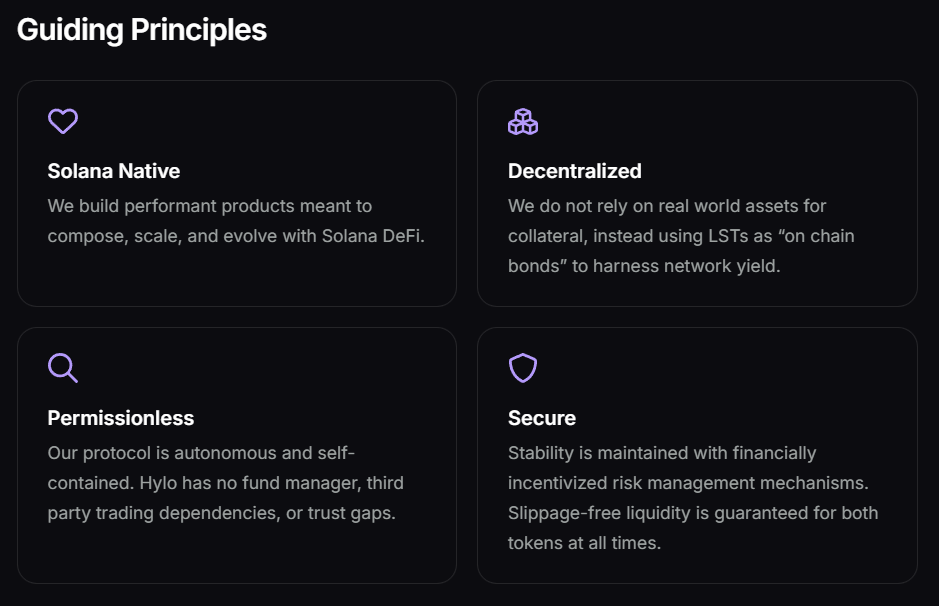
Hylo’s mission is to establish a fully autonomous, Solana-native financial system that is sustainable, composable, and maximally decentralized. This vision is governed by four core principles:
1. Solana-Native
“We build performant products meant to compose, scale, and evolve with Solana DeFi.”
Hylo is built exclusively for Solana, optimizing for its:
This enables fast, cost-efficient, and low-latency DeFi primitives that seamlessly integrate with the broader Solana ecosystem, including liquid staking protocols (like Jito, Marinade) and DeFi venues (like Jupiter, Kamino, Meteora).
2. Decentralized
“We do not rely on real world assets for collateral.”
Hylo is free of dependencies on:
Instead, it uses LSTs as fully on-chain collateral, effectively turning staking yield into a decentralized “bond” market for backing stable value and synthetic assets.
3. Permissionless
“Our protocol is autonomous and self-contained.”
Hylo does not require:
Anyone with a Solana wallet can mint hyUSD, leverage into xSOL, or earn passive yield, without ever trusting a third party. The system operates purely through immutable smart contracts.
4. Secure
“Stability is maintained with financially incentivized risk management mechanisms.”
Hylo prioritizes safety through
The result is a risk-contained, slippage-free liquidity model that can sustain itself even in volatile markets.
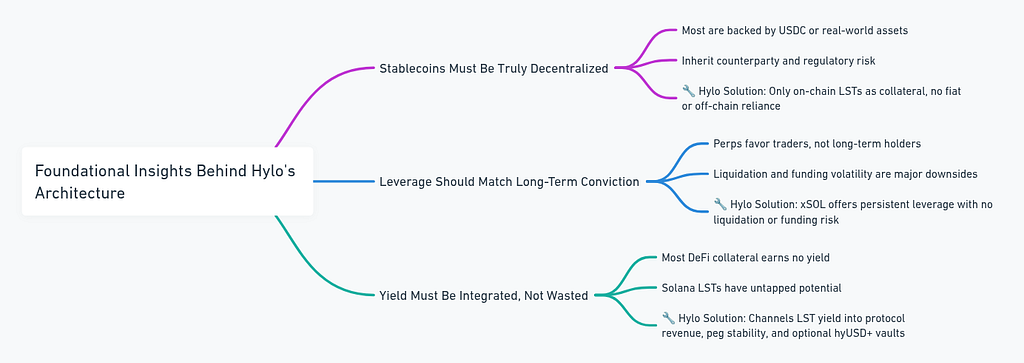
Hylo’s architecture is shaped by three foundational insights about DeFi’s challenges:
1. Stablecoins must be truly decentralized
Most DeFi stablecoins on Solana (e.g., USDC-backed) inherit counterparty and regulatory risk. Even MakerDAO’s DAI is increasingly reliant on real-world assets.
🔧 Hylo uses only on-chain LSTs to back its stablecoin, avoiding fiat and off-chain trust assumptions.
2. Leverage should match long-term conviction, not short-term speculation
Perpetual futures (perps) dominate leverage in DeFi, but are unsuitable for long-term investors due to:
🔧 xSOL offers durable, automated leverage with no funding or liquidation, aligning with HODL-style investing rather than trading.
3. Yield must be integrated, not wasted
Collateral in most DeFi protocols sits idle. Solana’s LSTs are natively yield-bearing, yet most protocols fail to harness this.
🔧 Hylo channels LST yield into:
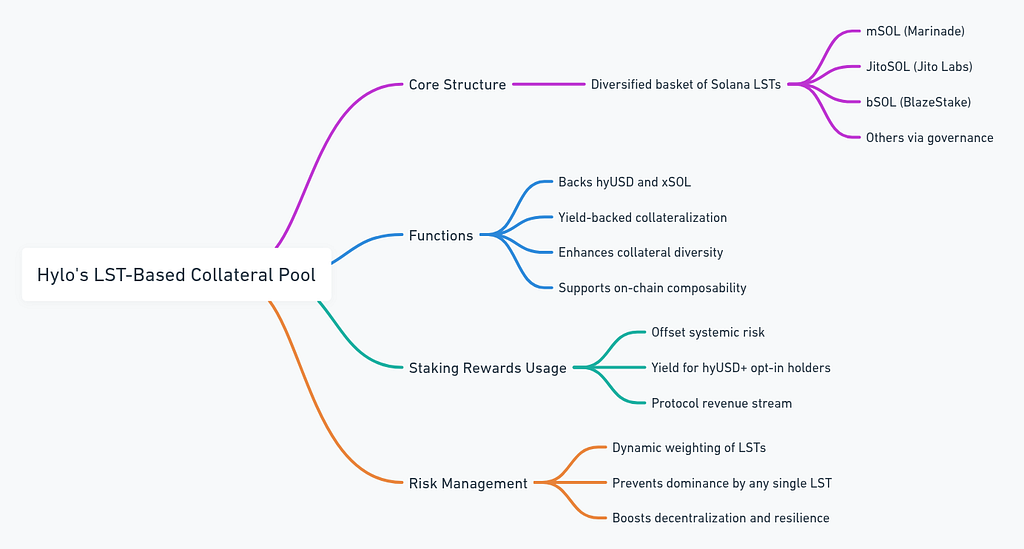
At the heart of Hylo lies its Collateral Pool, made up of a diversified basket of LSTs on Solana:
This LST basket supports both hyUSD and xSOL and provides:
Each LST accrues staking rewards, which are:
The protocol also uses dynamic weighting and accounting to ensure no single LST dominates the basket, enhancing resilience and decentralization.
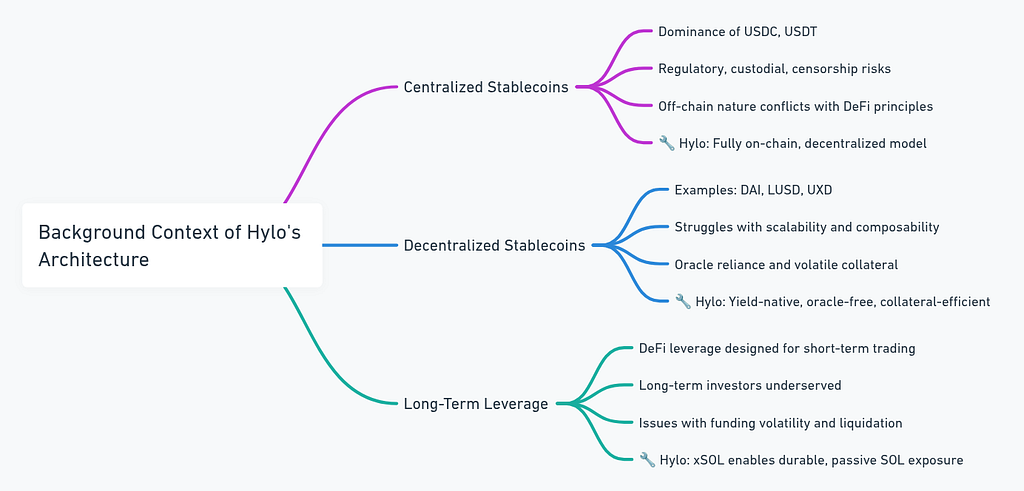
Hylo’s architecture stems from foundational research into three domains:
Hylo introduces two flagship products: hyUSD, a decentralized stablecoin, and xSOL, a leveraged asset tracking SOL. These are built atop a carefully designed protocol that integrates staking yield, minimizes risk, and rewards users through the XP (Experience Points) System.
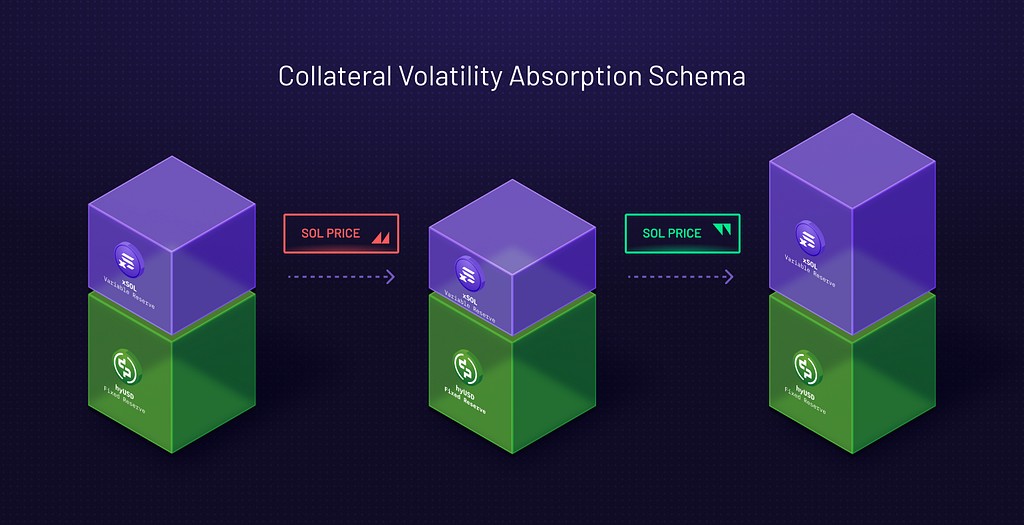
How Hylo Works?
hyUSD is a dollar-pegged stablecoin minted against a basket of liquid staking tokens (LSTs) on Solana, such as:
Users deposit these LSTs into the protocol’s Collateral Pool to mint hyUSD. The system maintains full collateralization using the real-time protocol-defined value of each LST — not via external oracles.
Unlike USDC or other fiat-backed stablecoins, hyUSD is entirely on-chain, decentralized, and yield-native.
Collateral: A Yield-Backed Basket
The LST basket acts as both collateral and a yield engine. These LSTs accrue staking rewards, which flow into the protocol to:
This collateral system is diverse and risk-balanced, with weighting mechanisms to prevent overexposure to a single staking provider.
Stability Mechanism
Hylo ensures peg stability through
There is no dependency on oracles, external AMMs, or real-world price feeds, which is a major innovation in reducing systemic risk.
Use Cases
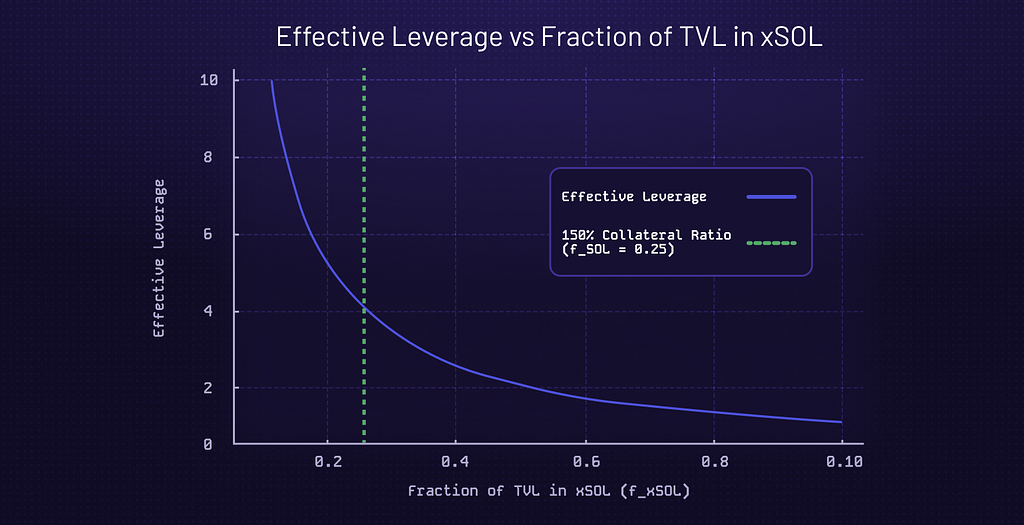
Design and Mechanics
xSOL is a synthetic token that provides long-term leveraged exposure to SOL. Unlike perpetual futures or margin trading platforms, xSOL does not rely on funding rates, liquidation engines, or external price oracles.
It is minted by depositing hyUSD into the protocol, which simulates leverage by increasing SOL exposure through internal logic — backed by LSTs.
How It Achieves Leverage
When users mint xSOL, their deposited hyUSD is converted into additional LST collateral, increasing exposure to SOL while keeping the protocol overcollateralized.
Key features
Target Users
Risk Profile and Use Cases
While xSOL avoids the downsides of traditional leverage (like liquidation), it is still exposed to SOL’s price volatility. Users must understand that:
Use cases include
Hylo includes a points-based incentive layer called the XP System — designed to reward early adopters and long-term protocol participants.
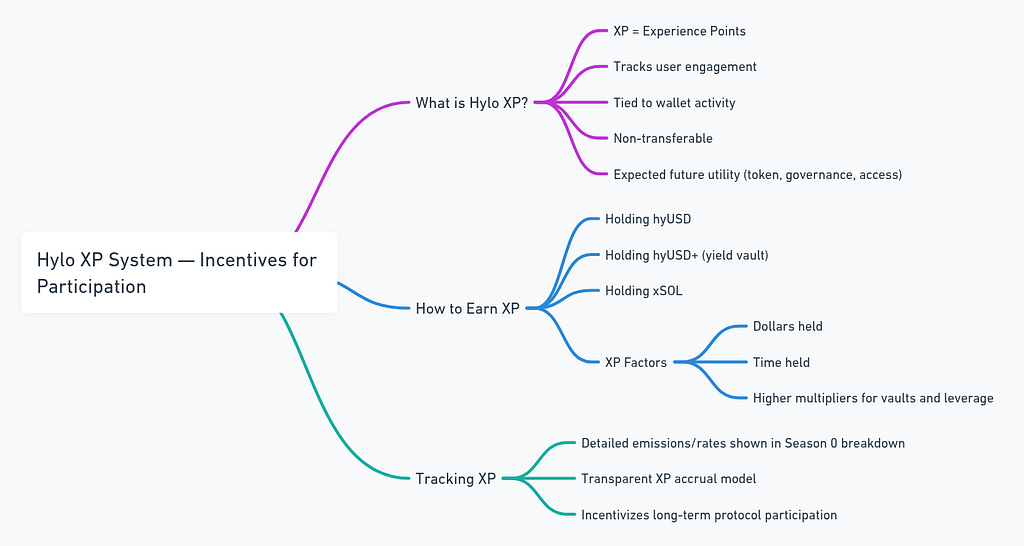
💠 What is Hylo XP?
While not explicitly tied to a token yet, XP is widely anticipated to have future utility (e.g., token distribution, governance rights, exclusive access).
How to Earn XP
XP is earned by
Each product offers a base payout rate, calculated based on:
For example
You can track detailed emissions and rates in the Season 0 breakdown.
Mint hyUSD and xSOL using this link.
Hylo’s architecture is not just novel — it is strategically designed to eliminate key weaknesses in traditional and decentralized finance systems. Its core competitive edge lies in its self-contained design, innovative liquidity model, and advanced risk management, all implemented without relying on external oracles or AMMs.
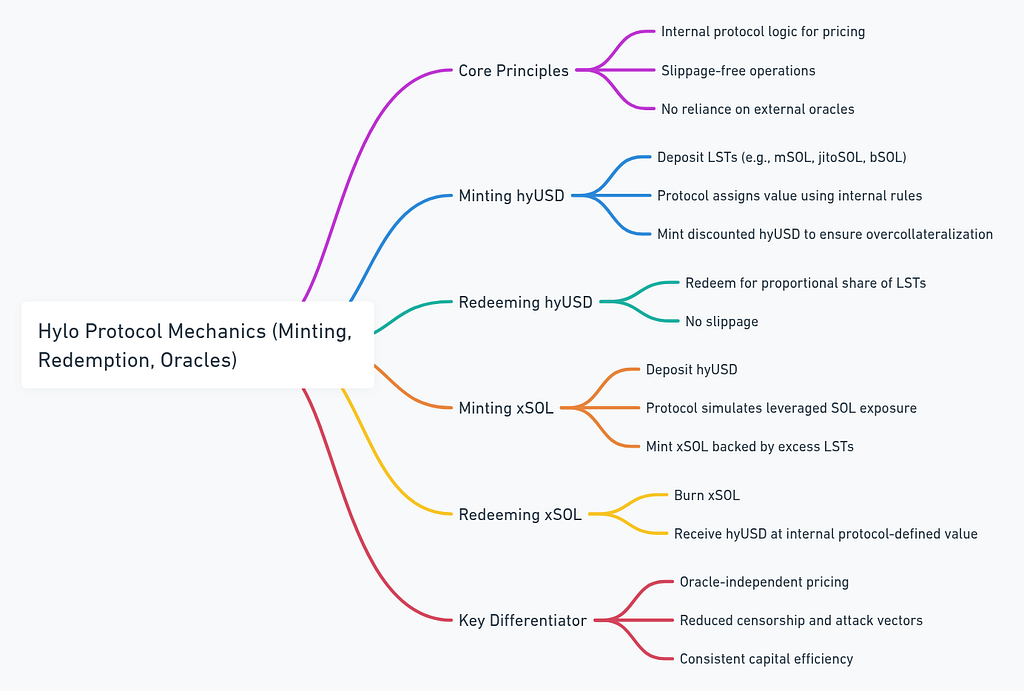
(Minting, Redemption, Price Oracles)
Minting and Redemption Logic
Hylo uses internal protocol logic to determine minting and redemption values for both hyUSD and xSOL. These operations are slippage-free and oracle-independent, built to maintain user trust and capital efficiency even under volatility.
🔹 Minting hyUSD
🔹 Redeeming hyUSD
🔹 Minting xSOL
🔹 Redeeming xSOL
✅ Key Differentiator: All pricing is done internally, without dependence on external oracles like Pyth or Switchboard. This minimizes oracle attack vectors and censorship risk.
(Slippage-Free, AMM-Less)
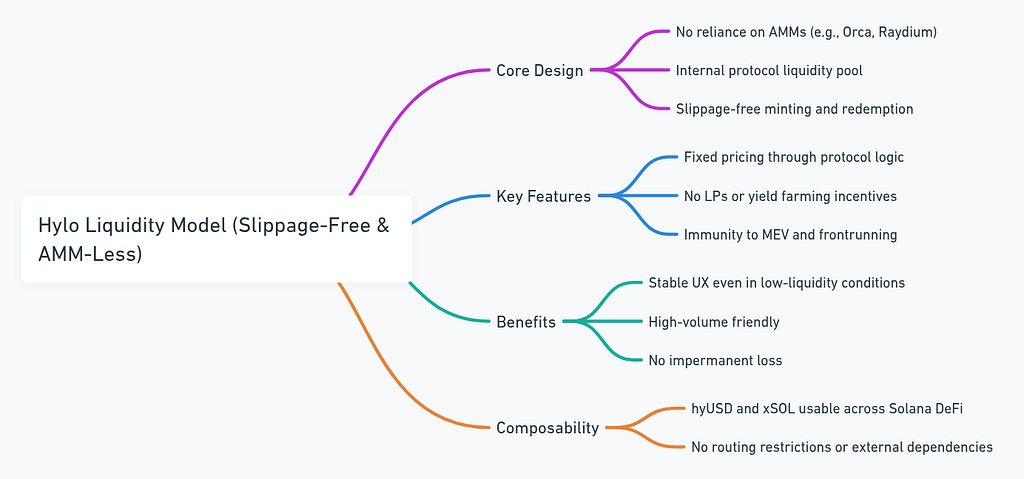
Hylo offers a native, self-contained liquidity model, making it one of the few DeFi protocols that:
🔹 Key Characteristics
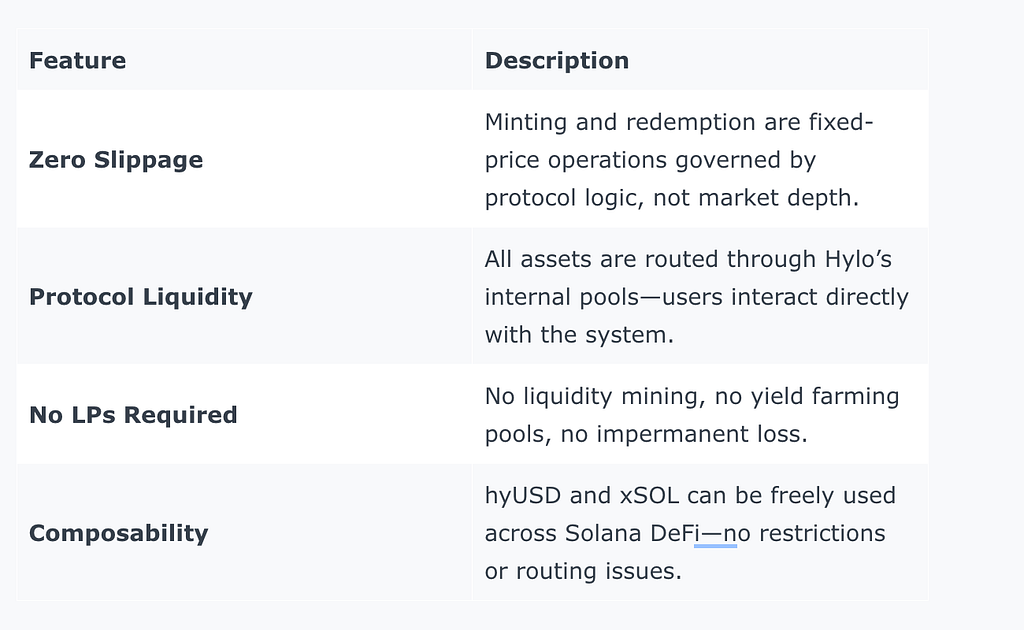
✅ Strategic Benefit: This model is immune to low-liquidity conditions, frontrunning, and MEV extraction, and offers a superior user experience for high-volume users.
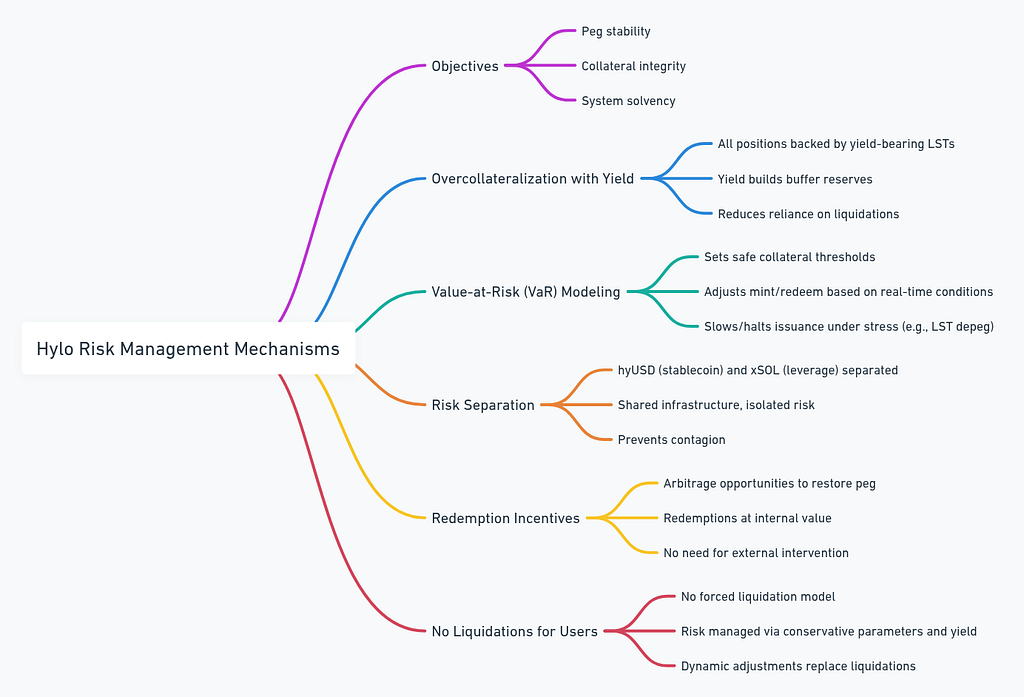
(Incentives, Liquidations, Rebalancing)
Hylo employs a sophisticated, financially-incentivized risk management framework designed to maintain:
1. Overcollateralization with Yield
2. Value-at-Risk (VaR) Modeling
3. Risk Separation Between hyUSD and xSOL
The protocol segregates risk between
These systems share collateral infrastructure but do not cross-subsidize each other, preventing contagion between products.
4. Redemption Incentives
5. No Liquidations (for Users)
Hylo’s strategic design offers robust decentralization, composability, and risk isolation — core differentiators from legacy DeFi protocols. By rejecting the standard reliance on external liquidity, centralized oracles, and volatile leverage, Hylo positions itself as a next-generation financial primitive for a decentralized Solana economy.
Source: Earning Yield with hyUSD
What Is hyUSD? (Quick Recap)
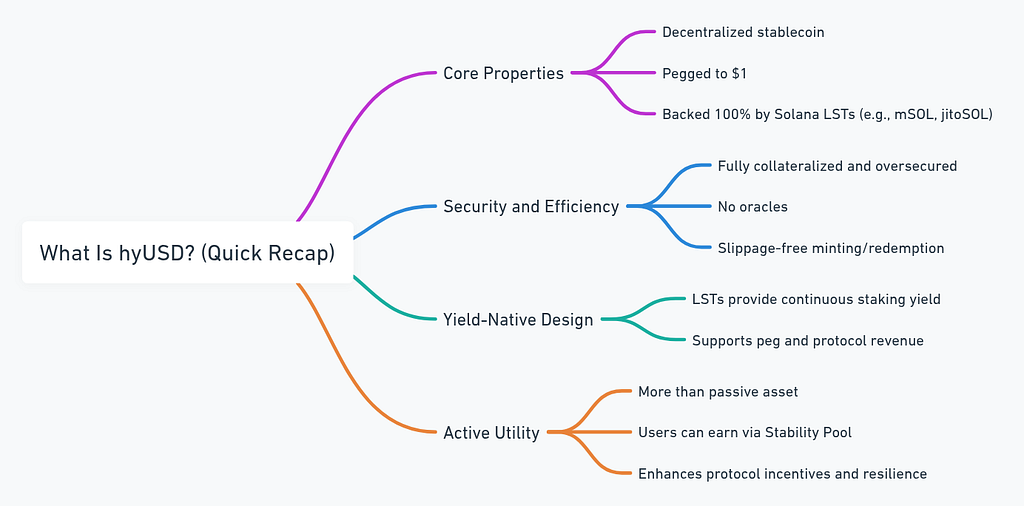
hyUSD is Hylo’s decentralized stablecoin, backed 100% by a basket of Solana-based liquid staking tokens (LSTs). It is:
But hyUSD is more than a passive stable asset — it offers active yield opportunities through the Stability Pool.
What Is the Stability Pool?
The Stability Pool is Hylo’s central risk absorption and stabilization mechanism. It’s where users deposit hyUSD to:
This is not just a yield farm — it’s a core part of Hylo’s design for sustainability and user-aligned incentives.
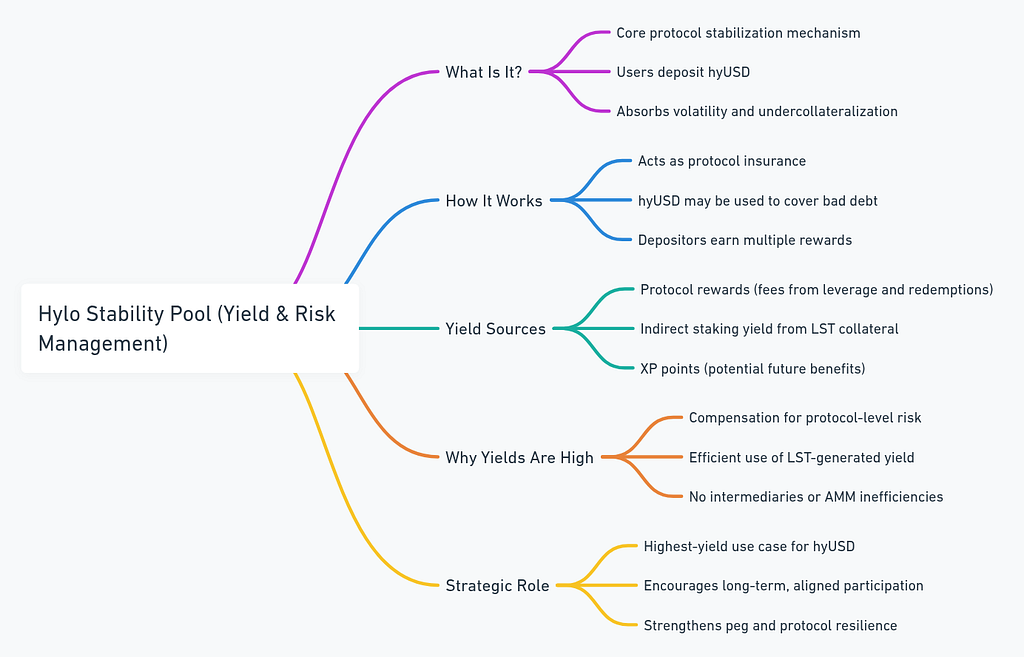
How Does It Work?
When you deposit your hyUSD into the Stability Pool, you are:
💡 Stability Pool participants are first in line to receive protocol rewards, making this the highest-yielding use case for hyUSD holders.
Why Do Yields Tend to Be High?
As of now, Hylo does not have a native token, but the XP system serves as a precursor to future token-based rewards or governance rights.
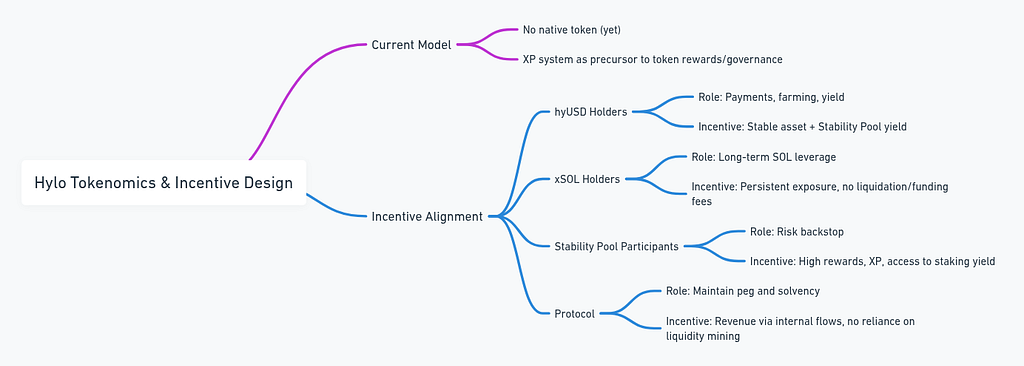
🔹 Incentive Alignment
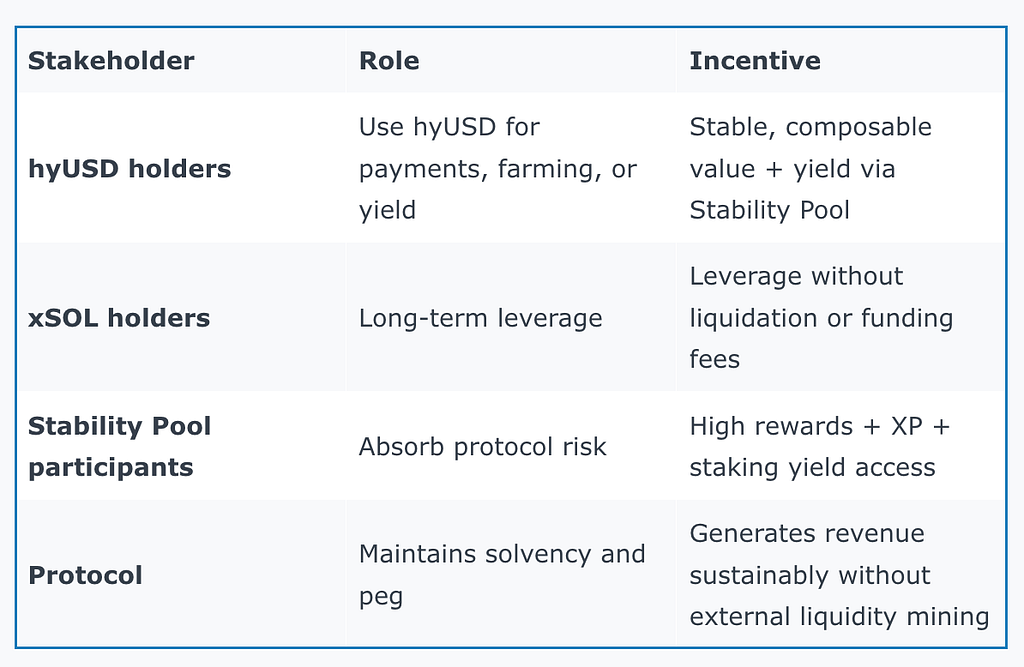

Hylo is designed to generate sustainable, on-chain revenue, without inflationary token emissions or reliance on real-world assets.
🔹 Key Revenue Streams
These revenue streams enable the protocol to:
Hylo’s design emphasizes long-term solvency and yield-based peg defense, rather than fragile arbitrage models or oracle-based interventions.
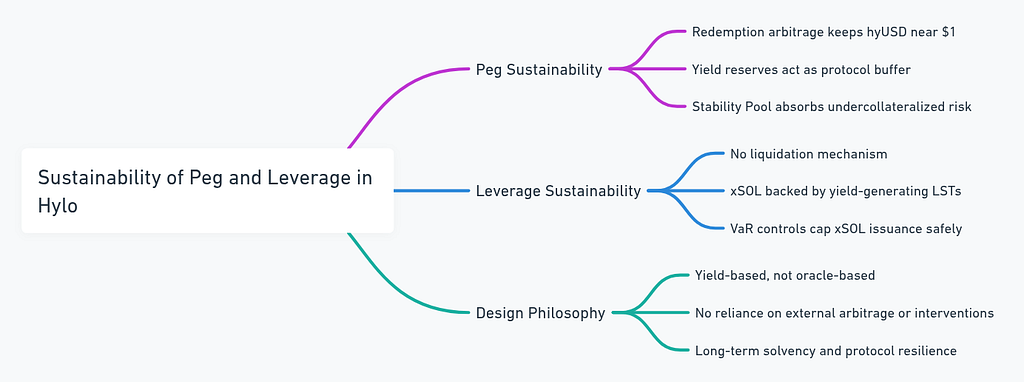
✅ Peg Sustainability via
✅ Leverage Sustainability via
Hylo’s Stability Pool is a powerful DeFi primitive that turns passive stablecoin holders into protocol co-insurers — rewarded with outsized returns for supporting systemic health. With no inflationary emissions, no reliance on liquidity mining, and native yield built into its collateral design, Hylo sets a new standard for sustainable stablecoin yield.
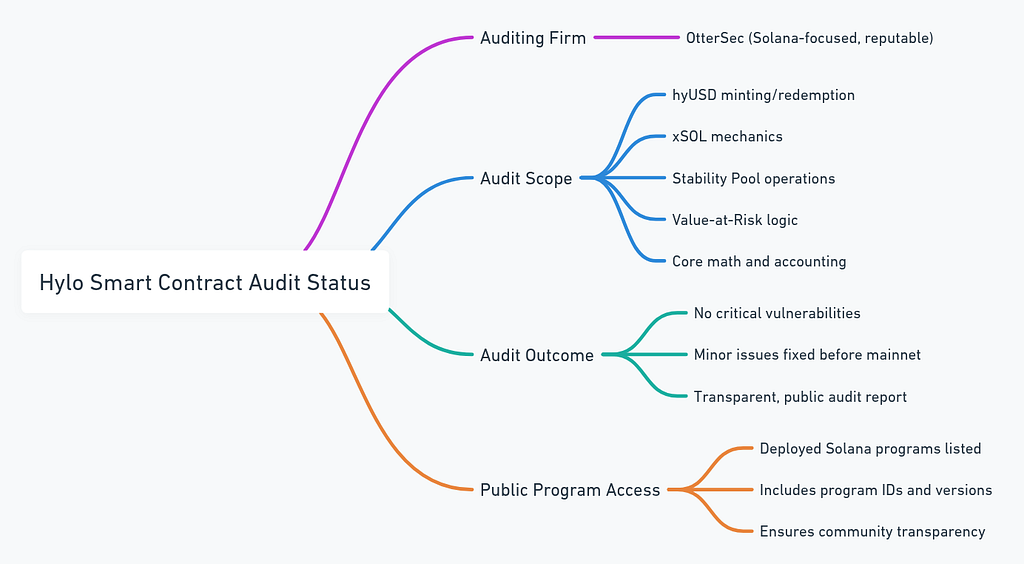
Hylo has undergone independent third-party security audits to validate its smart contract integrity and operational safety.
Auditing Firm
Audit Scope
Audit Outcome
Deployed Programs
All deployed Solana programs are available for public review:
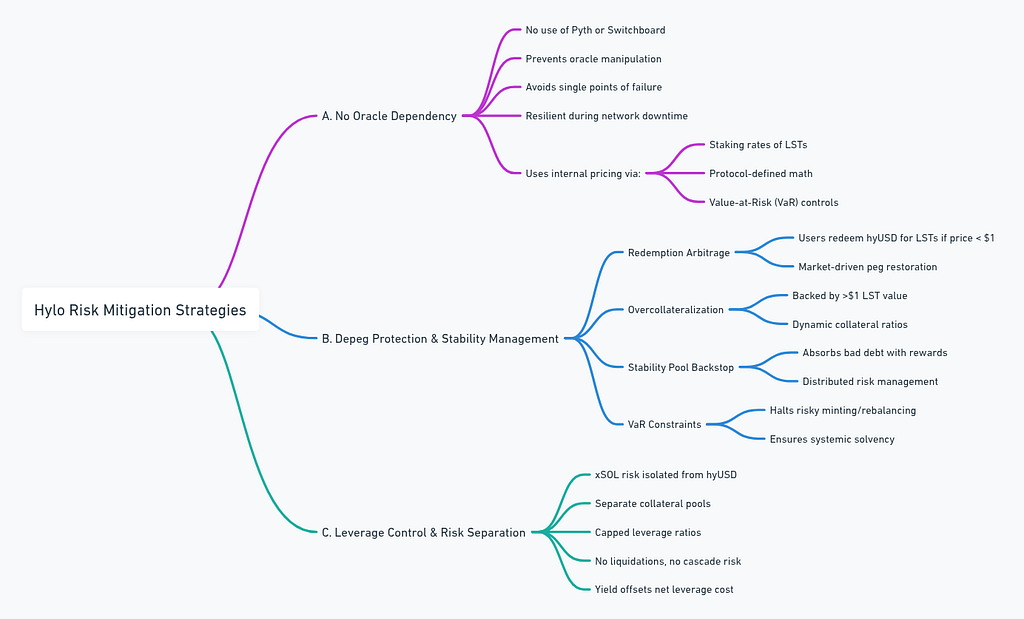
Hylo’s architecture is built from first principles to minimize systemic and technical risks. Below are its key mitigation measures:
A. No Oracle Dependency
Hylo does not use external price oracles (e.g., Pyth or Switchboard) to determine asset prices or trigger liquidations.
Why this matters
Instead, Hylo uses internally computed exchange rates based on:
B. Depeg Protection & Stability Management
To protect against hyUSD depegging, Hylo employs a multi-layered defense system
2. Overcollateralization
3. Stability Pool Backstop
4. VaR Constraints
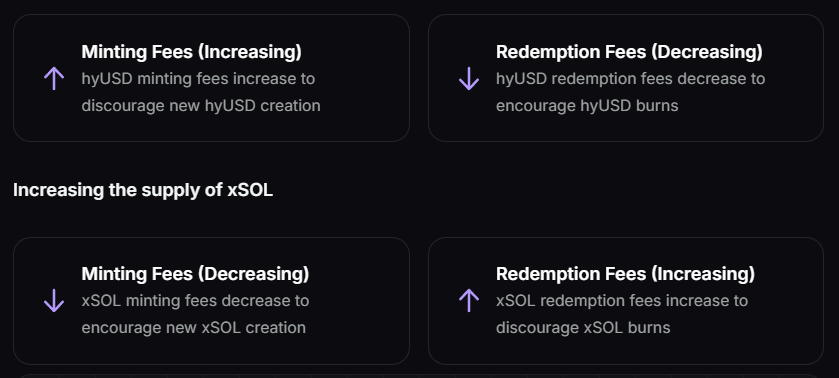
C. Leverage Control & xSOL Risk Separation
xSOL carries inherent risk due to its leveraged nature, but Hylo isolates and contains this risk via:
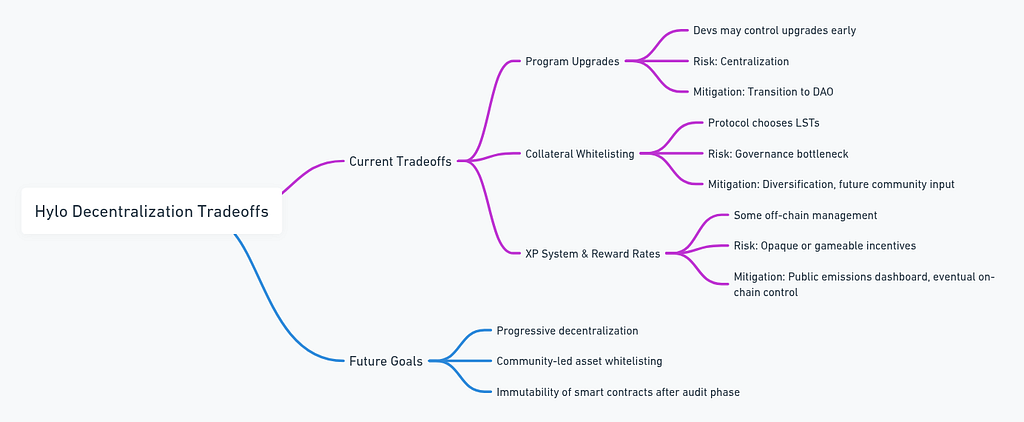
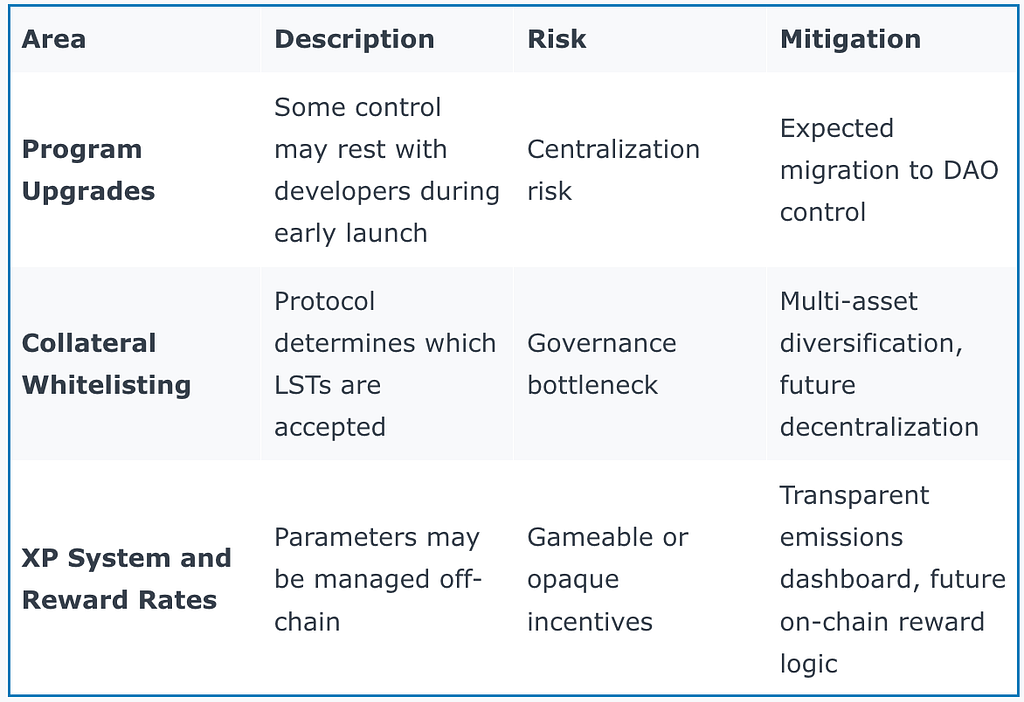
While Hylo maximizes on-chain autonomy, some early-stage decentralization tradeoffs are acknowledged:
Current Tradeoffs
Future Goals
Hylo’s approach to security is rooted in proactive architecture design, not just reactive auditing. By eliminating oracles, ensuring transparent code, and isolating risk at every layer, it sets a high bar for systemic safety in Solana DeFi. Its public audit, zero-slippage internal mechanics, and decentralized peg mechanisms ensure user trust — even in volatile markets.
Hylo stands apart from traditional crypto-collateralized stablecoins like MakerDAO’s DAI by offering an entirely on-chain, oracle-free system backed solely by Solana liquid staking tokens (LSTs).
Unlike DAI, which increasingly relies on real-world assets and price oracles, Hylo uses LSTs to generate native staking yield, supports overcollateralization through internal math, and avoids liquidations altogether.
Its stablecoin, hyUSD, can be minted or redeemed without slippage, offering superior capital efficiency and decentralization.
Compared to UXD Protocol — another Solana-native stablecoin — Hylo offers a simpler, more sustainable architecture that doesn’t rely on complex delta-neutral positions or perpetual futures.
UXD depends on perpetual markets and oracles to maintain peg stability, exposing it to systemic risk. In contrast, Hylo maintains peg stability using collateral buffers, a Stability Pool, and yield-backed reserves, all while remaining oracle-independent and frictionless to interact with.
When stacked against Ethereum-based LST-backed protocols like Lybra and Ethena, Hylo delivers similar yield-bearing benefits but with stronger user control and a more modular design.
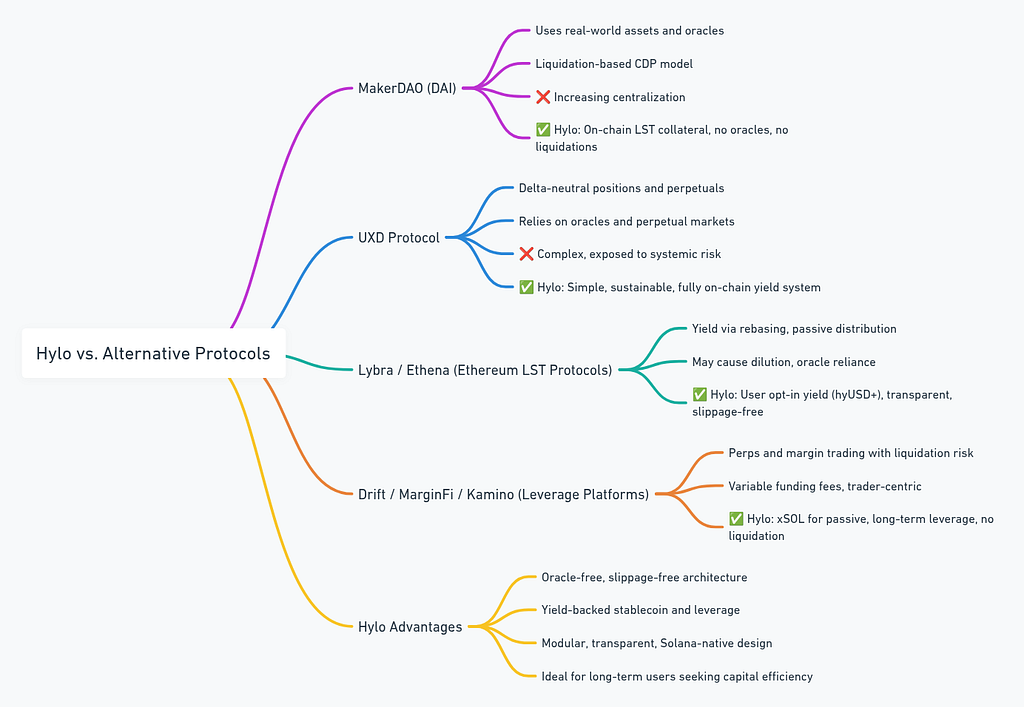
Where Lybra uses rebasing mechanics to distribute yield passively, Hylo allows users to opt in via hyUSD+, avoiding forced dilution.
It also ensures that redemptions remain slippage-free and transparent, and is positioned as the Solana-native alternative with similar economic advantages and fewer dependencies.
Hylo’s leverage token xSOL offers a major innovation over trading-centric protocols like Drift, MarginFi, or Kamino.
These platforms provide short-term leverage via perps or margin with liquidation risk and variable funding rates, whereas xSOL enables passive, long-term SOL exposure without liquidation, perpetual fees, or user intervention.
This makes Hylo uniquely suited for long-term DeFi users looking for stable value and sustainable leverage in one integrated platform.
Hylo’s architecture is built on a set of deterministic equations that govern how hyUSD and xSOL are minted and redeemed.
These formulas use internal valuations of liquid staking tokens (LSTs) and enforce strict collateralization ratios, allowing users to interact with the protocol in a slippage-free, oracle-independent manner.
For example, the amount of hyUSD minted is directly tied to the total USD value of LST collateral divided by a safety ratio, while the price of xSOL reflects the leveraged exposure to SOL over its supply. This transparent, math-based design makes user interactions predictable and secure.
To manage risk, Hylo implements a Value-at-Risk (VaR) framework, which calculates potential losses under extreme conditions (like an LST depeg).
This risk modeling is used to limit minting, cap leverage, and maintain collateral health, acting as a preemptive safeguard instead of relying on liquidations.
This ensures the system remains solvent and the hyUSD peg is protected, even in volatile market conditions.
Hylo is already integrated across the Solana ecosystem. Users can access it via popular wallets like Phantom, Backpack, and Solflare.
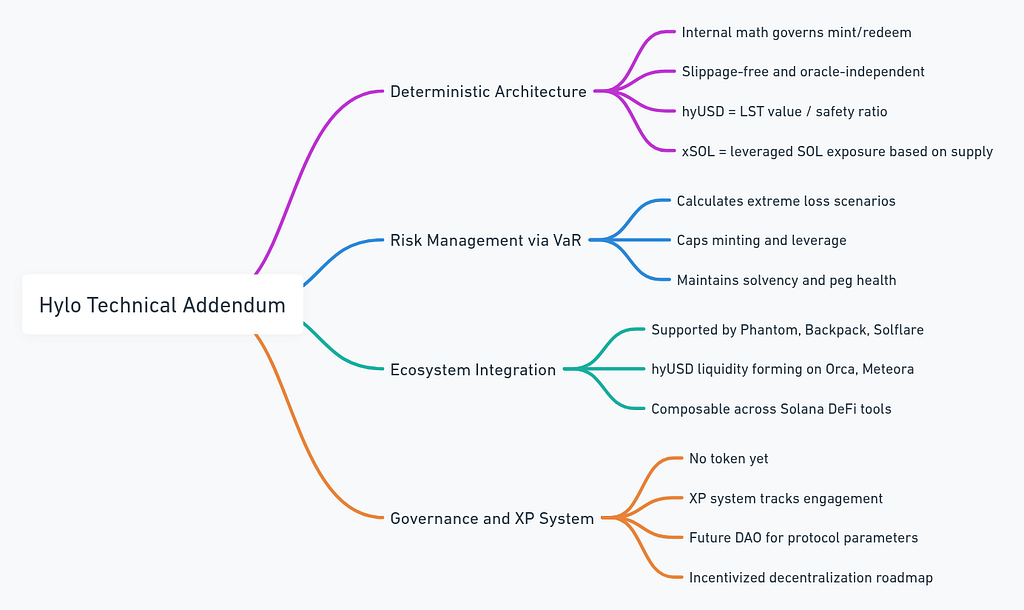
While Hylo’s minting and redemption are protocol-native and AMM-less, liquidity for hyUSD is beginning to form on platforms like Orca and Meteora. Additionally, hyUSD and xSOL are designed to be composable across Solana lending protocols, yield optimizers, and DEXs, enabling a wide range of DeFi strategies.
Though Hylo currently operates without a native governance token, it encourages early user engagement through the XP system, a points-based rewards model that may unlock future governance or token incentives.
The team has signaled a roadmap toward progressive decentralization, with governance of protocol parameters and collateral pool composition eventually migrating to a DAO.
In the meantime, the community is active across Telegram and X (Twitter), providing transparency and regular updates on development progress.
https://medium.com/media/38f0967eb55c0b1baba076b4c123fd67/hrefLST-Based Stability
Zero Slippage Liquidity
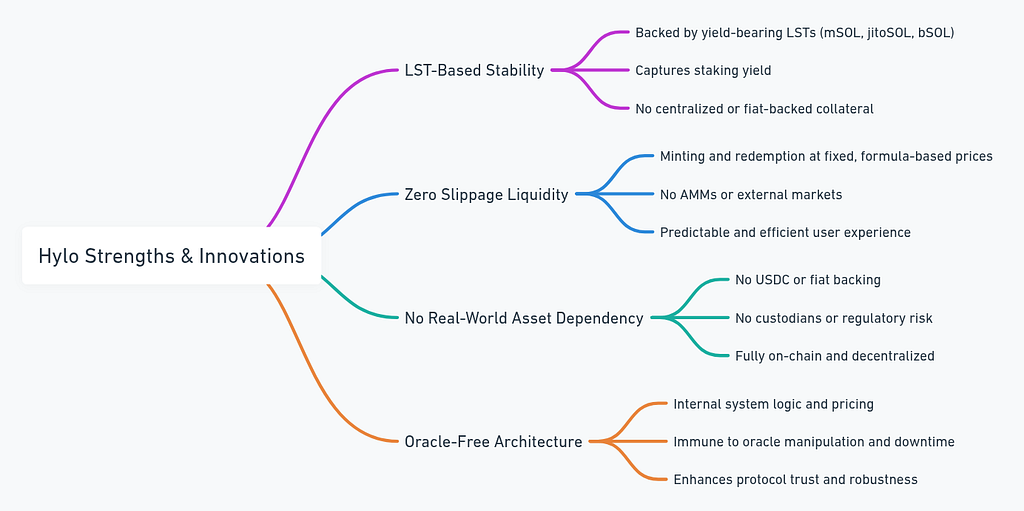
No Reliance on Real-World Assets or Custodians
Oracle-Free Architecture
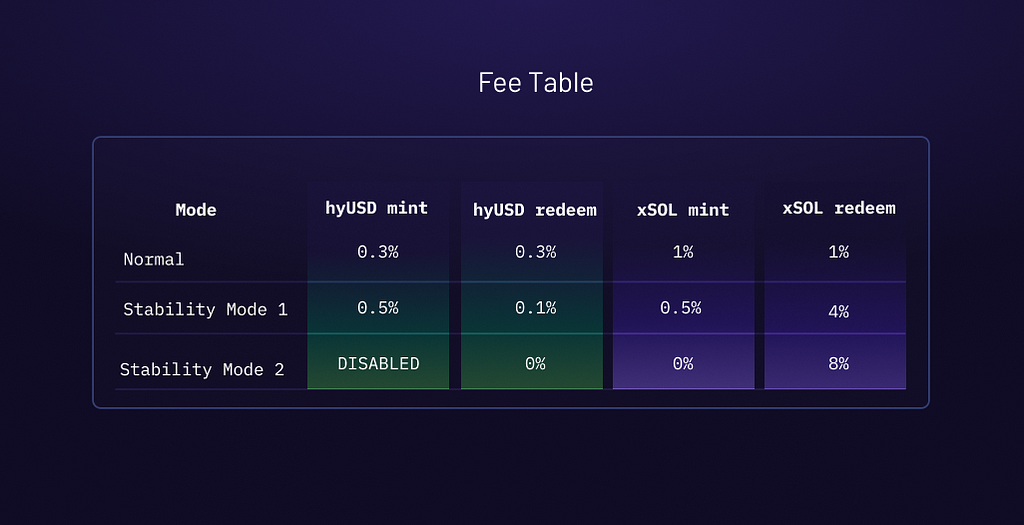
Value-at-Risk (VaR) Modeling
Isolated Risk Pools
Automatic Rebalancing Triggers
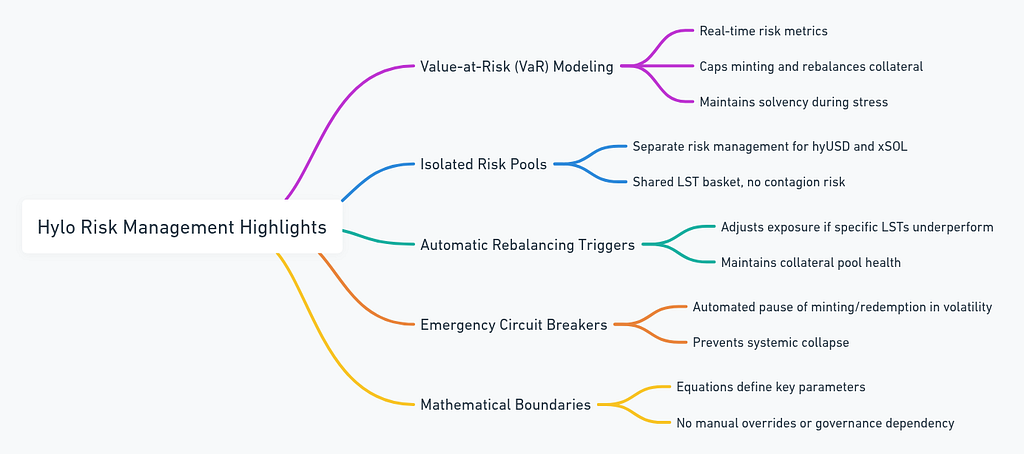
Emergency Circuit Breakers
Mathematical Boundaries for Exposure
1. Smart Contract Risk
2. Oracle Risk (Mitigated but Relevant)
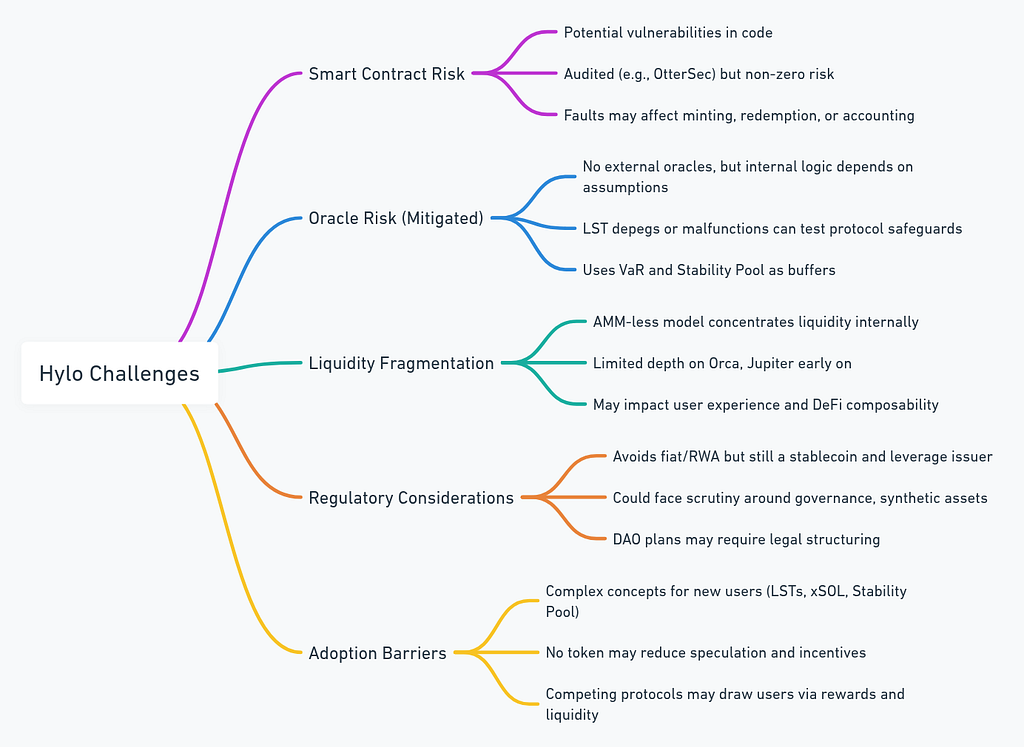
3. Liquidity Fragmentation
4. Regulatory Considerations
5. Adoption Barriers
What’s Next for Hylo

Although the documentation doesn’t release a public timeline, community updates suggest these progressive upgrades are planned for the medium term.
Protocol Revenue Streams
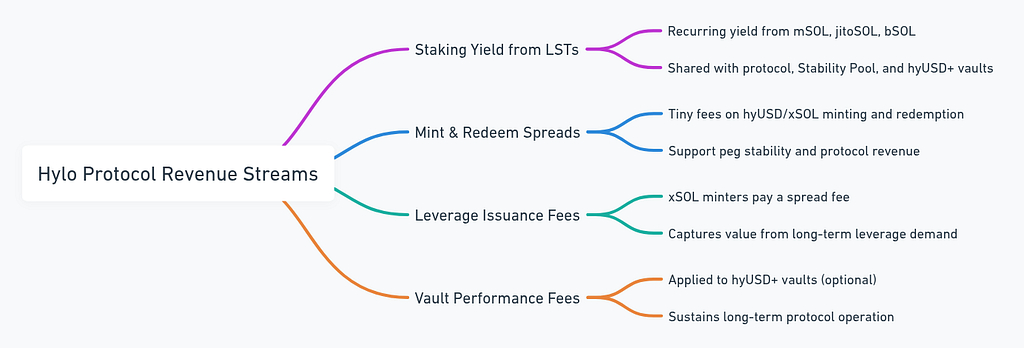
(Source: Protocol Revenue overview, updated metrics from hylo.so stats)
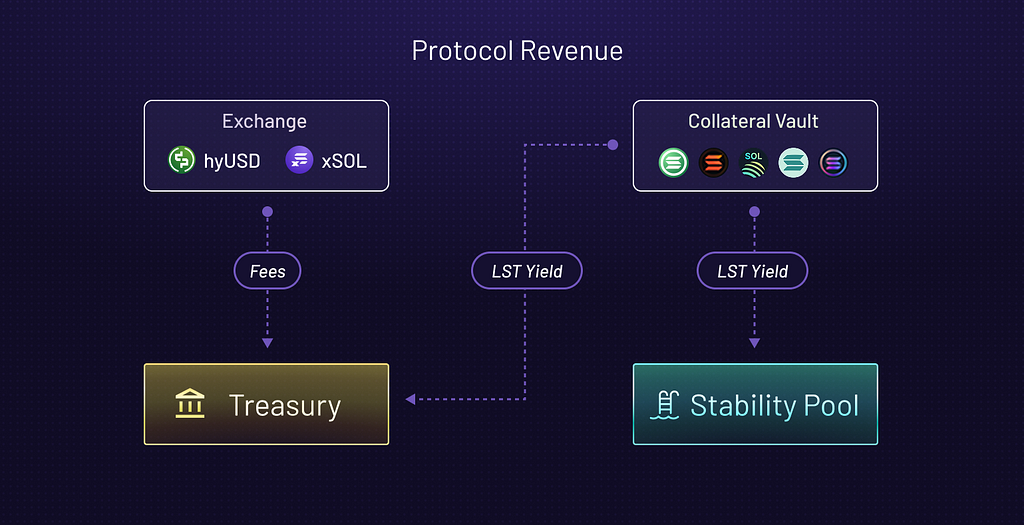
According to recent analytics dashboards, Hylo has already earned tens of thousands of USD in protocol revenue
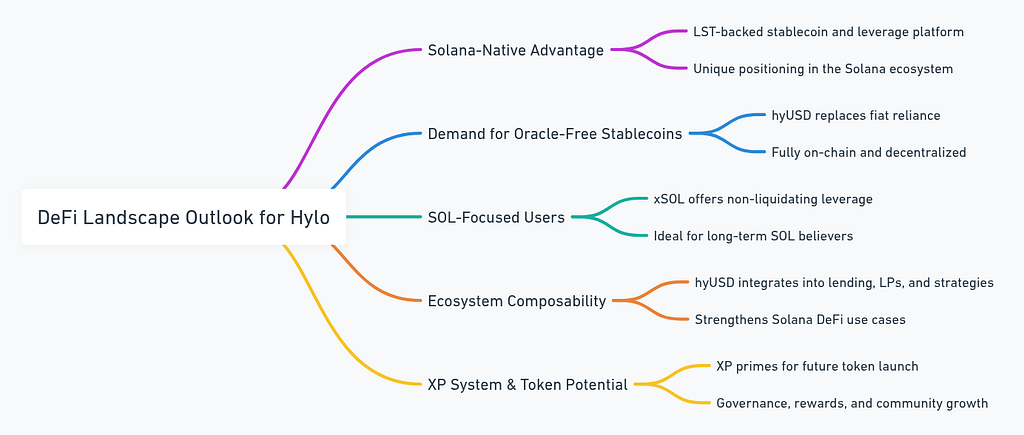
As one of the only Solana-native, LST-backed stablecoin and synthetic leverage platforms, Hylo is well-positioned for long-term growth:
Strategic Summary
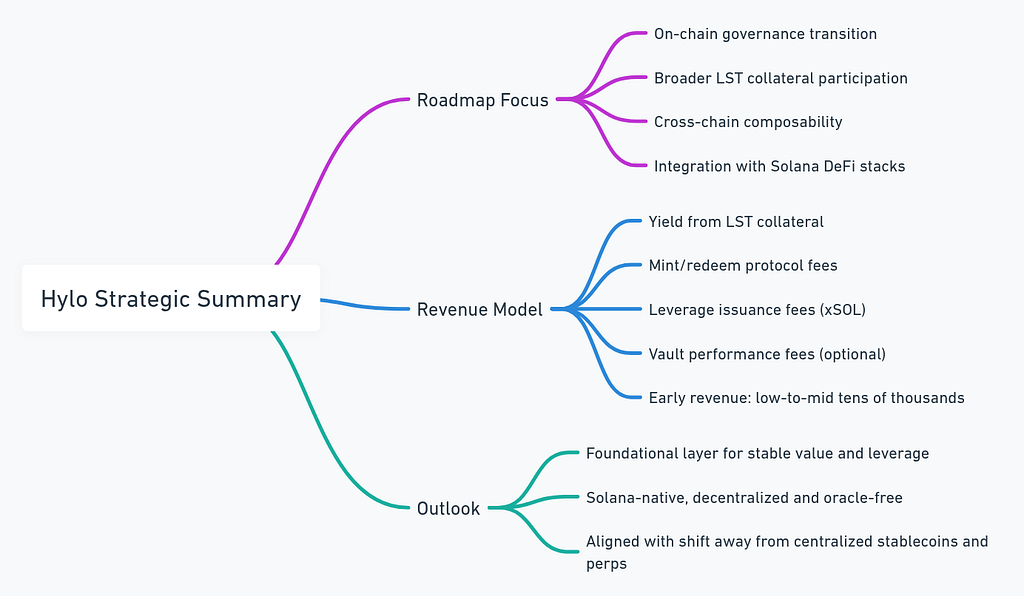
Hylo represents a major innovation in decentralized finance on Solana, delivering a protocol-native stablecoin (hyUSD) and long-term leverage product (xSOL) backed entirely by yield-bearing liquid staking tokens (LSTs).
It sets itself apart by eliminating reliance on fiat, centralized custodians, or oracles — creating a self-contained financial system with slippage-free operations, native staking yield, and robust risk management through internal logic and Value-at-Risk modeling.
The ideal users for Hylo include long-term SOL investors, DeFi builders, and liquidity providers seeking yield and composability.
For investors, xSOL offers durable leveraged exposure without funding fees or liquidation risk. Stablecoin users can opt into yield through the Stability Pool, earning rewards while strengthening the system. Builders benefit from hyUSD’s oracle-free pricing and protocol-native liquidity, making it easy to integrate into lending, swaps, and DeFi strategies.
Hylo’s XP-based rewards system incentivizes early participation and aligns users with the protocol’s long-term growth — priming it for future governance and potential token-based models.
Its roadmap focuses on decentralization, deeper ecosystem integration, and cross-chain reach, positioning it as a resilient cornerstone of Solana’s DeFi future.
Final verdict: Hylo is one of the most forward-thinking and technically sound protocols in the Solana ecosystem.
Its blend of LST-backed stability, composable leverage, oracle-free architecture, and real yield makes it not just a DeFi tool, but a foundational layer for decentralized, permissionless value creation on-chain.
Hylo is a decentralized finance protocol on Solana offering two main products: hyUSD, a stablecoin backed by liquid staking tokens (LSTs), and xSOL, a token providing long-term leveraged exposure to SOL. Unlike centralized stablecoins like USDC, hyUSD is fully on-chain and not backed by fiat or real-world assets.
Compared to DAI, Hylo removes oracle risk, doesn’t rely on overcollateralization with idle assets, and captures native staking yield from Solana — making it more decentralized, efficient, and yield-generating by design.
You can earn high yield by depositing hyUSD into the protocol’s Stability Pool. This helps backstop the system during volatility and, in return, you earn rewards from staking yield, leverage fees, and protocol revenues.
You can also opt in to hyUSD+, a vault that passively collects yield from the LST collateral. It’s a way to make your stablecoin work for you — without relying on farming or external liquidity pools.
Hylo has been audited by OtterSec, one of Solana’s top security firms, and implements robust risk management tools like Value-at-Risk (VaR) modeling, slippage-free mint/redeem logic, and isolation between stablecoin and leverage assets.
While no protocol is risk-free, Hylo avoids many common vulnerabilities by not relying on price oracles, centralized custodians, or AMMs — making it one of the most thoughtfully designed systems in Solana DeFi.
Affiliate Disclaimer
Some links in this article are affiliate links. If you use them and make a purchase, we may earn a commission at no extra cost to you. This does not influence our opinions or recommendations. Always do your own research before investing.

Hylo.so Protocol Review was originally published in Coinmonks on Medium, where people are continuing the conversation by highlighting and responding to this story.





