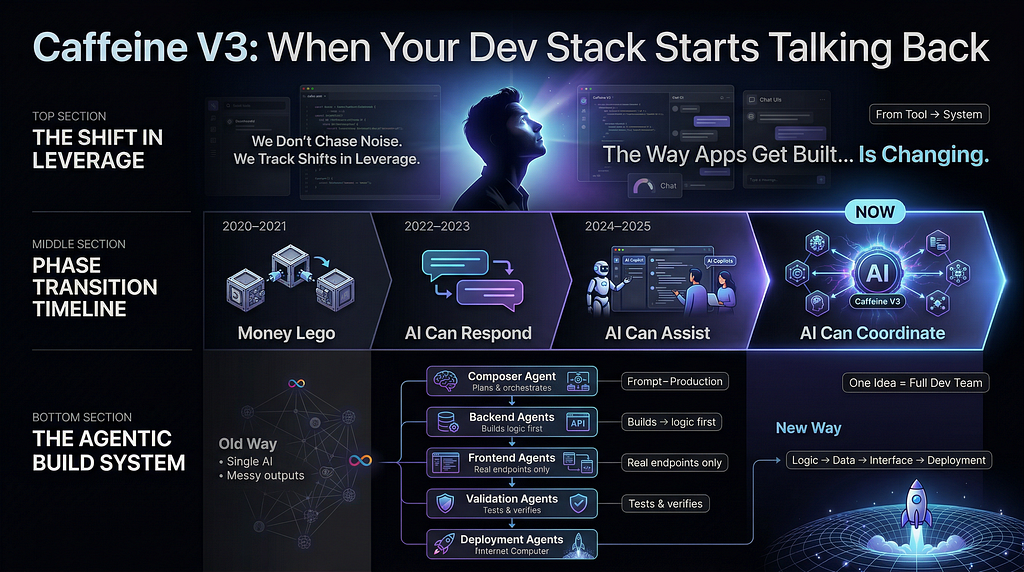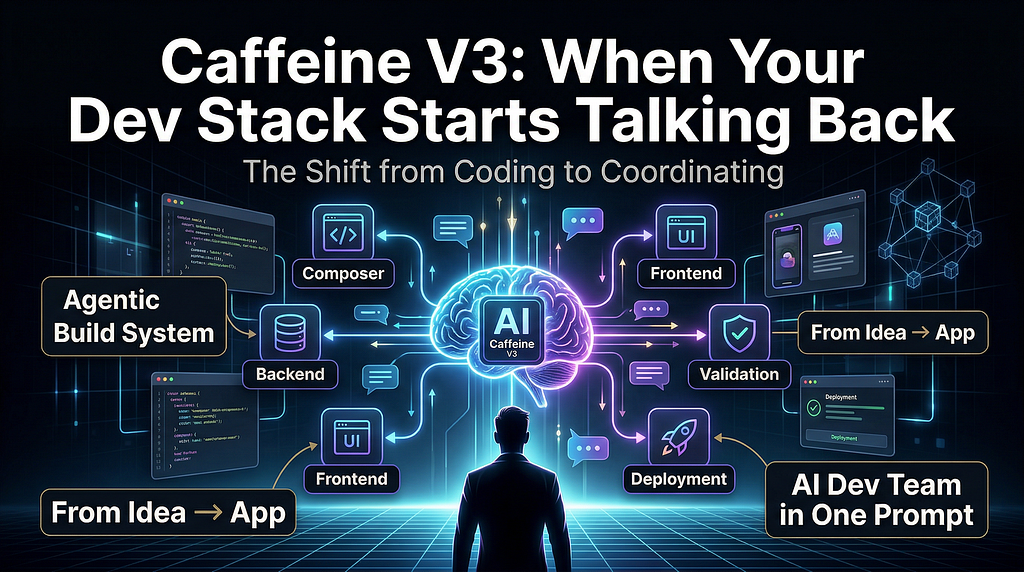
Caffeine V3: When Your Dev Stack Starts Talking Back

20-Apr-2026 Medium » Coinmonks

If you’ve been around Collectors Portal for a minute, you already know the rule.

We don’t chase noise.
We track shifts in leverage.

Caffeine V3 isn’t just another AI tool drop.
It’s one of those moments where you pause and go:

“Wait… the way apps get built might actually be changing.”

And not in a theoretical way.

In a right now way.
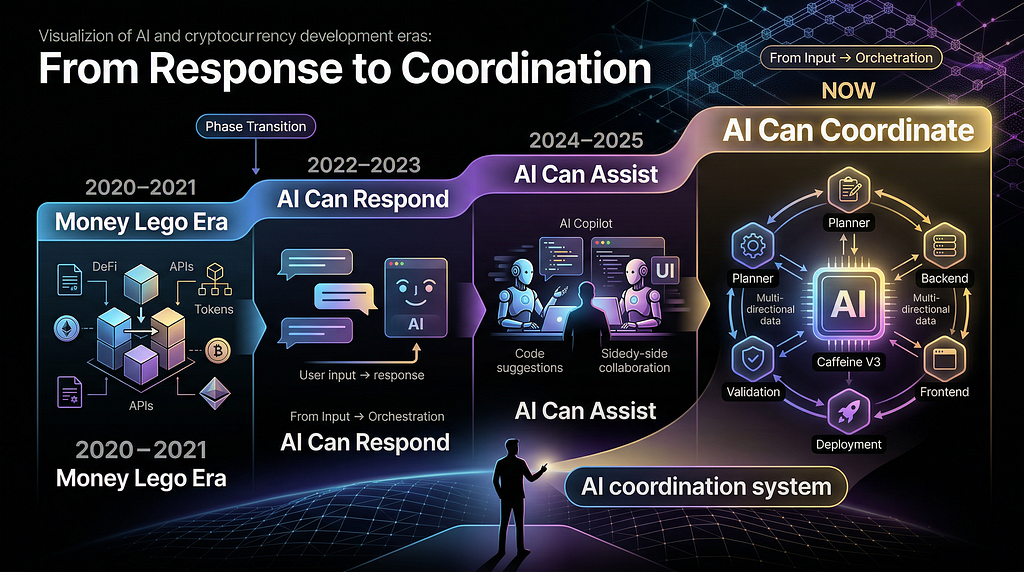
Zoom Out First: What Kind of Upgrade Is This, Really?

Every cycle — crypto, AI, or otherwise — has a phase transition.

  • 2020–2021: APIs + DeFi → “money lego” era
  • 2022–2023: Chat interfaces → “AI can respond” era
  • 2024–2025: copilots → “AI can assist” era

Now?

We’re entering:

“AI can coordinate.”

That’s the real story behind Caffeine V3.
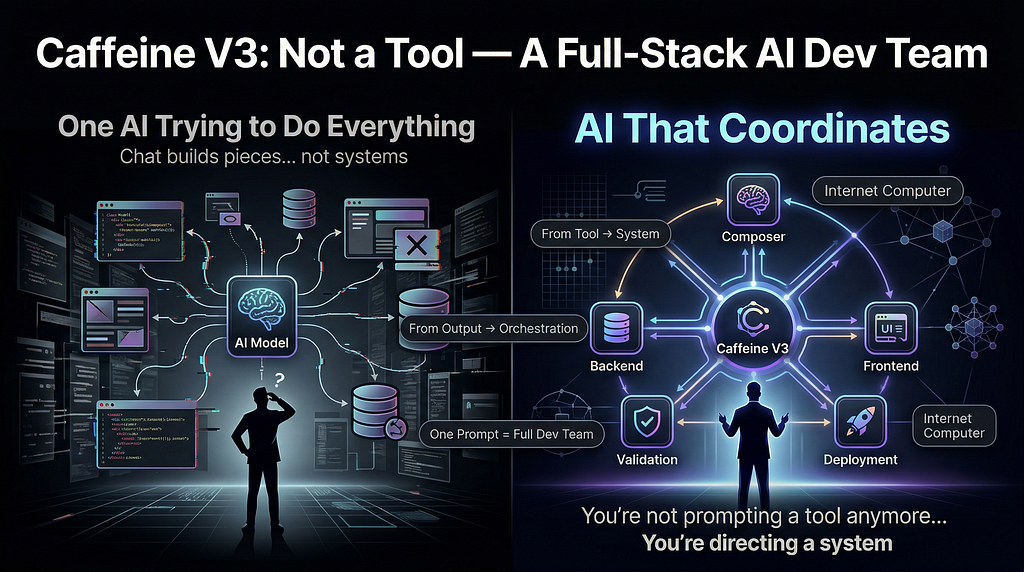
So… What Is Caffeine V3 Actually Doing?

At surface level, you could say:

“It’s a tool that builds apps from chat.”

But that’s underselling it.

Caffeine V3 is better understood as:

An agentic build system running on top of the Internet Computer

Instead of one model trying to do everything (and doing most of it okay-ish), V3 splits the work into specialized agents.

Think less “ChatGPT writes code”
More:

“You just spun up a full-stack AI dev team.”
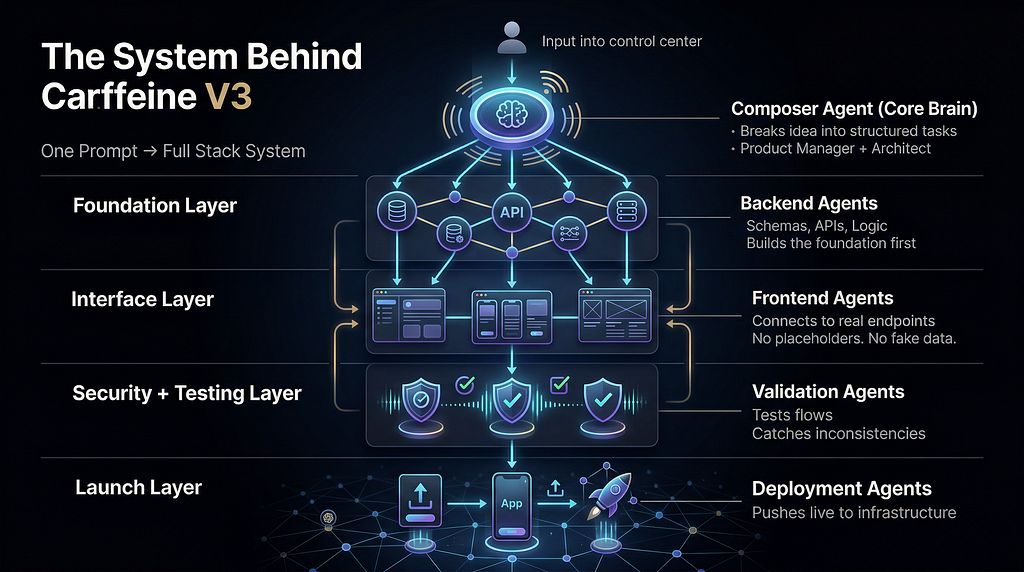
The System Looks Like This:

  • Composer Agent
  • Breaks your idea into structured tasks
  • Think: product manager + architect
  • Backend Agents
  • Define schemas, APIs, logic
  • Build the foundation first
  • Frontend Agents
  • Only start once backend exists
  • Wire real endpoints (not fake demo fluff)
  • Validation Agents
  • Test flows, catch inconsistencies
  • Deployment Agents
  • Push the app live on ICP infrastructure

Why Backend-First Is a Bigger Deal Than It Sounds

Most “AI app builders” fail in the same place:

They start with UI illusions.

Nice buttons. Fake data.
And then… nothing underneath.

Caffeine V3 flips that.

Logic → Data → Interface → Deployment

That’s how real systems are built.

And that one decision signals something important:

This isn’t trying to impress you.
It’s trying to
hold up under usage.

The Real Upgrade: From Tool → System

Earlier versions of Caffeine felt like:

“Let me try something cool.”

V3 feels like:

“I might actually ship something real with this.”

That’s a completely different mindset.
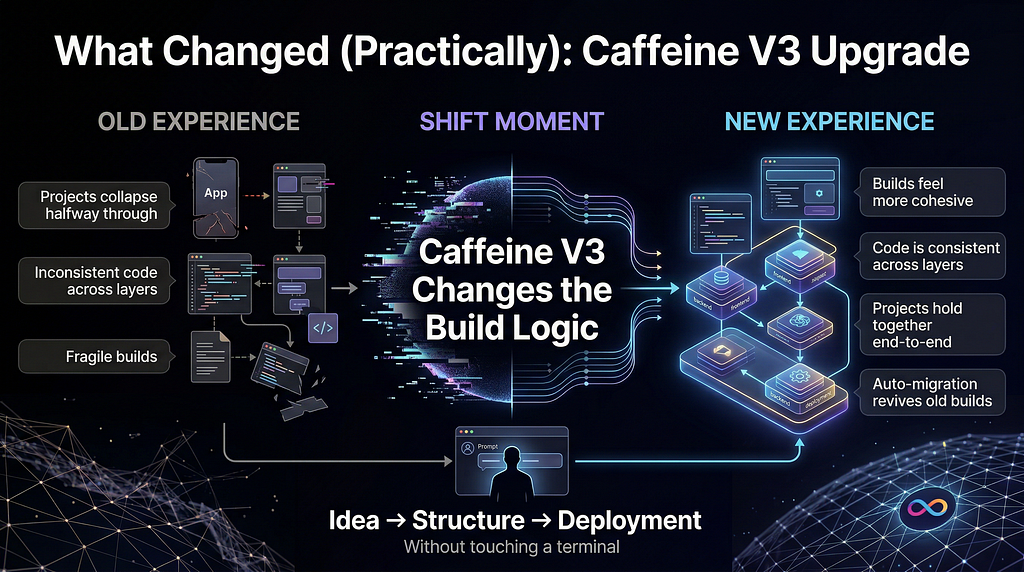
What Changed (Practically):

  • Builds feel more cohesive
  • Code is more consistent across layers
  • Projects don’t collapse halfway through
  • Old builds can be revived via auto-migration
  • Non-devs can move from:
  • idea → structure → deployment

Without touching a terminal.

What People Are Saying (Reading Between the Lines)

Across the builder side of X (especially around Caffeine AI and ICP), there’s a noticeable tone shift.

Not hype. Not dismissal.

Something more interesting:

“This might actually work… if it holds up.”

The Patterns:

  • “Biggest update yet” — repeated, but not dismissed
  • “Feels like a dev team, not a tool”
  • “Non-coders can finally execute”
  • “This could onboard a new wave into ICP”

But also:

  • “Let’s see how it handles real load”
  • “Speed and reliability still matter”
  • “Edge cases will expose the truth”

That’s what cautious conviction looks like.
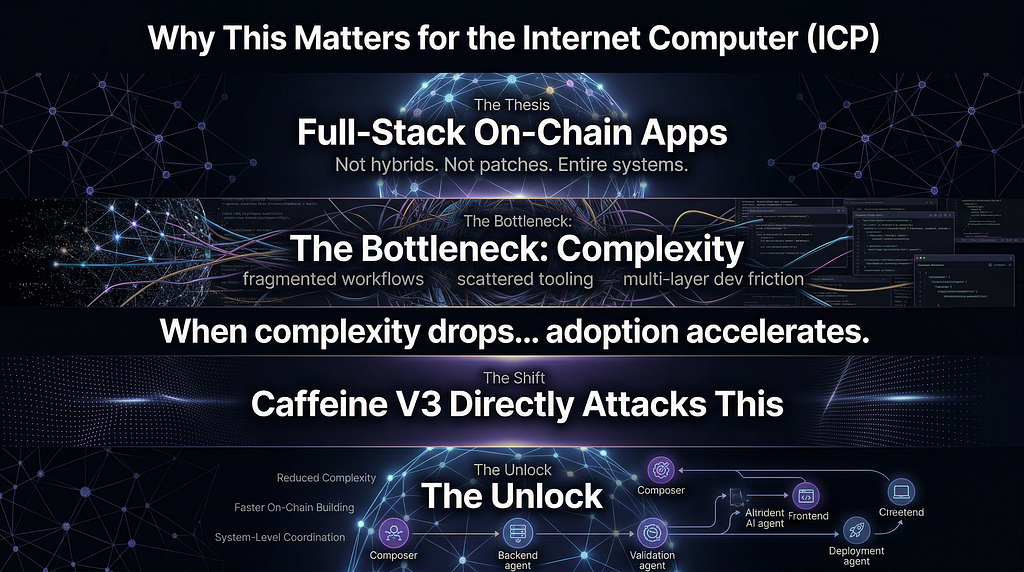
Why This Matters for the Internet Computer (ICP)

Let’s connect the dots properly.

The Internet Computer has always pushed a bold thesis:

Full-stack on-chain apps. Not hybrids. Not patches. Entire systems.

But there’s always been a bottleneck:

Complexity.

Caffeine V3 directly attacks that.

Here’s the Unlock:

  • Idea → App friction collapses
  • Builders don’t need deep infra knowledge
  • Web2 founders can experiment inside Web3
  • More apps → more usage → more network activity

And here’s where it gets strategic:

If ICP owns the deployment layer
And Caffeine owns the
creation layer

You’re looking at an end-to-end builder pipeline.

That’s not just tooling.

That’s ecosystem gravity.

Collectors Portal Thesis: What This Becomes

Let’s go deeper.

Not just “what it is”
But what it turns into.
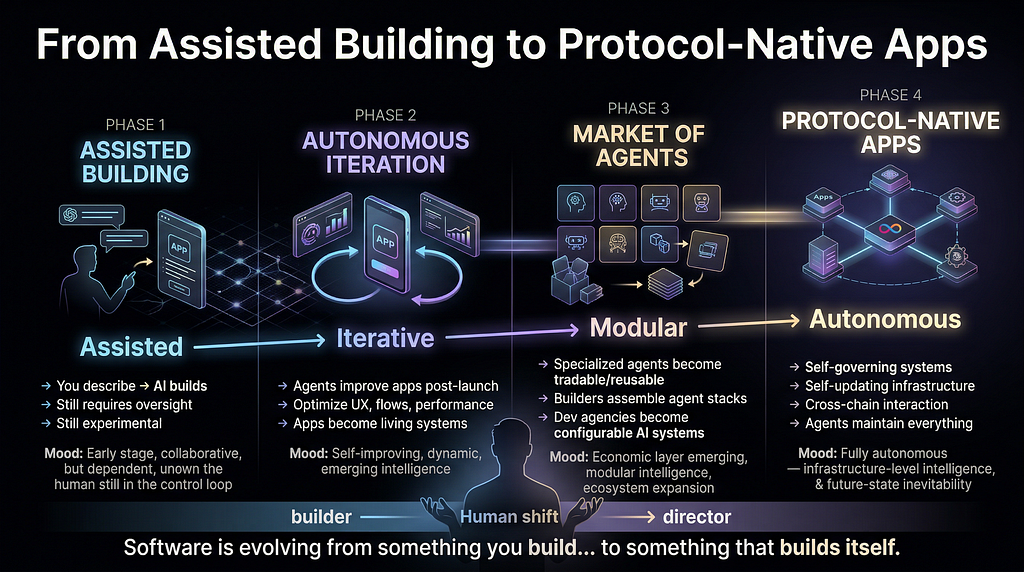
Phase 1 (Now): Assisted Building

  • You describe → AI builds
  • Still requires oversight
  • Still experimental

Phase 2 (Next): Autonomous Iteration

  • Agents improve apps post-launch
  • Optimize UX, flows, performance
  • Apps become living systems

Phase 3 (Coming): Market of Agents

  • Specialized agents become tradable / reusable
  • Builders assemble agent stacks
  • “Dev agencies” = configurable AI systems

Phase 4 (Inevitable): Protocol-Native Apps

  • Apps that:
  • self-govern
  • self-update
  • interact cross-chain
  • Built + maintained by agents
  • Humans define intent, not implementation

The Bigger Signal: The Internet Is Being Rewritten

Not slowly.

Right now.

You’re watching three layers converge:

AI (Execution Layer)

  • Agents doing the work

Blockchain (Ownership Layer)

  • Verifiable, sovereign infrastructure

Interfaces (Abstraction Layer)

  • Chat replaces dashboards

Caffeine V3 sits right in the middle of that convergence.
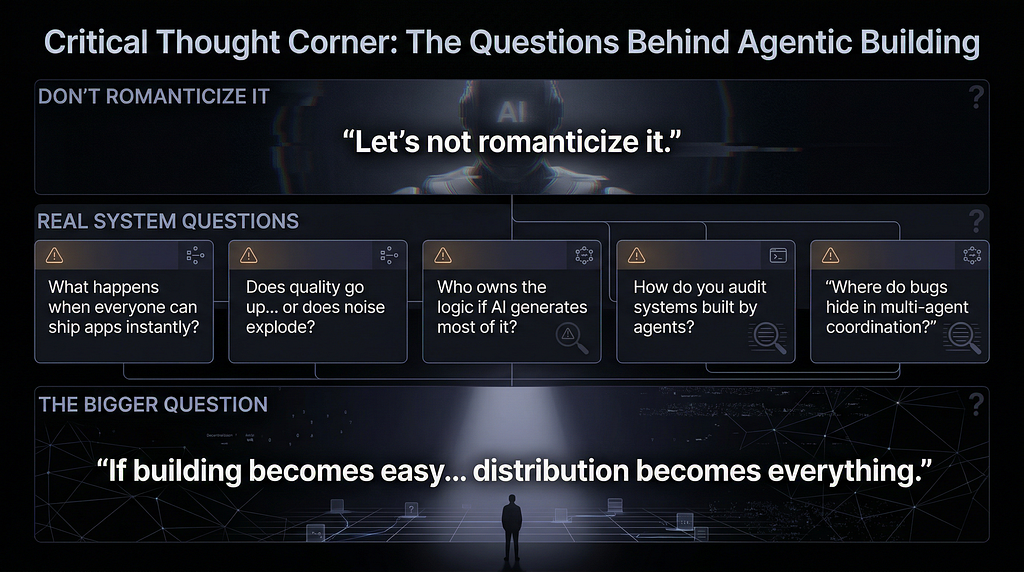
Critical Thought Corner

Let’s not romanticize it.

Because there are real questions here:

  • What happens when everyone can ship apps instantly?
  • Does quality go up… or does noise explode?
  • Who owns the logic if AI generates most of it?
  • How do you audit systems built by agents?
  • Where do bugs hide in multi-agent coordination?

And the bigger one:

If building becomes easy… distribution becomes everything.

For Builders, Creators, and Collectors

This is where you lean in.

Because tools like this shift the game:

  • Builders → move faster than ever
  • Creators → can turn ideas into products directly
  • Collectors → can identify infrastructure plays early

And that last one matters.

Because the real winners in the next cycle?

Won’t just use the tools.
They’ll understand
what layer the tool controls.
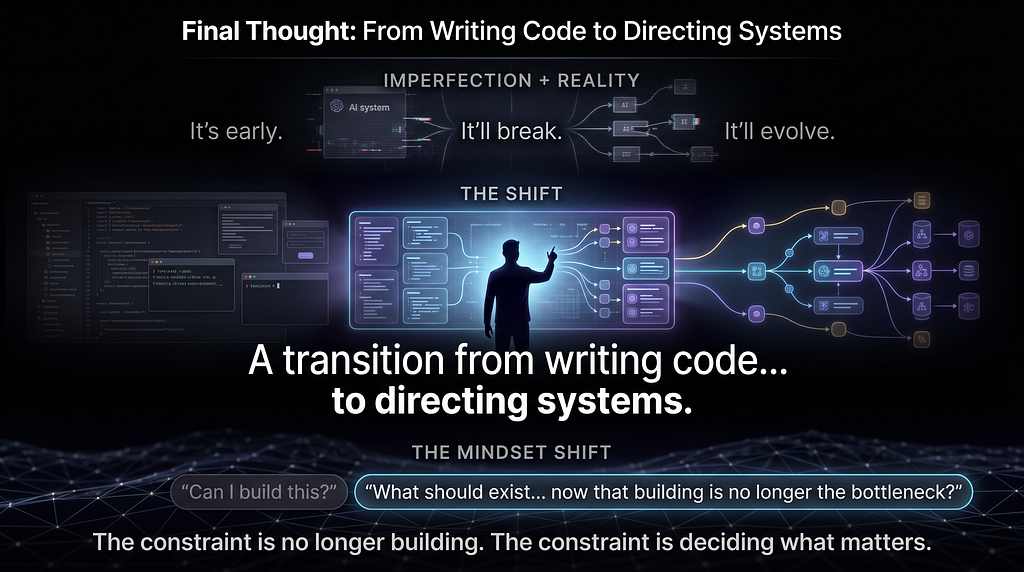
Final Thought

Caffeine V3 isn’t perfect.

It’s early. It’ll break. It’ll evolve.

But it represents something bigger than itself:\

A transition from writing code… to directing systems.

And once that clicks —

You stop asking:

“Can I build this?”

And start asking:

“What should exist… now that building is no longer the bottleneck?”

Collector’s Signal

Pay attention to tools that:

  • Compress time
  • Remove friction
  • Shift control layers

Caffeine V3 checks all three.

And if it holds up under pressure?

This won’t just be a feature release.

It’ll be remembered as:

One of the early interfaces of the agent-driven internet.

Caffeine V3: When Your Dev Stack Starts Talking Back was originally published in Coinmonks on Medium, where people are continuing the conversation by highlighting and responding to this story.


Also read: Un nouveau moteur plus puissant et économe arrive sur les Airbus, il est américain
About Author Lorem ipsum dolor sit amet, consectetur adipiscing elit. Nunc fermentum lectus eget interdum varius. Curabitur ut nibh vel velit cursus molestie. Cras sed sagittis erat. Nullam id ante hendrerit, lobortis justo ac, fermentum neque. Mauris egestas maximus tortor. Nunc non neque a quam sollicitudin facilisis. Maecenas posuere turpis arcu, vel tempor ipsum tincidunt ut.
WHAT'S YOUR OPINION?
Related News