In today’s digital-first marketplace, visuals play a critical role in influencing purchase decisions. Customers expect to see products in high detail before committing to a purchase, whether it’s furniture, electronics, fashion, or even industrial equipment. While traditional photography has long been the standard, it comes with challenges such as high costs, logistics, and limitations in customization. This is where 3D product modeling services have emerged as a game-changing solution, offering businesses an innovative way to present their products with unmatched accuracy and flexibility.
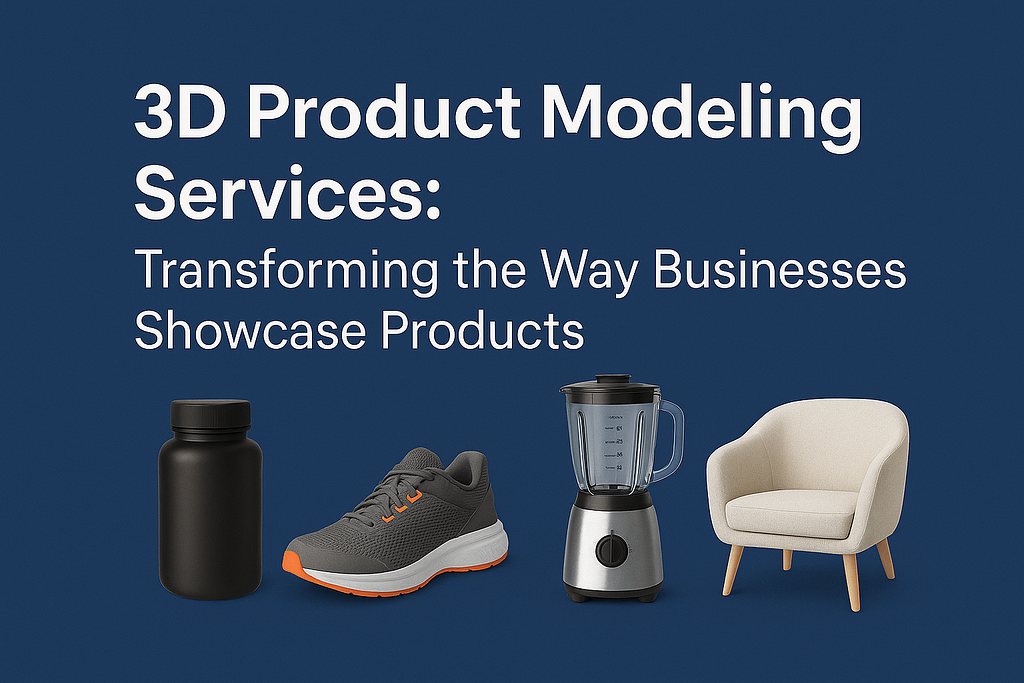
3D product modeling is the process of creating a three-dimensional digital representation of a real-world product using specialized software. These models capture every curve, texture, and detail of a product, providing a lifelike visualization that can be rotated, zoomed in, and even customized. Unlike static photos, 3D models are dynamic and adaptable, making them ideal for e-commerce, marketing, augmented reality (AR), and product design.
Traditional photoshoots involve setting up studios, hiring photographers, and arranging for multiple product samples. If you need to showcase color variations or design updates, it means repeating the entire process. With 3D modeling, once a digital asset is created, it can be reused, repurposed, and updated without additional costs.
Maintaining uniformity in product visuals across websites, social media, and marketing materials can be challenging with photography. 3D models ensure that every product is displayed with consistent angles, lighting, and resolution, creating a professional and reliable brand image.
Shoppers want to “experience” products online as closely as they would in-store. With interactive 3D models, they can rotate, zoom, and view the product from every perspective. This immersive experience not only builds trust but also reduces uncertainty, leading to fewer returns and higher customer satisfaction.
For companies launching new products, waiting for prototypes and photo shoots can delay marketing campaigns. 3D modeling eliminates this lag, allowing businesses to start promoting products before physical samples are even manufactured.
The versatility of 3D product modeling services makes them valuable across industries:
While every service provider has its own workflow, the general process includes:
Whether you need one model or thousands, 3D modeling can be scaled efficiently. Large product catalogs can be digitized quickly without the logistical challenges of photography.
Want to show a product in five colors or three sizes? Instead of manufacturing multiple prototypes, 3D modeling allows instant variations at no additional production cost.
3D models aren’t limited to static images they can be used in interactive 360° viewers, promotional videos, AR apps, and even virtual showrooms.
By reducing the need for physical samples and photo shoots, businesses cut down on waste, transportation, and resource usage, contributing to eco-friendly practices.
The adoption of 3D modeling is expected to accelerate as technologies like AR, VR, and the metaverse become mainstream. Soon, consumers may “try” products virtually before purchase whether placing a sofa in their living room via AR apps or exploring gadgets in a virtual showroom. Businesses that invest in 3D modeling now will be better prepared to deliver cutting-edge experiences tomorrow.
In an era where visuals drive sales and customer trust, 3D product modeling services offer businesses a powerful tool to stay ahead. They provide cost savings, scalability, and a level of customer engagement that traditional photography simply cannot match. Whether you’re a retailer, manufacturer, or marketer, 3D modeling opens new doors for product presentation and brand storytelling.
By adopting this technology, businesses can showcase their products in the best light, reduce costs, and deliver immersive experiences that resonate with today’s digital-savvy customers. As the future of commerce becomes increasingly visual and interactive, 3D product modeling is no longer just an option it’s a necessity.
3D Product Modeling Services: Transforming the Way Businesses Showcase Products was originally published in Coinmonks on Medium, where people are continuing the conversation by highlighting and responding to this story.





