JPMorgan just got sued for allegedly letting $328 million in crypto fraud flow straight through its accounts, and it knew. That’s the allegation at the heart of a class action that names one of the world’s most powerful banks as a knowing participant in a Ponzi scheme.
Goliath Ventures ran for three years, funds landed directly in Coinbase wallets, and prosecutors say the red flags were there the entire time. If the case holds, it rewrites the liability rules for every traditional bank servicing crypto businesses.
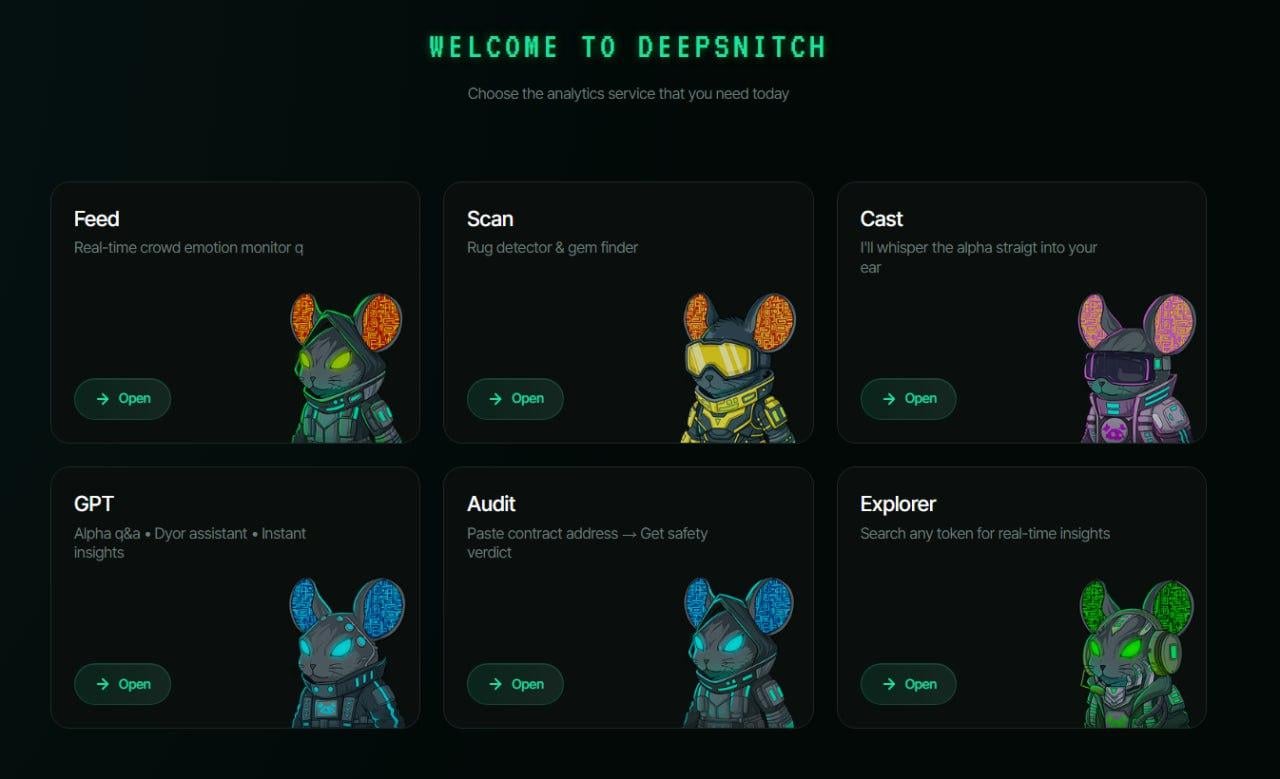
That case is a reminder that risk in financial markets never fully goes away, and that the demand for real verification tools has never been higher. Over $2.1M has flowed into DeepSnitch AI’s presale from investors who understand that.
The platform is live today, contract analysis tools are already accessible, and the TGE hits Uniswap on March 31st. While JPMorgan’s KYC processes allegedly missed $328 million in red flags, DSNT is built to catch them before a single dollar moves.

Investors have filed a class action against JPMorgan, alleging the bank ignored suspicious transactions and allowed Goliath Ventures to funnel $328 million in fraudulent investor funds through its accounts.
A parallel federal criminal case targets Goliath CEO Christopher Delgado, who faces up to 30 years in prison. Prosecutors allege the scheme ran from January 2023 through January 2026, with funds flowing through JPMorgan, Bank of America, and directly into Coinbase wallets.
The lawsuit’s core argument, that JPMorgan’s own KYC processes gave it knowledge of Goliath’s unlicensed operations, sets up a significant legal test for how far traditional banks can be held liable for servicing crypto businesses later exposed as fraudulent.
The case reinforces two persistent headwinds: reputational risk from high-profile fraud and the regulatory scrutiny that follows. It also puts pressure on exchanges like Coinbase, which received funds directly, to demonstrate increasingly rigorous onboarding and transaction monitoring standards.
The JPMorgan class action alleging the bank overlooked $328 million in fraudulent transactions is a reminder that risk in financial markets never fully goes away. Crypto is no different: rug pulls get worse in sideways conditions and bad contracts slip through when attention drifts, regardless of what narrative is dominating at the time.
DeepSnitch AI sits right at that verification layer, and it’s already live. The dashboards and contract analysis tools are accessible today, which means you’re buying into a working product before it gets broader exchange exposure.
The traction speaks for itself. Over $2.1 million raised, with more than 42 million tokens already staked. That staked supply reduces sell pressure and signals that early holders are here for the long run, not a quick exit.
At $0.04399 with nearly 190% presale growth already on the board, DeepSnitch AI has real momentum before it even lists, while competitors like Pepeto are still selling roadmap promises.
As on-chain activity keeps growing, contract verification only becomes more valuable. That’s the real asymmetry here: demand built on utility, not trend cycles.
The latest BlockDAG news shows that BDAG crosses into live trading. Tokens airdropped on March 3, exchange liquidity launched March 4 at $0.05. The presale chapter closes. A harder one opens.
Early predictions target $0.08–$0.10 within months, a potential 60–100% gain from listing. Presale momentum makes that range credible. The pitch holds up too: parallel processing and high transaction throughput address real infrastructure demand, not manufactured narrative.
But open markets apply a different standard. Fundraising milestones, or bullish BlockDAG news, don’t move prices here. Developer adoption does. Live dApps do. Real network usage does.
What happens on-chain in the weeks after launch carries more signal than a hundred positive BlockDAG news. That’s where BlockDAG proves itself, or doesn’t.
Pepeto targets cross-chain friction with a unified interface for all things DeFi. Presale price: $0.000000186. Staking yields reach 209% APY. Early yield-seekers arrive before any listing date exists.
The credibility layer is genuine. Dual audits from SolidProof and Coinsult cover the ground most early-stage projects skip. Token value tied to DEX volume creates a logical, legible growth story.
But the meme coin label is the ceiling as speculative capital chases the next opportunity. Sustaining 209% APY demands real users returning because the product works. Pepeto built something credible, but real adoption determines how far that credibility travels.
BDAG raised millions and now has to prove its blockchain was worth it beyond speculative BlockDAG news. Pepeto has the structure but not yet the users.
DeepSnitch AI already has a live product and holders who won’t stop talking about it. At $0.04399, with 190% presale gains and $2.1M raised, the fundamentals are in place before a single exchange candle prints.
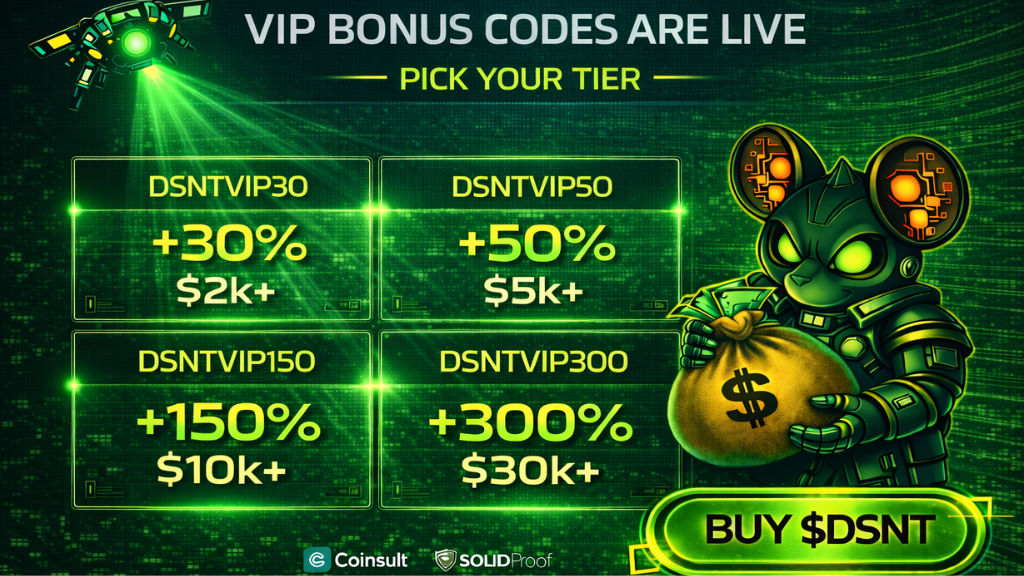
Use code DSNTVIP300 to turn $30,000 into $90,000 in tokens, and if those 100x projections land, that math gets very interesting very fast.
Visit the official website for more information, and join X and Telegram for community updates.
Presale tokens were airdropped on March 3rd, and exchange liquidity launched on March 4th at $0.05. The presale chapter now closes, and open market trading begins. Early price targets sit at $0.08–$0.10 within months, contingent on real developer adoption and live dApp deployment.
The early price target of $0.08–$0.10 represents a 60–100% gain from listing, credible if network usage follows. But open markets care about developer activity and live dApps, not presale momentum. Those metrics write the price story from here.
BlockDAG is transitioning from presale to open market, still unproven post-listing. DeepSnitch AI has a live platform, $2.1M+ raised, 190% presale gains, and a confirmed March 31st Uniswap launch. BlockDAG’s best case is a double. DSNT’s starting conversation is 100x.
The post BlockDAG News: As JPMorgan Gets Dragged Into a $328M Crypto Mess, Traders Dump BDAG & Pepeto and Pour $2.1M Into DeepSnitch AI For 100x appeared first on Blockonomi.





