The Jubi Exchange Collapse update has a clear message for victims: stop chasing people and start chasing money. That's the core advice coming from rights protection expert Darcy, known online as @DarcyAri from FlashRescue.
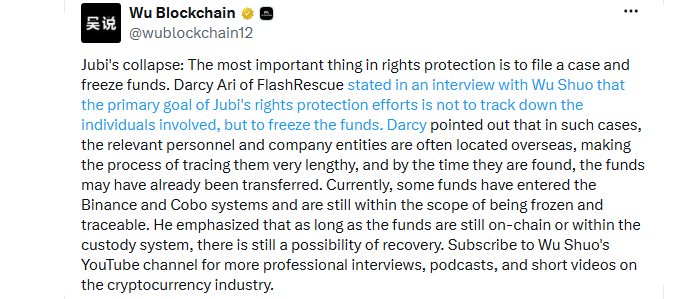
He shared this view in an interview with Wu Shuo, and it changes how people should think about getting their money back.
Jubi, also called JuCoin, is an old Chinese crypto exchange that launched around 2013 to 2014. In September 2025, its token JU crashed about 70% in minutes, falling from near $24 to around $7, with more than $1 billion in trading volume that day.
Into 2026, the platform allegedly froze withdrawals, force-converted user fund, and saw its claimed reserves exposed as fake, wiping out most user balances.
Darcy explained that going after specific people behind Jubi is not the smart move. Most of the relevant staff and company entities sit overseas, far from where victims live.
That distance creates huge legal headaches. Tracking someone down across borders takes months, sometimes years, and crypto moves a lot faster than any court system.
By the time investigators or lawyers actually locate these individuals, the money is often long gone. Funds get moved, mixed, or converted before anyone can act. This is exactly why Jubi exchange fund recovery efforts work better when they focus on the money trail instead.
Some funds tied to Jubi have already landed inside the Binance and Cobo systems. That detail matters a lot.
Both platforms operate within structures that allow tracking and, in some cases, freezing of suspicious funds. Here's why that's good news for victims:
Funds sitting inside Binance or Cobo remain visible on record
These systems can act on freeze requests when fraud is confirmed
Money still on the blockchain leaves a traceable path
Darcy stressed that as long as funds stay on-chain or inside a custody institution, recovery remains possible. Once money exits these systems completely, the odds drop fast.
Filing a case is the first real action victims should take. A formal case creates the legal basis needed to request a freeze.
Without that paperwork, platforms like Binance or Cobo have no grounds to act, even if they spot the funds. Speed matters here too, since crypto can move between wallets and platforms within minutes.
Darcy's advice boils down to a simple priority list:
File a case immediately to start the legal process
Identify which platforms currently hold the affected funds
Push for freezes before money moves again
This approach skips the slow, often pointless hunt for individuals. It puts energy into something with an actual shot at working.
Jubi exchange fund recovery doesn't promise full results for everyone affected. Darcy himself avoided making big guarantees during the interview.
What he did offer was a realistic roadmap. Filing cases fast, tracking where funds land, and pushing for freezes through systems like Binance and Cobo gives victims their best real chance.
For anyone following this case, the lesson is straightforward. Acting fast and aiming at the money itself, rather than people who may already be unreachable, offers the clearest path toward getting something back.
Disclaimer: This article is for informational purposes only and does not constitute financial or investment advice. Crypto markets carry significant risk. Always do your own research before making any investment decisions.





