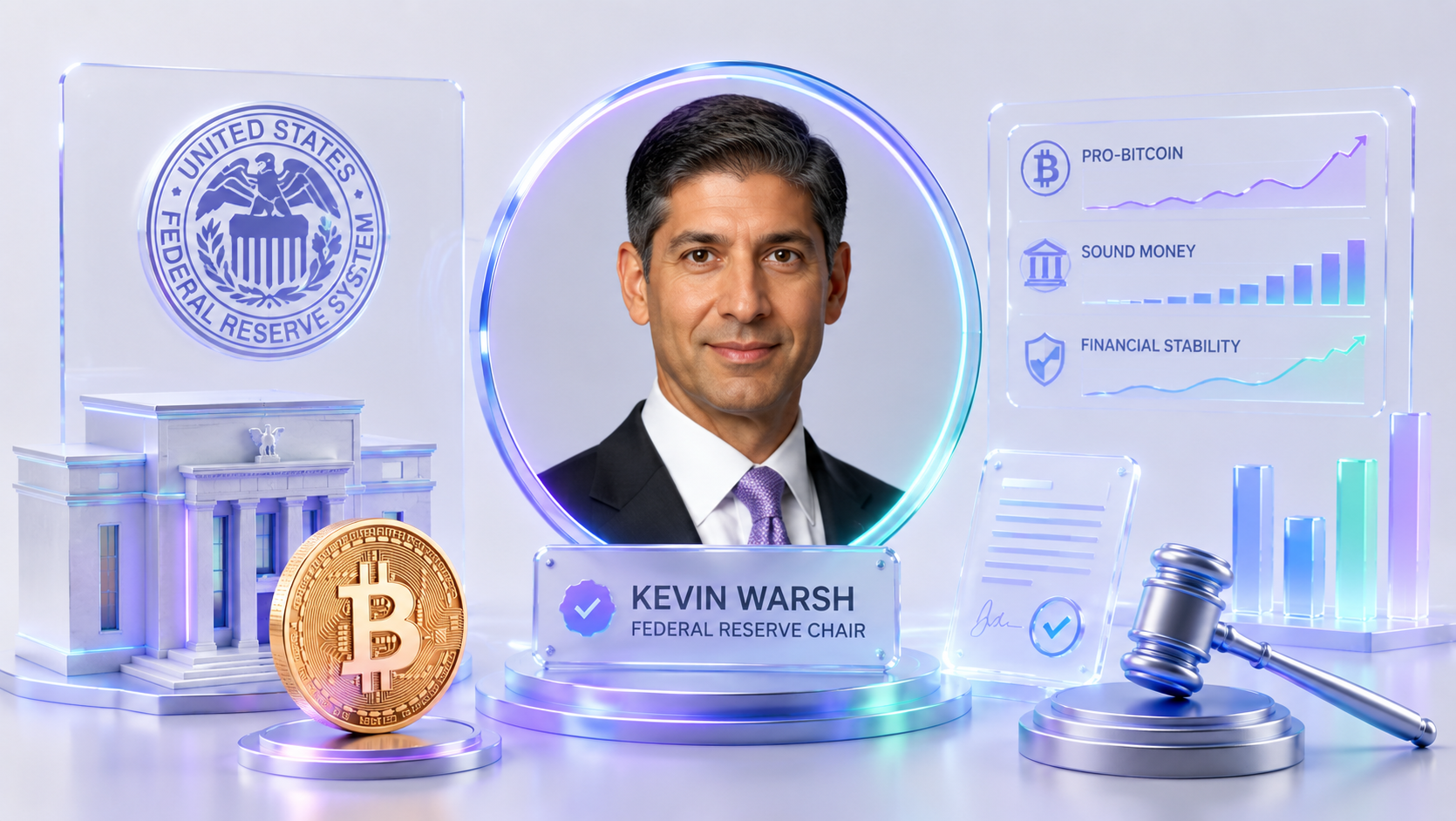
Kevin Warsh has been sworn in as the new chair of the Federal Reserve, replacing Jerome Powell and opening a new chapter for U.S. monetary policy at a moment when Bitcoin is already deeply tied to rates, liquidity and institutional risk appetite.
The appointment is symbolic for crypto because Warsh is not arriving as a central banker who sees Bitcoin only as a speculative nuisance. He has previously described Bitcoin as an important asset that can help policymakers judge whether policy is working, while making clear it is not a substitute for the dollar. That is a very different tone from the older central-bank instinct to treat crypto mainly as a risk-management problem.
Symbolism still has limits. The Fed chair does not decide whether Bitcoin goes up. The Fed does not approve spot ETFs, write securities law, run crypto exchanges or set token policy for the entire market. The chair does, however, shape the cost of money, the size of the Fed balance sheet, bank supervision tone, payment-system access and the macro conditions that decide whether investors want scarce, volatile assets.
Bitcoin is trading near $76,826, with the broader crypto market near $2.65 trillion. That puts Warsh’s first days in the chair inside a fragile market window, with BTC still fighting to hold the same $77,000 area where exchange-linked selling pressure has been watched closely.
For Bitcoin, the most important change is not that Warsh likes the asset. It is that the world’s most powerful central bank now has a chair who understands why Bitcoin became a serious financial signal in the first place.
That matters for institutions. Banks, asset managers, public companies and payment firms do not need the Fed chair to promote Bitcoin. They need the policy environment to stop treating every digital-asset interaction as suspicious by default. A Fed chair who understands Bitcoin as a monetary signal can make the conversation around custody, reserves, settlement, banking access and balance-sheet exposure more mature.
The industry should not confuse that with automatic deregulation. Warsh’s background points to a Fed that may prefer cleaner banking rules, stronger institutional discipline and less tolerance for reckless leverage. That could help serious crypto firms over time, but it may also make life harder for weak platforms that depend on easy money, offshore leverage or unclear counterparty risk.
Stablecoins could be one of the clearest policy battlegrounds. Dollar tokens now sit between payments, banking, Treasury demand and crypto liquidity. A Warsh Fed that respects innovation but protects the dollar could support a more formal stablecoin market while still pushing reserves, audits, redemption rights and bank-style controls into the center of the debate.
The harder part for crypto is Warsh’s monetary-policy instinct. He has argued for tighter control over inflation, less reliance on forward guidance and a smaller Fed balance sheet. Those views can be good for long-term monetary credibility, but they are not automatically bullish for risk assets.
Bitcoin often performs best when liquidity is expanding, real rates are falling and investors are hunting for scarce assets outside the traditional system. A Fed that keeps policy tight, shrinks its balance sheet or pushes back against rate-cut pressure can weigh on Bitcoin even if the chair is personally more open to the asset than past Fed leadership.
That is why the crypto market should separate two stories. Warsh is symbolically positive for Bitcoin’s legitimacy. Warsh may still be macro-tough for Bitcoin’s price if inflation stays high and the Fed refuses to deliver the easier policy investors want.
This is where the appointment becomes more interesting than a simple “bullish” headline. Bitcoin now has a Fed chair who understands its monetary argument at the same time the asset is trading like a liquidity-sensitive macro instrument. That tension will define the next phase.
The industry gets a better seat in the conversation, but not a free ride. Bitcoin’s next major move will still depend on ETF flows, Treasury yields, dollar liquidity, inflation data, bank access, corporate treasury demand and whether the Warsh Fed chooses credibility over market comfort. A Bitcoin-friendly Fed chair is a milestone. A Bitcoin-friendly liquidity cycle is still something the market has to earn.
The post Kevin Warsh Takes Over The Fed In A Symbolic Win For Bitcoin appeared first on Crypto Adventure.





