Natural gas prices across Europe experienced a sharp rally Monday, touching heights unseen since the final weeks of 2023. The primary Dutch futures contract advanced to approximately €73.80 per megawatt-hour, approaching the previous week’s summit of €74.32.
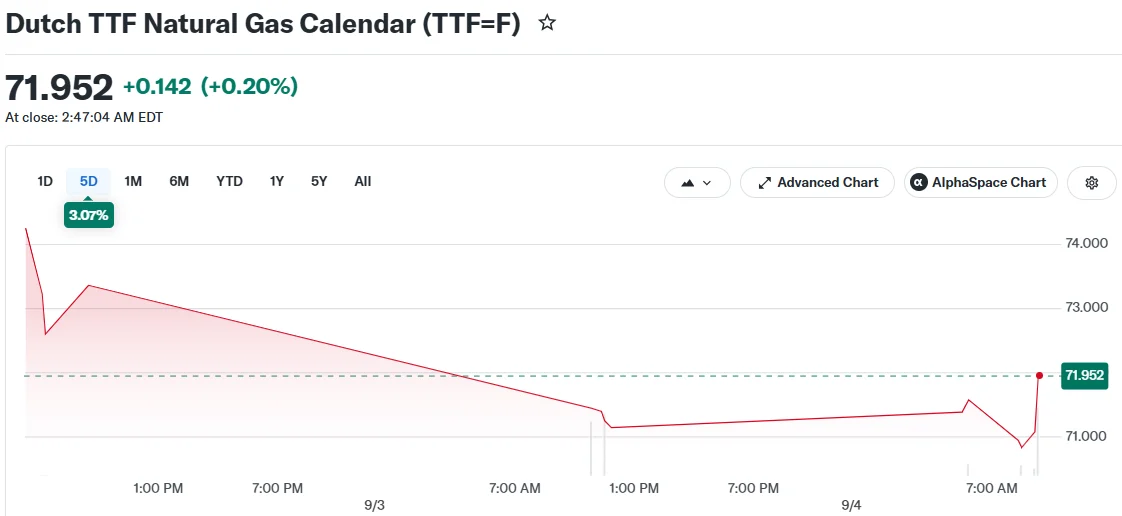
Across the Channel, British wholesale gas markets registered a 2% increase, hovering around 182.50 pence per therm, approaching the 2023 zenith of 183.95 pence.
The upward momentum follows intensifying military confrontations between Washington and Tehran in Persian Gulf waters.
Iranian authorities revealed intentions to establish a restricted naval zone adjacent to the Strait of Hormuz within days. The announcement follows weekend operations by American military forces that struck and incapacitated three Iranian petroleum tankers.
The Pentagon justified the military action as a response to Iranian ballistic missile launches targeting two US Naval vessels operating in regional waters.
The strategic waterway facilitates approximately one-fifth of international liquefied natural gas shipments, with Qatar serving as the primary source. Any interruption to maritime passage through this chokepoint would sever a critical supply artery feeding European markets.
European energy companies now find themselves in direct competition with Asian purchasers for Atlantic basin LNG cargoes to compensate for potential supply disruptions.
Market participants remain vigilant as the tit-for-tat military actions demonstrate no indication of de-escalation.
The geopolitical crisis arrives at an inopportune moment for European energy infrastructure. Underground storage inventories currently sit at approximately 62% capacity, significantly below the five-year historical average by roughly 17 percentage points.
Unusually warm temperatures throughout Southern European regions during summer months elevated gas consumption for power generation. Scheduled maintenance on Norwegian pipeline infrastructure and postponed Qatari LNG shipments further constrained storage replenishment efforts throughout August.
Should LNG imports face disruption during autumn months, energy analysts caution that Europe may confront severe price volatility and potential supply allocation measures during peak winter demand.
Meanwhile, Brent crude oil continues trading above $90 per barrel, compounding overall energy cost pressures.
Escalating energy expenses are amplifying inflationary pressures throughout the eurozone economy. Consumer price inflation registered 3.3% in August, with energy components surging 14.3% on an annual basis.
The European Central Bank convenes Thursday for its policy meeting. Financial markets have almost completely priced in a 25 basis point interest rate increase under President Christine Lagarde’s leadership.
Elevated energy input expenses are constraining both European industrial operations and household budgets, complicating the central bank’s monetary policy calculus.
The convergence of depleted inventories, supply chain vulnerabilities, and accelerating inflation has created substantial anxiety in European energy markets as the heating season approaches.
The post European Gas Markets Surge to 3-Year Peak Amid Middle East Tensions appeared first on Blockonomi.





