Wall Street wrapped up a chaotic trading week Friday with divergent performance across major indexes, as equities fought to regain footing following Thursday’s steep downturn.
The Dow Jones Industrial Average finished the session higher by 235 points, representing a roughly 0.5% advance. The S&P 500 managed to eke out a barely positive close. Meanwhile, the Nasdaq Composite surrendered 0.6%, continuing to face headwinds from technology sector weakness.
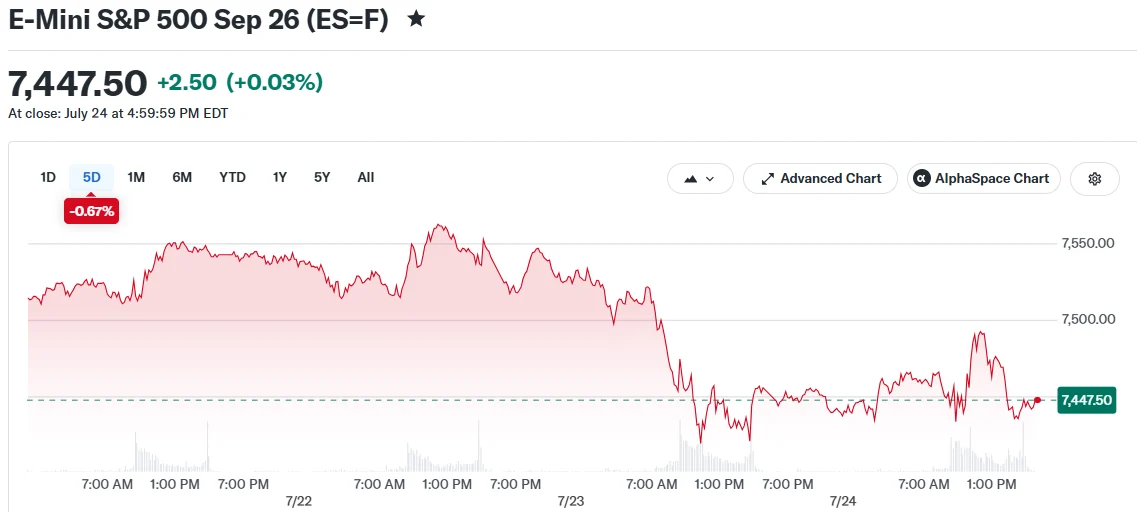
Though the Dow posted Friday gains, none of the three benchmark indexes escaped weekly losses. The technology-focused Nasdaq bore the brunt of the damage with a 2% retreat for the period.
The previous session’s rout stemmed from mounting anxiety surrounding artificial intelligence capital expenditures. The so-called “Magnificent Seven” cohort of large-cap technology giants saw roughly $800 billion in aggregate market capitalization vanish in just one trading day.
Alphabet’s quarterly financial results, disclosed Wednesday after market close, served as the catalyst. Market participants expressed growing unease about aggressive AI infrastructure investments in the absence of demonstrable revenue generation.
Intel shares plummeted nearly 8% Friday despite delivering second-quarter financial figures that exceeded analyst consensus estimates. The negative market response underscored deepening skepticism surrounding semiconductor stocks.
Apple, Amazon, Meta, and Microsoft are all scheduled to unveil their quarterly performance in the days ahead. Given investor reaction to Alphabet’s disclosure, additional volatility appears likely.
New trade levies implemented under Section 301 authority became effective overnight, affecting nearly all American imports. The duty rates span from 10% to 12.5% and impact major U.S. trading relationships.
Administration officials excluded certain energy commodities from the tariff framework, acknowledging elevated petroleum prices that have intensified inflation worries.
Oil markets retreated Friday, with Brent crude futures declining approximately 4% to settle under $96 per barrel. Nevertheless, crude was positioned for a weekly advance following a brief surge past the $100 threshold.
The 2-year Treasury yield concluded the week at 4.33%, though it retreated Friday, snapping a six-session climb.
Trading activity suggests investors are assigning a 62.1% probability the Federal Reserve maintains current interest rates at next Wednesday’s policy meeting. Expectations for a rate increase have jumped to 37.9%, a significant shift from the prior week’s 12.8% probability.
Corporate earnings delivered mixed signals. Verizon, American Express, and NextEra Energy each exceeded bottom-line expectations but fell short on top-line performance. American Express and Alphabet collectively pushed the Dow into negative territory for the weekly period.
U.S. business activity registered its strongest expansion in eight months during July, based on S&P Global’s preliminary Purchasing Managers’ Index, with World Cup-related economic activity providing partial support.
The post Tech Selloff Continues: Nasdaq Drops Again Amid AI Investment Worries and Trade Tensions appeared first on Blockonomi.





