The yellow metal has extended its upward trajectory for a third consecutive session as optimism surrounding potential diplomatic resolution between Washington and Tehran sent crude oil prices tumbling and reduced worries about persistent inflation.
Spot gold advanced 1% to reach $4,736.61 per ounce during Thursday trading. Meanwhile, US Gold Futures contracts for June delivery climbed 1.1% to settle at $4,746.86.
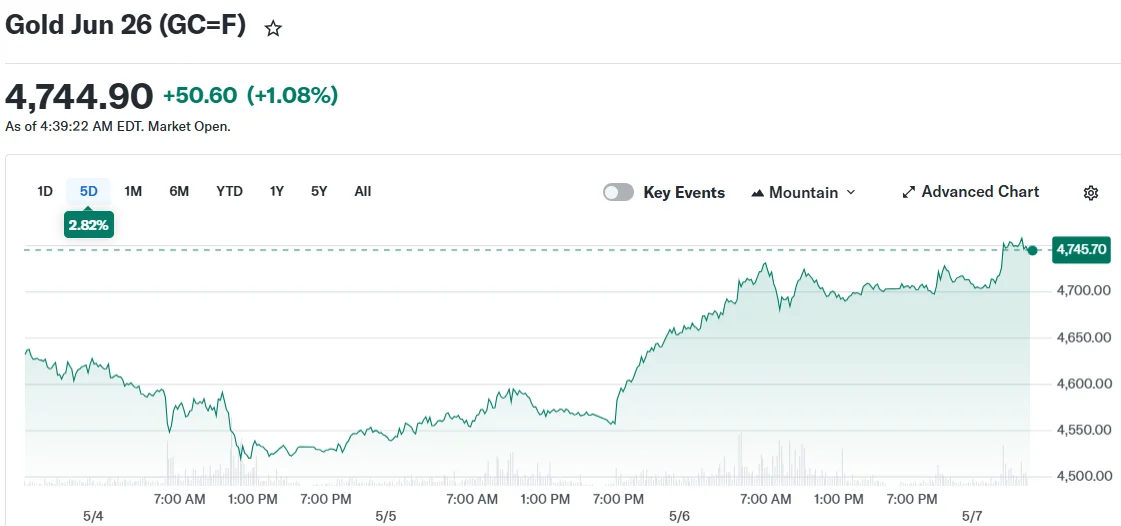
Wednesday witnessed gold’s most impressive single-session performance since the final days of March, with prices surging more than 3%. This substantial rally followed a sharp decline in crude oil prices triggered by encouraging reports of diplomatic advancement in US-Iran discussions.
According to reporting from Axios, the administration was nearing completion of a memorandum of understanding with Iranian officials to resolve the ongoing conflict. Tehran indicated it was evaluating the proposal, while President Donald Trump expressed confidence that Iranian leadership was interested in reaching an agreement.
Trump communicated via social media Wednesday that Washington would conclude its military operations and remove its blockade of the Strait of Hormuz, contingent upon Iranian compliance with specified conditions — though he acknowledged this might be “perhaps, a big assumption.”
Oil experienced a dramatic 7% decline on Wednesday before stabilizing Thursday as traders awaited additional details regarding the ongoing negotiations.
Decreasing energy costs diminish the probability of sustained inflation pressures. This development subsequently pressures US Treasury yields downward and undermines dollar strength, creating favorable conditions for gold prices.
Gold is denominated in dollars globally, meaning a softer greenback enhances affordability for international purchasers. Additionally, since gold generates no yield, declining interest rates improve its competitiveness relative to interest-bearing assets like government bonds.
“The potential easing in energy prices gives the Fed more room to cut rates, which is positive for gold,” analysts at ING said in a note.
The US Dollar Index declined 0.1% during Asian market hours Thursday, stabilizing near levels observed before the conflict erupted.
Prior to the recent rally, gold had declined 11% following the outbreak of US-Iran tensions in late February. The blockade of the Strait of Hormuz had propelled energy costs higher and intensified concerns that inflation would remain stubbornly elevated, forcing monetary policymakers to maintain restrictive interest rate policies for an extended period.
Not all observers share the optimistic outlook. Chicago Federal Reserve President Austan Goolsbee and St. Louis Federal Reserve President Alberto Musalem both emphasized that inflation continues to exceed the central bank’s 2% objective.
Strategists at TD Securities cautioned that positive headlines surrounding peace negotiations are “extremely fragile to reversal” given that fundamental positions from both Washington and Tehran appear largely unchanged from previous negotiating rounds.
Silver advanced 1.9% to $78.79 per ounce Thursday, following Wednesday’s impressive 6.2% surge. Platinum registered modest gains, while copper traded relatively unchanged.
Market attention has now shifted to Friday’s US non-farm payrolls release. The employment figures could provide critical insights into whether the Federal Reserve will implement interest rate reductions during the remainder of the year.
Spot gold traded at $4,701.96 per ounce as of 1:59 p.m. Singapore time Thursday.
The post Gold Climbs Past $4,700 Amid Diplomatic Breakthrough Between Washington and Tehran appeared first on Blockonomi.





