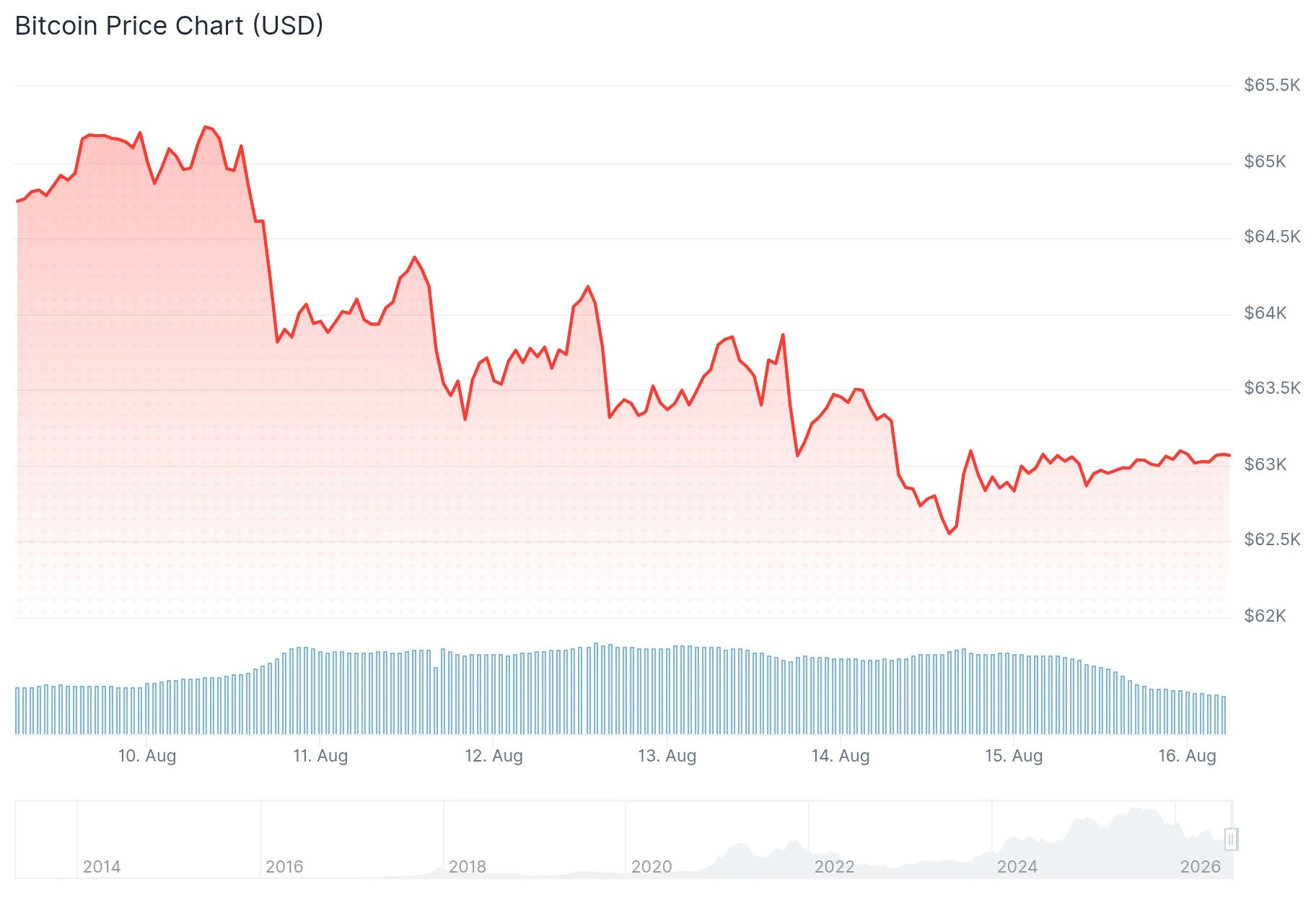
The leading cryptocurrency has experienced a dramatic collapse from its October 2026 all-time high near $126,080, shedding almost half its value as prices settle in the low-$60,000 territory. This significant drawdown has shaken investor confidence and sparked intense speculation about when this market cycle will reach its conclusion.
Analysis from investment manager VanEck indicates the ongoing correction aligns remarkably well with Bitcoin’s established four-year halving cycle pattern. Following each halving event, the rate of fresh BTC entering circulation is reduced by 50%, and substantial price corrections have historically followed preceding bull runs.
VanEck employs its proprietary GEO analytical model to evaluate Bitcoin performance, assessing three critical components: Global Liquidity conditions, Ecosystem Leverage levels, and On-Chain Activity metrics. Currently, two indicators register neutral readings, while ecosystem leverage demonstrates constructive positioning.
According to VanEck’s assessment, these metric configurations indicate preliminary signals of bottom formation, prompting the firm to recommend gradual position accumulation rather than attempting to time a precise market entry point.
On-chain data provider CryptoQuant offers complementary insights through its analysis. Researcher MorenoDV investigated adjusted Net Unrealized Profit/Loss (NUPL) metrics, discovering that Bitcoin’s long-term holder cohort currently bears more substantial unrealized losses compared to the overall market participant base. This specific configuration has historically emerged near significant Bitcoin cycle troughs.
Nevertheless, CryptoQuant maintains caution against declaring an absolute bottom. During previous major cycle lows, the long-term holder NUPL metric declined substantially beyond present readings, suggesting potential for additional downside before a definitive price floor materializes.
Katie Stockton, who founded Fairlead Strategies and manages the Amplify Fairlead Tactical Bitcoin ETF, shared with Coinage that her preferred technical indicators are displaying long-term oversold readings. She observed that long-term momentum measurements have started reversing upward following a period of accelerating downward pressure.
“We’re already observing indicators of long-term downside exhaustion,” Stockton explained. The simultaneous occurrence of oversold conditions alongside improving momentum was “exceptionally compelling,” she noted.
Stockton further highlighted that implied Bitcoin volatility metrics recently dropped to their lowest annual levels, while CryptoQuant’s founder Ki Young Ju documented that hedge fund positioning has transitioned to net long exposure in BTC futures contracts.
Geoffrey Kendrick from Standard Chartered made a bold bottom call for Bitcoin’s cycle low at $59,000 this past June, declaring the “winter is over.” Interestingly, Bitcoin concluded June 30 at $58,566, marking its lowest monthly close in nearly 24 months.
Galaxy Research maintains a more conservative outlook, projecting a potential bottom formation between $40,000 and $46,000 during Q4 2026, while acknowledging a worst-case capitulation scenario could drive prices toward $28,000.
On-chain intelligence platform Glassnode reports that 45 distinct Bitcoin metrics currently reflect capitulation conditions — representing the longest sustained period of such readings since the November 2022 FTX exchange collapse. Market strategists from Cowen, CryptoQuant, and veteran trader Peter Brandt are converging on September through October timeframes for a probable market bottom.
At present, Bitcoin trades around the $63,000 level, representing approximately 49% decline from its historical peak, as market participants monitor whether accumulated holdings by long-term investors and institutional buying interest can counterbalance persistent selling pressure.
The post Bitcoin (BTC) Price Analysis: Has the Crypto Winter Bottom Arrived or Will Prices Fall Further? appeared first on Blockonomi.





