Key Takeaways
Coinbase holding $19B in USDC across its products while all-exchange USDC reserve sits at 13.47B are not contradictory figures: Coinbase’s $19B includes custodial balances and retail products that do not appear in exchange reserve measurements, which means the two numbers are measuring different pools of the same asset rather than competing claims on the same supply.
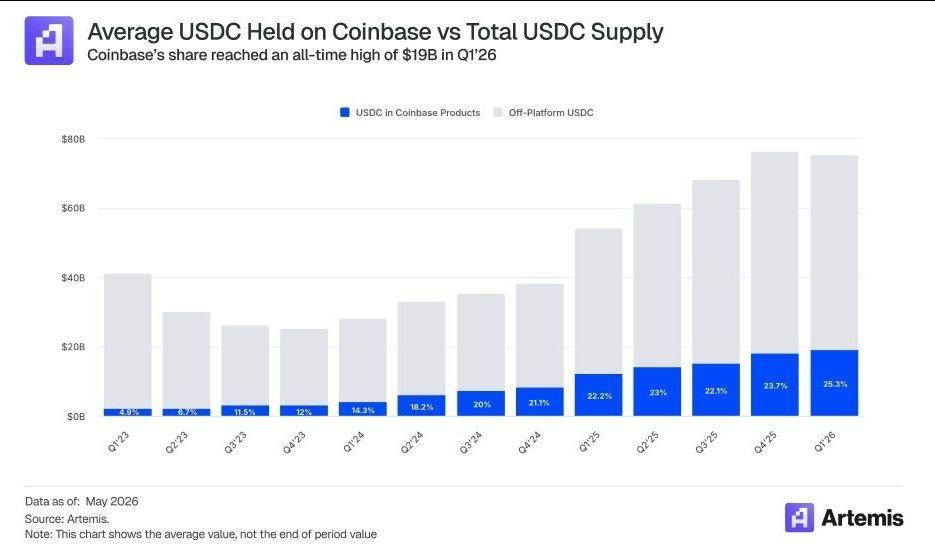
Exchange reserve in the CryptoQuant definition measures USDC available on exchange order books for trading. Coinbase’s $19B Artemis figure measures USDC held across all Coinbase products, including retail wallet balances, custodial holdings, and other non-trading infrastructure.
The scope difference extends to supply figures. CryptoQuant’s total ERC20 USDC supply of 52.76B and Artemis’s implied total of approximately $75.1B differ because CryptoQuant measures Ethereum-chain USDC only while Artemis measures cross-chain total supply. The approximately $22.3B difference represents USDC on non-Ethereum chains.
A 5.91% single-day decline in USDC exchange reserve to 13.47B while exchange netflow registers -846.2M confirms that USDC is leaving trading infrastructure faster than it is entering, a movement that is occurring simultaneously with Coinbase reporting a record share of total supply in its non-trading products. The CryptoQuant chart shows the reserve declining from approximately 15.5B in late April to the current 13.47B, with the sharpest single-session drop occurring on May 22.
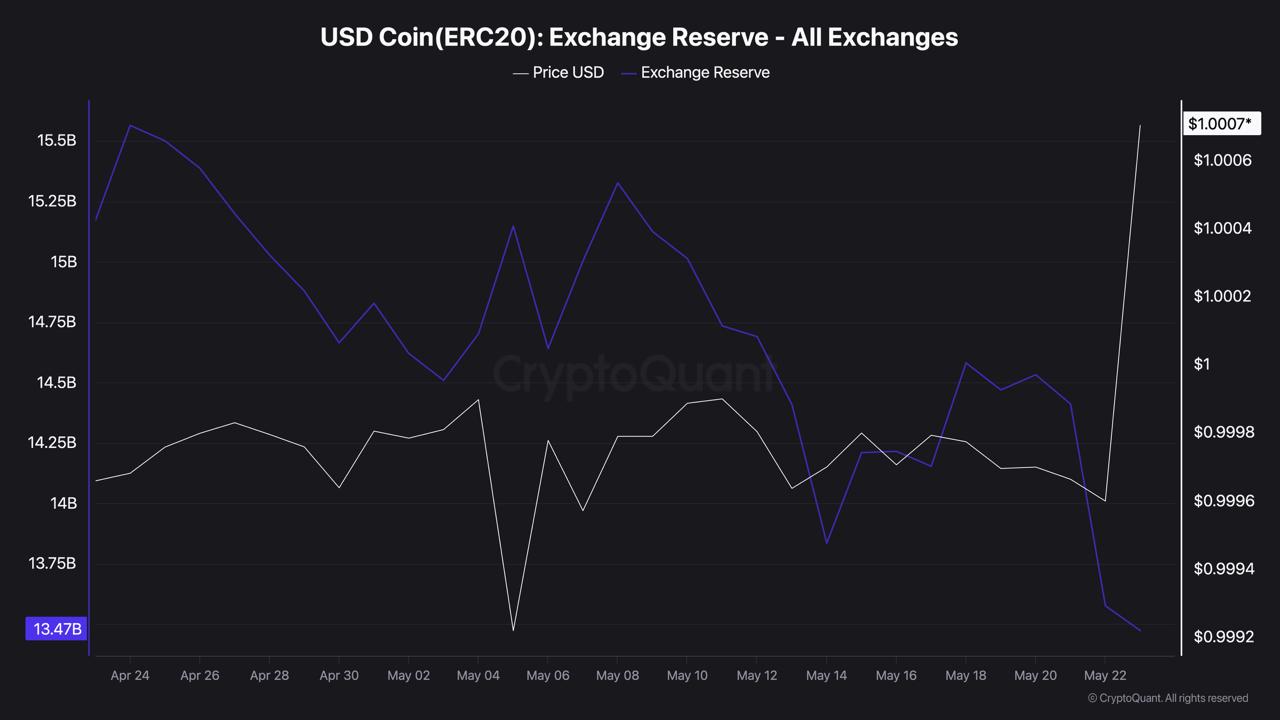
The chart’s sharpest single-session reserve decline in the visible 30-day range occurring on May 22 while Bitcoin fell below $76,000 analytically suggests the USDC outflow from exchanges was driven by the broader market selloff rather than a USDC-specific structural change, though the chart alone does not confirm that causal direction. Analytically, one mechanism consistent with the data is traders moving out of crypto positions into stablecoin holdings held off-exchange during the selloff, though the netflow data confirms the direction of movement without explaining the motivation behind it.
The -846.2M netflow figure represents the net difference between USDC flowing into and out of exchanges on the day. A negative netflow of this magnitude means outflows exceeded inflows by $846M, the largest net outflow visible in the recent data.
USDC leaving exchange reserve at its fastest 30-day rate while concentrating in Coinbase’s custodial and retail products at a record share describes a specific structural movement: the stablecoin is migrating from trading infrastructure into custodial infrastructure simultaneously. For Coinbase, that migration expands the yield-earning base: the $19B held in its products generates yield revenue regardless of whether those funds are active in trading. For market liquidity, the migration in the opposite direction reduces the USDC available on exchange order books, which analytically tightens the stablecoin supply available for spot purchases during the current market decline.
Coinbase earns yield on USDC reserves held in its products. The three-year trajectory from 4.9% in Q1’23 to 25.3% in Q1’26 shows share growth has been nearly uninterrupted. If Q2’26 Artemis data shows Coinbase’s share continuing above 25% while exchange reserve remains below its April levels, the structural migration from trading to custodial infrastructure will have persisted through a full quarter of market stress. If Coinbase’s share retreats below 23% and exchange reserve recovers toward 15B, the current concentration will have been a temporary response to market conditions rather than a durable structural shift.
The information provided in this article is for educational purposes only and does not constitute financial, investment, or trading advice. Coindoo.com does not endorse or recommend any specific investment strategy or cryptocurrency. Always conduct your own research and consult with a licensed financial advisor before making any investment decisions.
The post USDC Is Piling Into Coinbase Products While Leaving Exchanges Behind appeared first on Coindoo.