Key Takeaways:
Google Cloud is moving deeper into blockchain infrastructure with the development of the Google Cloud Universal Ledger (GCUL), a Layer-1 blockchain aimed at financial markets. The company revealed new details this week via LinkedIn, outlining its strategy to provide a neutral, institutional-grade blockchain capable of powering tokenized assets, payments, and round-the-clock settlement systems.
Rich Widmann, the Global Head of Web3 Strategy at Google Cloud, explained that GCUL is a neutral, middle-layer infrastructure that will support a number of banks and institutions at the same time. As opposed to vertically isolated corporate blockchains that are designed to serve a single provider, GCUL is horizontally integrated in support of international finance, capable of:
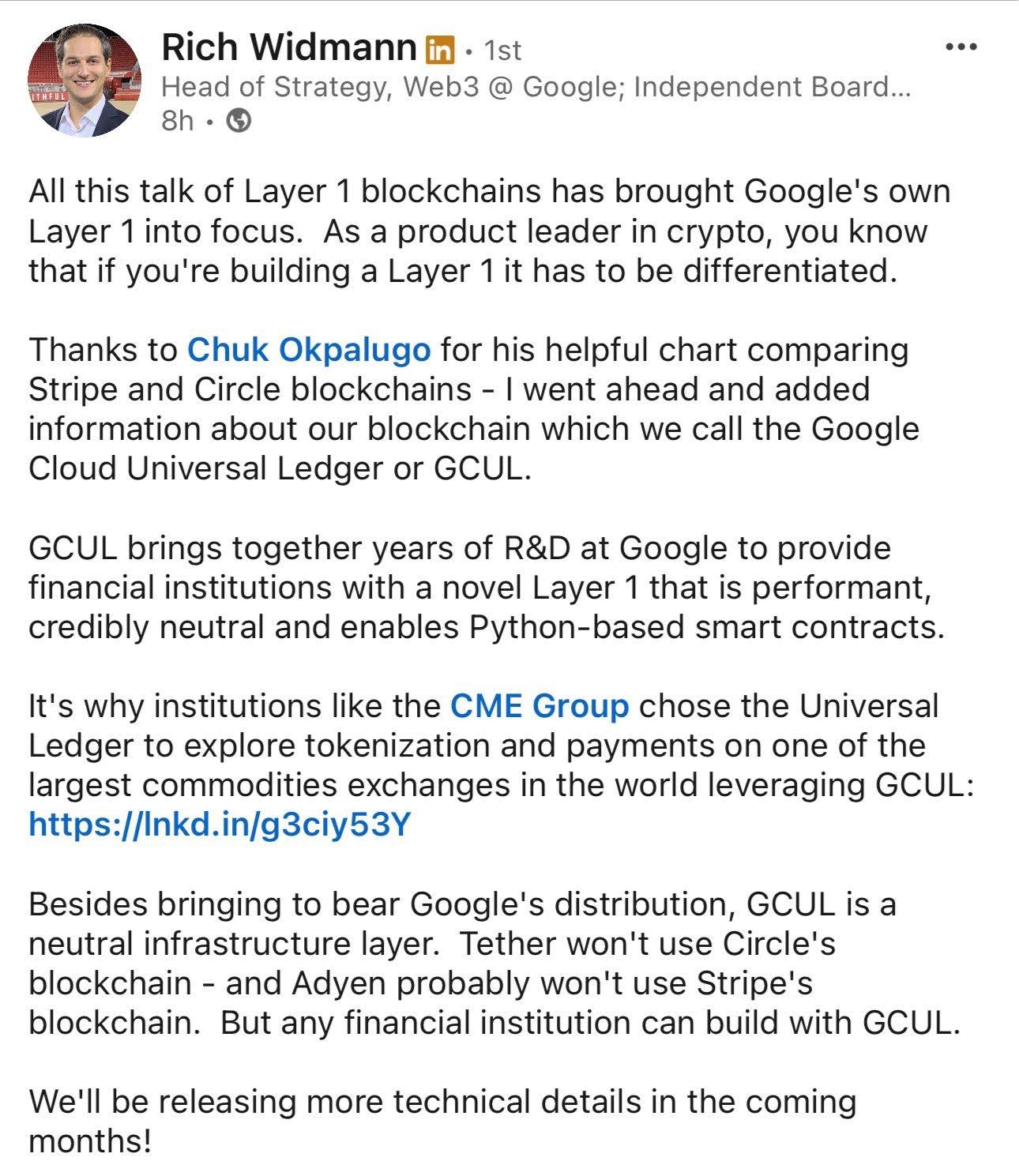
Widmann stressed that GCUL is not just another enterprise blockchain but aims to operate as a base layer for capital markets worldwide, potentially integrating with hundreds of institutional partners across Google’s network.
Read More: Google Secures 8% Stake in Bitcoin Miner TeraWulf in $3.7B AI Hosting Mega Deal
The post suggested GCUL could eventually be connected to Google’s broader ecosystem, opening access to billions of retail users and hundreds of enterprises. Where decentralization remains an issue in a ledger that is run by a tech giant, Google has attempted to underline neutrality to assure campuses who are hesitant to use mechanisms run by direct competitors.

CME Group, one of the largest derivatives exchanges in the world, is already in partnership with Google Cloud to pilot tokenization and settlement of some of its products on GCUL. Declared back in the year, the partnership model-tested tokens as well as wholesale payments and established a foundation to wider usage of tokens.
CME Chairman and CEO Terry Duffy commented in March that blockchain-enabled settlement could bring major efficiency gains as markets shift toward 24/7 trading models. By eliminating time-zone bottlenecks, collateral and margin could be settled instantly, cutting costs for global institutions.
For Google, CME’s involvement serves as an early endorsement of GCUL’s utility in institutional finance, adding credibility to the project as it moves through its private testnet phase.
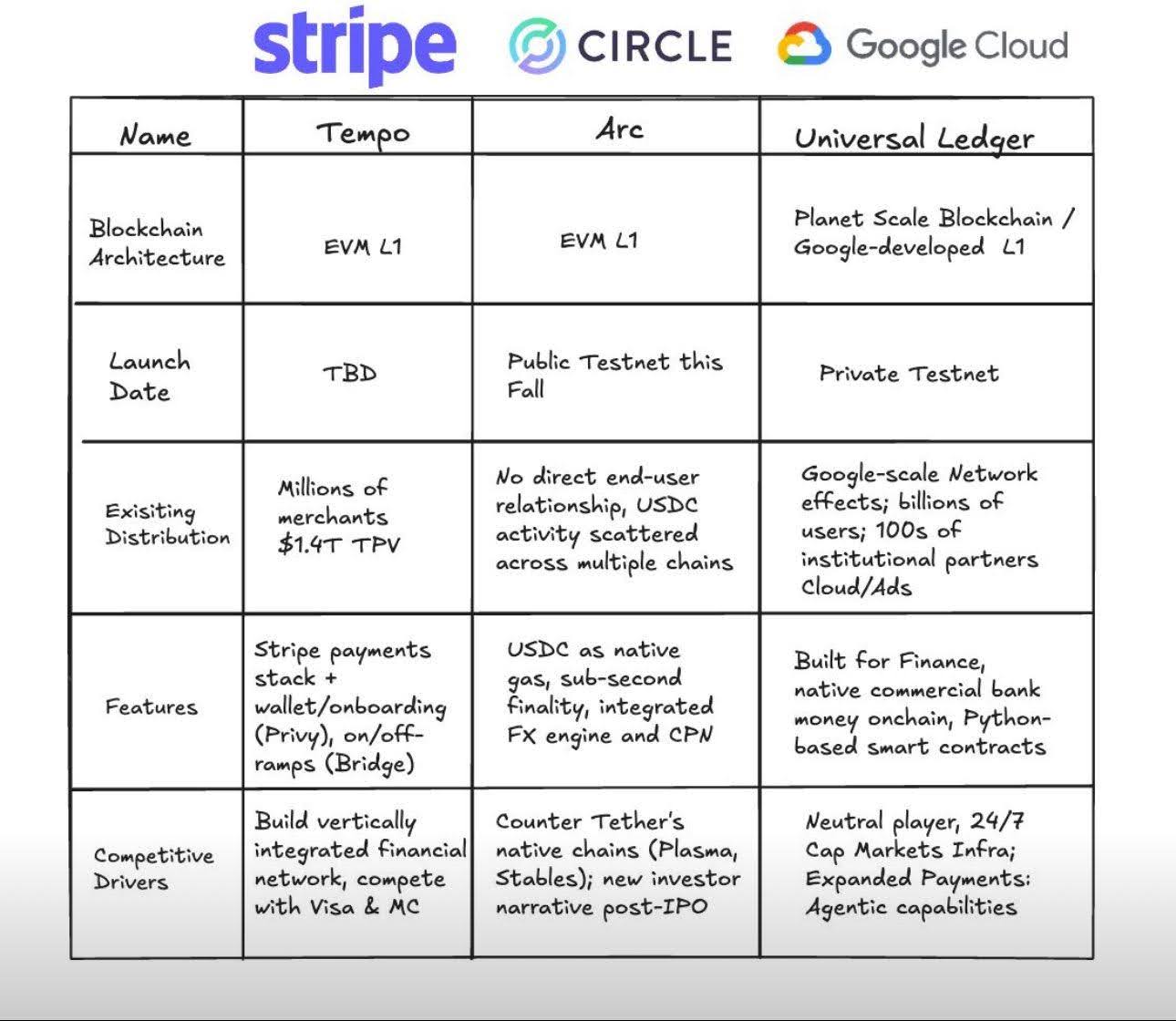
Google’s move comes as other payment and financial technology leaders build their own blockchain infrastructure.
Widmann contrasted GCUL with these efforts, noting that while Stripe and Circle build vertically integrated ecosystems tied to their own products, GCUL is designed to be a neutral ledger open to any financial institution.
Read More: Binance Unveils Keyleiss Wallet Extension for Chrome with MPC Security and Multi-Chain Support
As the pioneers of cloud hosting public chains, Google has been playing a significant role in the development of blockchain infrastructure since long ago: Etherium, Solana, Polygon, etc. It has additionally teamed up with Coinbase to accept crypto payments and invested in Web3 startups.
In third place, Google has joined the GCUL blockchain project, where it is taking part in development of the protocols rather than being a service provider as it does in most of its blockchain activities.
Analysts observe that it is a change of strategy: now Google will offer its own blockchain infrastructure to financial institutions, where it will have a unique product to offer at the expense of competitors and rent.
The post Google Cloud Reveals Details of Its L1 Blockchain GCUL appeared first on CryptoNinjas.