The total meme coin market capitalization sits at $25.96 billion, according to CoinMarketCap, a fraction of the roughly $137 billion peak reached in early 2025 during the memecoin mania that followed the U.S. election cycle. The drawdown of roughly 80% is deeper than Bitcoin’s decline from its own high, a reminder that the sector amplifies whatever the broader market does, in both directions.
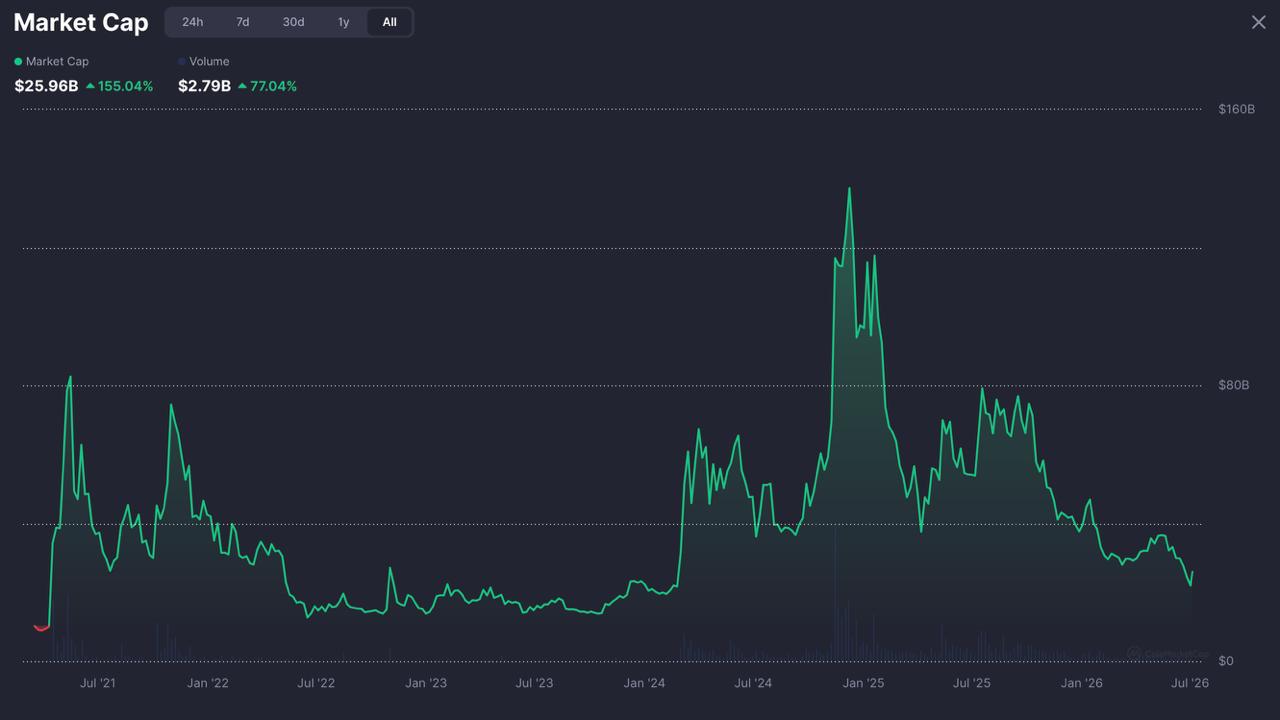
The past week showed the amplification working upward. Among the ten largest meme tokens by market cap, MemeCore led with an 86% gain to a $1.96 billion market cap at the time of writing, followed by SPX6900 at 29% and BONK at 15.5%. Pepe added 11.8%, Pudgy Penguins 7.7%, and FLOKI 7.49%. The two largest names moved least: Dogecoin, still the sector anchor at $13.22 billion, gained 2.3%, while Shiba Inu rose 3.24% to $2.6 billion. That distribution, small caps sprinting while majors crawl, is the classic signature of speculative capital returning down the risk curve after a period of caution.
The durability argument rests on the fact that meme coins compete on a different axis than utility projects. They do not need superior technology or real-world use cases; they need attention, community, and liquidity. Strong online communities sustain engagement between cycles, low nominal prices attract retail investors seeking asymmetric bets, and the sector’s extreme volatility is itself a product that professional trading firms actively consume.
Meme coins also serve a rotational function within crypto. When risk appetite rises, capital typically flows from Bitcoin and Ethereum toward more speculative assets, and meme coins are among the first beneficiaries, as this week’s small-cap-led rally illustrates. They generate trading activity, onboard new users to networks such as Solana, and act as a real-time sentiment gauge for retail participation.
A newer development strengthens the persistence case: the crossover into traditional finance. BONK core contributor Nom noted at Consensus Miami that Nasdaq-listed Bonk Holdings holds roughly 2.7% of BONK’s circulating supply and is targeting $115 million in token holdings by year-end, one of a handful of meme projects with exchange listings, ETF filings, or public-company structures behind them. Tokens with those anchors have institutional distribution channels that pure hype cycles never had.
The same Consensus panel produced the sector’s sharpest self-criticism. Nom warned that new meme coin trades increasingly resemble long-shot sports parlays, and that most teams lack the staying power to reach regulated channels, distinguishing durable tokens from those that “rinse retail.”
The structural problems are real. Thousands of new tokens launch regularly, diluting liquidity and attention across an ever-expanding field where the overwhelming majority go to zero. Prices remain tied to sentiment rather than fundamentals, which makes the sector the most volatile corner of an already volatile asset class: the same tokens posting double-digit weekly gains now routinely lose 70% or more when risk appetite fades, as MemeCore itself demonstrated with a 75% crash earlier this year before the current rebound. Regulation adds a further layer: SEC Commissioner Hester Peirce has stated that memecoins fall outside investor protection frameworks, meaning holders have effectively no recourse when projects fail or founders exit.
The honest answer to whether meme coins have a future is that they already survived the test that was supposed to kill them. An 80% sector drawdown eliminated most projects but not the category, and capital returned to the survivors within the first week of improved sentiment. That behavior looks less like a passing fad and more like a permanent, cyclical asset class driven by market psychology rather than utility, closer to lottery-style retail speculation than to venture-style technology investment.
What that means in practice: meme coins can deliver gains during risk-on windows, and the past week’s numbers show it, but they remain arguably the most volatile segment of the crypto market, dependent on sentiment that can reverse without warning. Their trajectory probably will continue to track broader crypto conditions, retail risk appetite, and community strength rather than the merits of any individual token. The sector’s future looks secure for now; the future of almost any specific coin in it is not.
This article is for informational purposes only and does not constitute financial or investment advice. Meme coins are among the most volatile and speculative digital assets. Always conduct your own research before making investment decisions.
The post Do Memecoins Still Have a Future After 80% Drop From Highs? appeared first on Coindoo.





