Key Takeaways:
PayPal is pushing crypto payments into the mainstream, positioning itself at the center of a $3+ trillion digital economy. With its latest innovation, “Pay with Crypto,” the global payments giant is transforming how merchants receive and manage cross-border payments, at a fraction of the traditional cost.
Read More: PayPal World Unleashed: A Game-Changing Move to Connect 2 Billion Wallet Users Globally
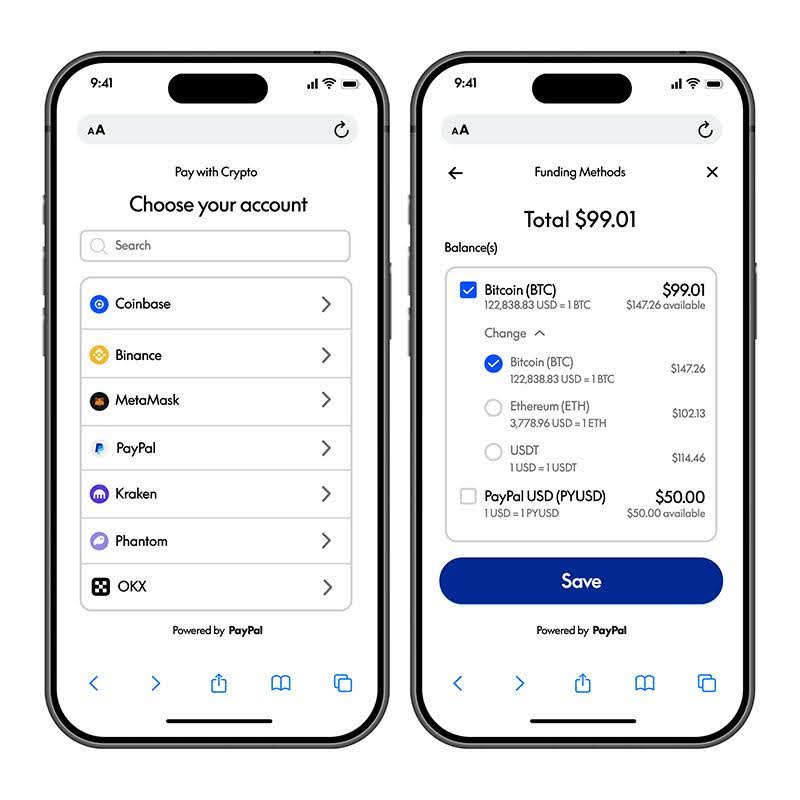
The new PayPal feature, Pay with Crypto, allows U.S.-based merchants to accept payments in over 100 cryptocurrencies, including Bitcoin (BTC), Ethereum (ETH), Tether (USDT), USD Coin (USDC), Binance Coin (BNB), Solana (SOL), and Ripple (XRP). Customers can use major crypto wallets such as MetaMask, Coinbase, Phantom, Exodus, Kraken, OKX, and more.
When a crypto payment is made, PayPal converts the digital coin used into either PayPal USD (PYUSD) or USD, for instantaneous settlement. This should take away the headache of dealing with volatile digital assets or worrying about price fluctuation directly for business.
This service has a direct connection into a crypto user base of over 650 million worldwide, which allows merchants to expand into new markets without struggling with the traditional banking wait times and high card processing fees.

Traditional international credit card payments usually incur fees ranging between 1.5% and 3.5% due to currency conversion, foreign exchange spreads, and intermediary banking layers. In contrast, PayPal’s Pay with Crypto offers a fixed transaction rate of just 0.99%, valid through July 31, 2026.
This huge fee cut, with a 90% savings is quite appealing to the small and medium-sized businesses (SMEs) who till date find it hard to grapple with the substance costs that are largely palmed across borders. With the support of blockchain infrastructure, when paying with stablecoins such as PYUSD, PayPal has no need to involve an intermediate bank whatsoever.
“Imagine a U.S. based clothing maker received an order from someone in India for a handmade gown. They used to have to worry about long wait times to receive their money and high transaction rates eating into profits,” said PayPal CEO Alex Chriss. “This is what the future of borderless commerce looks like.”
The checkout process has been designed to be simple and universal:
This payment flow solves several long-standing problems with crypto adoption in retail:
The company’s in-house stablecoin called PYUSD is also a key element of this approach. PYUSD is issued by Paxos Trust Company and is collateralized 1:1 by U.S. Treasuries and USD deposits and can always be redeemed in USD.
Read More: PayPal Expands PYUSD Stablecoin to Stellar Blockchain, Targeting Global Payments and Remittances
For merchants that decide to leave PYUSD in PayPal, PayPal also provides a 4% annual yield, driving yet another form of value. This allows SMEs to be able to scale up their crypto earnings without necessarily needing to cash them to customarily fiat immediately.
PYUSD also allows instant payouts to vendors, freelancers or supply chain partners, a feature in high demand in fast-paced verticals such as digital content, e-commerce and logistics.
Although PYUSD is only accessible to users in the United States, we are globally expanding through partners like Fiserv, which was recently announced yesterday Global expansion will help to grow stablecoin usage beyond borders and industries.
Despite the buzz, PayPal is quick to outline key regulatory and technical disclosures:
Additionally, transactions recorded on-chain are irreversible, and services can be restricted or paused due to legal or technical issues.
“We’re breaking long-standing barriers in global commerce,” Chriss emphasized, “but we’re also navigating evolving regulatory environments.”
The launch of Pay with Crypto comes at a pivotal time in the digital finance space. The global crypto market cap sits at over $3 trillion, and stablecoins alone account for over $250 billion of that, according to CoinGecko and recent market reports.
PayPal’s move positions it alongside players like Visa, Mastercard, Stripe, and Coinbase Commerce, but with a key differentiator: vertical integration. From wallet connectivity to stablecoin issuance and conversion to fiat, all occurs within PayPal’s ecosystem.
The post PayPal’s “Pay with Crypto” Targets $3 Trillion Market, Slashes Global Payment Fees by 90% appeared first on CryptoNinjas.