Within the Solana ecosystem, Pump.fun has established itself as a remarkably profitable enterprise. The service enables virtually anyone to launch and trade freshly minted cryptocurrencies within minutes, eliminating technical barriers entirely.
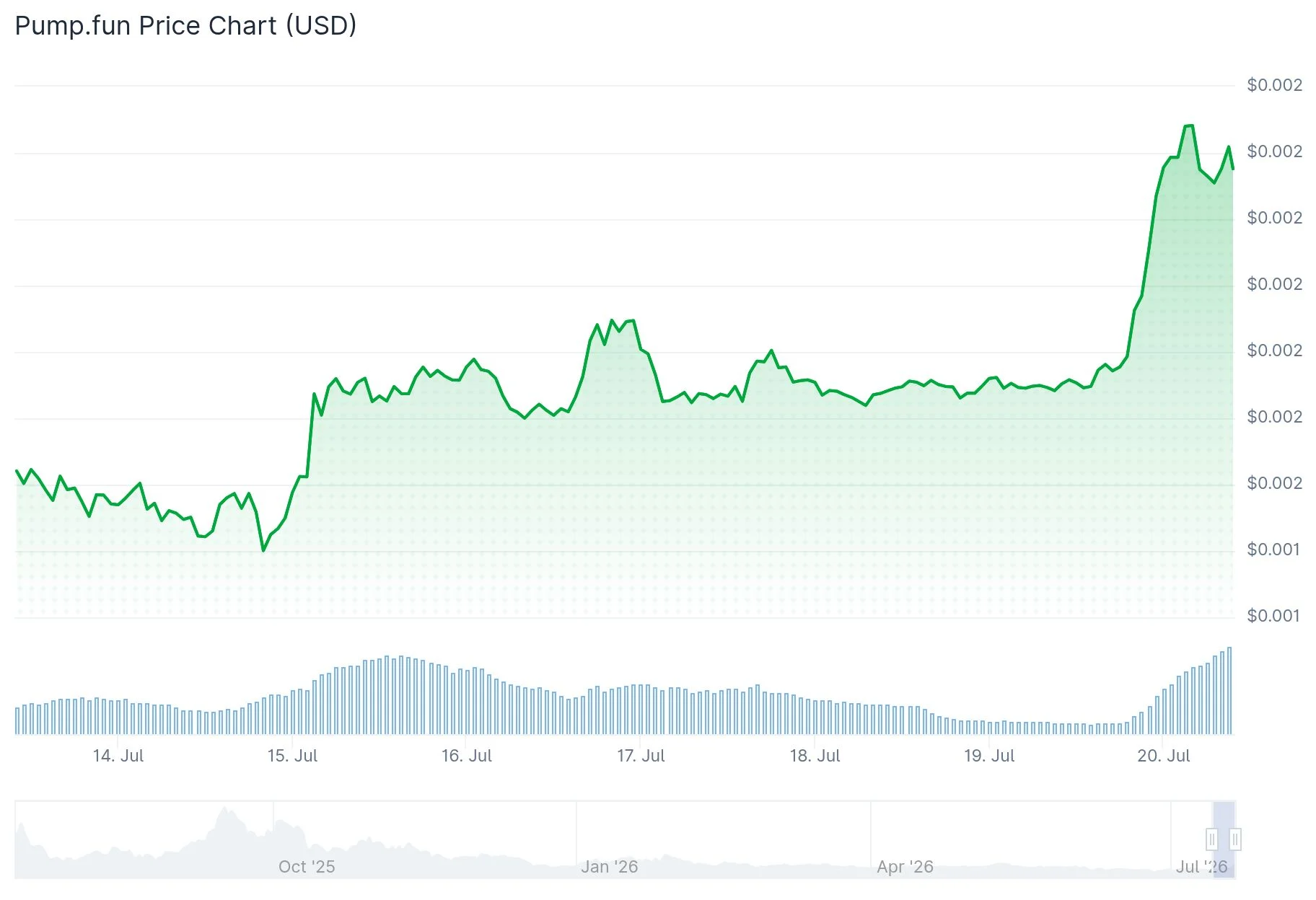
This straightforward approach has attracted substantial trading activity, producing protocol fees exceeding hundreds of millions of dollars. In contrast to numerous blockchain ventures, Pump.fun demonstrates authentic user engagement, functional infrastructure, and verifiable income streams.
New tokens deployed on the service begin trading via an automated bonding curve mechanism. When tokens achieve sufficient market momentum, they can transition to PumpSwap, the platform’s proprietary decentralized trading venue.
Additional features including livestream capabilities, creator incentive systems, community engagement tools, and competitive token events have been integrated. The infrastructure suggests development toward a comprehensive creator economy framework where visibility translates into monetization opportunities.
A fundamental component of the PUMP value proposition involves its structured token repurchase program. The platform allocates a portion of generated protocol fees toward acquiring PUMP tokens from secondary markets.
bought $PUMP here on the reclaim of old support @ .001675
thesis: making 30-40M a month during bear market for onchain, believe that $SOL will dominate retail activity again this cycle and https://t.co/vxui1AnAAw will be most likely beneficiary of this activity if that happens… https://t.co/NOq3z2qiBj pic.twitter.com/MZcRnhYUzU
— Ansem
(@blknoiz06) July 19, 2026
Token repurchases decrease circulating supply while simultaneously generating purchasing pressure, potentially providing price support. This arrangement creates a more tangible connection between platform success and token economics compared to typical cryptocurrency projects.
Nevertheless, PUMP token holders possess no enforceable rights to platform earnings. The repurchase program operates without binding commitments, allowing management to modify or discontinue operations without restriction.
PUMP’s tokenomics established a one trillion token maximum supply at launch. The development team secured 20% allocation while early-stage investors received 13%, culminating in 33% combined insider ownership.
Current circulation represents only a fraction of total supply. Progressive token unlock events will release additional PUMP into markets, potentially creating significant selling pressure.
Prudent evaluation requires examining fully diluted valuation metrics rather than focusing exclusively on circulating market capitalization. While buyback operations may counterbalance some pressure, no assurance exists that repurchases will match unlock velocities.
Regulatory exposure represents another consideration. Multiple lawsuits assert that certain platform-facilitated token sales constitute unregistered securities transactions. Although these remain allegations, potential outcomes include financial penalties or operational constraints.
The platform’s standing undergoes continuous stress testing through fraudulent projects, unsuccessful launches, and controversial livestream content incidents.
The overwhelming majority of tokens introduced through Pump.fun fail to sustain meaningful market interest. While the platform collects fees irrespective of individual token performance, sustainable expansion requires evolution beyond ephemeral memecoin trends.
Current operational status confirms ongoing buyback activity alongside consistent protocol revenue generation throughout recent reporting periods.
The post Pump.fun (PUMP) Token Analysis: Revenue-Backed Buybacks vs. Insider Risk and Legal Challenges appeared first on Blockonomi.





